Lemon-scented tea tree
Leptospermum petersonii. Family Myrtaceae. Tree.
Also called Lemon tea tree.
This Australian evergreen grows as a large shrub or small tree, with lemon-scented leaves, fine branching and small white flowers. Gardeners grow it for fragrant foliage, informal screening and pollinator visits; it needs a mild climate or frost-free winter shelter.
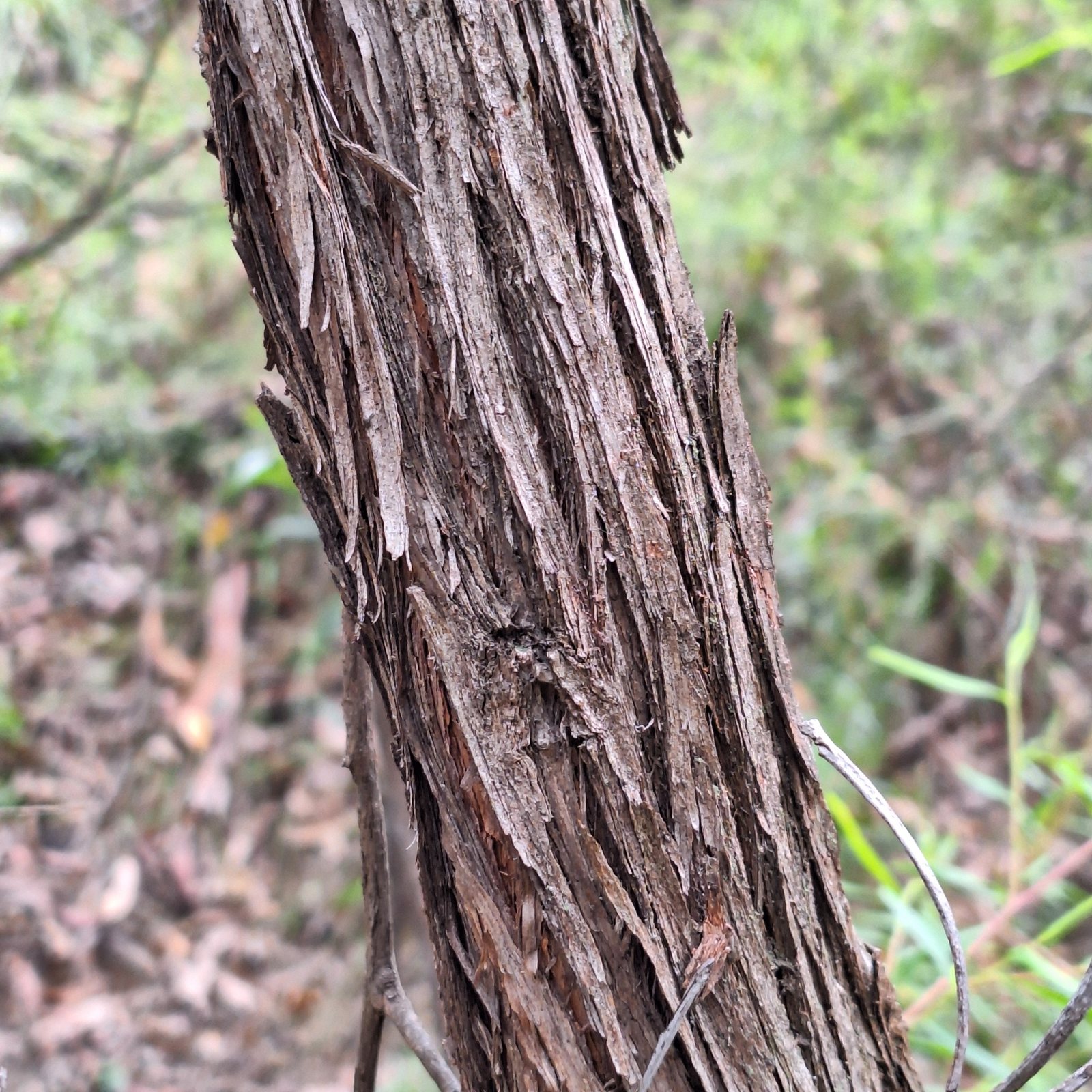
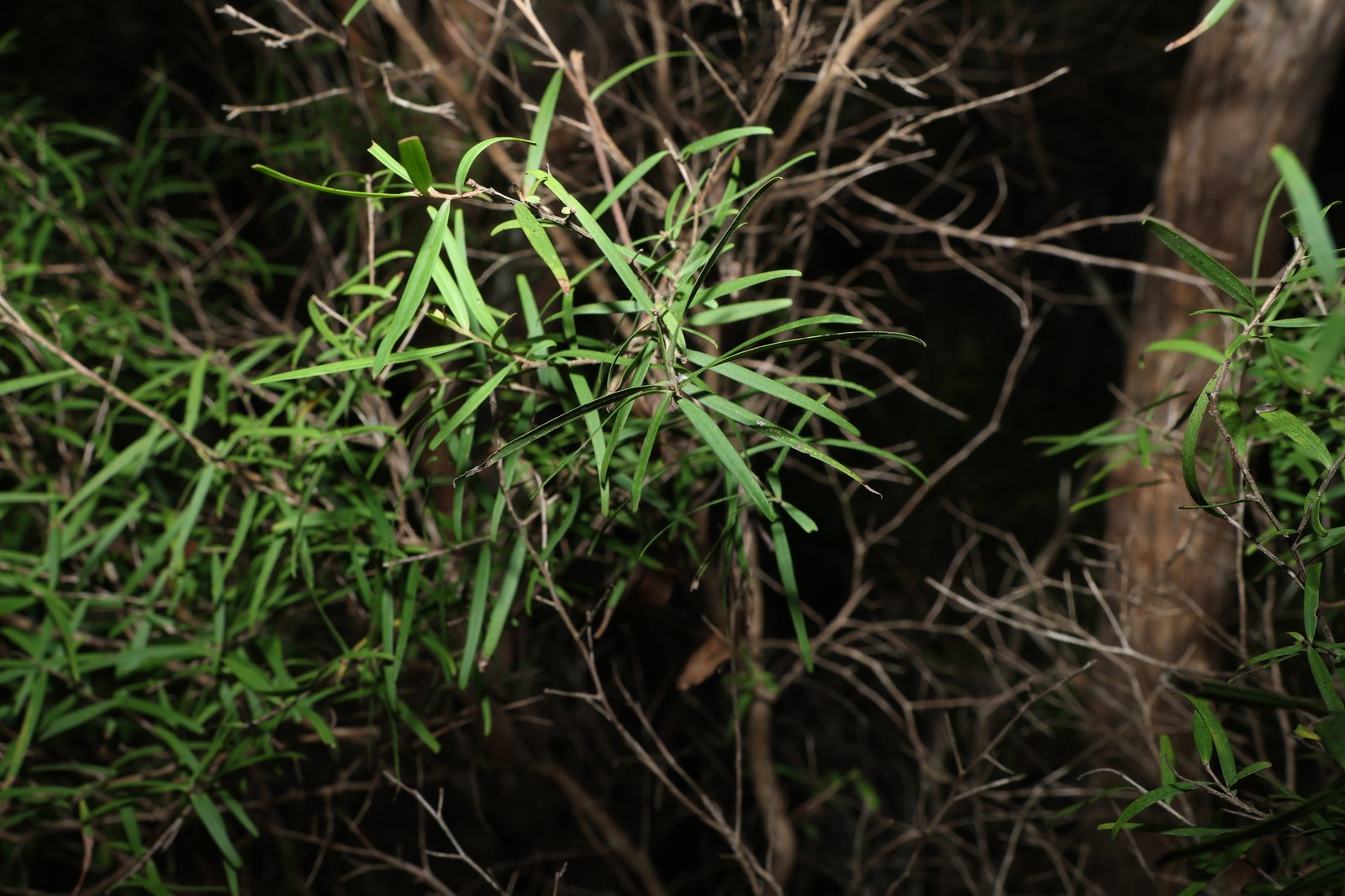
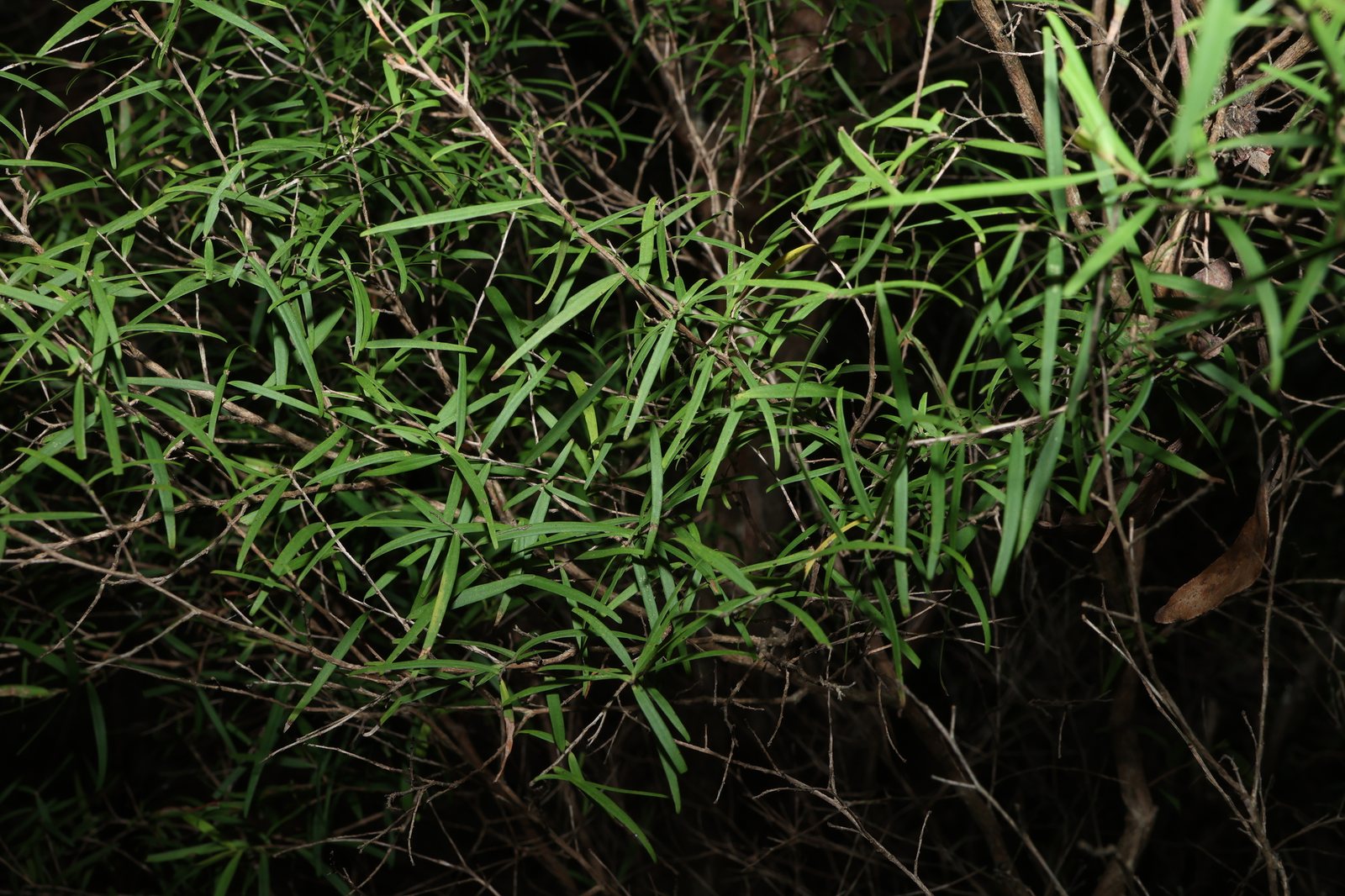
At a glance
- Sun
- Full sun for dense growth and good flowering; tolerates light partial shade.
- Water
- Water regularly while establishing. Once established, it tolerates short dry spells, but benefits from deep watering during prolonged drought.
- Soil
- Well-drained, acidic to neutral soil; tolerates sandy or loamy ground. Avoid waterlogged soil and strongly alkaline conditions.
- Height
- 15-20 ft (4.5-6 m)
- Spread
- 10-15 ft (3-4.5 m)
- Flowers
- Small white, five-petalled flowers in late spring and summer.
- Foliage
- Evergreen. Narrow green leaves with a strong lemon scent when rubbed or crushed; new growth may be coppery.
- Growth
- Moderate to fast in warm conditions with adequate moisture.
- Care needed
- Medium
The year at a glance
- Pollinators
- Drought tolerant
- Heat tolerant
- Wildlife
- Low allergen
- Fragrant
| J | F | M | A | M | J | J | A | S | O | N | D | |
|---|---|---|---|---|---|---|---|---|---|---|---|---|
| Flowers | ||||||||||||
| Fruit | ||||||||||||
| Plant |
Northern hemisphere months. In Australia, shift them by six.
- Difficulty
- Moderate
- Toughness
- Needs looking after
Will it suit your garden?
Pick your zone, country, light and whether you have pets.
Full sun is 6 or more hours of direct sun a day, part shade 3 to 6 hours, shade under 3.
How it grows
Planting day
7 ft (2 m)
After 1 year
7 ft (2.2 m)
After 2 years
8 ft (2.4 m)
After 3 years
9 ft (2.6 m)
After 5 years
10 ft (3 m)
About 16 years to full size.
From a typical nursery size, at an average rate for this kind of plant. A rule of thumb, not a forecast.
Good to know
- Cats and dogs
- Safe
- Native to
- Australia
- Growth rate
- Fast
Care
Jobs through the year
- WaterApr–May, Sep–Oct, every 14 days
- Water established outdoor plants when dry; check young plants and containers more frequently.
- WaterJun–Aug, every 7 days
- Water deeply during dry spells, letting the surface dry slightly; pots need more frequent checks.
- WaterJan–Mar, Nov–Dec, every 14 days
- Check frost-free overwintered pots and water sparingly as compost dries; never leave standing in water.
- FeedApr–May
- If growth is weak, apply a modest amount of low-phosphorus native-plant fertiliser.
- MulchMay
- Renew organic mulch over the root area, keeping it clear of the trunk.
- PruneJul–Aug
- After flowering, lightly shorten leafy shoots; avoid hard cuts into old, bare wood.
- ProtectJan–Apr, Oct–Dec
- In zones 6–7, keep in a container and overwinter in bright, frost-free shelter.
- Water deeply through the first growing season, allowing the surface soil to dry slightly between waterings.
- Spread organic mulch over the root area, keeping it clear of the trunk.
- If growth is weak, apply a modest amount of low-phosphorus native-plant fertiliser in spring.
- In cold regions, grow in a large container with free-draining compost and move it into bright, frost-free shelter for winter.
- Give container plants regular summer watering, but never leave the pot standing in water.
Pruning. Lightly trim leafy shoots after flowering to maintain a dense screen or balanced crown. Remove dead or crossing branches, but avoid cutting hard into old, bare wood because regrowth can be unreliable.
Harvest
Pick a few healthy leaves once the plant is established and making strong growth; fresh or dried leaves are used sparingly to flavour tea and food. Choose fully expanded, aromatic leaves from unsprayed plants, and do not substitute concentrated essential oil for leaves.
Through the year
- Spring
- Plant after frost risk has passed, or repot container plants if their roots are crowded.
- Spring
- Renew mulch and feed lightly only if growth needs support.
- Summer
- Check soil moisture during hot weather, especially in containers and around newly planted trees.
- After flowering
- Lightly shorten leafy shoots and remove damaged or crossing branches.
- Late summer
- Take semi-ripe cuttings from healthy, non-flowering shoots.
- Autumn
- Move container plants under bright, frost-free cover before cold nights arrive.
- Winter
- Keep sheltered container plants just moist and check regularly for scale insects.
In the garden
- Grow as an informal evergreen screen where there is room for its mature width.
- Train as a small, multi-stemmed tree to reveal the trunk and create light shade beneath the canopy.
- Place near a path or seating area where leaves can be rubbed for their lemon scent.
- Combine with bottlebrushes, westringias and lomandras in a mild-climate Australian planting.
- Use a large movable container in a sheltered courtyard where winter protection is practical.
Garden styles it suits: Australian native, Sensory garden, Wildlife garden, Pollinator garden, Modern courtyard and Edible landscape.
Plant it with: Coastal rosemary, Bottlebrush, Lomandra, Kangaroo paw and Native violet.
Wildlife: Flowers provide nectar and pollen for bees and other visiting insects. Dense branching offers shelter for small birds.
Problems to watch for
- Root rot in poorly drained soil: improve drainage before planting, avoid low wet spots and empty container saucers.
- Scale insects and associated sooty mould: inspect stems and leaf undersides, remove small infestations by hand and use a labelled horticultural oil if needed.
- Myrtle rust where present: watch for bright yellow-orange pustules on young growth, avoid moving affected plants and follow local plant-health guidance.
- Frost scorch or dieback: choose a sheltered site, protect young plants during cold snaps and keep container plants frost-free.
Safety
Not generally known to be toxic as a garden plant, and the leaves have culinary uses, but species-specific safety information for cats, dogs and horses is limited. Do not encourage pets to eat the foliage. Concentrated essential oil should not be swallowed or applied to pets; it can be harmful to people and animals.
Where it spreads. Reported invasive in South Africa, including parts of the Western Cape. Check local restrictions before planting there, and prevent seedlings from spreading into nearby natural vegetation.
Easily confused with
Lemon myrtle (Backhousia citriodora)
Has much larger, broader leaves arranged in opposite pairs and clusters of creamy flowers, rather than narrow leaves and small, open white tea-tree flowers.
Lemon-scented paperbark (Melaleuca citrolens)
Has papery bark and fluffy flower heads made up of conspicuous stamens, rather than distinct five-petalled flowers.
Mānuka (Leptospermum scoparium)
Usually has shorter, stiffer, sharply pointed leaves without the strong lemon scent; garden forms often have pink or red flowers.
The name
Leptospermum means 'slender seed', petersonii commemorates W. J. Peterson, and the common name refers to the lemon scent released by the leaves.
Propagation. Take semi-ripe cuttings in late summer and root them in a free-draining medium with gentle warmth and humidity. Seed is another option, but seedlings may vary in scent and growth habit.
Checked against open data
- Accepted botanical name
- Leptospermum petersonii
- In the US and Canada
- Introduced in Hawaii.
- Native range
- New South Wales and Queensland.
Sources: GBIF (CC BY 4.0), USDA PLANTS and Trefle (CC BY 4.0). The care and design notes are LandscapeGPT's own.
See it in your own yard.
Upload a photo of your yard and see it redesigned with plants that suit your climate, each checked against your zone.