Little Gem magnolia
Magnolia grandiflora 'Little Gem'. Family Magnoliaceae. Tree.
Also called Little Gem southern magnolia, Dwarf southern magnolia.
Little Gem is a compact, upright southern magnolia with glossy evergreen leaves and large, fragrant white flowers, often produced while the tree is still young. It grows more slowly and stays smaller than the species, but it is still a substantial tree rather than a permanently small shrub.
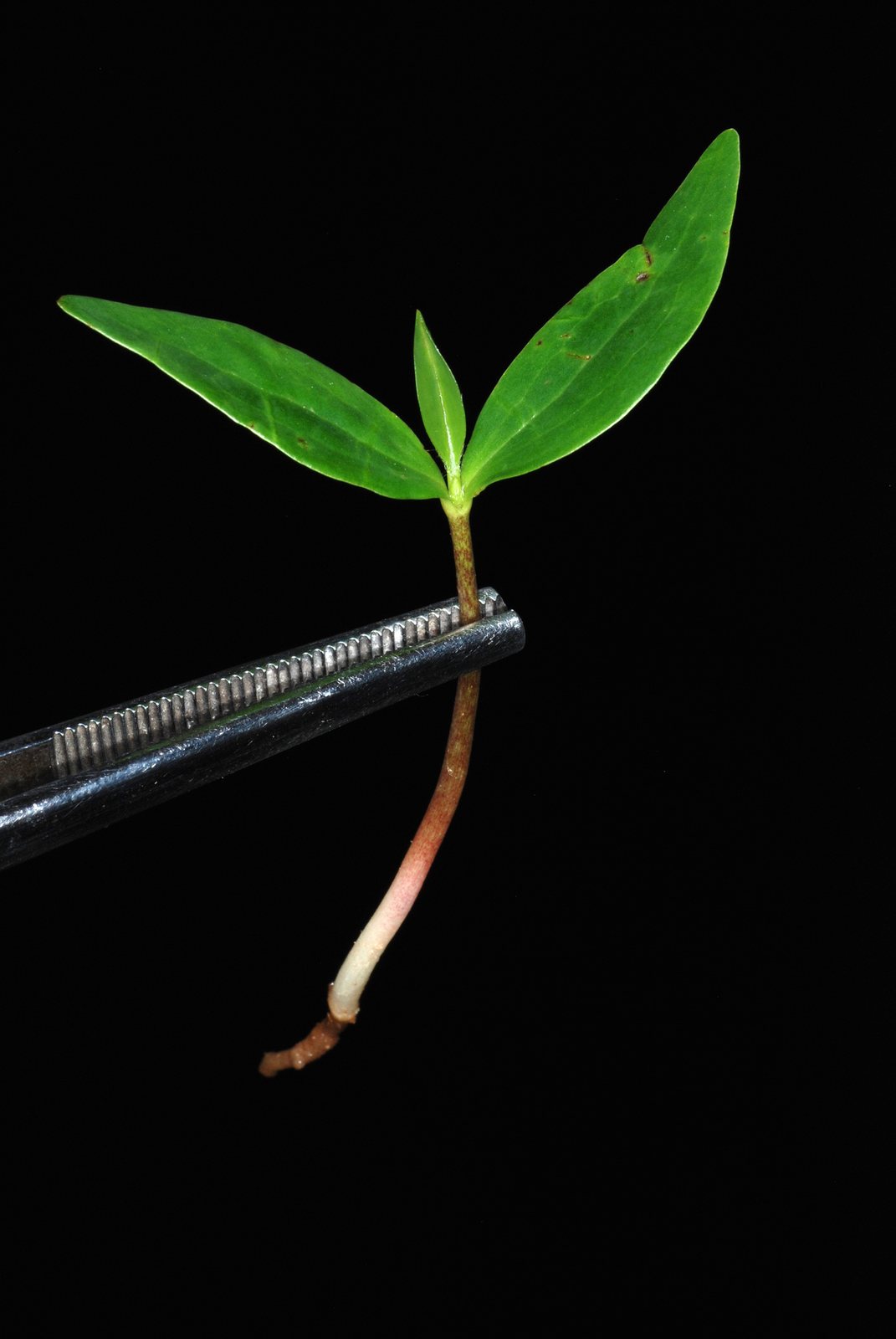
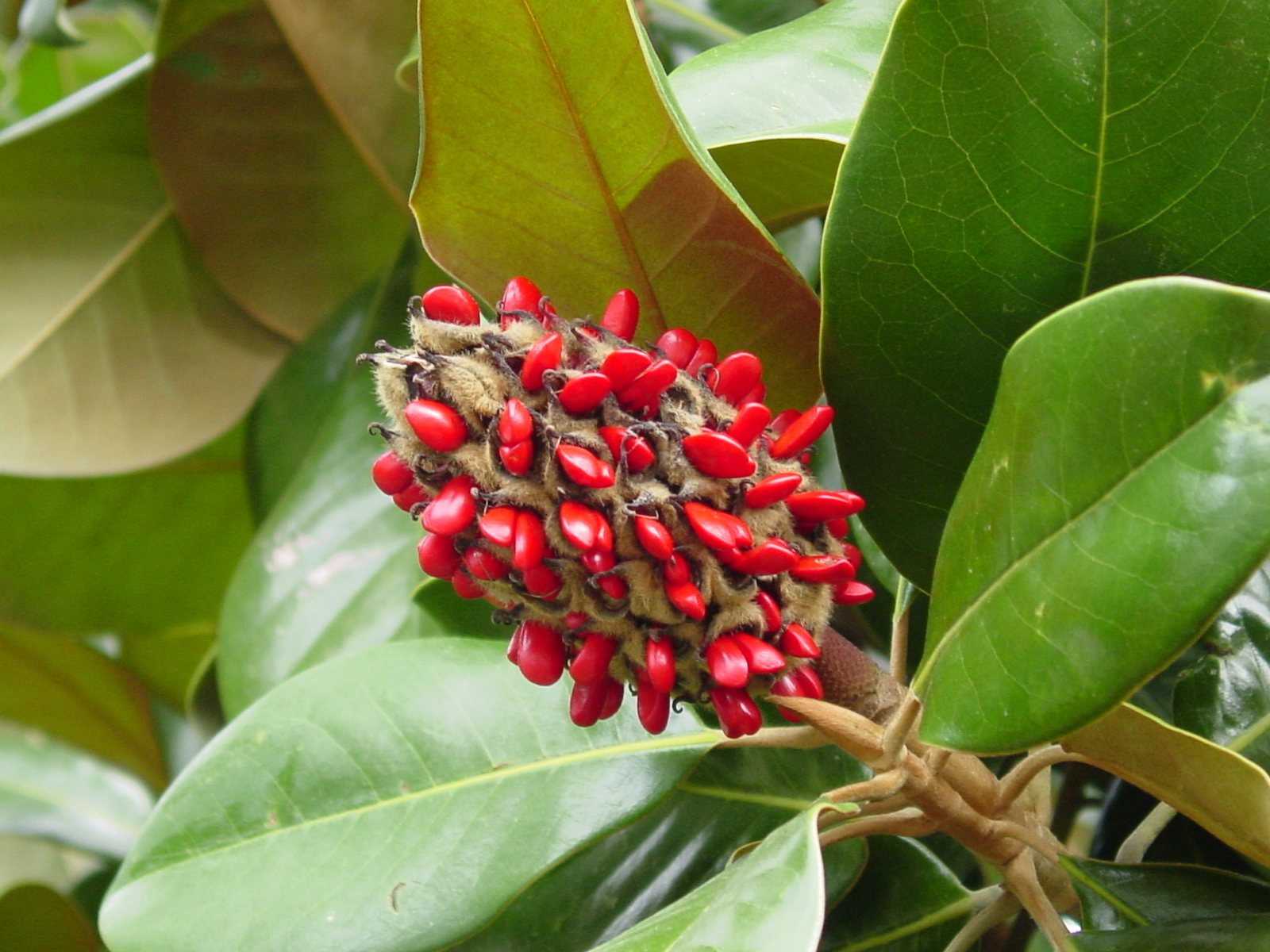
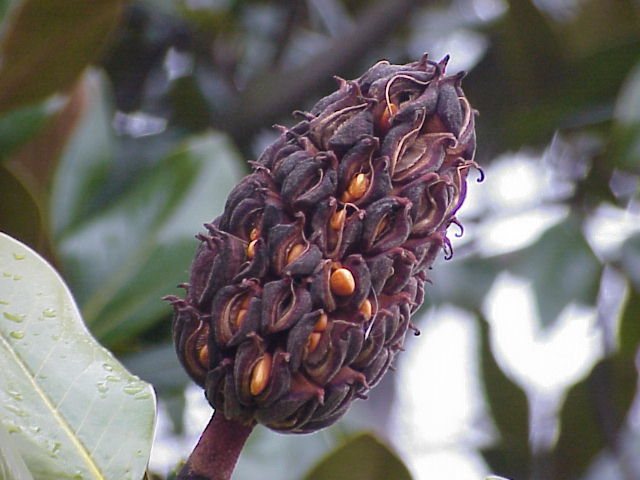
At a glance
- Sun
- Full sun to partial shade; flowering is best in sun. In cooler climates, choose a warm position sheltered from cold, drying winds.
- Water
- Water regularly while establishing, keeping the root zone moist but not waterlogged. Established trees tolerate short dry spells, but need deep watering during prolonged drought.
- Soil
- Moist, well-drained, humus-rich soil, preferably acidic to neutral. Avoid waterlogged ground and very chalky soil, which can cause yellow leaves.
- Height
- 20-25 ft (6-7.6 m), sometimes taller with age
- Spread
- 10-15 ft (3-4.6 m)
- Flowers
- Large, fragrant, creamy-white flowers from late spring through summer, with occasional flowers into autumn in warm climates.
- Foliage
- Evergreen. Leathery, glossy dark-green leaves with rusty-brown felt underneath; smaller and more closely spaced than those of typical southern magnolia. Older leaves shed mainly in spring and early summer.
- Growth
- Slow to moderate; growth is faster in warm climates with reliable moisture.
- Care needed
- Medium
The year at a glance
- Pollinators
- Heat tolerant
- Wildlife
- Low allergen
- Fragrant
| J | F | M | A | M | J | J | A | S | O | N | D | |
|---|---|---|---|---|---|---|---|---|---|---|---|---|
| Flowers | ||||||||||||
| Fruit | ||||||||||||
| Plant |
Northern hemisphere months. In Australia, shift them by six.
- Difficulty
- Moderate
- Toughness
- Fairly tough
Will it suit your garden?
Pick your zone, country, light and whether you have pets.
Full sun is 6 or more hours of direct sun a day, part shade 3 to 6 hours, shade under 3.
How it grows
Planting day
7 ft (2 m)
After 1 year
7 ft (2.2 m)
After 2 years
8 ft (2.5 m)
After 3 years
9 ft (2.7 m)
After 5 years
10 ft (3.2 m)
About 20 years to full size.
From a typical nursery size, at an average rate for this kind of plant. A rule of thumb, not a forecast.
Good to know
- Cats and dogs
- Safe
- Native to
- the US
- Growth rate
- Moderate
Care
Jobs through the year
- WaterApr–May, Sep–Oct, every 14 days
- Deep-water established trees if soil is dry; check young root balls more often.
- WaterJun–Aug, every 7 days
- Water deeply during prolonged dry spells, skipping when rain keeps the roots moist.
- MulchApr
- Maintain 5–8 cm of organic mulch over shallow roots, clear of the trunk.
- PruneJul–Aug
- After the main flowering flush, remove damaged branches and lightly shorten stray shoots.
- ProtectJan–Mar, Nov–Dec
- Shelter young trees from severe frost and drying winds; not reliably hardy in zone 6.
- Plant with the root flare at soil level, allowing room for its eventual canopy and shallow, spreading roots.
- Water deeply during dry weather for the first two growing seasons; check the root ball rather than watering by a fixed schedule.
- Apply 2-3 in (5-8 cm) of organic mulch over the root zone, keeping it clear of the trunk.
- Feed lightly in spring only if growth is weak or a soil test indicates a deficiency; avoid heavy lawn feeding beneath the canopy.
- Avoid digging beneath the tree or repeatedly moving it; its fleshy roots resent disturbance.
Pruning. Prune lightly after the main flowering flush in summer to remove damaged branches or shorten stray shoots. Retain lower branches if space allows, and avoid hard pruning or topping.
Through the year
- Spring
- Plant in colder regions once the soil is workable, and water the root ball thoroughly.
- Spring
- Refresh mulch and check pale foliage before feeding; natural shedding of older leaves is normal.
- Summer
- Water deeply during prolonged dry spells, especially around newly planted trees.
- Summer
- After the main flowering flush, remove damaged branches and make any minor shaping cuts.
- Autumn
- Plant in mild climates while the soil remains warm; clear fallen leaves from paths and drains.
- Winter
- Check young trees for wind rock and protect recently planted specimens from severe cold, drying winds.
In the garden
- Use as a compact specimen tree in a lawn or generous border, leaving room for the mature canopy.
- Plant as an evergreen screen where year-round privacy is needed, allowing enough space to avoid constant clipping.
- Place near a terrace to enjoy the scented flowers, but keep it far enough back that fallen leaves and seed cones do not clutter seating areas.
- Combine with camellias and shade-tolerant groundcovers for a layered evergreen planting, keeping companions toward the canopy edge.
Garden styles it suits: Southern, Traditional, Architectural minimal, Formal, Sensory garden and White garden.
Plant it with: Camellias, Azaleas, Oakleaf hydrangeas, Lilyturf, Cast iron plant and Autumn fern.
Wildlife: Flowers provide pollen for beetles and other insects. Birds may eat the red-coated seeds, and the dense evergreen canopy offers shelter.
Problems to watch for
- Yellow leaves with green veins: often caused by alkaline soil or poor root conditions. Check soil pH and drainage before applying iron treatments or fertilizer.
- Magnolia scale: look for raised bumps on stems, sticky honeydew and black sooty mould. Remove heavily infested small shoots and use a locally approved horticultural oil when crawlers are active, following the label.
- Leaf scorch and winter browning: reduce exposure to cold, drying winds, maintain mulch and water during dry periods when the ground is not frozen.
- Root rot and decline in wet ground: improve drainage before planting, keep the root flare exposed and avoid frequent watering of already wet soil.
Safety
Not known to be toxic to cats, dogs, horses or people. No part is recognized as a significant poisoning hazard, although eating leaves, bark or seed cones may cause stomach upset or choking.
Easily confused with
Southern magnolia (Magnolia grandiflora)
The typical species develops into a much larger tree with a broader crown and generally larger leaves; 'Little Gem' has smaller leaves and a denser, more upright habit.
Teddy Bear magnolia (Magnolia grandiflora 'Southern Charm')
Usually has a denser, more conical crown and broader, more strongly cupped leaves with conspicuous brown undersides. Young plants can be difficult to distinguish without a reliable label.
Sweetbay magnolia (Magnolia virginiana)
Has thinner leaves with silvery rather than rusty-brown undersides, smaller flowers, and foliage that may be deciduous in colder climates.
The name
Magnolia honours the French botanist Pierre Magnol, grandiflora means large-flowered, and 'Little Gem' refers to this cultivar's smaller stature.
Propagation. Named plants must be propagated vegetatively to retain their characteristics. Semi-ripe cuttings, air layering or grafting are possible, but rooting can be slow and difficult; seed-grown plants will not reliably resemble 'Little Gem'.
Checked against open data
- Accepted botanical name
- Magnolia grandiflora
- In the US and Canada
- Native in the lower 48 states. Introduced in Puerto Rico.
- Native range
- Alabama, Florida, Georgia, Louisiana, Mississippi, North Carolina, South Carolina and Texas.
- Measured
- Soil pH 4.5 to 6.5. Average height 2450 cm.
Sources: GBIF (CC BY 4.0), USDA PLANTS and Trefle (CC BY 4.0). The care and design notes are LandscapeGPT's own.
See it in your own yard.
Upload a photo of your yard and see it redesigned with plants that suit your climate, each checked against your zone.