Little Princess spirea
Spiraea japonica 'Little Princess'. Family Rosaceae. Shrub.
Also called Little Princess Japanese spirea, Japanese meadowsweet 'Little Princess'.
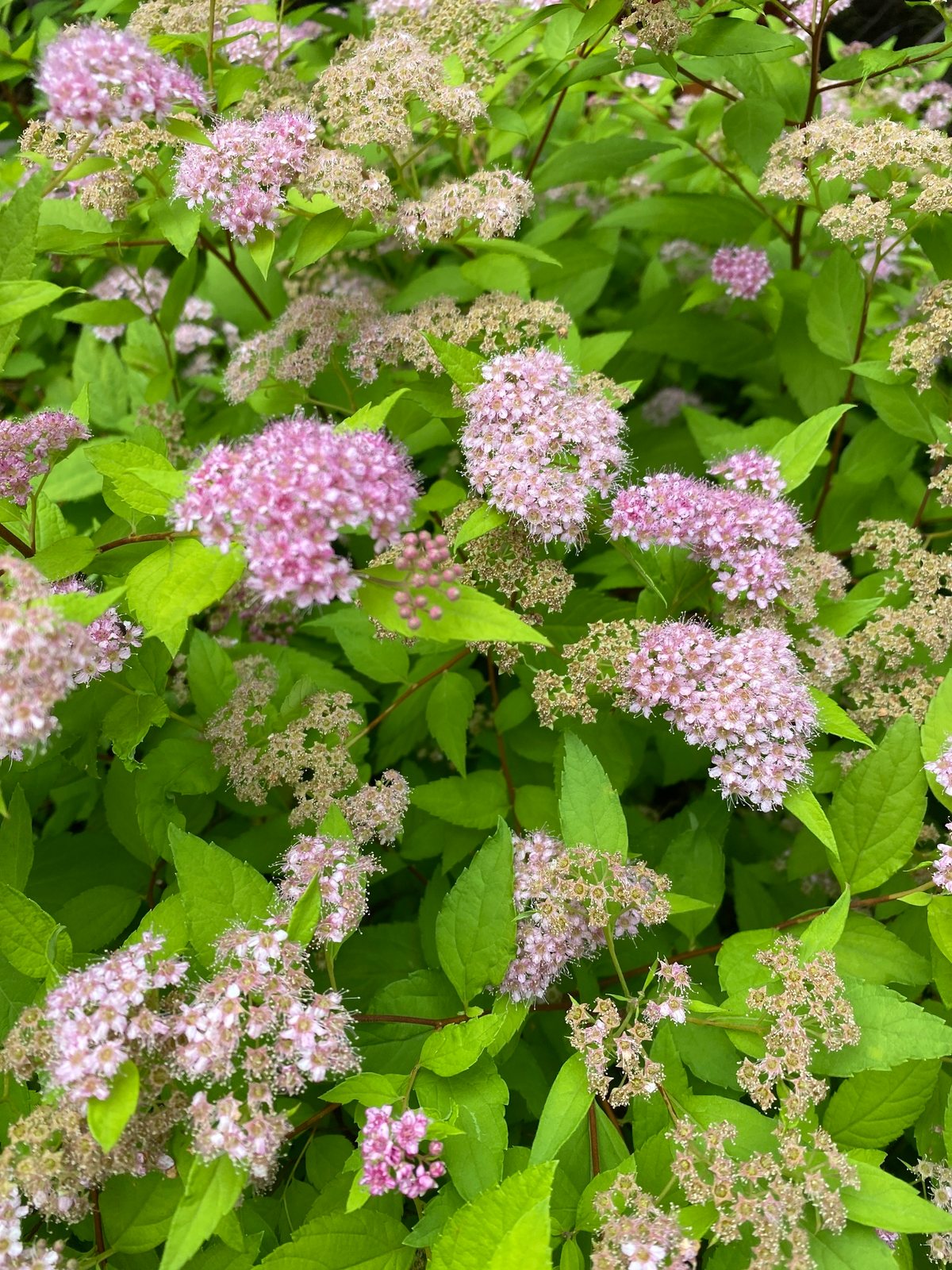
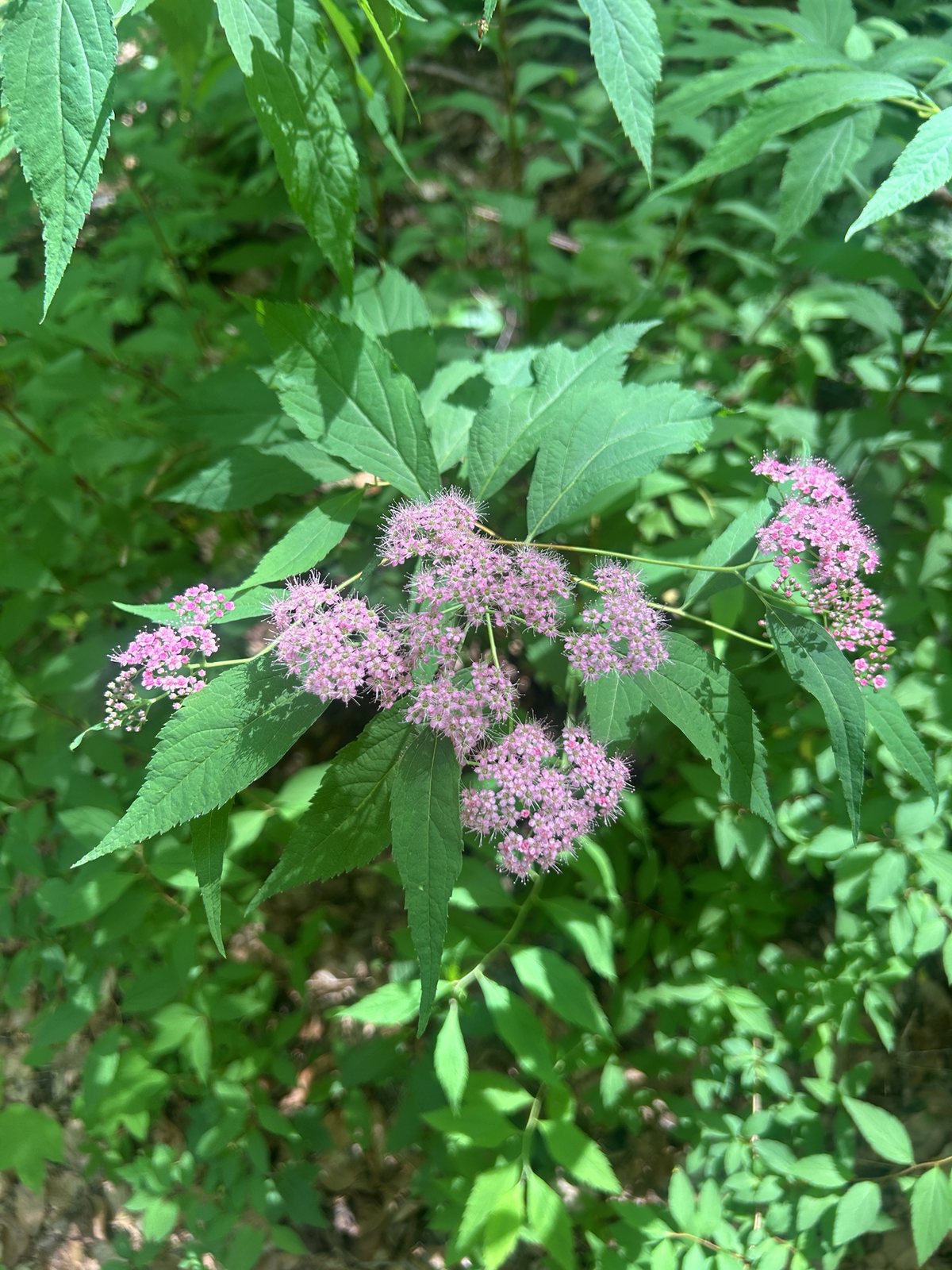
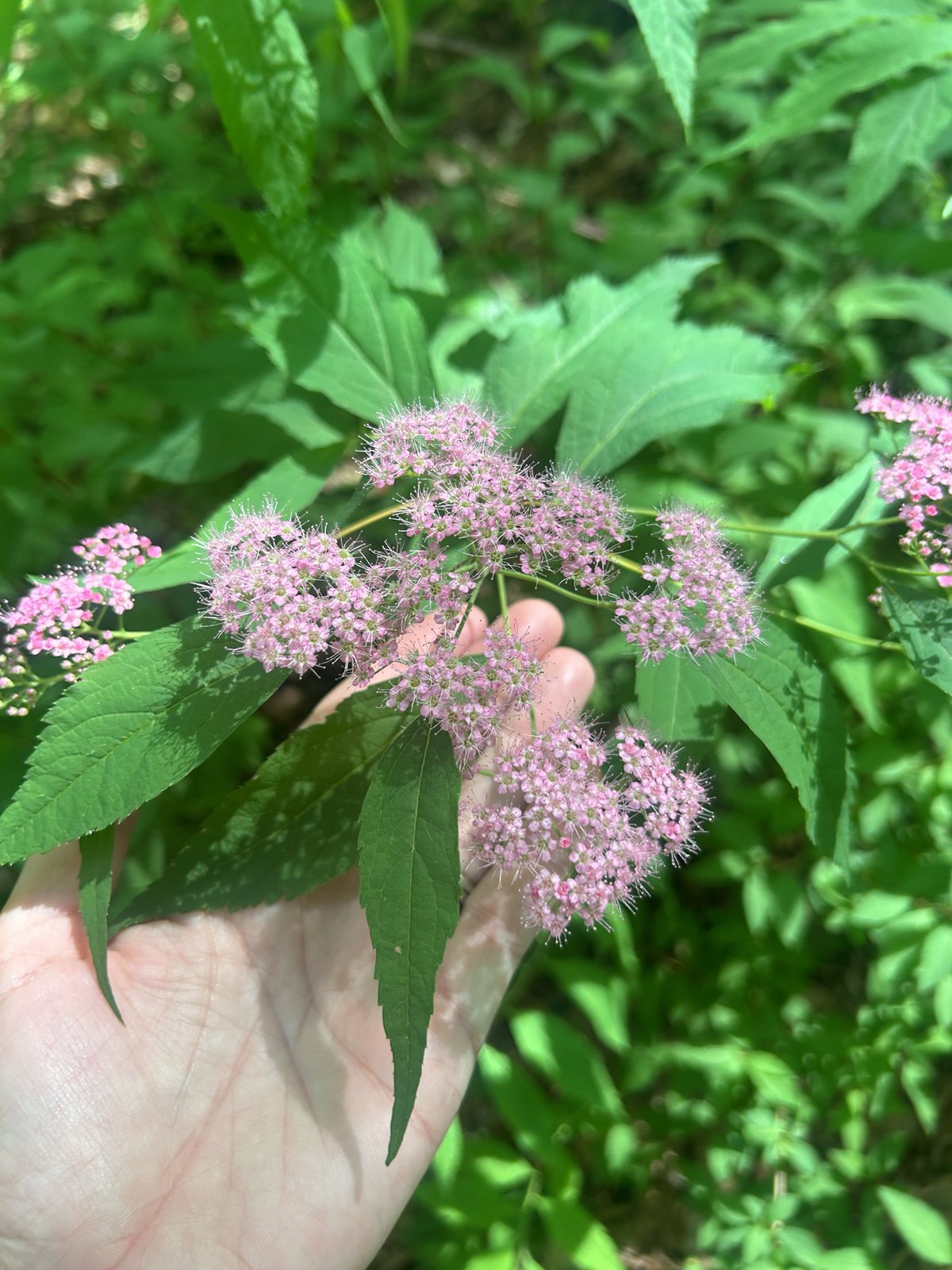
Little Princess spirea (Spiraea japonica 'Little Princess') is a compact, deciduous shrub with a rounded shape and clusters of pale pink summer flowers. Gardeners grow it for low borders, informal edging and easy-care groups, but Japanese spirea is invasive in parts of North America.
At a glance
- Sun
- Full sun gives the most flowers and densest growth; tolerates partial shade.
- Water
- Water regularly during the first growing season. Once established, water during prolonged dry spells; avoid persistently wet soil.
- Soil
- Average, well-drained soil, from slightly acidic to slightly alkaline. Tolerates clay if drainage is adequate.
- Height
- 2-3 ft (0.6-0.9 m)
- Spread
- 3-4 ft (0.9-1.2 m)
- Flowers
- Flat-topped clusters of pale pink flowers in early to midsummer, sometimes followed by scattered flowers after deadheading.
- Foliage
- Small, oval, finely toothed green leaves; autumn colour may include yellow, orange and reddish tones.
- Growth
- Moderate
- Care needed
- Low
The year at a glance
- Pollinators
- Deer resistant
- Cold hardy
- Low allergen
| J | F | M | A | M | J | J | A | S | O | N | D | |
|---|---|---|---|---|---|---|---|---|---|---|---|---|
| Flowers | ||||||||||||
| Plant |
Northern hemisphere months. In Australia, shift them by six.
- Difficulty
- Easy
- Toughness
- Very tough
Will it suit your garden?
Pick your zone, country, light and whether you have pets.
Full sun is 6 or more hours of direct sun a day, part shade 3 to 6 hours, shade under 3.
How it grows
Planting day
1.6 ft (0.5 m)
After 1 year
1.8 ft (0.55 m)
After 2 years
2 ft (0.6 m)
After 3 years
2.1 ft (0.65 m)
After 5 years
2.5 ft (0.75 m)
full size
About 5 years to full size.
From a typical nursery size, at an average rate for this kind of plant. A rule of thumb, not a forecast.
Good to know
- Cats and dogs
- Safe
- Invasive in
- the US
- In the garden
- Spreads vigorously: plan to contain it.
- Growth rate
- Moderate
Care
Jobs through the year
- WaterApr–May, Sep–Oct, every 14 days
- Water established shrubs only when the root zone is dry; water new shrubs more often.
- WaterJun–Aug, every 7 days
- Soak the root zone during prolonged dry spells; skip watering when soil remains moist.
- PruneFeb–Mar
- Remove dead wood and cut the oldest stems to ground level before new growth.
- MulchMar–Apr, Oct
- Top up organic mulch to 5–8 cm, keeping stems clear; use compost in spring.
- DeadheadJun–Aug, every 14 days
- Clip fading flower clusters before seed develops to limit spread and encourage rebloom.
- Water deeply when the root zone starts to dry during the first growing season.
- Apply 2-3 in (5-8 cm) of organic mulch, keeping it clear of the stems.
- Top-dress with compost in spring; additional fertiliser is usually unnecessary.
- Remove faded flower clusters before seeds develop, especially near natural areas.
- Check around the shrub for seedlings and pull them while small.
Pruning. In late winter or early spring, remove dead wood and cut the oldest stems to ground level to keep the shrub open and vigorous; flowers form on new growth. Lightly trim faded flowers after the main flush if you want a tidier shape and possible repeat bloom.
Through the year
- Late winter
- Remove dead, damaged and oldest stems before new growth starts.
- Spring
- Plant while soil is workable and not waterlogged; water thoroughly and mulch.
- Late spring
- Check tender shoots for aphids and rinse small colonies off with water.
- Early summer
- Water newly planted shrubs during dry weather, soaking the root zone.
- Midsummer
- Clip off fading flower clusters before seed develops.
- Autumn
- Pull unwanted seedlings and replenish mulch where needed.
In the garden
- Repeat along a sunny path as a low, informal flowering edge.
- Plant in small groups at the front of a mixed shrub border for rounded structure.
- Combine with catmint and hardy geraniums for a soft pink-and-blue summer border.
- Use beneath taller, open shrubs where it still receives several hours of direct sun.
Garden styles it suits: Cottage garden, Traditional, English country, Pastel border, Low-maintenance and Small-space.
Plant it with: Catmint, Hardy geranium, Salvia, Daylily, Lady's mantle and Feather reed grass.
Wildlife: Flowers attract bees, hoverflies and other small insects. It is not a substitute for locally native shrubs where supporting native food webs is the main goal.
Problems to watch for
- Aphids can cluster on soft shoots; wash them off with a firm spray of water and avoid excessive nitrogen feeding.
- Powdery mildew may coat leaves in crowded or shaded sites; improve airflow, thin congested stems and provide more sun.
- Poor flowering and loose growth usually indicate too much shade; move the shrub to a sunnier position.
- Root rot can develop in waterlogged soil; improve drainage or replant in a better-drained site rather than watering repeatedly.
Safety
Not known to be toxic to people, cats, dogs or horses. No part is recognised as a significant poisoning hazard, but it is not an edible plant and eating plant material may cause stomach upset.
Where it spreads. Spiraea japonica spreads by seed and is listed as invasive in parts of the eastern United States, including the Mid-Atlantic, Southeast and Appalachians, with invasive populations also reported in parts of the Midwest. 'Little Princess' should not be assumed sterile; avoid planting where Japanese spirea is locally listed as invasive, especially near woodland edges and waterways.
Easily confused with
Goldmound spirea (Spiraea japonica 'Goldmound')
Similar compact habit and pink flowers, but its leaves are golden yellow rather than the green leaves of 'Little Princess'.
Anthony Waterer spirea (Spiraea japonica 'Anthony Waterer')
Usually taller and more upright, with deeper carmine-pink flowers rather than pale pink.
Bridal wreath spirea (Spiraea prunifolia)
A much larger shrub with long, arching branches and white spring flowers, rather than a compact mound with pink summer flowers.
The name
Spiraea comes from the Greek speira, meaning a wreath or coil, japonica means Japanese, and 'Little Princess' is the cultivar name.
Propagation. Take softwood cuttings in late spring or early summer, or hardwood cuttings during dormancy. Cuttings preserve the cultivar; seedlings may differ from the parent.
Checked against open data
- Accepted botanical name
- Spiraea japonica
- In the US and Canada
- Introduced in Canada and the lower 48 states.
- Native range
- China North-Central, China South-Central, China Southeast, Japan, Myanmar, Taiwan and Tibet.
- Measured
- Average height 138 cm.
Sources: GBIF (CC BY 4.0), USDA PLANTS and Trefle (CC BY 4.0). The care and design notes are LandscapeGPT's own.
See it in your own yard.
Upload a photo of your yard and see it redesigned with plants that suit your climate, each checked against your zone.