London plane
Platanus × hispanica. Family Platanaceae. Tree.
Also called London plane tree, Hybrid plane.
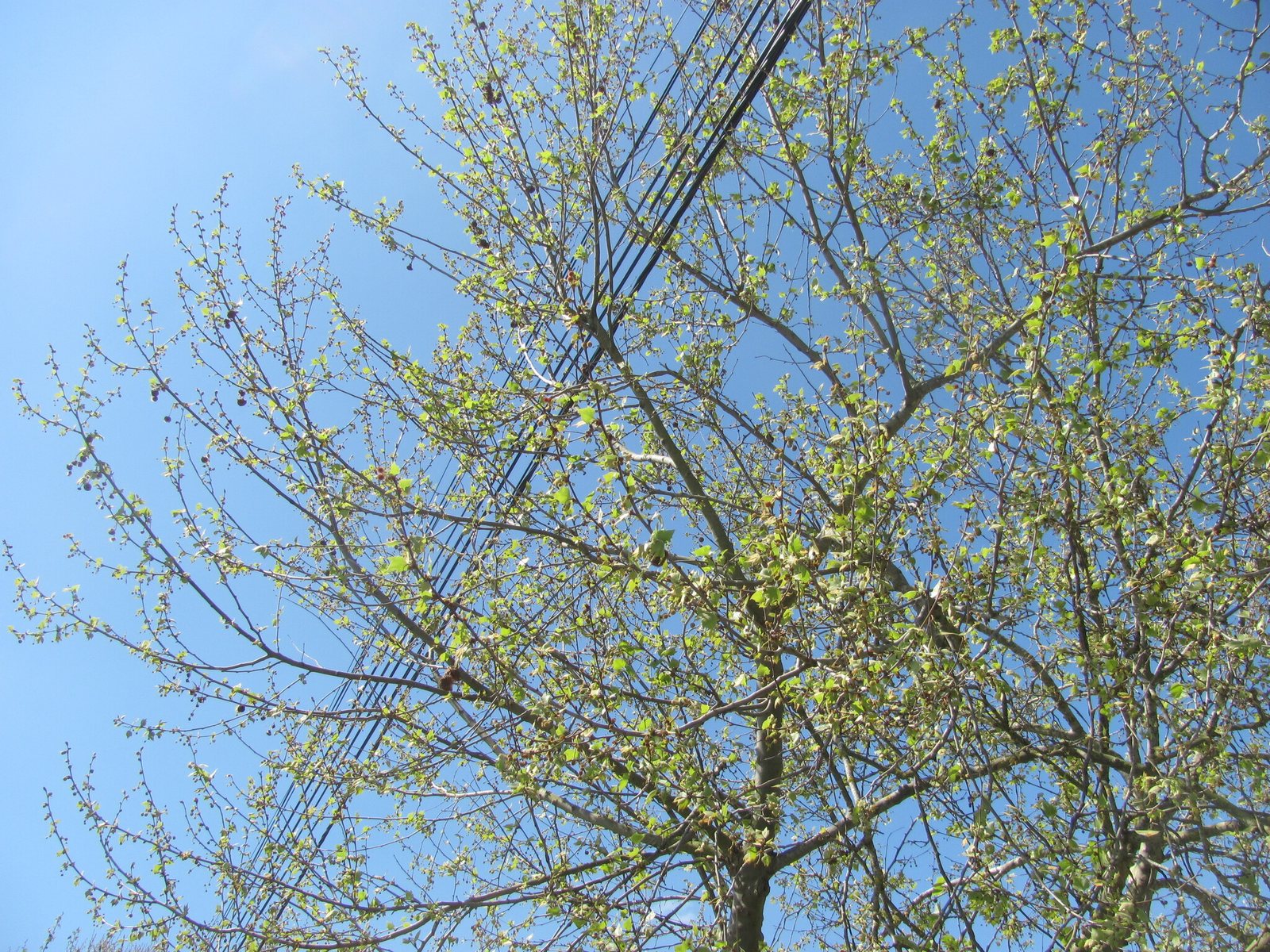
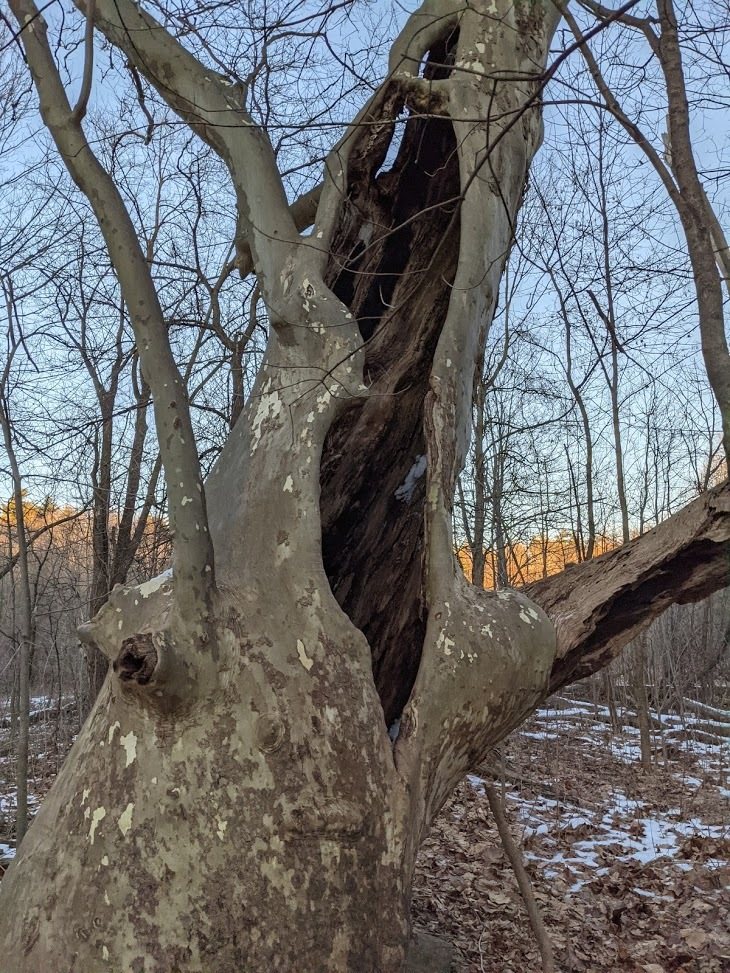
London plane is a very large deciduous tree grown for its broad shade canopy and mottled cream, olive and grey bark. It tolerates urban pollution and compacted ground better than many trees, but its eventual size, surface roots and heavy leaf fall make it unsuitable for most small gardens.
At a glance
- Sun
- Full sun; tolerates light shade but develops its best crown in an open position.
- Water
- Water regularly while establishing. Mature trees tolerate some drought, but grow best with access to moisture; prolonged drought can cause early leaf fall.
- Soil
- Deep, moisture-retentive, well-drained soil; tolerates clay, loam, sand and a broad pH range. Avoid persistently waterlogged ground.
- Height
- 65-100 ft (20-30 m)
- Spread
- 50-80 ft (15-24 m)
- Flowers
- Spring: small, inconspicuous reddish female and yellowish male flower heads; brown seed balls persist into winter.
- Foliage
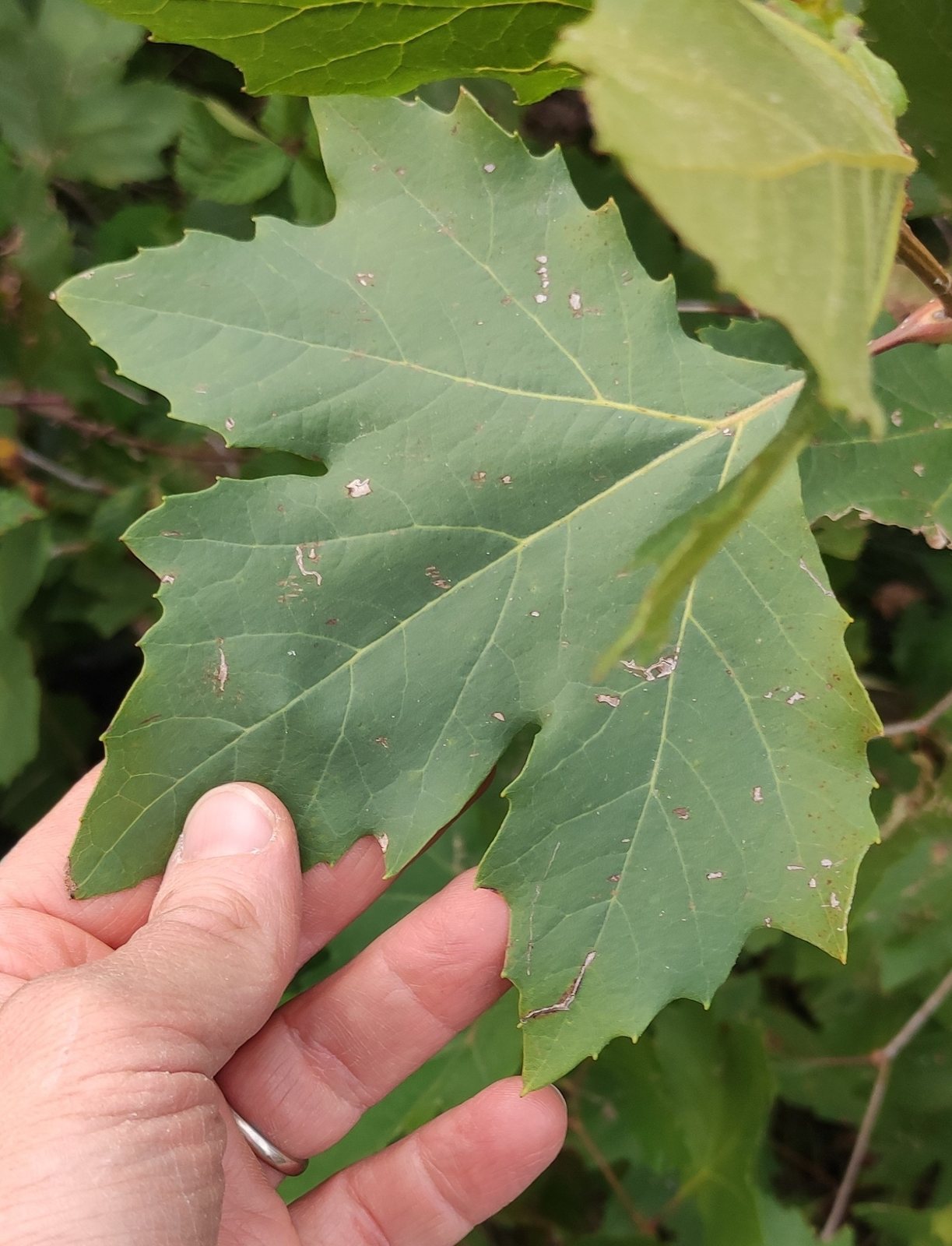
- Large, alternate, maple-like leaves with three to five pointed lobes; green in summer, turning yellow-brown in autumn.
- Growth
- Fast when young, especially in moist soil.
- Care needed
- Medium
The year at a glance
- Drought tolerant
- Heat tolerant
- Wildlife
| J | F | M | A | M | J | J | A | S | O | N | D | |
|---|---|---|---|---|---|---|---|---|---|---|---|---|
| Flowers | ||||||||||||
| Fruit | ||||||||||||
| Plant |
Northern hemisphere months. In Australia, shift them by six.
- Difficulty
- Moderate
- Toughness
- Very tough
Will it suit your garden?
Pick your zone, country, light and whether you have pets.
Full sun is 6 or more hours of direct sun a day, part shade 3 to 6 hours, shade under 3.
How it grows
Planting day
10 ft (3 m)
After 1 year
15 ft (4.7 m)
After 2 years
21 ft (6.4 m)
After 3 years
27 ft (8.1 m)
After 5 years
38 ft (11.5 m)
About 13 years to full size.
From a typical nursery size, at an average rate for this kind of plant. A rule of thumb, not a forecast.
Good to know
- Cats and dogs
- Safe
- Growth rate
- Fast
Care
Jobs through the year
- WaterApr–May, Sep–Oct, every 21 days
- Water established trees only during prolonged dry weather; young trees need more frequent watering.
- WaterJun–Aug, every 14 days
- Soak the root zone during prolonged drought to reduce stress and premature leaf fall.
- MulchMar–Apr
- Renew a broad grass-free organic mulch ring, leaving the trunk and root flare exposed.
- PruneJan–Feb, Dec
- Prune young trees only as needed for structure; have an arborist assess and handle mature limbs.
- Choose a site with room for the mature canopy and roots, well away from buildings, drains and paving.
- Water deeply during dry spells for the first two to three growing seasons, wetting the root ball and surrounding soil.
- Keep a broad, grass-free mulch ring, with mulch clear of the trunk.
- Stake only if the root ball is unstable; use flexible ties and remove supports once the tree is firmly rooted.
- Do not feed routinely; fertilise only where poor growth and soil testing indicate a deficiency.
- Arrange periodic arborist inspections for a mature tree over paths, seating or buildings.
Pruning. Prune young trees in winter dormancy to develop a sound framework, removing competing leaders and damaged or crossing branches. Have an arborist handle large limbs; pollarding must begin on a young tree and continue on a regular cycle, rather than starting by topping a mature tree.
Through the year
- Autumn
- Plant while the soil is workable and moist; in very cold climates, wait until spring.
- Winter
- Carry out formative pruning on young trees and check stakes and ties.
- Spring
- Renew the mulch ring and check emerging leaves for anthracnose damage.
- Summer
- Water young trees deeply during dry weather and inspect leaf undersides for lace bugs.
- Late summer
- Arrange an arborist inspection if upper branches show dieback or shed unexpectedly.
- Late autumn
- Collect fallen leaves from lawns and drains; compost healthy leaves or make leaf mould.
In the garden
- Use as a specimen shade tree in a large lawn, where its spreading crown has room to develop.
- Plant in widely spaced avenues on large properties for a strong, formal framework.
- Set against dark evergreen planting to highlight the pale, patchwork trunk in winter.
- Underplant an established tree with shade-tolerant groundcovers and spring bulbs, avoiding deep cultivation among its roots.
Garden styles it suits: Urban city garden, Architectural minimal, Formal, Grand estate, English manor and Winter interest.
Plant it with: Epimedium, Bigroot geranium, Hellebores, Liriope, Snowdrops and Hardy cyclamen.
Wildlife: The broad crown provides nesting and shelter for birds, and some seed-eating birds take the seeds. Its value to leaf-feeding insects varies by region and is generally lower than that of locally native trees.
Problems to watch for
- Anthracnose: cool, wet springs can cause blotched leaves, shoot dieback and early leaf fall. Collect fallen leaves, water stressed young trees and have dead branches removed; established trees often produce replacement foliage.
- Plane or sycamore lace bugs: pale stippling above and dark specks beneath leaves indicate feeding. Small infestations rarely need treatment; avoid broad-spectrum insecticides that kill predators and seek local advice for severe damage.
- Massaria disease: affected branches can decay and fail, particularly on mature, stressed trees. Damage may be hidden on the upper side of branches, so use a qualified arborist for inspection and removal.
- Root conflict: large surface roots can lift paving and compete strongly with nearby planting. Prevent this with generous siting; do not cut substantial roots without arborist advice.
Safety
Not known to be poisonous to people, cats, dogs or horses. Fine hairs from leaves, shoots and seed balls can irritate eyes, skin and airways, especially during pruning or dry leaf clearance; pollen can also trigger allergies.
Easily confused with
American sycamore (Platanus occidentalis)
Usually bears one seed ball per stalk, rather than the commonly paired balls of London plane; its leaves generally have shallower lobes. Individual trees can be difficult to separate.
Oriental plane (Platanus orientalis)
Usually has more deeply cut, narrower leaf lobes and three or more seed balls along a stalk; London plane generally has broader lobes and fewer balls.
Sycamore maple (Acer pseudoplatanus)
Has opposite leaves and paired winged seeds. London plane has alternate leaves and round, hanging seed balls.
The name
The common name reflects its long association with London's streets, where its tolerance of smoky urban conditions made it a widely planted tree.
Propagation. Usually propagated by dormant hardwood cuttings or nursery grafting. Seedlings vary because it is a hybrid and will not reliably reproduce the parent tree's characteristics.
Checked against open data
- Accepted botanical name
- Platanus hispanica
Sources: GBIF (CC BY 4.0). The care and design notes are LandscapeGPT's own.
See it in your own yard.
Upload a photo of your yard and see it redesigned with plants that suit your climate, each checked against your zone.