Macedonian scabious
Knautia macedonica. Family Caprifoliaceae. Perennial.
Also called Crimson scabious.
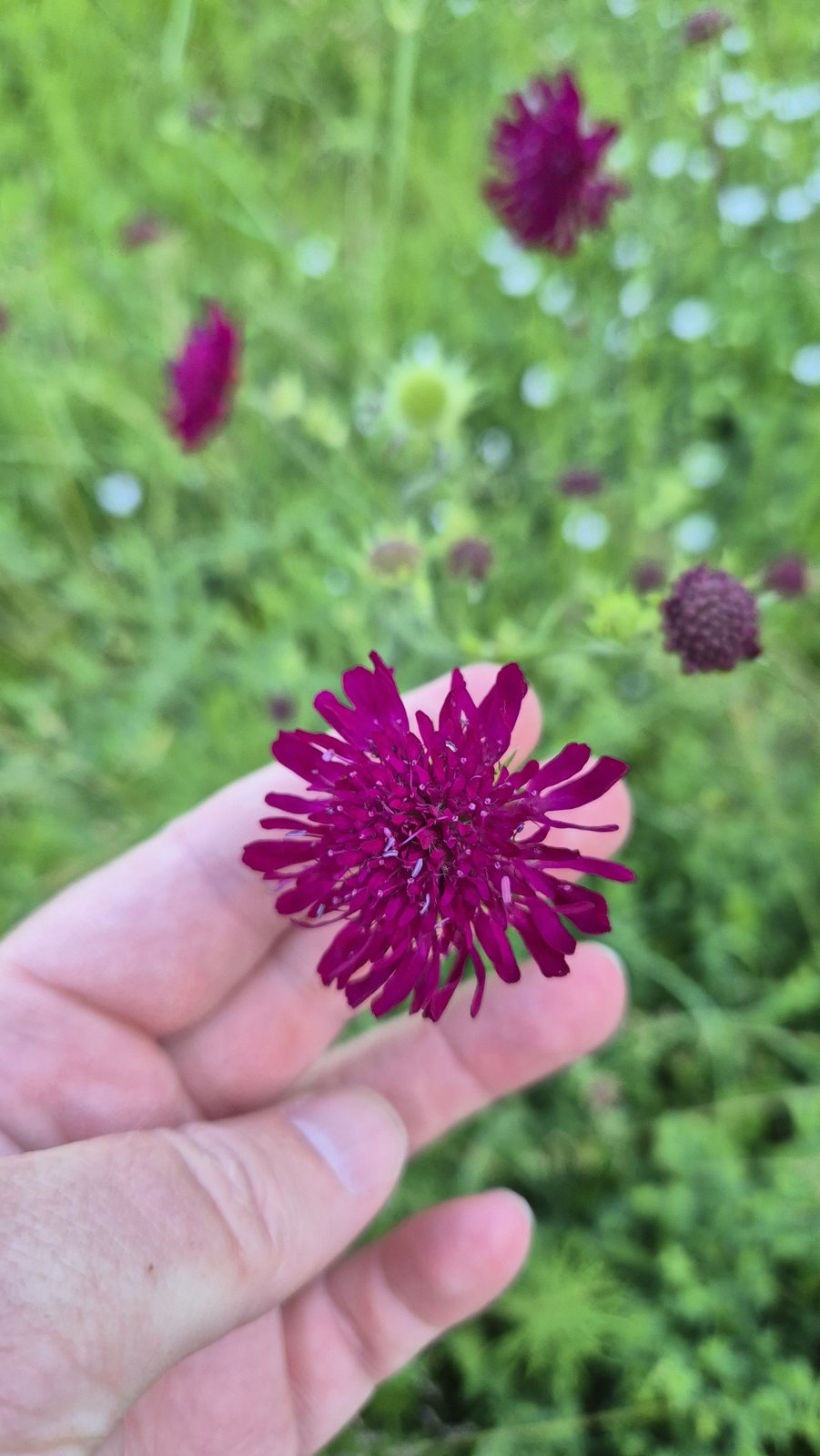
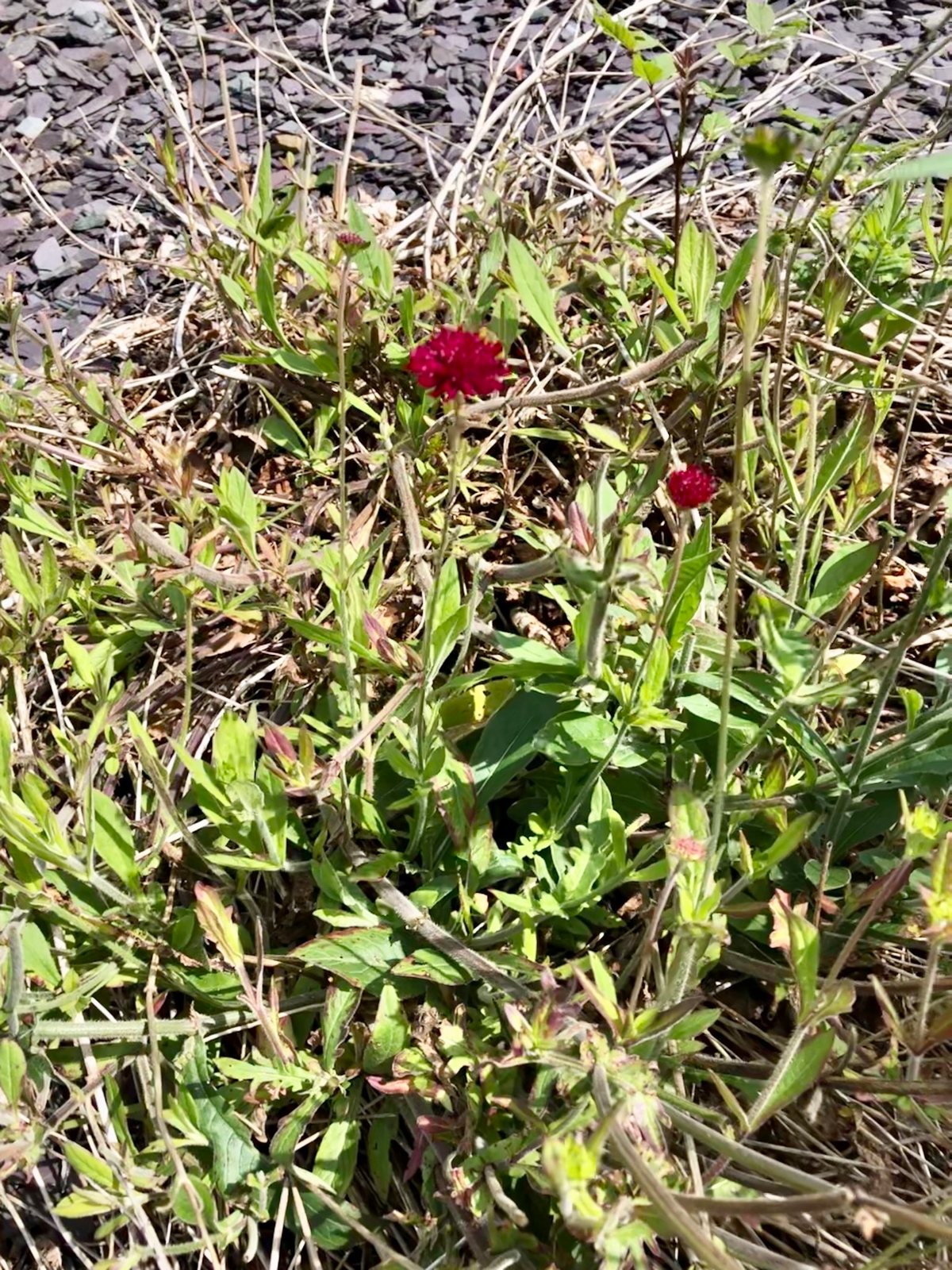
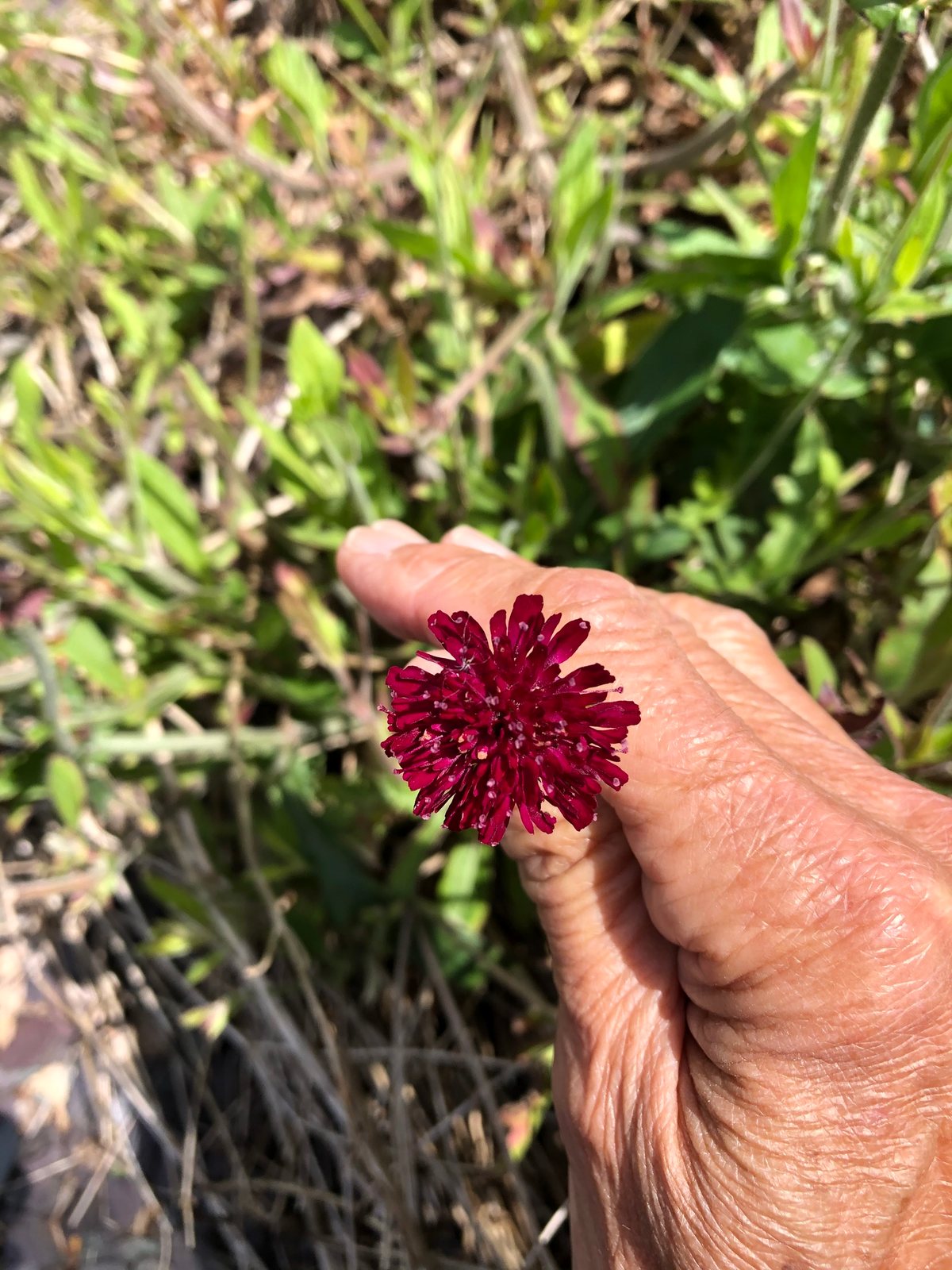
Macedonian scabious is a clump-forming perennial with wine-red pincushion flowers carried on slender, branching stems. Gardeners grow it for its long flowering season, airy habit and appeal to pollinating insects; it can be short-lived but often replaces itself through seedlings.
At a glance
- Sun
- Full sun; light afternoon shade is useful in very hot climates, but too much shade encourages floppy stems.
- Water
- Water regularly while establishing. Once established, water during prolonged dry spells; avoid persistently wet soil.
- Soil
- Well-drained, moderately fertile soil, including sandy, chalky or gravelly ground. Avoid waterlogged clay and heavily enriched soil.
- Height
- 2-3 ft (0.6-0.9 m)
- Spread
- 1-2 ft (0.3-0.6 m)
- Flowers
- Early summer into autumn, with rounded, deep crimson to burgundy flower heads.
- Foliage
- Green to grey-green, slightly hairy leaves form a basal clump; leaves higher on the stems are more deeply divided. Usually dies back in winter.
- Growth
- Moderate; often flowers in its first growing season from young plants.
- Care needed
- Low
The year at a glance
- Pollinators
- Drought tolerant
- Heat tolerant
- Low allergen
| J | F | M | A | M | J | J | A | S | O | N | D | |
|---|---|---|---|---|---|---|---|---|---|---|---|---|
| Flowers | ||||||||||||
| Fruit | ||||||||||||
| Plant |
Northern hemisphere months. In Australia, shift them by six.
- Difficulty
- Easy
- Toughness
- Very tough
Will it suit your garden?
Pick your zone, country, light and whether you have pets.
Full sun is 6 or more hours of direct sun a day, part shade 3 to 6 hours, shade under 3.
How it grows
Planting day
1 ft (0.3 m)
After 1 year
1.5 ft (0.45 m)
After 2 years
2 ft (0.6 m)
After 3 years
2.5 ft (0.75 m)
full size
About 3 years to full size.
From a typical nursery size, at an average rate for this kind of plant. A rule of thumb, not a forecast.
Good to know
- Cats and dogs
- Safe
- Growth rate
- Moderate
Care
Jobs through the year
- WaterApr–May, Sep, every 21 days
- Water established clumps only during prolonged dry spells; water new plants more often until rooted.
- WaterJun–Aug, every 14 days
- Water deeply only during extended drought, allowing soil to dry between waterings.
- PruneFeb–Mar
- Cut dead stems back to basal foliage and remove unwanted seedlings.
- MulchApr
- Use a light gravel mulch on damp sites, leaving the crown uncovered.
- ProtectMay
- Install twiggy supports or a plant ring before stems become tall on exposed sites.
- DeadheadJun–Oct, every 7 days
- Remove spent flower stems to prolong flowering; retain a few late heads for seed.
- ProtectOct–Nov
- Clear wet fallen leaves from the crown to reduce winter rot.
- Water newly planted clumps when the soil begins to dry, until roots are established.
- Avoid routine heavy feeding; rich soil produces loose growth that is more likely to flop.
- Use a light gravel mulch where winter damp is a problem, keeping the crown uncovered.
- Support stems with twiggy branches or a discreet plant ring before flowering if the site is exposed.
- Remove unwanted seedlings while small, or leave a few to replace ageing plants.
Pruning. Remove spent flower stems regularly to prolong flowering, leaving a few seed heads if you want seedlings. Cut dead stems back to the basal foliage in late winter or early spring.
Through the year
- Early spring
- Remove dead stems and check that the crown has not become buried under wet mulch.
- Spring
- Plant in a sunny, freely drained position and water while establishing.
- Late spring
- Add discreet supports before the flowering stems become tall.
- Summer
- Deadhead regularly and water during extended drought.
- Late summer
- Leave selected flower heads to ripen if you want seed or replacement seedlings.
- Autumn
- Remove unwanted seedlings and clear fallen leaves away from the crown on damp sites.
In the garden
- Thread through sunny mixed borders so the small burgundy flowers appear to float among neighbouring plants.
- Combine with ornamental grasses for a loose, meadow-like planting with contrasting flower and seed-head shapes.
- Plant beside catmint or perennial salvias for a long-flowering purple-and-burgundy combination.
- Use in gravel gardens with yarrow and other sun-loving perennials where drainage is sharp.
Garden styles it suits: Cottage garden, English country, New perennial (prairie), Pollinator garden, Dry gravel garden and Wildlife garden.
Plant it with: Catmint, Perennial salvia, Yarrow, Feather reed grass, Gaura and Globe thistle.
Wildlife: The open flower heads provide nectar and pollen for bees, butterflies and other flower-visiting insects over a long season.
Problems to watch for
- Flopping stems: provide full sun, avoid rich feeding and support the stems early.
- Crown or root rot in wet soil: improve drainage or move the plant to a raised bed; do not keep the crown wet.
- Powdery mildew: improve airflow, avoid overcrowding and water the soil rather than repeatedly wetting the leaves.
- Aphids on young shoots: wash small colonies off with water and encourage natural predators.
Safety
Not known to be toxic to cats, dogs, horses or people. No particular plant part is recognised as poisonous, although species-specific toxicity information is limited and it should not be treated as an edible plant.
Easily confused with
Sweet scabious (Scabiosa atropurpurea)
Its flowers usually have more conspicuous enlarged outer florets and prominent pale-tipped stamens. It is commonly grown as an annual or short-lived perennial and comes in a wider range of colours.
Caucasian scabious (Scabiosa caucasica)
Its flower heads are larger and flatter, usually lavender-blue or white, with a broad ring of enlarged outer florets rather than small, rounded burgundy heads.
Field scabious (Knautia arvensis)
It normally has pale lilac flower heads with more noticeably enlarged outer florets, rather than the deep crimson, more evenly rounded heads of Macedonian scabious.
The name
The botanical epithet macedonica refers to Macedonia, part of the plant's native Balkan range.
Propagation. Sow seed in containers in spring or autumn; seedlings may vary in flower colour and habit. Divide healthy young clumps in spring, keeping roots attached to each section. Self-sown seedlings can be moved while small.
Checked against open data
- Accepted botanical name
- Knautia macedonica
- Native range
- Albania, Bulgaria, Greece, Romania, Turkey-in-Europe and Yugoslavia.
Sources: GBIF (CC BY 4.0) and Trefle (CC BY 4.0). The care and design notes are LandscapeGPT's own.
See it in your own yard.
Upload a photo of your yard and see it redesigned with plants that suit your climate, each checked against your zone.