Madonna lily
Lilium candidum. Family Liliaceae. Bulb.
Also called White lily, Annunciation lily.
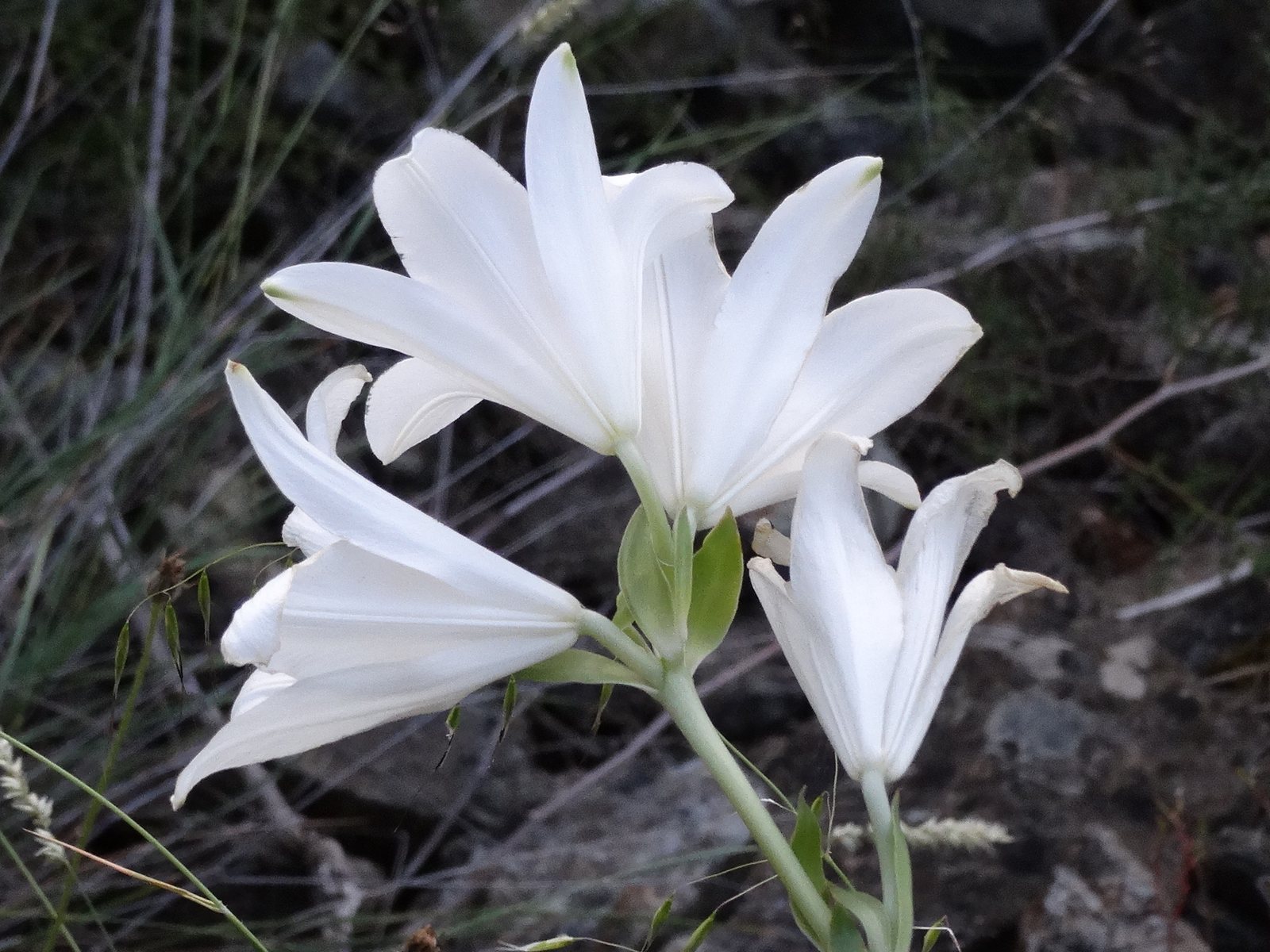
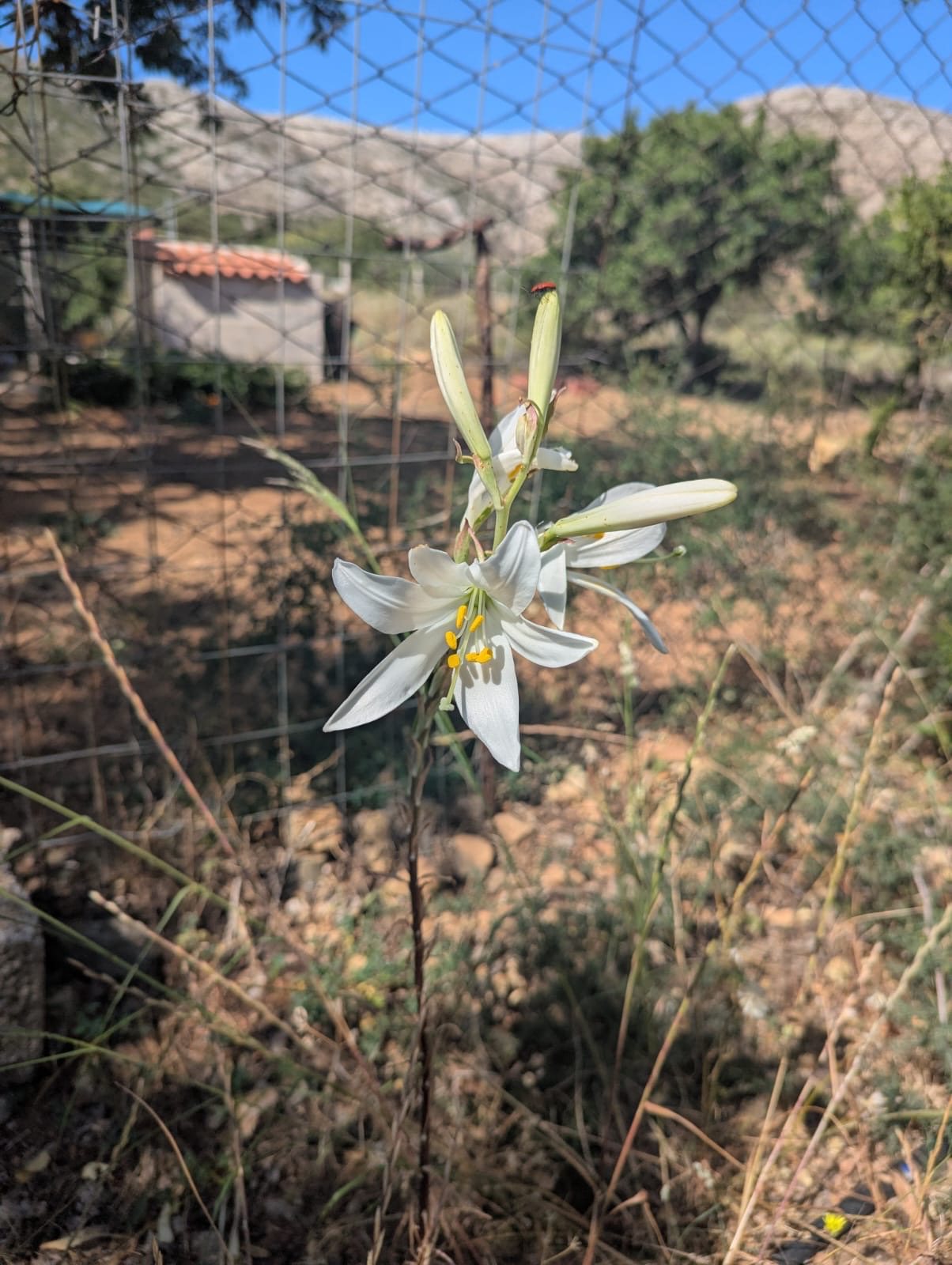
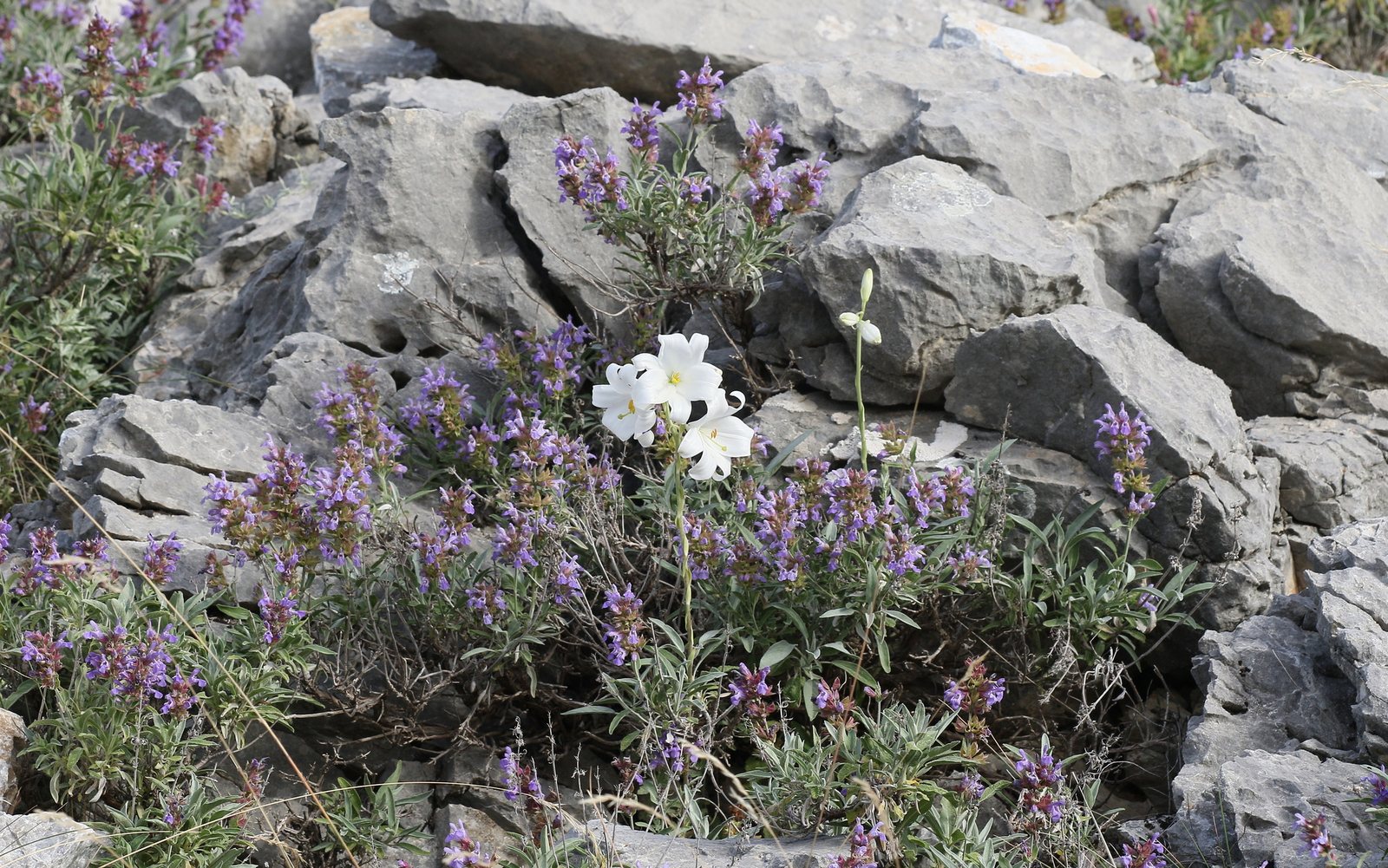
Madonna lily is a perennial bulb grown for its tall stems of fragrant, white trumpet-shaped flowers in early summer. Unlike most garden lilies, it makes a leafy rosette in autumn, keeps that growth through winter and rests briefly after flowering in summer.
At a glance
- Sun
- Full sun; light afternoon shade is useful in hot climates.
- Water
- Water during autumn-to-spring growth and flowering when the soil becomes dry. Reduce watering during summer dormancy; avoid waterlogged soil in any season.
- Soil
- Well-drained, moderately fertile soil, preferably neutral to alkaline. Improve heavy soil or plant in a raised bed rather than leaving bulbs in wet clay.
- Height
- 3-5 ft (0.9-1.5 m)
- Spread
- 1-2 ft (0.3-0.6 m)
- Flowers
- Early to midsummer; fragrant white trumpets with yellow anthers.
- Foliage
- Broad, glossy green leaves form a low autumn and winter rosette; narrower leaves grow along the flowering stem. Foliage dies back during the summer resting period.
- Growth
- Moderate; bulbs gradually form clumps where conditions suit them.
- Care needed
- Medium
The year at a glance
- Pollinators
- Heat tolerant
- Low allergen
- Fragrant
| J | F | M | A | M | J | J | A | S | O | N | D | |
|---|---|---|---|---|---|---|---|---|---|---|---|---|
| Flowers | ||||||||||||
| Plant |
Northern hemisphere months. In Australia, shift them by six.
- Difficulty
- Moderate
- Toughness
- Fairly tough
Will it suit your garden?
Pick your zone, country, light and whether you have pets.
Full sun is 6 or more hours of direct sun a day, part shade 3 to 6 hours, shade under 3.
How it grows
Planting day
0.5 ft (0.15 m)
After 1 year
4 ft (1.2 m)
full size
About 1 years to full size.
From a typical nursery size, at an average rate for this kind of plant. A rule of thumb, not a forecast.
Good to know
- Cats and dogs
- Toxic
- Growth rate
- Moderate
Care
Jobs through the year
- WaterMar–May, Sep–Nov, every 14 days
- Water established ground plants only when active-growth soil is dry; check new plantings more frequently.
- WaterJun–Jul, every 7 days
- Water established ground plants during dry weather while green; stop routine watering once summer dormancy begins.
- FeedMar–Apr
- Apply a light balanced feed as spring growth begins; avoid excessive nitrogen.
- ProtectMar–Jul, every 7 days
- Check for slugs and lily beetles; remove beetles, eggs and larvae.
- ProtectApr–May
- Stake tall stems early in exposed gardens, using loose ties.
- ProtectJan–Feb, Sep–Dec
- Keep winter rosettes clear of wet leaves and mulch; control slugs and prevent waterlogging.
- DeadheadJun–Jul, every 7 days
- Remove faded flowers before pods form, retaining green stems and leaves.
- PruneJul–Aug
- Remove dried flowering stems without damaging the developing basal rosette.
- DivideAug–Sep
- Divide only crowded dormant clumps; replant promptly with bulb tips about 2.5 cm deep.
- Plant in late summer or early autumn, with the bulb tip only about 1 in (2.5 cm) below the soil surface.
- Water during active growth if rainfall is insufficient, but keep dormant bulbs relatively dry.
- Apply a light dressing of balanced fertiliser as spring growth starts; avoid heavy nitrogen feeding.
- Keep thick mulch and neighbouring foliage away from the winter rosette.
- Stake tall stems early in exposed gardens, tying loosely to avoid damage.
- Leave established clumps undisturbed unless crowded; divide during summer dormancy and replant promptly.
Pruning. Remove faded flowers before seed pods develop, leaving the stem and leaves to feed the bulb. Cut the old flowering stem to ground level only after it has yellowed and dried, without damaging the new basal rosette.
Through the year
- Spring
- Apply a light balanced feed and check emerging stems for slugs and lily beetles.
- Late spring
- Stake stems where needed and water during dry spells.
- Early summer
- Remove faded flowers and inspect leaves for spotting or grey mould.
- Midsummer
- Allow foliage to yellow naturally, then remove dead stems and reduce watering.
- Late summer
- Plant new bulbs shallowly; divide crowded clumps only if necessary.
- Autumn
- Keep the new leafy rosettes clear of fallen leaves and water if conditions are dry.
- Winter
- Check drainage and keep wet mulch away from the rosettes.
In the garden
- Plant in small groups through a sunny cottage border for upright flowers above lower perennials.
- Use in a white garden with white roses and silver-leaved plants, leaving the basal rosettes uncrowded.
- Place near a path or seating area where the summer fragrance can be enjoyed.
- Combine with lavender or catmint in a well-drained Mediterranean-style border.
Garden styles it suits: Cottage garden, Traditional, White garden, Mediterranean, Romantic rose garden and Sensory garden.
Plant it with: Lavender, Catmint, Roses, Hardy geraniums and Yarrow.
Wildlife: Flowers offer pollen and nectar to visiting insects. Leaves may feed lily beetles where those pests occur.
Problems to watch for
- Lily beetles: where present, inspect leaf undersides regularly, remove adults and larvae, and crush egg clusters.
- Botrytis leaf blight: brown spotting and dying foliage are encouraged by damp, crowded conditions; improve airflow, avoid overhead watering and remove infected debris.
- Bulb or basal rot: bulbs decline in poorly drained soil; discard rotten bulbs and improve drainage before replanting.
- Slugs and snails: protect autumn rosettes and emerging stems with regular hand-picking or an approved iron-phosphate bait used as labelled.
Safety
Extremely toxic to cats: all parts, including pollen, and water from a vase containing lilies can cause fatal kidney failure. Any suspected cat exposure needs immediate veterinary attention. It is not known to be toxic to dogs or horses. Serious poisoning in people is not well established, but do not eat the plant; sap or pollen may irritate sensitive skin.
Easily confused with
Easter lily (Lilium longiflorum)
Its flowers are usually longer, narrower trumpets and its leaves are narrow along the stem; it does not make the broad autumn basal rosette typical of Madonna lily.
Regal lily (Lilium regale)
Its white trumpets usually have pink-purple colouring outside and a conspicuous yellow throat; the stem carries many narrow leaves.
White trumpet lily (Lilium formosanum)
It has very narrow leaves and long trumpets often flushed purple outside, and usually flowers later in summer.
The name
The Latin candidum means pure or shining white, while Madonna lily refers to the flower's traditional association with the Virgin Mary.
Propagation. Separate offsets during the brief summer dormant period and replant immediately at shallow depth. It can also be grown from seed, but seedlings take several years to flower.
Checked against open data
- Accepted botanical name
- Lilium candidum
- In the US and Canada
- Introduced in the lower 48 states.
- Native range
- East Aegean Is., Greece, Lebanon-Syria, Palestine, Turkey and Yugoslavia.
- Measured
- Soil pH 7.5 to 8. Average height 120 cm.
Sources: GBIF (CC BY 4.0), USDA PLANTS and Trefle (CC BY 4.0). The care and design notes are LandscapeGPT's own.
See it in your own yard.
Upload a photo of your yard and see it redesigned with plants that suit your climate, each checked against your zone.