Magic Carpet spirea
Spiraea japonica 'Walbuma'. Family Rosaceae. Shrub.
Also called Spiraea japonica 'Walbuma', Japanese spirea 'Walbuma', Magic Carpet Japanese spiraea.
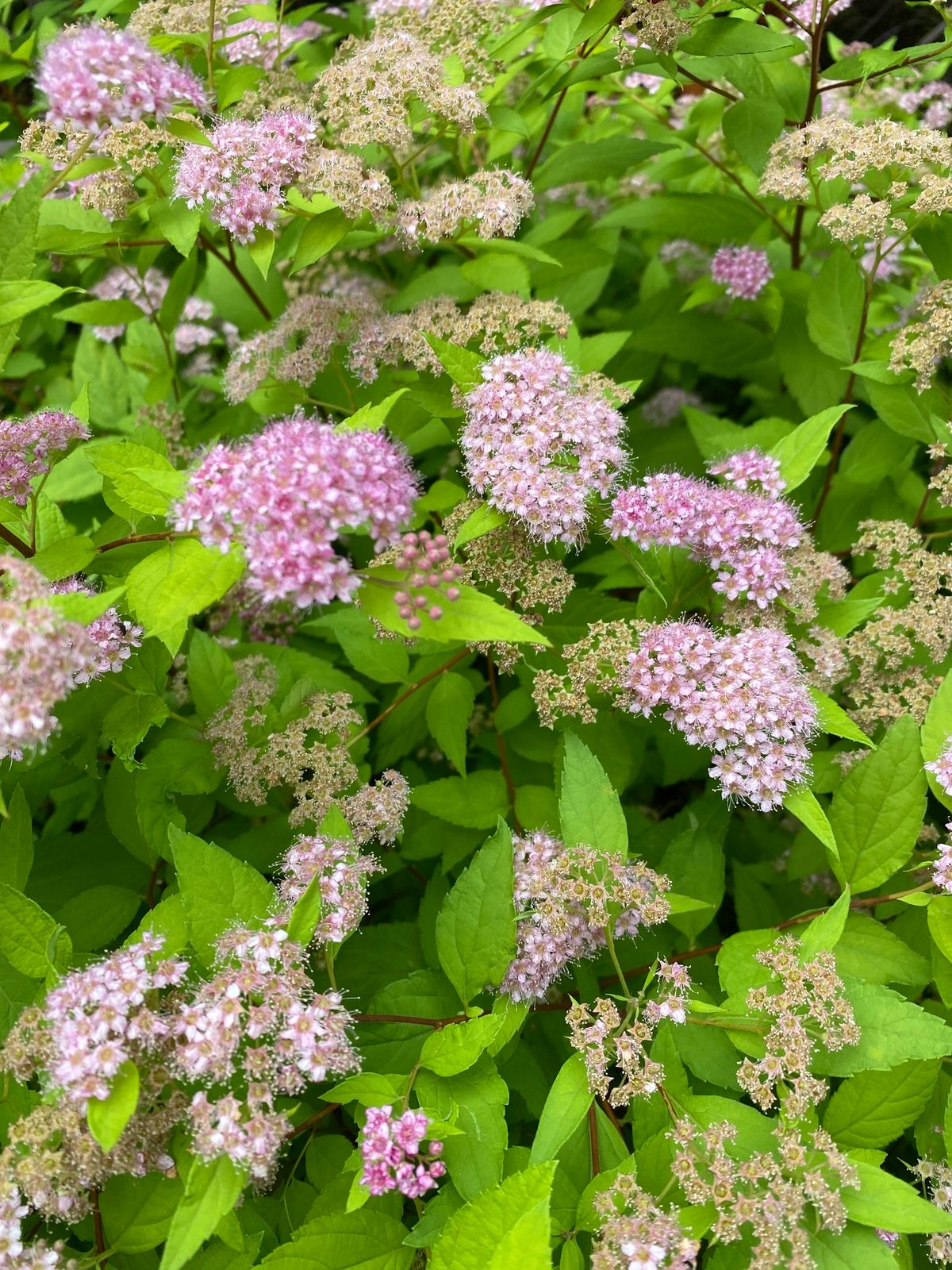
Magic Carpet spirea is a compact, deciduous shrub grown for its red-tinted young leaves, golden summer foliage and clusters of pink flowers. Its rounded shape suits small borders and low edging, but Japanese spirea is invasive in parts of eastern North America, so check local guidance before planting.
At a glance
- Sun
- Full sun gives the strongest leaf colour and most flowers; tolerates partial shade.
- Water
- Water regularly during the first growing season. Once established, water during prolonged dry spells; avoid persistently wet soil.
- Soil
- Average, well-drained soil; tolerates clay if drainage is adequate and a fairly wide range of soil pH.
- Height
- 1-2 ft (0.3-0.6 m)
- Spread
- 2-3 ft (0.6-0.9 m)
- Flowers
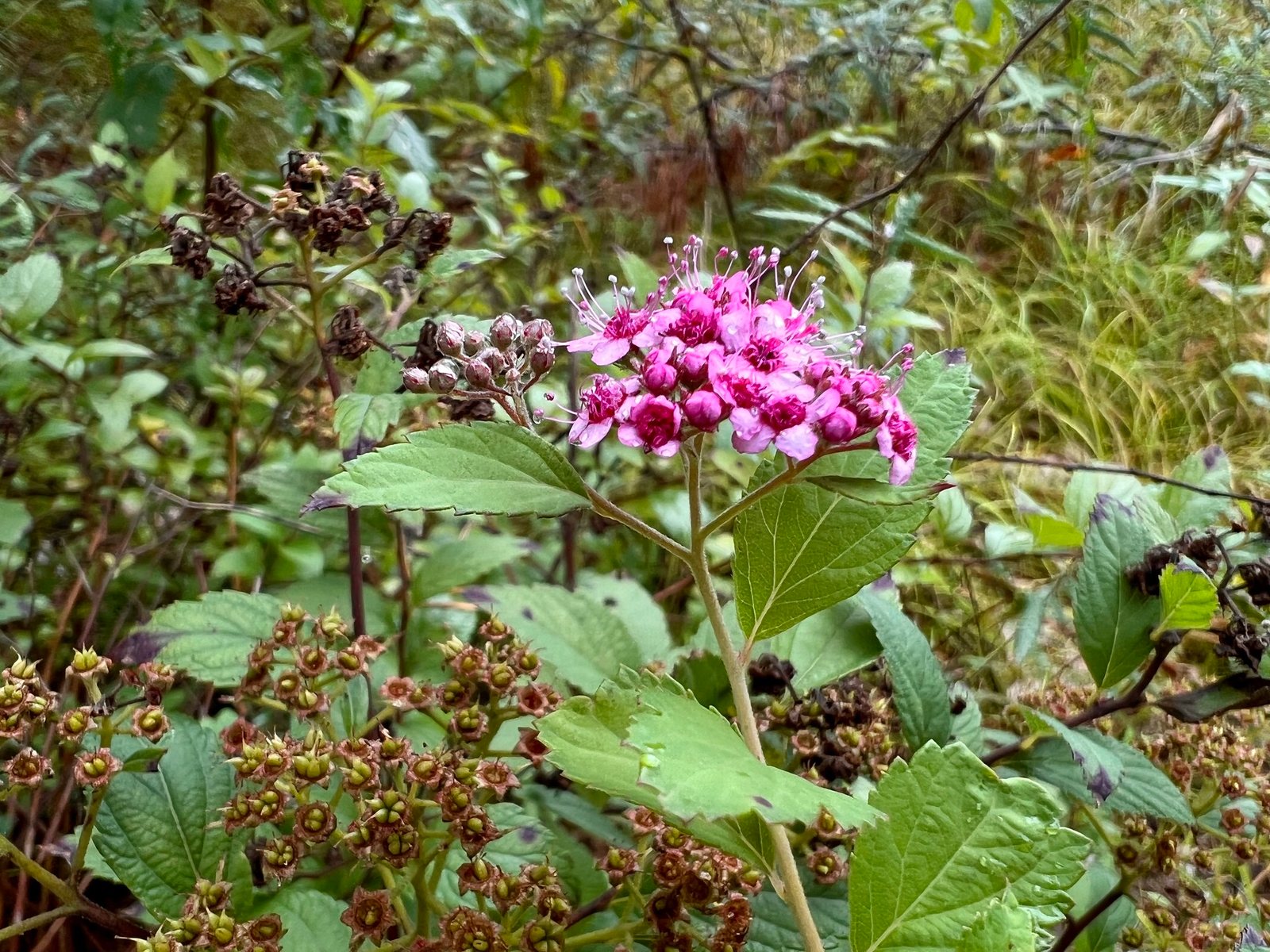
- Flat clusters of deep pink flowers in late spring and summer, sometimes followed by a lighter repeat flush after trimming.
- Foliage
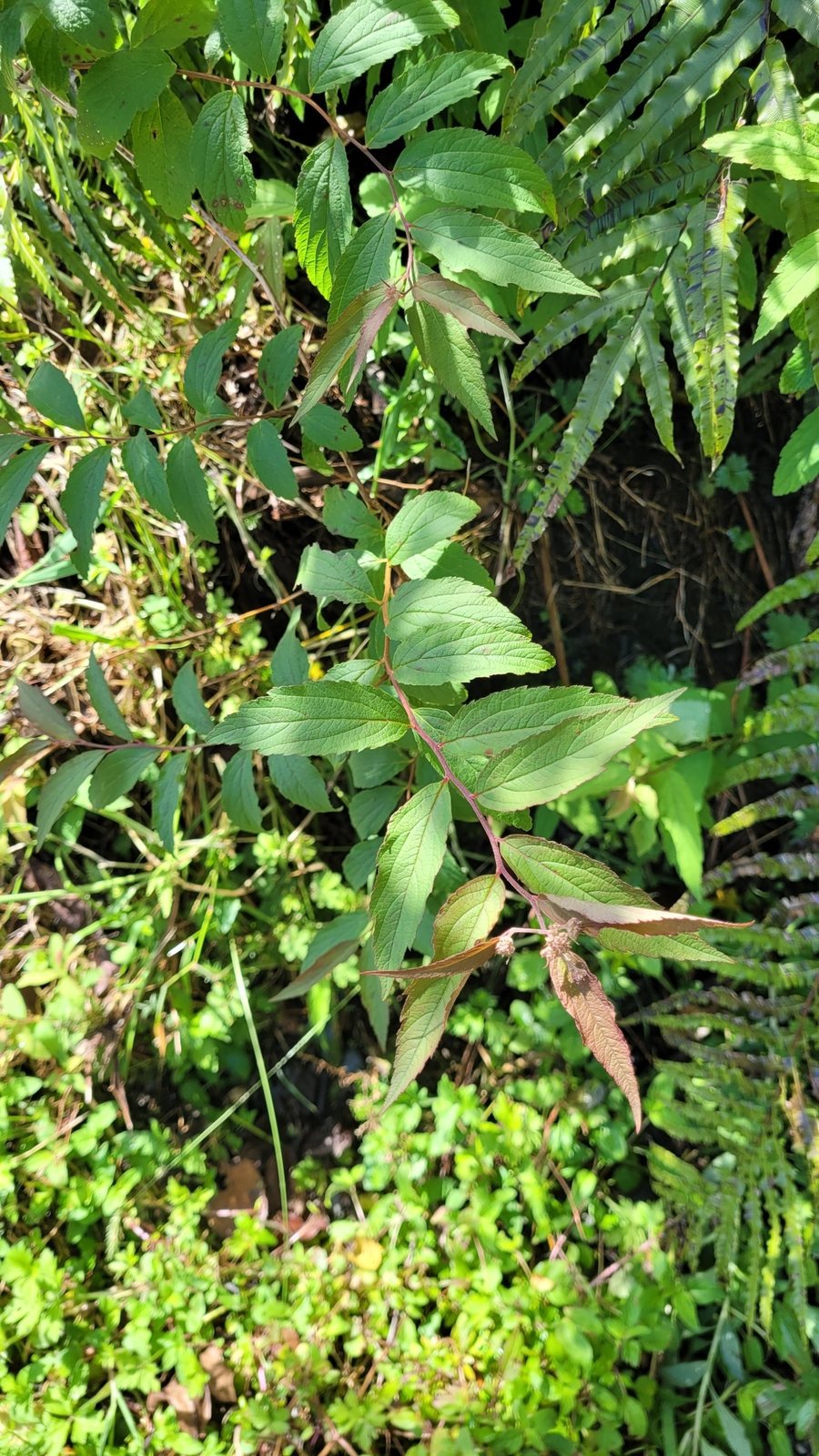
- Small, toothed leaves emerge orange-red, mature to yellow or yellow-green, and often develop orange, red or bronze autumn colour. Leaves become greener in shade.
- Growth
- Moderate
- Care needed
- Low
The year at a glance
- Pollinators
- Deer resistant
- Drought tolerant
- Cold hardy
- Low allergen
| J | F | M | A | M | J | J | A | S | O | N | D | |
|---|---|---|---|---|---|---|---|---|---|---|---|---|
| Flowers | ||||||||||||
| Plant |
Northern hemisphere months. In Australia, shift them by six.
- Difficulty
- Easy
- Toughness
- Very tough
Will it suit your garden?
Pick your zone, country, light and whether you have pets.
Full sun is 6 or more hours of direct sun a day, part shade 3 to 6 hours, shade under 3.
How it grows
Planting day
1.5 ft (0.45 m)
full size
About 5 years to full size.
From a typical nursery size, at an average rate for this kind of plant. A rule of thumb, not a forecast.
Good to know
- Cats and dogs
- Safe
- Invasive in
- the US
- In the garden
- Spreads vigorously: plan to contain it.
- Growth rate
- Moderate
Care
Jobs through the year
- WaterApr–May, Sep–Oct, every 14 days
- Water established shrubs only if the root zone is dry; check first-year plants more often.
- WaterJun–Aug, every 7 days
- Water established shrubs deeply during prolonged drought; skip watering when soil remains moist.
- FeedMar–Apr
- Add a light compost top-dressing; use fertilizer only if growth is weak or soil is poor.
- MulchMar, Oct
- Maintain about 5 cm of organic mulch without covering the woody stems.
- PruneFeb–Mar
- Before leaves open, remove dead stems and shorten remaining growth by about one-third.
- DeadheadJun–Sep, every 14 days
- Trim faded clusters before seed forms to limit spread and encourage repeat flowering.
- ProtectApr–Jun, Sep–Oct
- Pull unwanted seedlings promptly; avoid planting where Japanese spirea is invasive.
- Water deeply when the root zone begins to dry during the first growing season.
- Apply 2 in (5 cm) of organic mulch, keeping it clear of the woody stems.
- In spring, add a light layer of compost; use fertiliser only if growth is weak or soil is poor.
- Remove faded flower clusters before seed develops, especially where Japanese spirea escapes into natural areas.
- Pull out seedlings promptly and water established plants during extended drought.
Pruning. In late winter or early spring, remove dead or damaged stems and shorten the remaining growth by about one-third to maintain a compact mound. Lightly trim after the main flowering flush to remove spent flowers and encourage fresh growth.
Through the year
- Late winter
- Prune before new leaves open, removing dead wood and shortening crowded or straggly growth.
- Spring
- Plant when soil is workable, water thoroughly and mulch around the root zone.
- Late spring
- Check tender shoots for aphids and rinse off small colonies with water.
- Summer
- Trim faded flower clusters before seed forms and water during prolonged dry weather.
- Autumn
- Remove unwanted seedlings and replenish mulch without covering the stems.
In the garden
- Plant as low edging along sunny paths, allowing space for the mature spread.
- Repeat small groups through a mixed border to link planting with bright foliage.
- Pair with purple-leaved heucheras or dark-green shrubs for leaf-colour contrast.
- Combine with catmint and hardy salvias for contrasting flower shapes and a long summer display.
Garden styles it suits: Cottage garden, Traditional, Formal, Low-maintenance, Small-space and Family-friendly.
Plant it with: Catmint, Hardy salvia, Purple coneflower, Purple-leaved heuchera and Feather reed grass.
Wildlife: Flowers provide pollen and nectar for bees and other insects. Despite this value, it is not a suitable substitute for native shrubs where Japanese spirea is invasive.
Problems to watch for
- Aphids can curl young shoots: rinse colonies off with water and avoid excessive nitrogen feeding.
- Powdery mildew may coat leaves in crowded conditions: improve airflow, thin congested stems and avoid drought stress.
- Root rot can follow waterlogging: improve drainage or move the shrub to a better-drained position.
- Dull green foliage and sparse flowering usually indicate too much shade: move to a sunnier site.
Safety
Not known to be toxic to cats, dogs, horses or people. No part is recognised as seriously poisonous, but it is an ornamental plant rather than a food plant.
Where it spreads. Japanese spirea spreads by seed and can form dense stands in disturbed ground, along streams and at woodland edges in the eastern United States. It is listed as invasive in states including Tennessee, North Carolina and Pennsylvania. Do not assume 'Walbuma' is sterile; choose a locally suitable alternative where the species is invasive.
Easily confused with
Goldflame spirea (Spiraea japonica 'Goldflame')
Has similar bronze-red new growth and yellow foliage but usually forms a taller, broader shrub; reliable identification may require its nursery label.
Goldmound spirea (Spiraea japonica 'Goldmound')
Usually has more uniformly yellow foliage with less pronounced red colouring in the emerging leaves and grows somewhat larger.
Anthony Waterer spirea (Spiraea japonica 'Anthony Waterer')
Has predominantly green mature leaves and a taller habit, rather than Magic Carpet's low mound of golden foliage.
The name
The species name japonica means 'Japanese', while Magic Carpet is the selling name for the cultivar 'Walbuma'.
Propagation. Softwood cuttings in late spring or early summer preserve the cultivar's characteristics. Seedlings do not reliably retain its compact habit or leaf colour; check applicable plant breeders' rights before propagating.
Checked against open data
- Accepted botanical name
- Spiraea japonica
- In the US and Canada
- Introduced in Canada and the lower 48 states.
- Native range
- China North-Central, China South-Central, China Southeast, Japan, Myanmar, Taiwan and Tibet.
- Measured
- Average height 138 cm.
Sources: GBIF (CC BY 4.0), USDA PLANTS and Trefle (CC BY 4.0). The care and design notes are LandscapeGPT's own.
See it in your own yard.
Upload a photo of your yard and see it redesigned with plants that suit your climate, each checked against your zone.