Maltese cross
Silene chalcedonica. Family Caryophyllaceae. Perennial.
Also called Jerusalem cross, Scarlet lychnis, Lychnis chalcedonica.
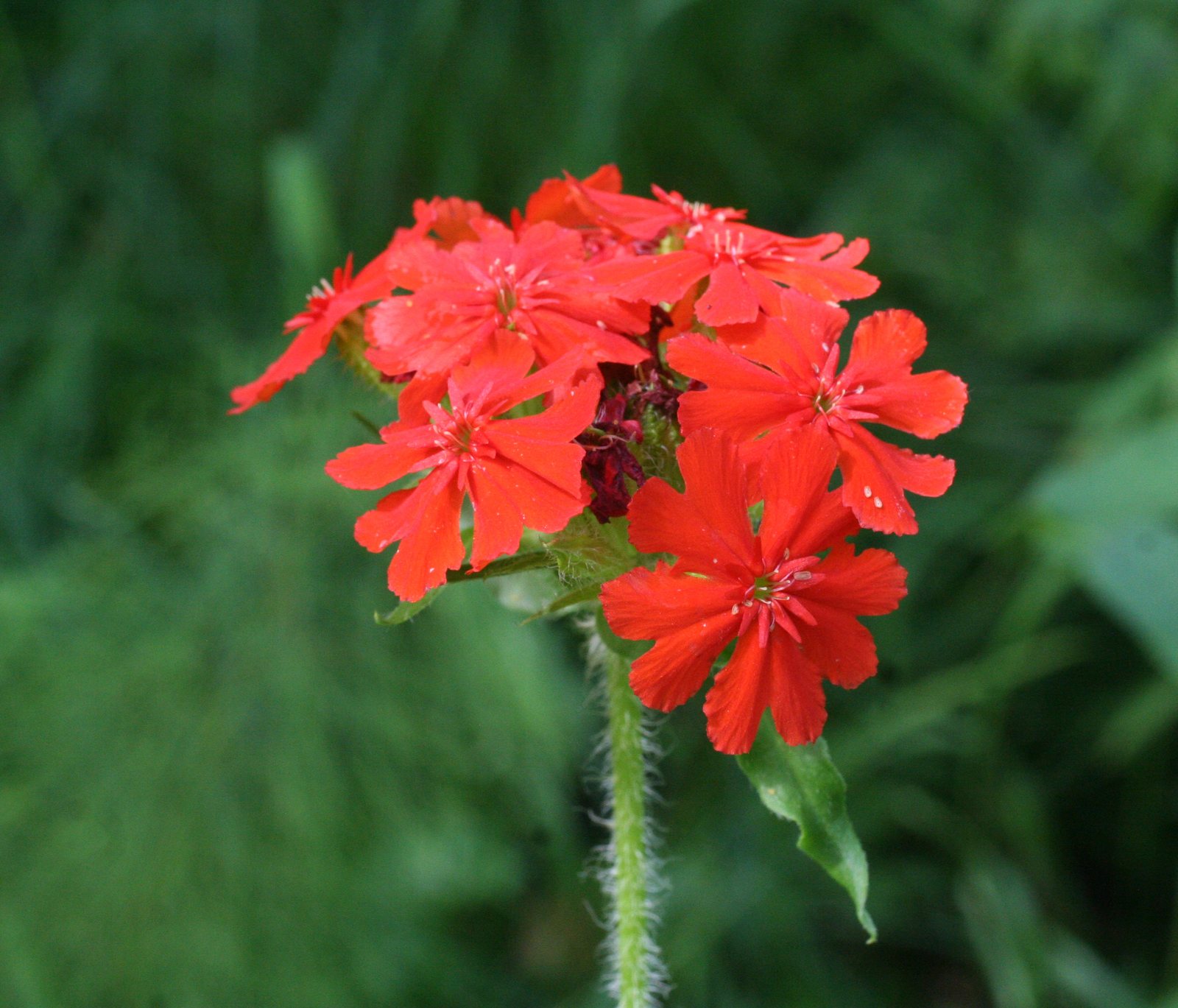
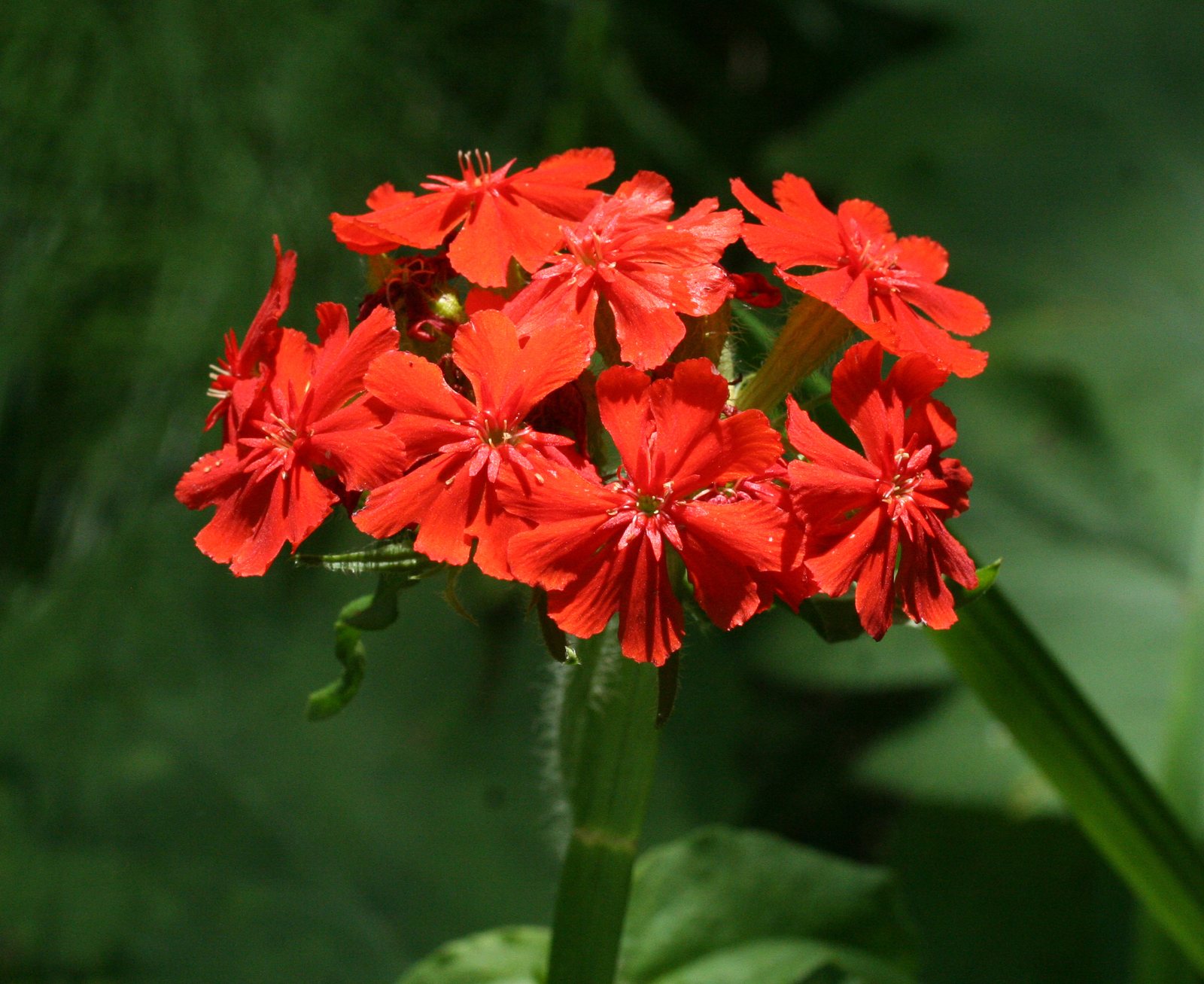
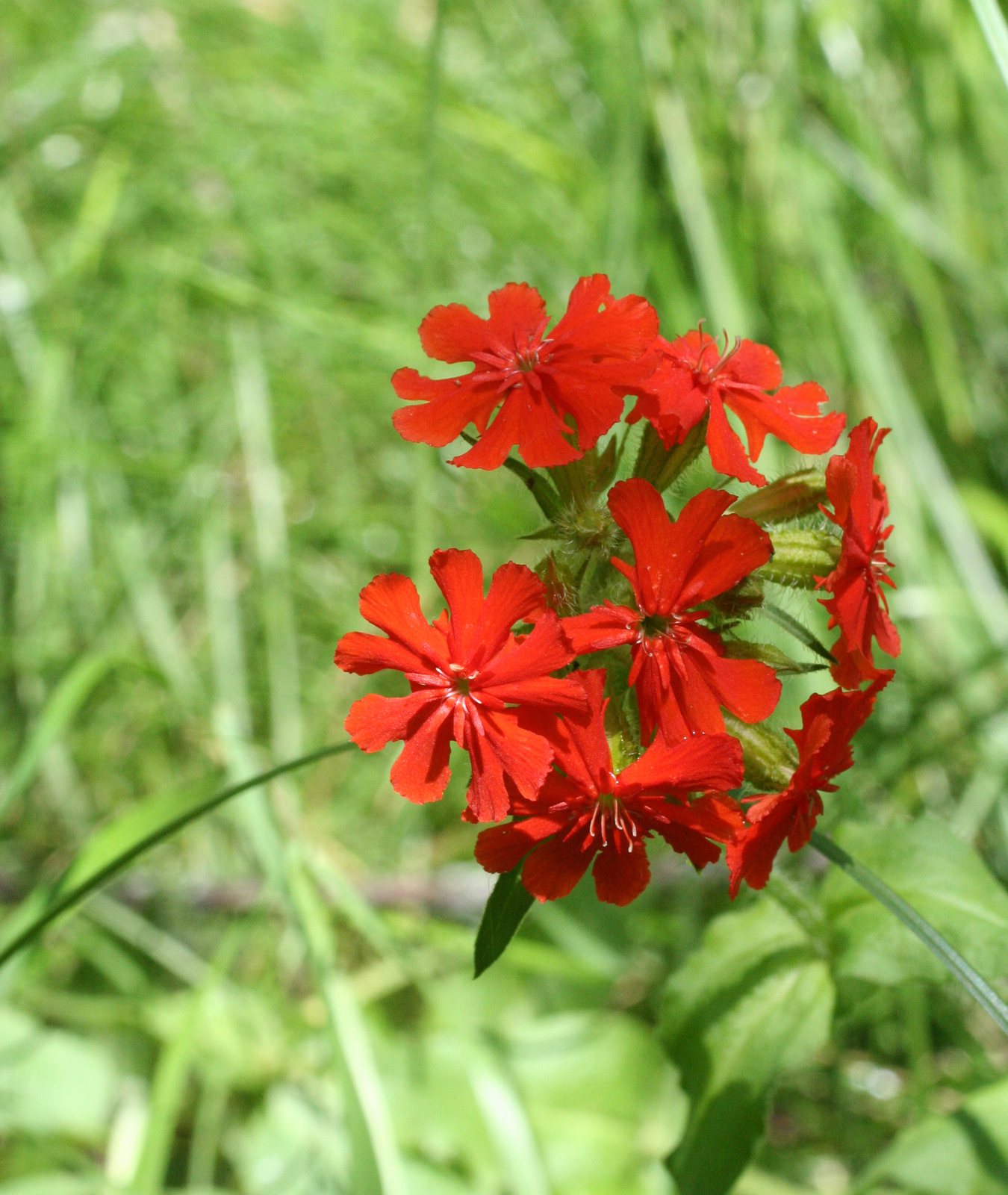
Maltese cross is an upright, clump-forming perennial grown for dense heads of scarlet, cross-shaped flowers in summer. It brings strong colour to cottage gardens and mixed borders, especially in cooler climates, but its stems may need support and its foliage can look tired after flowering.
At a glance
- Sun
- Full sun is best; tolerates light partial shade, but flowers less and may lean.
- Water
- Keep moderately moist during active growth. Water deeply during dry spells, especially in the first growing season; avoid persistently wet soil.
- Soil
- Fertile, moisture-retentive but well-drained soil. Tolerates clay where drainage is adequate and grows in acidic, neutral or alkaline soil.
- Height
- 2-4 ft (0.6-1.2 m)
- Spread
- 1-2 ft (0.3-0.6 m)
- Flowers
- Early to midsummer; dense, rounded heads of scarlet-red flowers. White and pink forms also exist.
- Foliage
- Opposite pairs of rough, hairy, green leaves on upright stems; lower leaves are broader than those higher up. Top growth dies back for winter.
- Growth
- Moderate; usually forms a flowering clump within one or two growing seasons.
- Care needed
- Low
The year at a glance
- Pollinators
- Deer resistant
- Cold hardy
- Low allergen
| J | F | M | A | M | J | J | A | S | O | N | D | |
|---|---|---|---|---|---|---|---|---|---|---|---|---|
| Flowers | ||||||||||||
| Plant |
Northern hemisphere months. In Australia, shift them by six.
- Difficulty
- Easy
- Toughness
- Very tough
Will it suit your garden?
Pick your zone, country, light and whether you have pets.
Full sun is 6 or more hours of direct sun a day, part shade 3 to 6 hours, shade under 3.
How it grows
Planting day
1 ft (0.3 m)
After 1 year
1.6 ft (0.5 m)
After 2 years
2.3 ft (0.7 m)
After 3 years
3 ft (0.9 m)
full size
About 3 years to full size.
From a typical nursery size, at an average rate for this kind of plant. A rule of thumb, not a forecast.
Good to know
- Cats and dogs
- Safe
- Growth rate
- Moderate
Care
Jobs through the year
- WaterApr–May, Sep, every 14 days
- Water established clumps only during prolonged dry spells; water new plants more frequently.
- WaterJun–Aug, every 7 days
- Water established clumps deeply during dry weather, allowing surplus water to drain.
- MulchMar–Apr
- Spread a thin compost mulch clear of the crown; avoid heavy feeding.
- DivideMar–Apr
- Divide congested clumps every three to four years.
- DeadheadJun–Aug, every 7 days
- Remove faded heads above healthy leaves to limit seedlings and encourage a smaller repeat display.
- PruneFeb–Mar
- Cut remaining dead stems to ground level before new shoots emerge.
- ProtectMar–May, every 7 days
- Inspect young shoots for slugs and snails and remove pests.
- ProtectApr–May
- Install discreet supports in windy sites before stems become tall.
- Water new plants regularly until established, then water during prolonged dry spells.
- Apply a thin layer of compost in spring; avoid heavy feeding, which encourages floppy growth.
- Mulch to conserve moisture, keeping mulch away from the crown.
- Fit discreet supports in spring in windy sites or where stems tend to flop.
- Divide congested clumps every three to four years in spring.
Pruning. Remove spent flower heads just above a healthy pair of leaves to discourage seedlings and encourage a smaller repeat flowering. Cut dead stems to ground level in late autumn or late winter.
Through the year
- Late winter
- Cut down any remaining dead stems before new shoots emerge.
- Spring
- Plant or divide clumps, water well and add a thin compost mulch.
- Late spring
- Install supports before stems become tall and check young shoots for slugs.
- Early summer
- Water during dry spells to support flowering.
- Midsummer
- Remove faded flower heads unless you want to collect seed.
- Autumn
- Collect ripe seed from dry capsules and remove unwanted seedlings.
In the garden
- Plant small groups through the middle of a cottage border for clear scarlet accents.
- Combine with blue cranesbills or purple salvias for strong colour contrast.
- Use behind lower-growing perennials to conceal bare or tired lower stems.
- Mix with yellow yarrow and orange-flowered perennials in a sunny hot-colour border.
Garden styles it suits: Cottage garden, English country, Traditional, Hot border, Pollinator garden and Farmhouse.
Plant it with: Cranesbill, Perennial salvia, Yarrow, Shasta daisy, Bellflower and Lady's mantle.
Wildlife: Flowers attract butterflies and other nectar-feeding insects. Deer often leave the rough foliage alone, but browsing is still possible.
Problems to watch for
- Flopping stems: provide early support, grow in full sun and avoid excessive nitrogen fertiliser.
- Slugs and snails on young shoots: inspect after dark, remove pests and use wildlife-conscious controls where needed.
- Powdery mildew: improve spacing and airflow, water the soil rather than the leaves, and remove badly affected foliage.
- Crown or root rot in wet soil: improve drainage or move plants to a better-drained position; do not bury the crown deeply.
Safety
Not known to be toxic to people, cats, dogs or horses. It is an ornamental plant, not a food plant; eating plant material may still cause digestive upset.
Easily confused with
Rose campion (Silene coronaria)
Rose campion has conspicuously silvery, woolly leaves and usually separate magenta flowers on branching stems, rather than dense scarlet heads above green foliage.
Sweet William (Dianthus barbatus)
Sweet William also has clustered flowers, but its petals have toothed edges, its leaves are narrower and smoother, and its flower heads are usually flatter.
The name
The common name refers to the resemblance of each flower's deeply notched petals to the shape of a Maltese cross.
Propagation. Sow seed in pots in spring, covering lightly and keeping evenly moist. Divide established clumps in spring; division preserves the flower colour of named selections, while seedlings may vary. Plants can self-seed if flower heads are left to ripen.
Checked against open data
- Accepted botanical name
- Silene chalcedonica
- Native range
- Altay, Central European Rus, China North-Central, East European Russia, Irkutsk, Kazakhstan, Khabarovsk, Krasnoyarsk, Mongolia, South European Russi, West Siberia and Xinjiang.
- Measured
- Average height 35 cm.
Sources: GBIF (CC BY 4.0) and Trefle (CC BY 4.0). The care and design notes are LandscapeGPT's own.
See it in your own yard.
Upload a photo of your yard and see it redesigned with plants that suit your climate, each checked against your zone.