Martagon lily
Lilium martagon. Family Liliaceae. Bulb.
Also called Turk's cap lily.
Martagon lily is a long-lived bulb with whorled leaves and tall stems carrying nodding, strongly recurved flowers. Gardeners grow it for early-summer colour in lightly shaded borders and woodland gardens, where established bulbs can remain undisturbed for many years.
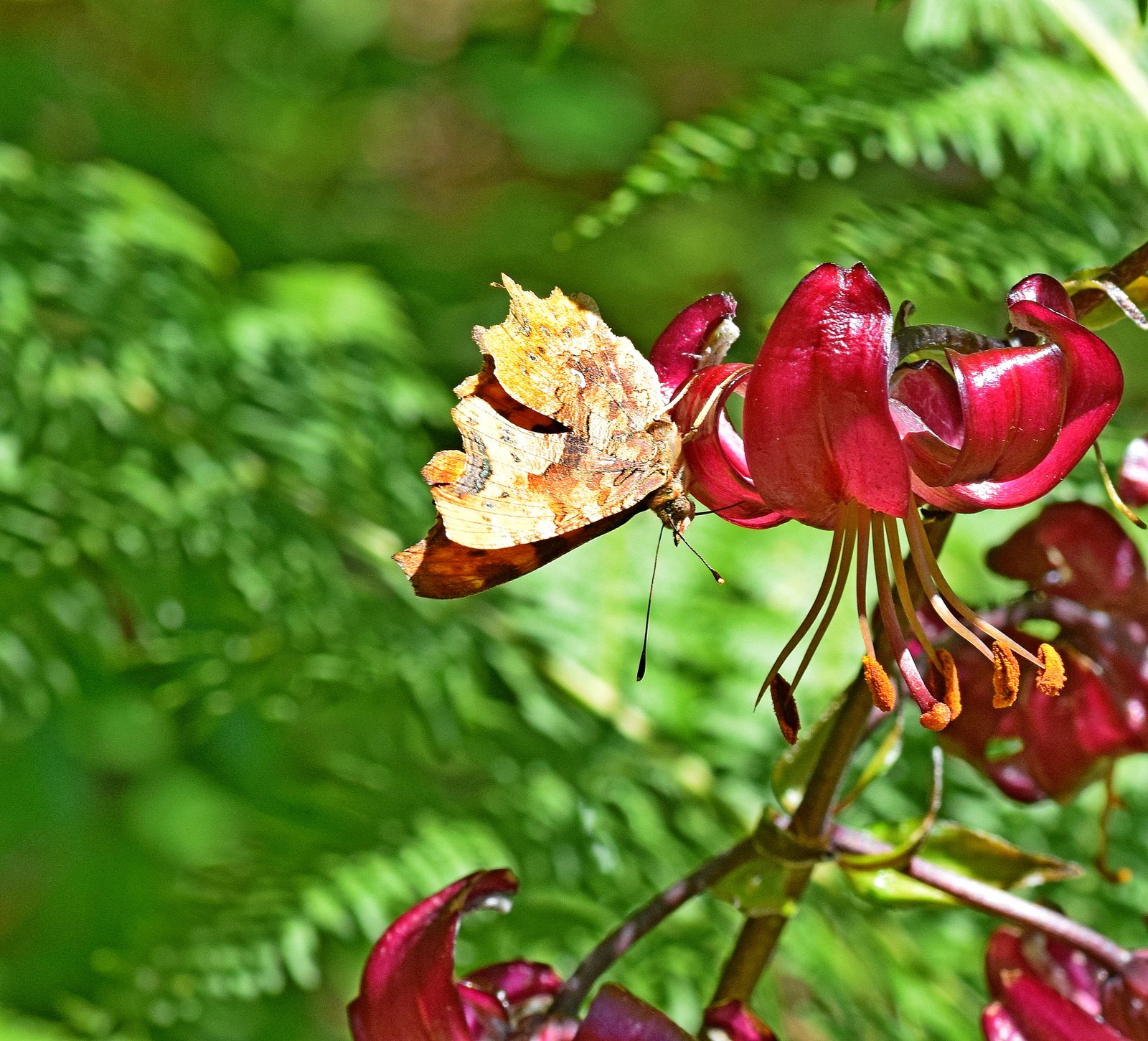
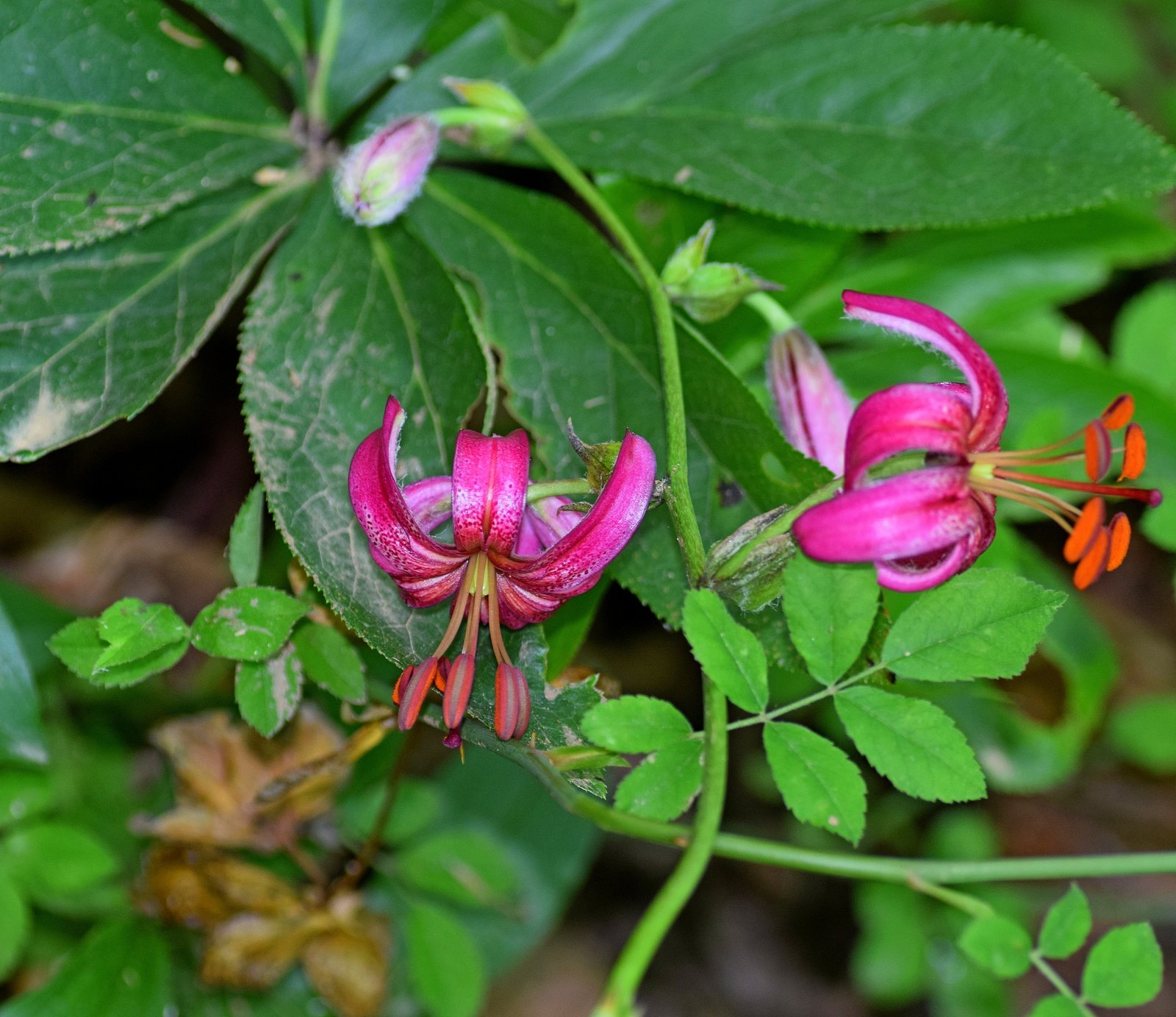
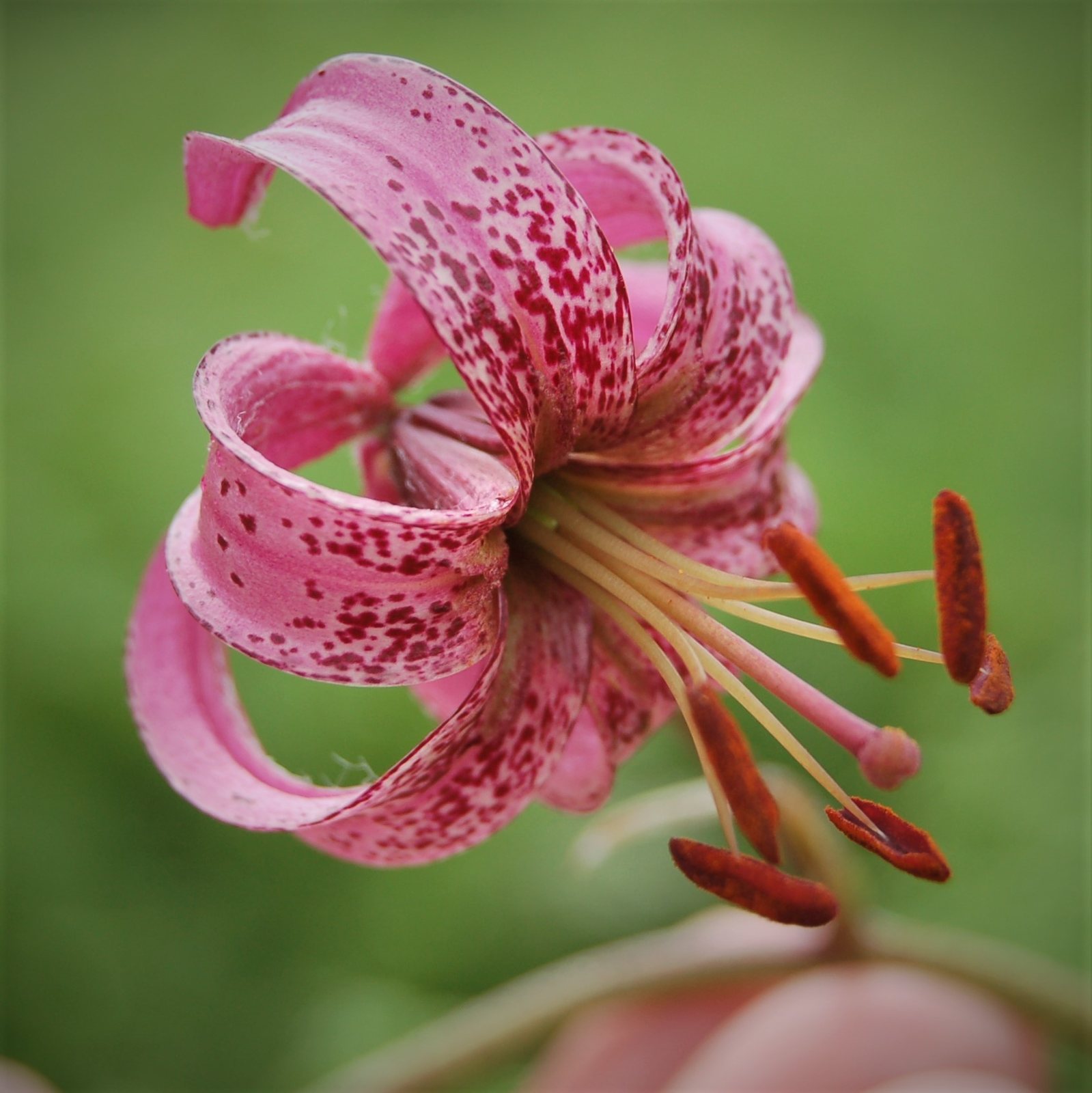
At a glance
- Sun
- Partial shade or dappled sunlight; tolerates full sun in cool climates if the soil stays moist. Shelter from hot afternoon sun.
- Water
- Keep evenly moist during spring growth and flowering, but never waterlogged. Water established plants during prolonged dry spells.
- Soil
- Humus-rich, well-drained soil, preferably neutral to alkaline. Avoid compacted ground and sites that stay wet in winter.
- Height
- 3-6 ft (0.9-1.8 m)
- Spread
- 1-2 ft (0.3-0.6 m)
- Flowers
- Early to midsummer; usually pink to purplish pink with dark spots and prominent orange anthers. White forms also occur.
- Foliage
- Green, lance-shaped leaves arranged in conspicuous whorls along the lower and middle stem, with smaller leaves above; dies back in autumn.
- Growth
- Slow to establish; bulbs may take a season or two to flower well after planting.
- Care needed
- Medium
The year at a glance
- Pollinators
- Cold hardy
- Low allergen
| J | F | M | A | M | J | J | A | S | O | N | D | |
|---|---|---|---|---|---|---|---|---|---|---|---|---|
| Flowers | ||||||||||||
| Plant |
Northern hemisphere months. In Australia, shift them by six.
- Difficulty
- Moderate
- Toughness
- Fairly tough
Will it suit your garden?
Pick your zone, country, light and whether you have pets.
Full sun is 6 or more hours of direct sun a day, part shade 3 to 6 hours, shade under 3.
How it grows
Planting day
0.5 ft (0.16 m)
After 1 year
3 ft (0.9 m)
After 2 years
4 ft (1.4 m)
full size
About 2 years to full size.
From a typical nursery size, at an average rate for this kind of plant. A rule of thumb, not a forecast.
Good to know
- Cats and dogs
- Toxic
- Growth rate
- Slow
Care
Jobs through the year
- WaterApr–May, Sep, every 14 days
- Water established ground plants deeply if rainfall is insufficient; newly planted bulbs need closer moisture checks.
- WaterJun–Aug, every 7 days
- Water established ground plants during dry spells, keeping soil moist but freely drained.
- FeedMar–Apr
- On poor soil, apply balanced bulb fertilizer as shoots emerge.
- MulchMar–Apr
- Apply leaf mould or well-rotted compost without covering emerging shoots.
- ProtectMar–Jul, every 7 days
- Inspect for slugs and lily beetles; remove beetles, eggs and larvae by hand.
- ProtectApr–May
- Stake tall stems early in exposed positions.
- DeadheadJun–Jul, every 7 days
- Remove faded flowers before seed pods form, leaving leafy stems intact.
- PruneOct–Nov
- Cut stems near ground level only after they have yellowed and died.
- DivideSep–Nov
- Divide only crowded dormant clumps; replant bulbs immediately.
- Plant fresh bulbs promptly in autumn, about 6-8 in (15-20 cm) deep, with good drainage beneath them.
- Water during dry spring and summer weather, soaking the root zone rather than repeatedly wetting the surface.
- Apply leaf mould or well-rotted compost in spring, keeping it clear of emerging shoots.
- On poor soil, apply a balanced bulb fertiliser as shoots emerge, following the label rate.
- Stake tall stems early if the site is exposed to wind.
- Leave established clumps undisturbed; divide only when crowded or when more plants are needed.
Pruning. Remove faded flowers before seed pods develop unless you want seed. Leave stems and leaves intact until they turn yellow or brown in autumn, then cut them down near ground level.
Through the year
- Early spring
- Mark emerging shoots, protect them from slugs and apply a compost or leaf-mould mulch.
- Spring
- Check shoots and leaf undersides for lily beetles where present; stake stems before they become tall.
- Late spring
- Water during dry spells as stems lengthen and flower buds develop.
- Early to midsummer
- Remove spent flowers unless saving seed, leaving all green foliage in place.
- Autumn
- Plant fresh bulbs or carefully lift and divide crowded clumps after the foliage dies back.
- Late autumn
- Cut down dead stems and remove diseased foliage from the garden.
In the garden
- Plant loose groups beneath open-canopied deciduous trees for flowers above a low woodland ground layer.
- Thread through partially shaded borders with ferns, hostas and hardy geraniums to contrast upright stems with broad or finely divided leaves.
- Place behind low spring-flowering plants so the lilies extend interest into early summer.
- Use repeated small groups along a shaded path where the hanging flowers can be viewed closely.
Garden styles it suits: Woodland, English country, Cottage garden, Romantic rose garden, Grand estate and Blues and silvers.
Plant it with: Hostas, Hardy geraniums, Lady fern, Solomon's seal, Hellebores and Brunnera.
Wildlife: Flowers provide pollen and nectar for visiting insects. Deer may eat the shoots and flowers, and rodents sometimes damage bulbs.
Problems to watch for
- Scarlet lily beetles, where established in the UK and parts of North America, chew leaves and buds. Inspect frequently and remove adults, eggs and the dark, droppings-covered larvae by hand.
- Slugs and snails can destroy emerging shoots. Check young growth regularly and use barriers, hand removal or a locally approved slug bait according to its label.
- Botrytis causes brown leaf spots and premature foliage collapse in damp conditions. Improve airflow, avoid overhead watering and remove affected debris.
- Bulbs rot or fail to return in waterlogged soil. Improve drainage or move them to a better-drained site; do not leave dormant bulbs standing in wet ground.
Safety
Extremely toxic to cats: flowers, leaves, stems, bulbs, pollen and vase water can cause fatal kidney failure. Suspected exposure needs immediate veterinary attention. It is not known to cause comparable poisoning in dogs or horses, but ingestion may cause digestive upset. It is not generally regarded as poisonous to people, though it should not be treated as a food plant.
Easily confused with
American Turk's cap lily (Lilium superbum)
Also has whorled leaves and recurved flowers, but its flowers are usually orange with a distinctive green star at the centre; martagon flowers are usually pink-purple without that green star.
Tiger lily (Lilium lancifolium)
Usually has orange, heavily spotted flowers, narrow leaves arranged alternately rather than in broad whorls, and dark bulbils in the leaf axils.
The name
The common name Turk's cap lily refers to the strongly swept-back petals, which give each flower a turban-like shape.
Propagation. Separate offsets carefully in autumn and replant immediately; disturbance can delay flowering. Bulb scales can also produce new bulbs under clean, moist propagation conditions. Seed is slow, may need successive warm and cold periods to germinate, and usually takes several years to produce flowering plants.
Checked against open data
- Accepted botanical name
- Lilium martagon
- In the US and Canada
- Introduced in Canada.
- Native range
- Albania, Altay, Austria, Baltic States, Belarus, Bulgaria, Buryatiya, Central European Rus, Corse, Czechoslovakia, East European Russia and France.
- Measured
- Soil pH 7 to 7.5. Average height 51 cm.
Sources: GBIF (CC BY 4.0), USDA PLANTS and Trefle (CC BY 4.0). The care and design notes are LandscapeGPT's own.
See it in your own yard.
Upload a photo of your yard and see it redesigned with plants that suit your climate, each checked against your zone.