Masterwort
Astrantia major. Family Apiaceae. Perennial.
Also called Great masterwort, Hattie's pincushion.
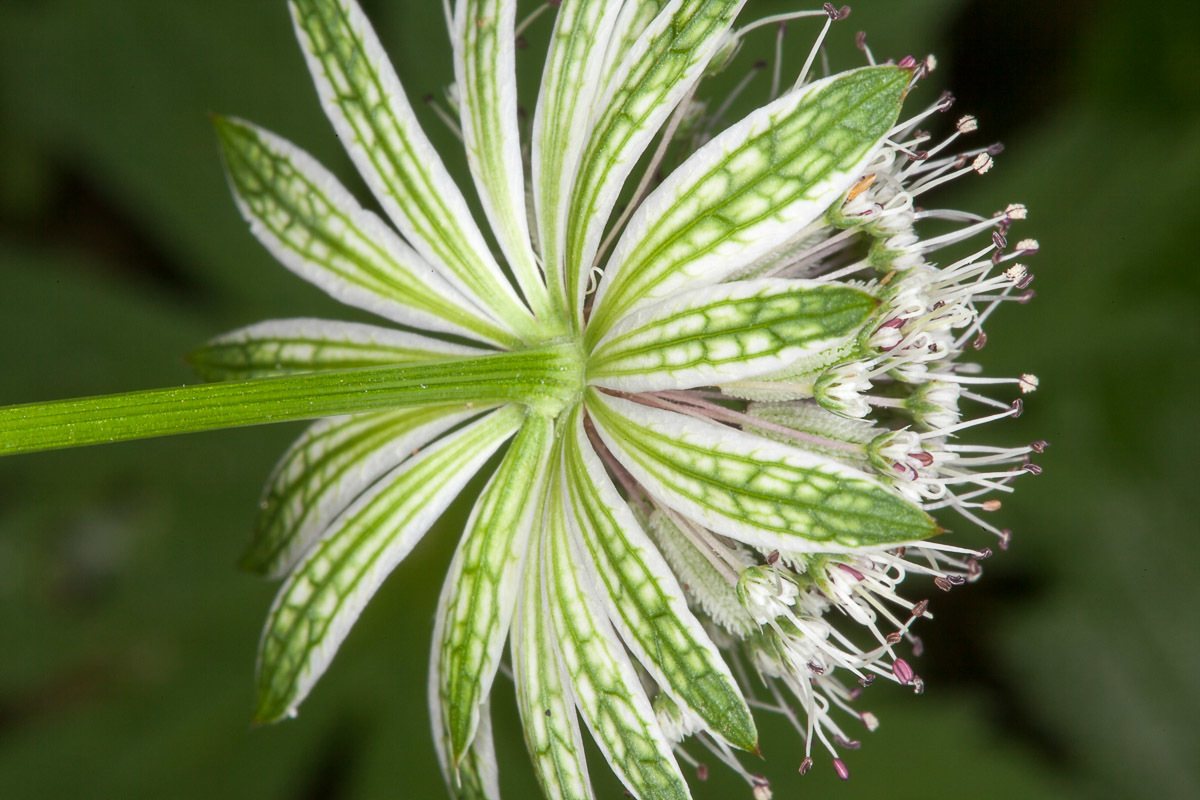
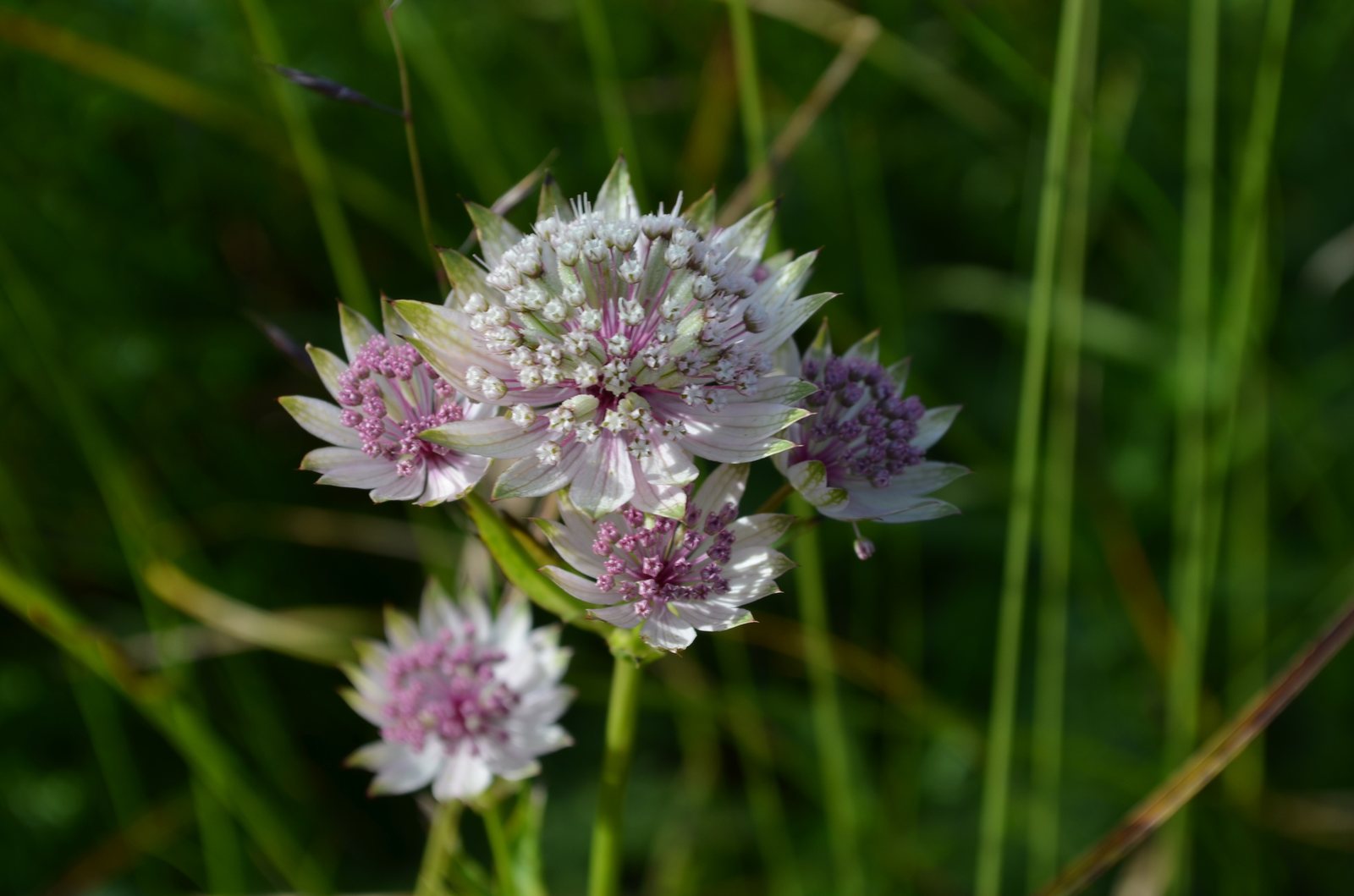
Masterwort is a clump-forming perennial with deeply divided leaves and small, pincushion-like flower heads surrounded by papery bracts. Gardeners grow it for its long summer display, useful cut flowers and ability to brighten lightly shaded borders. It performs best in cool climates with reliable soil moisture and struggles in hot, dry summers.
At a glance
- Sun
- Partial shade, especially afternoon shade in warmer areas; full sun where summers are cool and the soil stays moist.
- Water
- Keep the soil evenly moist but not waterlogged; water deeply during dry spells.
- Soil
- Humus-rich, moisture-retentive soil with good drainage; tolerates clay, loam and a range of soil pH.
- Height
- 1.5-3 ft (0.45-0.9 m)
- Spread
- 1-2 ft (0.3-0.6 m)
- Flowers
- Late spring through summer, sometimes repeating into early autumn; tiny white or pink flowers surrounded by greenish-white, pink or red-toned bracts, depending on the cultivar.
- Foliage
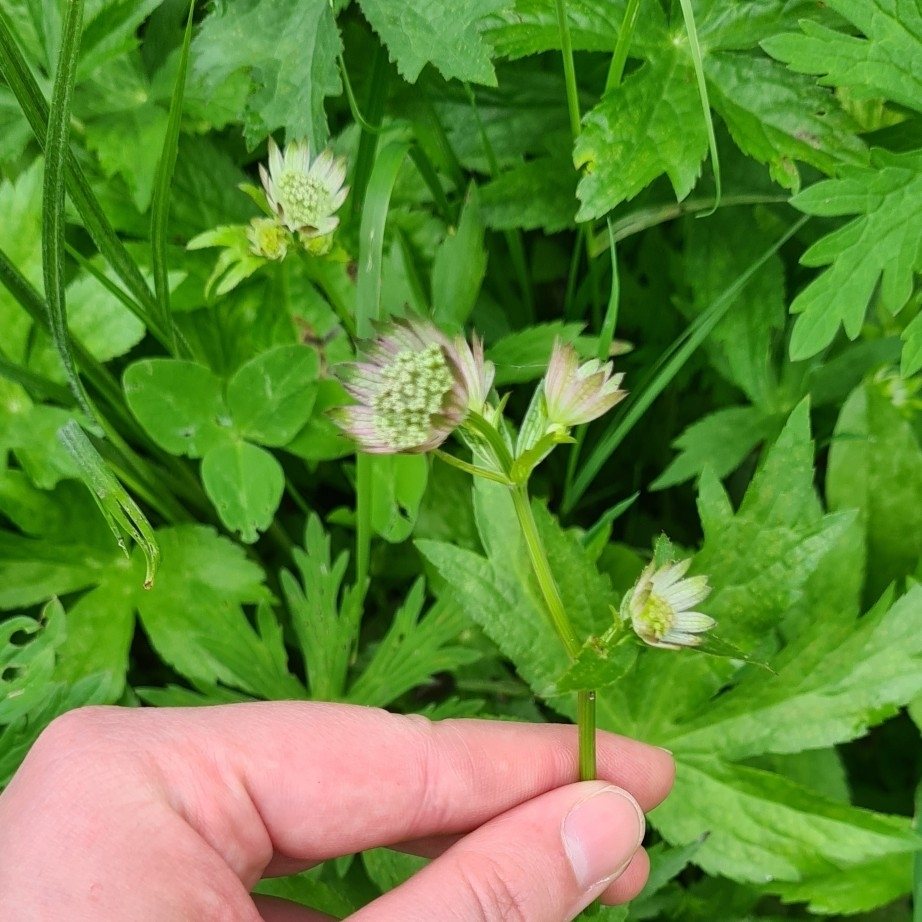
- Basal clumps of green, palmately divided leaves with toothed edges; smaller leaves occur along the upright flower stems.
- Growth
- Moderate
- Care needed
- Medium
The year at a glance
- Pollinators
- Cold hardy
- Low allergen
| J | F | M | A | M | J | J | A | S | O | N | D | |
|---|---|---|---|---|---|---|---|---|---|---|---|---|
| Flowers | ||||||||||||
| Fruit | ||||||||||||
| Plant |
Northern hemisphere months. In Australia, shift them by six.
- Difficulty
- Moderate
- Toughness
- Fairly tough
Will it suit your garden?
Pick your zone, country, light and whether you have pets.
Full sun is 6 or more hours of direct sun a day, part shade 3 to 6 hours, shade under 3.
How it grows
Planting day
1 ft (0.3 m)
After 1 year
1.4 ft (0.43 m)
After 2 years
1.8 ft (0.55 m)
After 3 years
2.2 ft (0.68 m)
full size
About 3 years to full size.
From a typical nursery size, at an average rate for this kind of plant. A rule of thumb, not a forecast.
Good to know
- Cats and dogs
- Safe
- Growth rate
- Moderate
Care
Jobs through the year
- WaterApr–May, Sep–Oct, every 14 days
- Water established clumps if rain is insufficient; keep soil moist and water new divisions more often.
- WaterJun–Aug, every 7 days
- Water deeply during dry weather before the root zone dries out; sunny sites may need more.
- MulchMar–Apr
- Apply compost and moisture-retaining mulch, leaving the crown clear.
- FeedApr
- Feed lightly only on poor soil or where growth is weak.
- DivideMar–Apr, Sep
- Divide crowded clumps every three to four years and water divisions well.
- DeadheadJun–Sep, every 14 days
- Cut faded stems to basal leaves for repeat flowers; retain some for decorative seed heads if desired.
- PruneMar
- Remove dead foliage and remaining old stems before new growth develops.
- Water during dry spells before the root zone dries out completely.
- Apply compost and a moisture-conserving mulch in spring, keeping mulch clear of the crown.
- Feed lightly in spring only if growth is weak or the soil is poor.
- Divide crowded clumps in spring or early autumn, watering divisions until established.
- Remove unwanted seedlings while small; they may not match the parent plant.
Pruning. Cut spent flower stems back to the basal leaves to limit self-seeding and encourage another flush of flowers. Remove dead foliage in late autumn or before new growth starts in spring.
Through the year
- Early spring
- Remove old foliage and check for slugs around emerging shoots.
- Spring
- Plant or divide clumps, then water well and mulch with compost.
- Late spring
- Begin watering during dry weather, particularly in sunny borders.
- Summer
- Cut flowers for arrangements and remove fading stems to encourage repeat flowering.
- Early autumn
- Plant or divide while the soil is moist and there is time for roots to establish before winter.
- Late autumn
- Remove collapsed foliage and any remaining seed heads if seedlings are unwanted.
In the garden
- Plant in small groups through a partly shaded border, where the fine flower heads soften larger leaves.
- Combine with ferns, hostas and hardy geraniums along a woodland edge with moist soil.
- Weave among roses in cool, well-watered borders to fill gaps beneath their flowering stems.
- Use pale-flowered forms in white or pastel planting schemes, with dark foliage nearby for contrast.
- Include in a cutting border for fresh arrangements and dried flower heads.
Garden styles it suits: Cottage garden, English country, Woodland, New perennial (prairie), Romantic rose garden and Pollinator garden.
Plant it with: Hardy geraniums, Hostas, Lady's mantle, Astilbes, Japanese painted ferns and Roses.
Wildlife: The accessible flower heads attract bees, hoverflies and other pollinating insects.
Problems to watch for
- Slugs and snails can damage emerging leaves: inspect young growth and use hand removal or locally approved iron-phosphate bait as needed.
- Powdery mildew may develop in dry, crowded conditions: water the root zone, improve spacing and remove badly affected foliage.
- Leaf scorch and early summer dormancy can follow heat or drought: provide afternoon shade, mulch and maintain steady moisture.
- Crown or root rot can occur in waterlogged soil: improve drainage and avoid planting the crown too deeply.
Safety
Not known to be toxic to people, cats, dogs or horses. No specific poisonous part is established, but it is not an edible plant and animal safety information is limited.
Easily confused with
Largest masterwort (Astrantia maxima)
Usually has larger, pale pink flower heads with broad bracts and leaves divided into three main lobes; Astrantia major usually has more deeply divided, five- to seven-lobed leaves.
The name
Astrantia refers to the star-like arrangement of the flower bracts, and major means larger.
Propagation. Divide established clumps in spring or early autumn to preserve a named cultivar. Sow fresh seed outdoors in autumn; a period of cold often helps germination, which can be slow and uneven. Seedlings may differ from the parent.
Checked against open data
- Accepted botanical name
- Astrantia major
- In the US and Canada
- Introduced in St. Pierre and Miquelon.
- Native range
- Albania, Austria, Belarus, Bulgaria, Czechoslovakia, France, Germany, Greece, Hungary, Italy, North Caucasus and Poland.
- Measured
- Soil pH 6.5 to 7. Average height 40 cm.
Sources: GBIF (CC BY 4.0), USDA PLANTS and Trefle (CC BY 4.0). The care and design notes are LandscapeGPT's own.
See it in your own yard.
Upload a photo of your yard and see it redesigned with plants that suit your climate, each checked against your zone.