Matrona sedum
Hylotelephium telephium 'Matrona'. Family Crassulaceae. Perennial.
Also called Hylotelephium 'Matrona', Sedum 'Matrona', Matrona stonecrop, Matrona orpine.
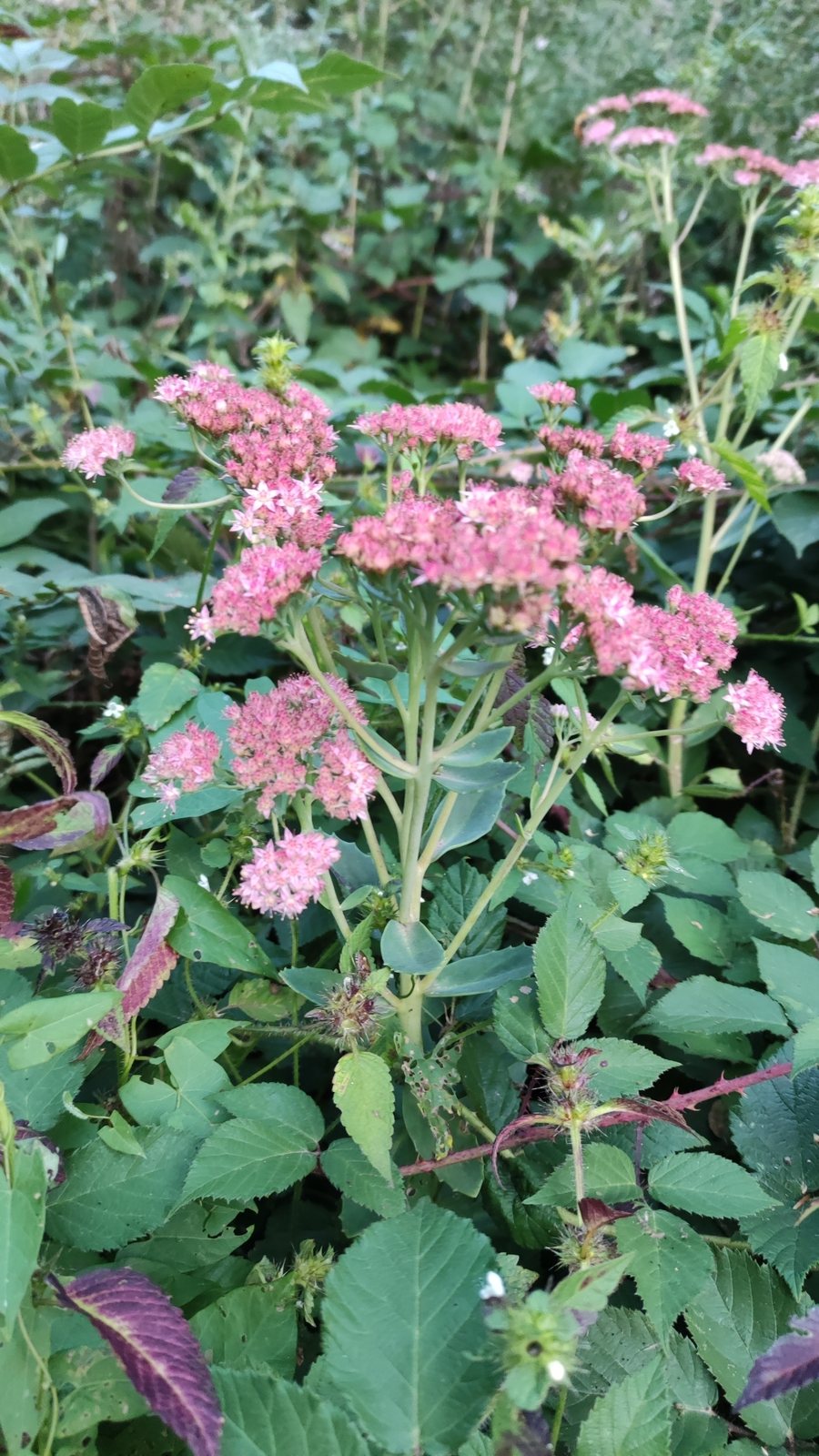
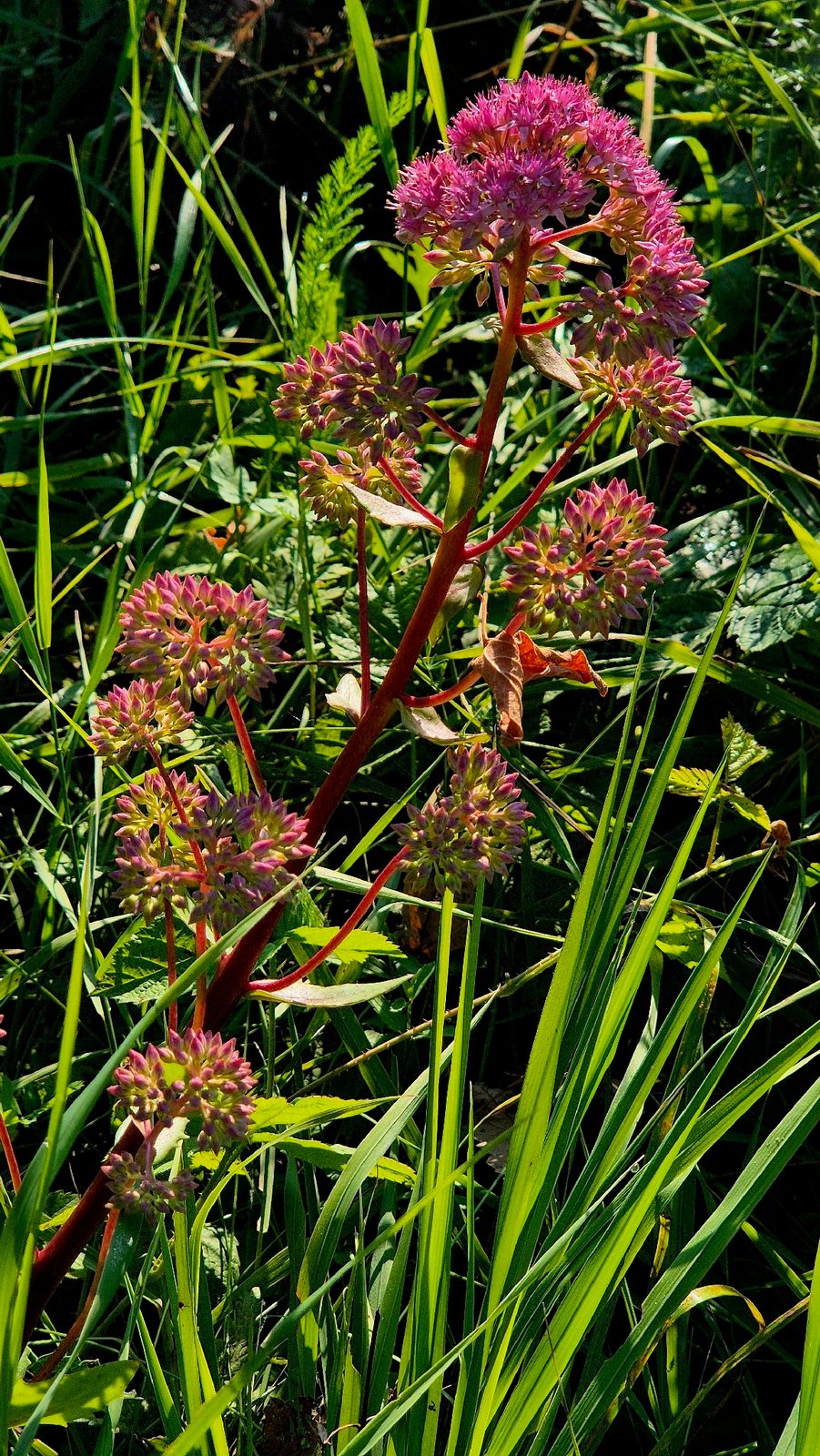
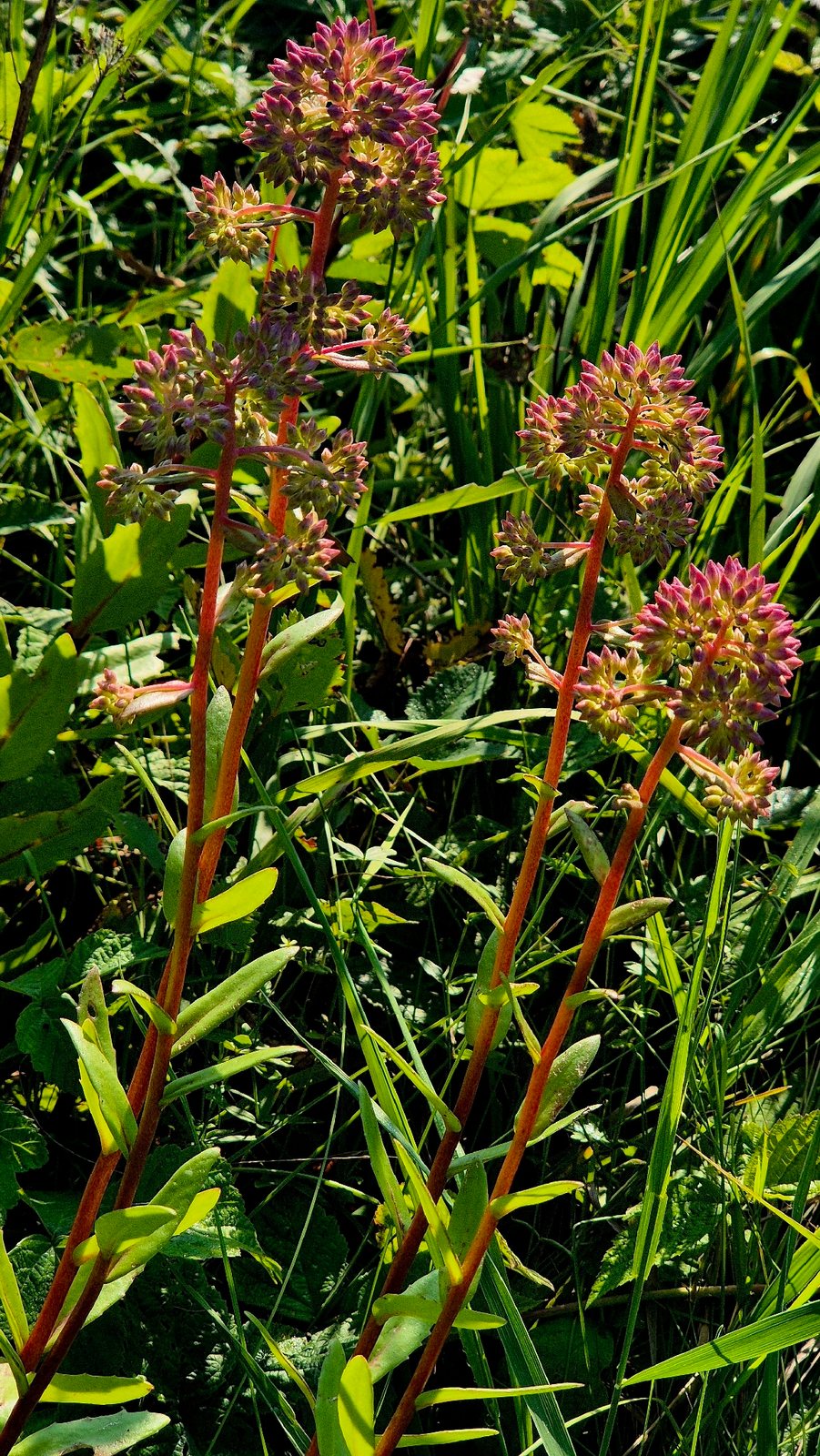
Matrona is a clump-forming, succulent perennial with burgundy stems, fleshy grey-green leaves flushed purple, and broad heads of pale pink flowers. Gardeners grow it for late-season colour, pollinator visits and seedheads that remain attractive through winter.
At a glance
- Sun
- Full sun is best; tolerates light shade, but stems may lean and leaf colour becomes greener.
- Water
- Low once established. Water new plants during dry spells; established clumps usually need extra water only during prolonged drought.
- Soil
- Well-drained soil, including sandy, gravelly or moderately fertile loam. Avoid waterlogged ground, especially in winter, and very rich soil.
- Height
- 2-3 ft (0.6-0.9 m)
- Spread
- 1.5-2 ft (0.45-0.6 m)
- Flowers
- Late summer to autumn; broad, flat heads of pale pink flowers age to dusky pink and brown.
- Foliage
- Fleshy, oval, lightly toothed grey-green leaves with purple-bronze flushing, carried on sturdy burgundy stems. Dies back in winter.
- Growth
- Moderate; forms a substantial flowering clump within two or three growing seasons.
- Care needed
- Low
The year at a glance
- Pollinators
- Drought tolerant
- Cold hardy
- Heat tolerant
- Wildlife
- Low allergen
| J | F | M | A | M | J | J | A | S | O | N | D | |
|---|---|---|---|---|---|---|---|---|---|---|---|---|
| Flowers | ||||||||||||
| Fruit | ||||||||||||
| Plant |
Northern hemisphere months. In Australia, shift them by six.
- Difficulty
- Easy
- Toughness
- Very tough
Will it suit your garden?
Pick your zone, country, light and whether you have pets.
Full sun is 6 or more hours of direct sun a day, part shade 3 to 6 hours, shade under 3.
How it grows
Planting day
1 ft (0.3 m)
After 1 year
1.5 ft (0.45 m)
After 2 years
2 ft (0.6 m)
After 3 years
2.5 ft (0.75 m)
full size
About 3 years to full size.
From a typical nursery size, at an average rate for this kind of plant. A rule of thumb, not a forecast.
Good to know
- Cats and dogs
- Safe
- Native to
- the UK
- Growth rate
- Moderate
Care
Jobs through the year
- WaterApr–May, Sep, every 28 days
- Water established clumps only during prolonged drought; water new plants whenever the root zone dries.
- WaterJun–Aug, every 21 days
- Water established clumps deeply only during prolonged drought, letting soil dry between waterings.
- PruneFeb–Mar
- Cut old stems close to ground level without damaging new crown buds.
- PruneMay
- Optionally shorten stems by one-third for sturdier, shorter plants and later flowering.
- DivideMar–Apr
- Divide only if clumps become congested, centres bare or flowering declines.
- ProtectMar–Apr
- Check emerging shoots for slugs and snails; hand-pick or use suitable barriers if needed.
- ProtectOct–Nov
- Clear fallen leaves from the crown to reduce winter rot.
- Water newly planted clumps when the root zone dries; let the soil dry between waterings.
- Avoid routine feeding; rich soil and excess nitrogen encourage weak, flopping stems.
- Use a thin gravel mulch if needed, keeping the crown clear of wet organic mulch.
- In windy positions, put a discreet support around the clump before stems reach full height.
- Divide congested clumps in spring if the centre becomes bare or flowering declines.
Pruning. Leave dry stems and flowerheads standing through winter, then cut them close to ground level in late winter or early spring before new shoots lengthen. For shorter, more branched plants, optionally shorten stems by about one-third in late spring; flowering will be later.
Through the year
- Late winter
- Cut down old stems before fresh shoots grow tall, taking care not to damage buds at the crown.
- Spring
- Plant or divide clumps in free-draining ground and water them in.
- Late spring
- Add discreet supports where needed, or shorten stems by one-third to reduce height.
- Summer
- Check new plants during dry spells; avoid feeding established clumps.
- Late summer
- Leave flowers for pollinators and cut a few stems for indoor arrangements if wanted.
- Autumn
- Keep fading flowerheads for winter structure and check that fallen leaves are not smothering the crown.
In the garden
- Plant in repeated groups through a sunny perennial border for burgundy stems and late pink flowers.
- Combine with ornamental grasses and coneflowers in naturalistic planting; the broad flowerheads contrast with fine leaves and upright spikes.
- Use in a gravel garden with catmint and lamb's ears, where drainage is sharp and foliage contrasts are prominent.
- Place beside a path or patio where winter seedheads can be seen, allowing room for the mature clump.
Garden styles it suits: New perennial (prairie), Dry gravel garden, Pollinator garden, Low-maintenance, Autumn colour and Winter interest.
Plant it with: Feather reed grass, Little bluestem, Purple coneflower, Catmint, Lamb's ears and Russian sage.
Wildlife: The late flowers provide nectar and pollen for bees, butterflies and other visiting insects. Standing stems and seedheads add shelter and structure through winter.
Problems to watch for
- Crown and root rot in wet soil: improve drainage or move the plant to a raised position; discard badly rotted crowns.
- Flopping stems: provide more sun, stop feeding and avoid excessive watering; divide crowded clumps or shorten stems in late spring.
- Slugs and snails eating emerging shoots: inspect young growth and use barriers, hand-picking or locally approved controls as needed.
- Vine weevil larvae damaging roots, especially in containers: inspect failing plants and use an appropriate biological control when soil temperatures suit the product.
Safety
Not known to be toxic to people, cats, dogs or horses. No part is recognised as a serious poisoning hazard, but it is an ornamental rather than a food plant; eating large amounts may cause stomach upset.
Easily confused with
Autumn Joy sedum (Hylotelephium 'Herbstfreude')
Usually has greener leaves and stems, with stronger pink flowers that age to coppery rust; Matrona has conspicuous burgundy stems and paler flowers.
Purple Emperor sedum (Hylotelephium 'Purple Emperor')
Has much darker purple foliage across the whole leaf and generally a shorter habit; Matrona retains more grey-green in its leaves.
The name
Hylotelephium combines the Greek word for woodland with Telephium, an older plant name, while stonecrop refers to these plants' ability to grow in stony places.
Propagation. Divide clumps in spring, or root non-flowering stem cuttings in late spring or early summer. These methods preserve the cultivar; seedlings will not reliably match 'Matrona'.
Checked against open data
- Accepted botanical name
- Hylotelephium telephium
- In the US and Canada
- Introduced in Canada and the lower 48 states.
- Native range
- Altay, Amur, Austria, Baltic States, Belarus, Belgium, Buryatiya, Central European Rus, China North-Central, Chita, Czechoslovakia and East European Russia.
- Measured
- Soil pH 6.5 to 7. Average height 41 cm.
Sources: GBIF (CC BY 4.0), USDA PLANTS and Trefle (CC BY 4.0). The care and design notes are LandscapeGPT's own.
See it in your own yard.
Upload a photo of your yard and see it redesigned with plants that suit your climate, each checked against your zone.