Maypop (hardy passionflower)
Passiflora incarnata. Family Passifloraceae. Climber.
Also called Maypop, Hardy passionflower, Purple passionflower.
A tendril-climbing perennial native to the eastern and southern United States, grown for intricate purple-and-white flowers and edible, egg-shaped fruit. It usually dies back in winter and returns late in spring from spreading underground roots. Warm summers help it flower and ripen fruit; cool summers can limit cropping.
At a glance
- Sun
- Full sun for best flowering and fruiting; tolerates light shade.
- Water
- Water regularly during establishment and prolonged dry spells. Established roots tolerate some drought, but flowering and fruiting benefit from even moisture.
- Soil
- Well-drained soil, from sandy loam to clay loam; avoid ground that stays wet in winter.
- Height
- 10-20 ft (3-6 m) with support
- Spread
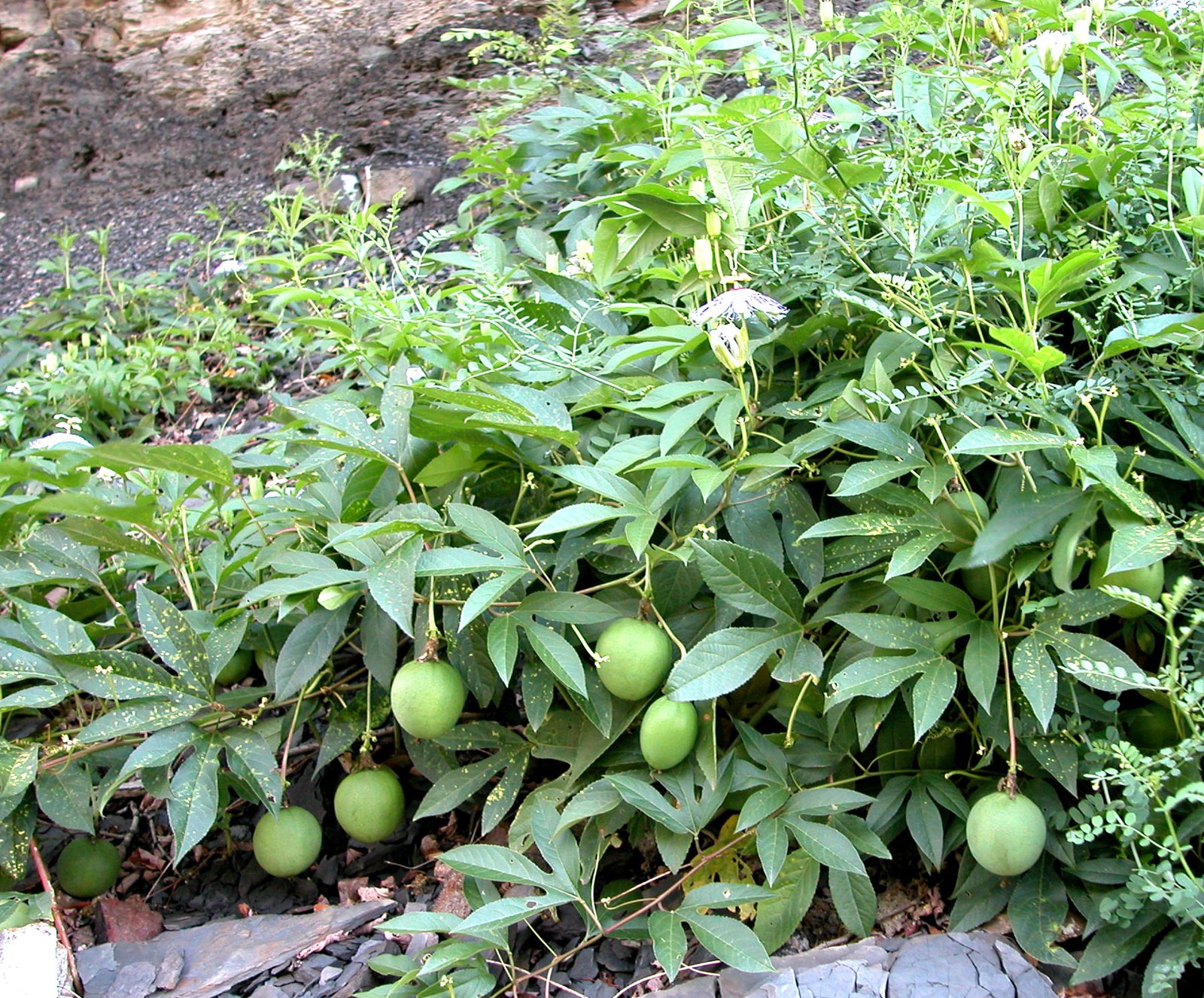
- 3-6 ft (0.9-1.8 m) of trained growth; underground runners can spread much farther
- Flowers
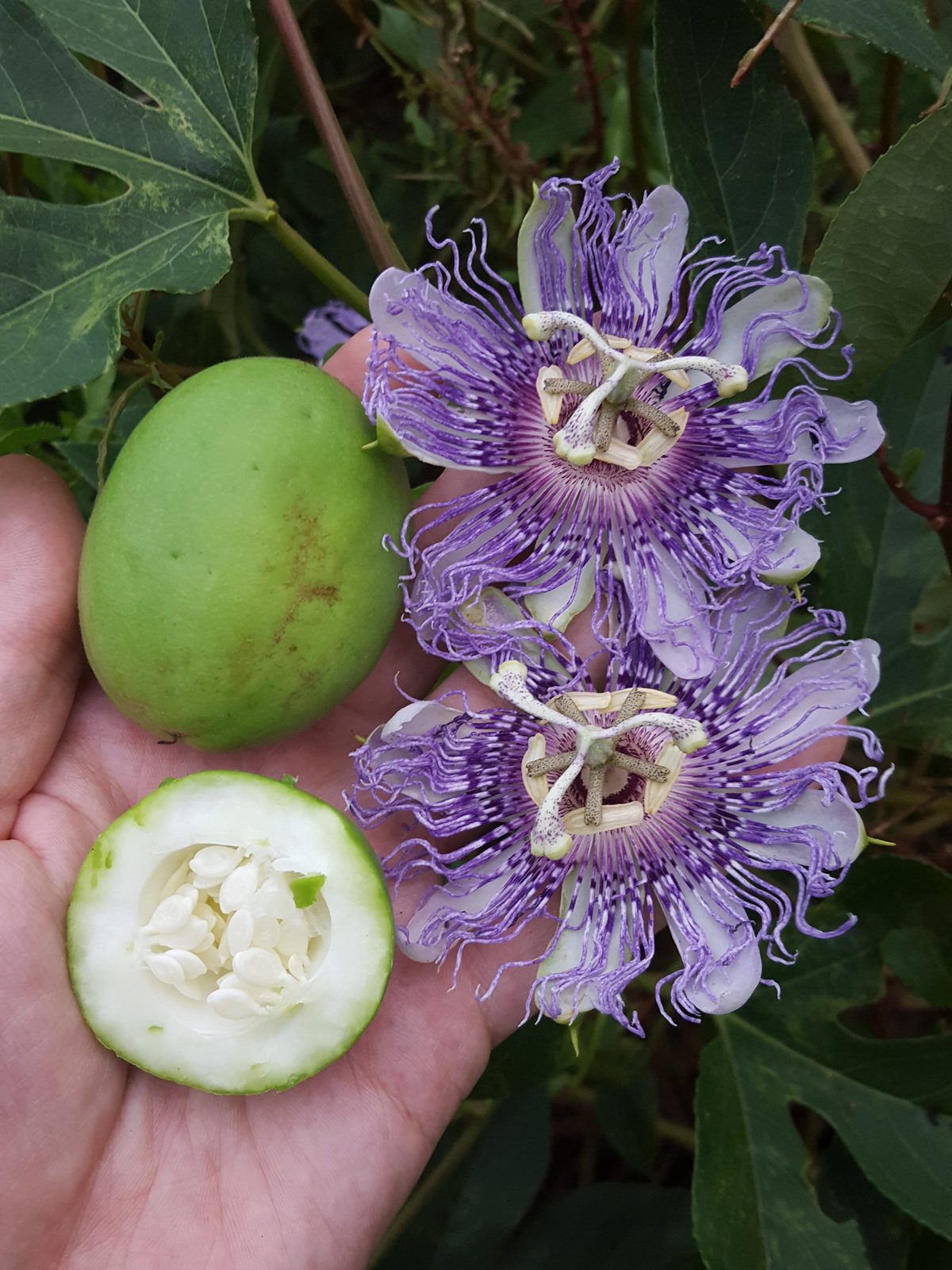
- Summer into early autumn; white to pale lavender petals with a fringed purple-and-white central crown.
- Foliage
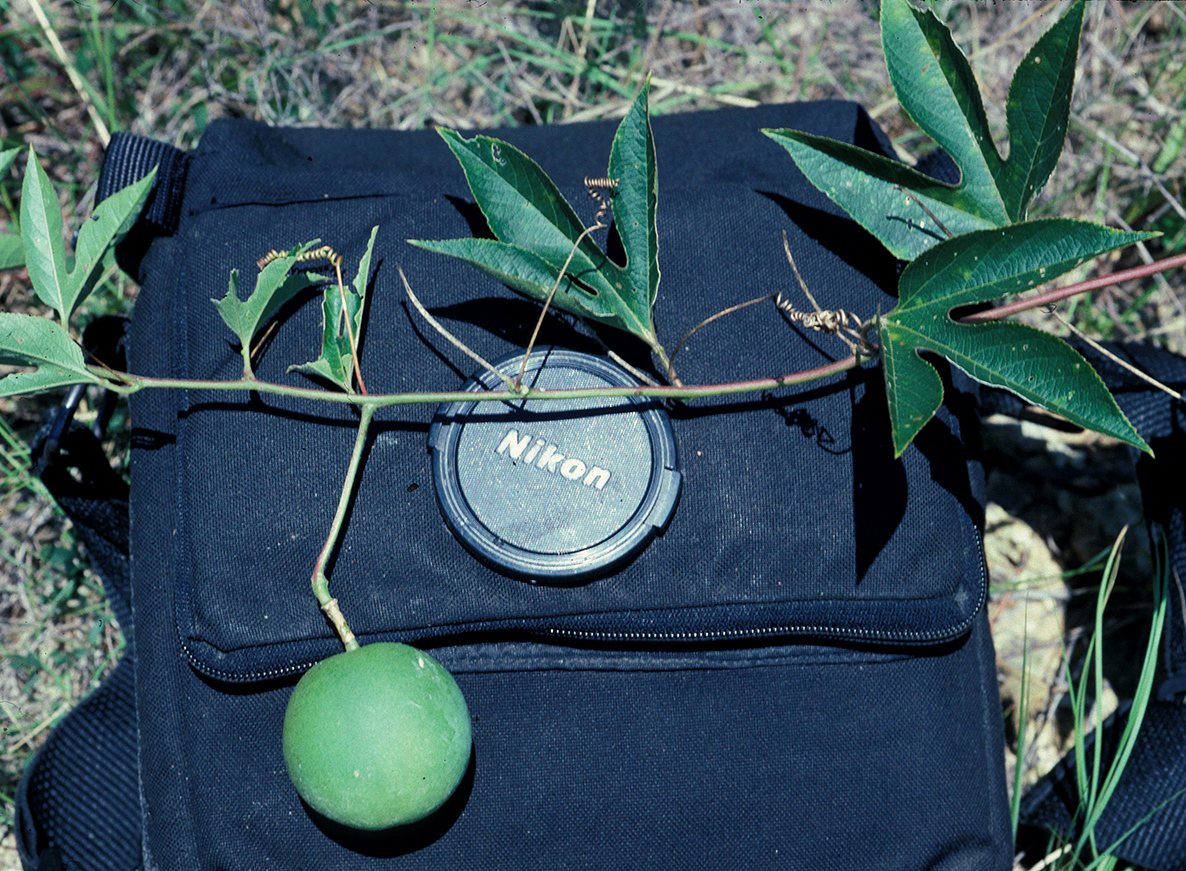
- Green, alternate leaves, usually deeply divided into three pointed lobes; tendrils grip nearby supports.
- Growth
- Fast once growth begins in late spring
- Care needed
- Medium
The year at a glance
- Pollinators
- Drought tolerant
- Heat tolerant
- Wildlife
- Low allergen
- Edible
| J | F | M | A | M | J | J | A | S | O | N | D | |
|---|---|---|---|---|---|---|---|---|---|---|---|---|
| Flowers | ||||||||||||
| Fruit | ||||||||||||
| Plant |
Northern hemisphere months. In Australia, shift them by six.
- Difficulty
- Moderate
- Toughness
- Fairly tough
Will it suit your garden?
Pick your zone, country, light and whether you have pets.
Full sun is 6 or more hours of direct sun a day, part shade 3 to 6 hours, shade under 3.
How it grows
Planting day
2 ft (0.6 m)
After 1 year
3 ft (1.1 m)
After 2 years
5 ft (1.5 m)
After 3 years
6 ft (1.8 m)
full size
About 3 years to full size.
From a typical nursery size, at an average rate for this kind of plant. A rule of thumb, not a forecast.
Good to know
- Cats and dogs
- Toxic
- Native to
- the US
- In the garden
- Spreads vigorously: plan to contain it.
- Growth rate
- Fast
Care
Jobs through the year
- WaterMay–Jun, Sep, every 14 days
- Deep-water established plants if soil is drying; water young plants more often.
- WaterJul–Aug, every 7 days
- Water deeply during dry weather, keeping moisture even while fruit develops.
- FeedApr–May
- Apply compost as growth starts; avoid high-nitrogen fertilisers.
- PruneFeb–Mar
- Cut dead stems nearly to ground level before new shoots appear.
- PruneJun–Sep, every 14 days
- Remove unwanted suckers and thin wandering shoots, retaining flowering stems.
- MulchOct–Nov
- Insulate the root area before hard frost, keeping wet mulch away from the crown.
- HarvestAug–Oct
- Pick softened yellowish-green fruit that releases easily; eat only ripe pulp.
- Provide a sturdy trellis or wire framework and guide young shoots onto it.
- Water deeply during dry spells, especially while fruit is developing.
- Apply compost in spring; avoid heavy nitrogen feeding, which encourages leaves rather than flowers.
- Mulch the root area before winter in colder regions, keeping wet mulch away from the crown.
- Remove unwanted suckers promptly and keep the plant away from delicate shrubs.
- For dependable fruit set, grow two genetically different plants rather than two divisions of one plant.
Pruning. In late winter or early spring, cut dead stems back to near ground level before new shoots appear. Thin crowded shoots and trim wandering growth during summer without removing all the flowering stems.
Harvest
Pick fruit in late summer or autumn when it changes from firm green to yellowish green, softens and releases easily; ripe fruit may fall naturally. Eat the aromatic pulp surrounding the seeds, not the rind or unripe fruit. Plants may fruit in their first or second growing season, but cool summers and poor cross-pollination can prevent a useful crop.
Through the year
- Late winter
- Cut back dead stems and repair the supporting framework.
- Spring
- Plant after severe frost risk has passed, in a sunny position with well-drained soil.
- Late spring
- Watch for late-emerging shoots before disturbing the root area; add compost and guide shoots onto supports.
- Summer
- Water during dry spells and remove suckers outside the intended growing area.
- Late summer
- Check developing fruit for softening and an easy release from the stem.
- Autumn
- Collect ripe fallen fruit and mulch the root area before hard frosts in colder gardens.
In the garden
- Train over a strong fence or trellis for seasonal screening.
- Grow on a sunny arbor where the flowers can be seen at eye level.
- Use at the edge of a wildlife garden, with room for suckers and caterpillar feeding.
- Include on a separate support in an edible garden for flowers and late-season fruit.
Garden styles it suits: Cottage garden, Wildlife garden, Pollinator garden, Edible landscape, Homestead and Southern.
Plant it with: Purple coneflower, Black-eyed Susan, Butterfly weed, Little bluestem and Garden phlox.
Wildlife: Flowers attract large bees, especially carpenter bees. In parts of North America, the foliage feeds Gulf fritillary, variegated fritillary and zebra longwing caterpillars; wildlife also eats the ripe fruit.
Problems to watch for
- Unwanted suckers: dig out shoots with their attached roots while small; avoid planting beside delicate borders.
- Little or no fruit: provide a genetically different second plant, encourage pollinating bees and choose a warm, sunny site.
- Root rot or winter losses: improve drainage and avoid waterlogged winter soil, especially near the cold end of its range.
- Caterpillar feeding: passionflower butterflies can strip leaves in its native range; tolerate damage where possible, as established plants often regrow.
Safety
Ripe fruit pulp is edible for people. Other parts, including foliage and unripe fruit, contain potentially harmful compounds and should not be eaten or offered to cats, dogs or horses. Species-specific poisoning information for these animals is limited, so do not assume the vine is safe forage; seek veterinary advice after substantial ingestion.
Where it spreads. Can spread aggressively by underground runners in eastern and southern United States gardens, within its native range. It may colonize nearby beds or disturbed ground; this spreading habit is not the same as being a listed non-native invasive plant.
Easily confused with
Blue passionflower (Passiflora caerulea)
Usually has five to seven narrow leaf lobes and blue-and-white flowers; maypop usually has three broader leaf lobes and a more densely fringed lavender-purple crown.
Purple passion fruit (Passiflora edulis)
A frost-tender vine with glossy leaves and fruit that usually ripens purple or yellow, depending on the form; maypop is a hardy, usually winter-dormant perennial with greenish-yellow ripe fruit.
Yellow passionflower (Passiflora lutea)
Has much smaller yellow-green flowers, shallowly three-lobed leaves and small dark berries rather than maypop's large flowers and egg-sized fruit.
The name
Passiflora refers to Christian interpretations of the flower as symbols of the Passion, while incarnata means flesh-coloured.
Propagation. Separate rooted suckers in spring or take root cuttings while dormant. Seed germination can be slow and irregular; seedlings provide genetic diversity for cross-pollination, while divisions remain genetically identical to the parent.
Checked against open data
- Accepted botanical name
- Passiflora incarnata
- In the US and Canada
- Native in the lower 48 states.
- Native range
- Alabama, Arkansas, Bermuda, Florida, Georgia, Illinois, Indiana, Kansas, Kentucky, Louisiana, Mississippi and Missouri.
Sources: GBIF (CC BY 4.0), USDA PLANTS and Trefle (CC BY 4.0). The care and design notes are LandscapeGPT's own.
See it in your own yard.
Upload a photo of your yard and see it redesigned with plants that suit your climate, each checked against your zone.