Mealycup sage
Salvia farinacea. Family Lamiaceae. Perennial.
Also called Mealy sage, Blue sage.
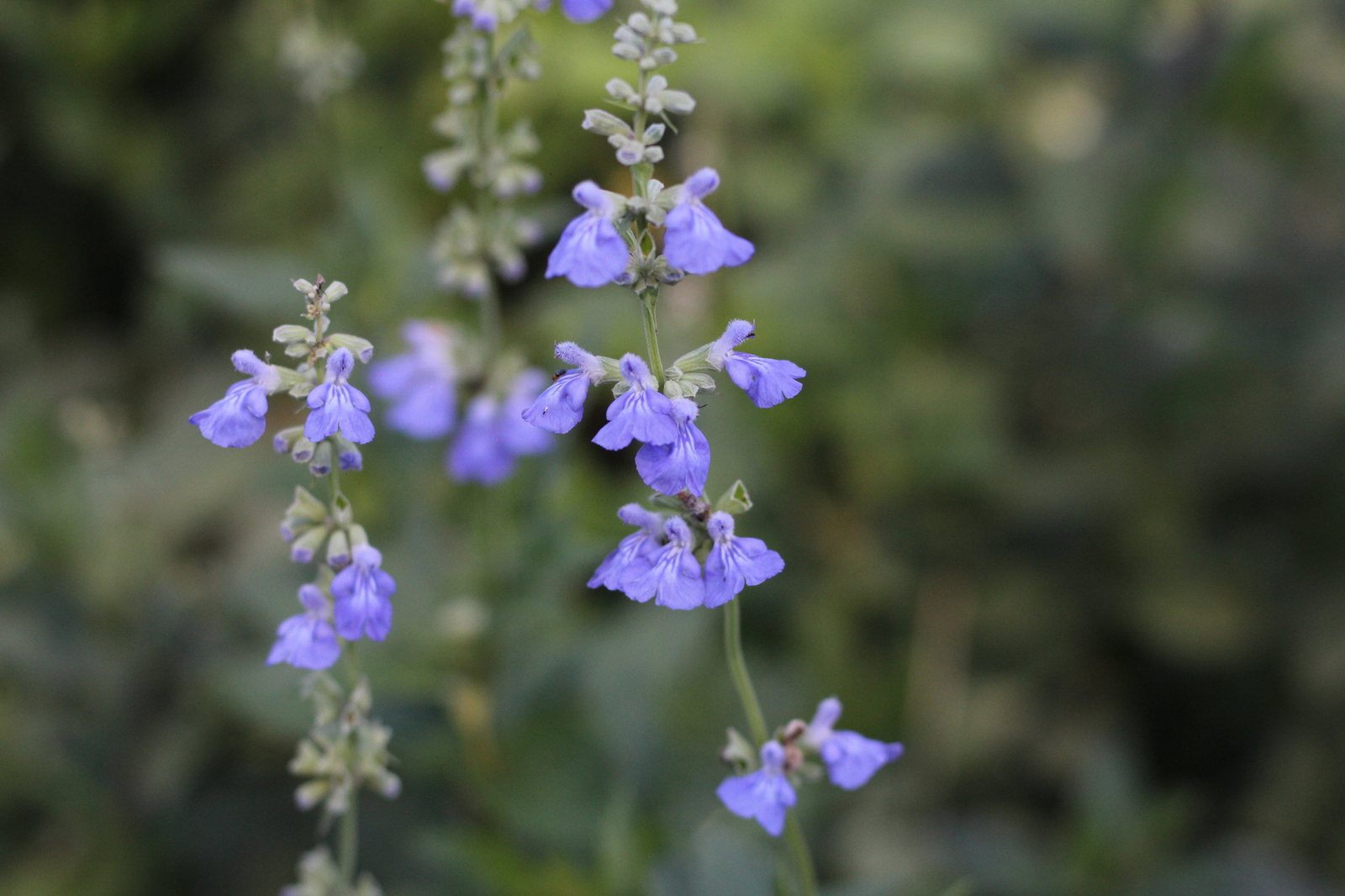
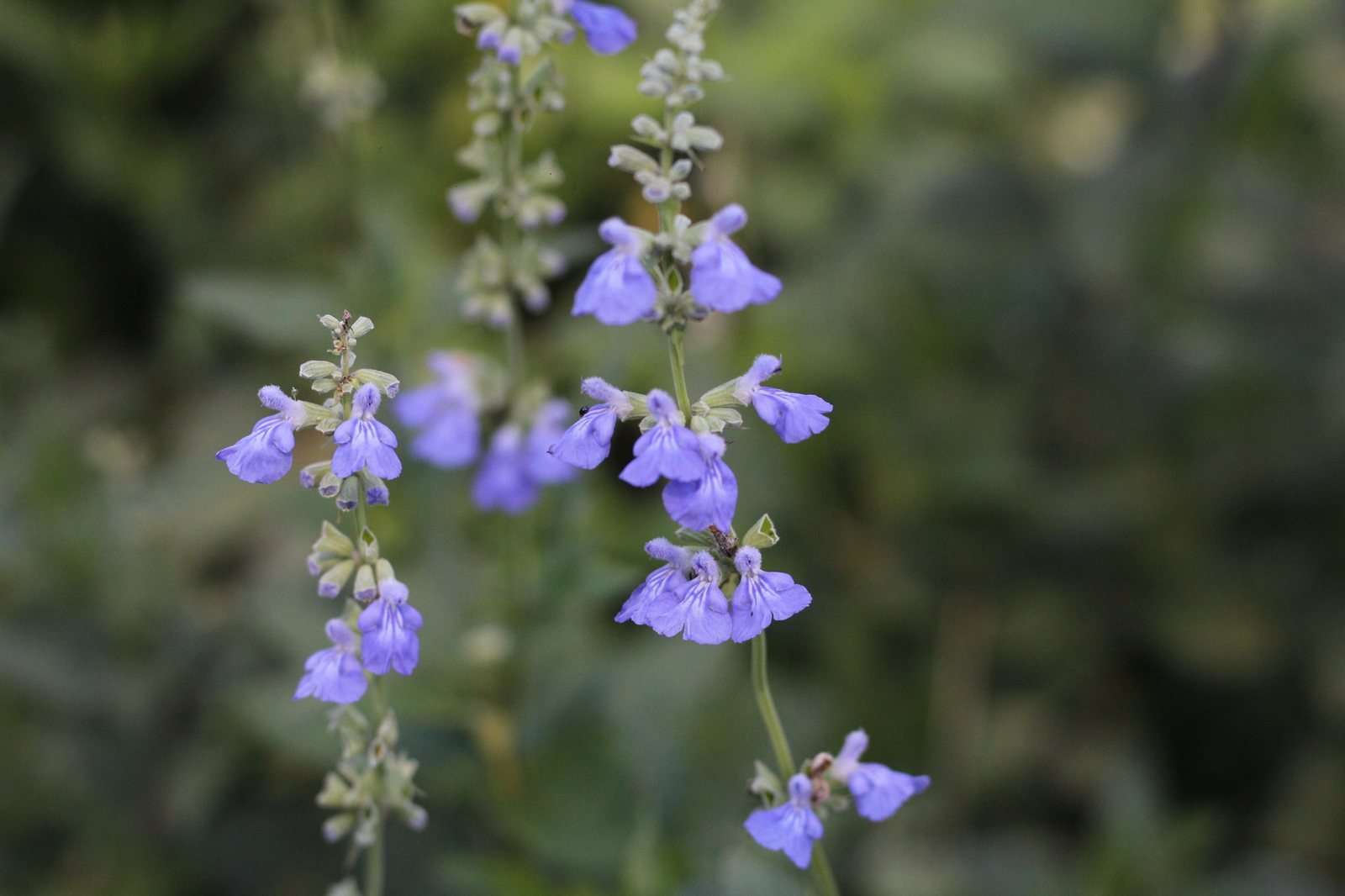
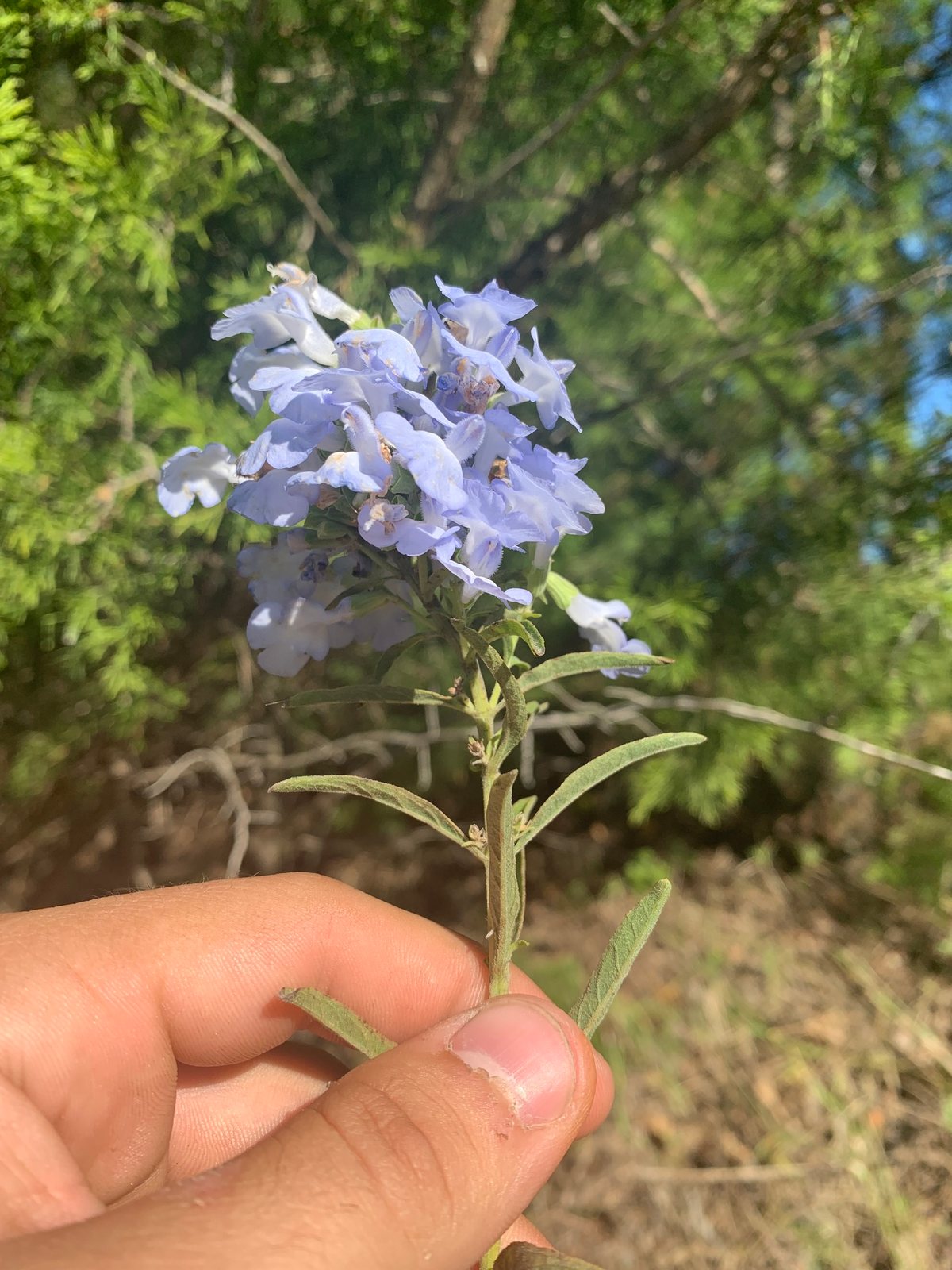
Mealycup sage is a short-lived, frost-tender perennial from Texas and Mexico, grown for its upright spikes of blue, violet-blue or white flowers. It flowers through summer into autumn, attracts bees and is grown as an annual where winters are too cold for it to survive.
At a glance
- Sun
- Full sun; light afternoon shade is useful in very hot climates, but too much shade reduces flowering.
- Water
- Water regularly while establishing. Once established in the ground, allow the surface soil to dry between thorough waterings; water containers more often.
- Soil
- Well-drained sandy, loamy or gravelly soil. Tolerates some clay if drainage is good; avoid ground that stays wet in winter.
- Height
- 1.5-3 ft (0.45-0.9 m)
- Spread
- 1-2 ft (0.3-0.6 m)
- Flowers
- Late spring or early summer until autumn frost; usually violet-blue or blue, with white-flowered forms also available.
- Foliage
- Narrow, lance-shaped green to grey-green leaves, sometimes with lightly toothed edges; flower stalks and calyces have a pale, mealy coating.
- Growth
- Fast; usually flowers in its first growing season.
- Care needed
- Low
The year at a glance
- Pollinators
- Deer resistant
- Drought tolerant
- Heat tolerant
- Low allergen
| J | F | M | A | M | J | J | A | S | O | N | D | |
|---|---|---|---|---|---|---|---|---|---|---|---|---|
| Flowers | ||||||||||||
| Plant |
Northern hemisphere months. In Australia, shift them by six.
- Difficulty
- Easy
- Toughness
- Fairly tough
Will it suit your garden?
Pick your zone, country, light and whether you have pets.
Full sun is 6 or more hours of direct sun a day, part shade 3 to 6 hours, shade under 3.
How it grows
Planting day
1 ft (0.3 m)
After 1 year
1.6 ft (0.49 m)
After 2 years
2.2 ft (0.68 m)
full size
About 2 years to full size.
From a typical nursery size, at an average rate for this kind of plant. A rule of thumb, not a forecast.
Good to know
- Cats and dogs
- Safe
- Native to
- the US
- Growth rate
- Fast
Care
Jobs through the year
- WaterMay–Jun, Sep, every 14 days
- For established plants, water deeply if soil is dry; water new transplants more often.
- WaterJul–Aug, every 7 days
- Water during dry spells, allowing the surface soil to dry between soakings.
- MulchMay–Jun
- Apply a thin mulch after planting, keeping it away from crowns.
- DeadheadJun–Oct, every 7 days
- Cut faded flower spikes back to a leafy shoot to encourage more blooms.
- PruneJul–Aug
- Lightly shear tired plants only if flowering slows.
- ProtectSep–Oct
- To retain plants, move rooted cuttings to a bright frost-free place before frost; otherwise treat as annuals.
- Plant after the danger of frost has passed, spacing plants about 1-2 ft (0.3-0.6 m) apart according to their mature size.
- Water at soil level and let the surface dry between waterings rather than keeping roots constantly wet.
- Work a little compost into poor soil before planting; avoid heavy nitrogen feeding, which encourages leafy, floppy growth.
- Apply a thin mulch to conserve moisture, keeping it clear of the crown.
- Grow container plants in pots with drainage holes and feed lightly with a balanced fertiliser during active growth.
Pruning. Remove spent flower spikes back to a leafy shoot to encourage more flowers; lightly shear tired plants in midsummer if flowering slows. Where plants overwinter, leave stems through winter and cut back to healthy new growth in spring.
Through the year
- Late winter
- Sow seed indoors about 8-10 weeks before your last expected frost, providing warmth and bright light.
- Spring
- Cut back overwintered plants once new shoots show, removing dead or frost-damaged stems.
- Late spring
- Harden off young plants and plant outdoors after frost danger has passed.
- Summer
- Remove faded flower spikes and water during extended dry spells, especially in containers.
- Late summer
- Take non-flowering softwood cuttings if you want to keep a particular plant through winter.
- Autumn
- Before frost, move rooted cuttings to a bright, frost-free place; remove frost-killed bedding plants where grown as annuals.
In the garden
- Repeat small groups through sunny borders to create a rhythm of upright blue flower spikes.
- Pair with yellow coreopsis or rudbeckia for a clear blue-and-yellow summer display.
- Use compact forms in sunny containers with trailing plants, keeping their roots well drained.
- Plant among ornamental grasses and coneflowers for a loose, pollinator-friendly border.
Garden styles it suits: Cottage garden, Pollinator garden, New perennial (prairie), Blues and silvers, Dry gravel garden and Texas Hill Country.
Plant it with: Coreopsis, Black-eyed Susan, Purple coneflower, Blanket flower, Ornamental grasses and Zinnia.
Wildlife: Flowers provide nectar and pollen for bees and attract butterflies. Hummingbirds may visit where they occur in North America.
Problems to watch for
- Root or crown rot in wet soil: improve drainage, keep mulch away from the crown and avoid frequent watering of already moist soil.
- Powdery mildew in crowded or poorly ventilated planting: increase spacing, provide sun and remove badly affected leaves.
- Aphids on young shoots: wash them off with water and encourage natural predators; use insecticidal soap if infestations persist.
- Floppy growth and sparse flowering: move plants into more sun and reduce nitrogen feeding; support tall stems if necessary.
Safety
Not known to be toxic to people, cats, dogs or horses. No part is recognised as a significant poisoning hazard, but this ornamental sage is not a substitute for culinary sage; eating plant material may still cause stomach upset.
Easily confused with
Woodland sage (Salvia nemorosa)
Usually has more wrinkled, toothed leaves and denser flower spikes, without the conspicuous pale, mealy coating of mealycup sage; it is also much more winter-hardy.
Bog sage (Salvia uliginosa)
Usually much taller, with loose sprays of sky-blue flowers and a spreading, rhizomatous habit; it prefers moister soil.
Lavender (Lavandula angustifolia)
Has a woody base and strongly aromatic, narrow grey leaves; its flower heads are shorter and more compact than the long, interrupted spikes of mealycup sage.
The name
The Latin epithet farinacea means floury or mealy, referring to the pale coating on the flower stalks and calyces, which also gives mealycup sage its common name.
Propagation. Sow seed indoors before the growing season or directly outdoors once frost danger has passed and the soil is warm. Take softwood cuttings during active growth to preserve a particular flower colour or cultivar; seedlings may vary.
Checked against open data
- Accepted botanical name
- Salvia farinacea
- In the US and Canada
- Native in the lower 48 states.
- Native range
- Mexico Northeast, New Mexico and Texas.
- Measured
- Average height 14 cm.
Sources: GBIF (CC BY 4.0), USDA PLANTS and Trefle (CC BY 4.0). The care and design notes are LandscapeGPT's own.
See it in your own yard.
Upload a photo of your yard and see it redesigned with plants that suit your climate, each checked against your zone.