Mellow Yellow spirea
Spiraea thunbergii 'Ogon'. Family Rosaceae. Shrub.
Also called Spiraea thunbergii 'Ogon', Ogon spirea, Golden Thunberg spirea, Mellow Yellow spiraea.
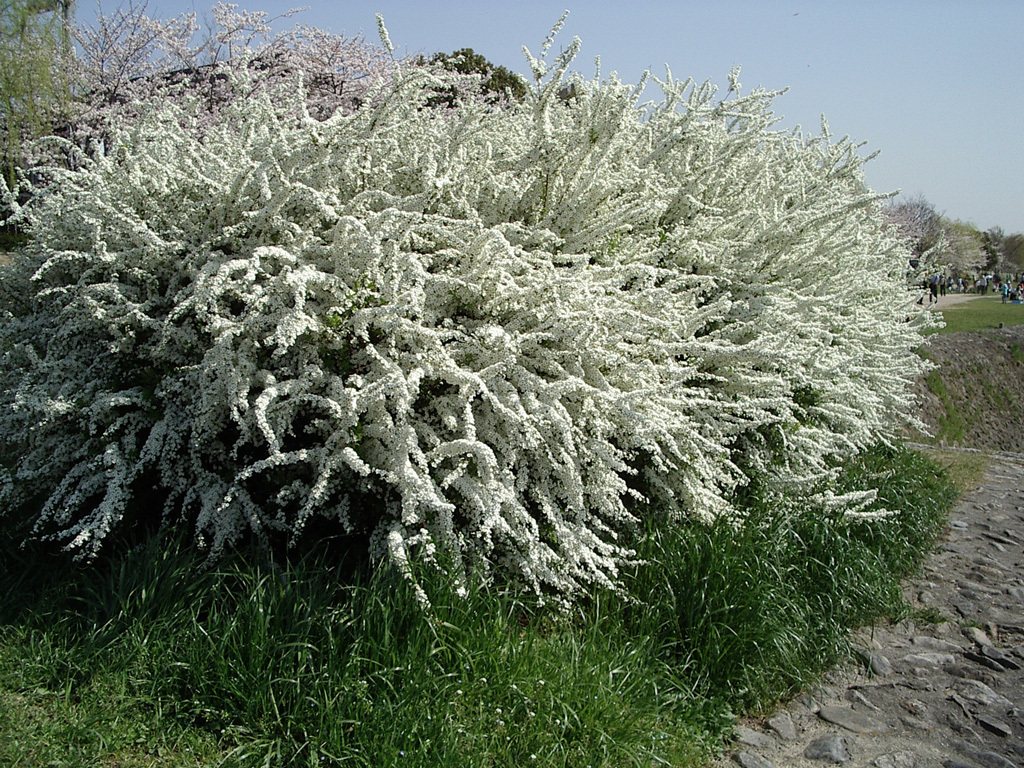
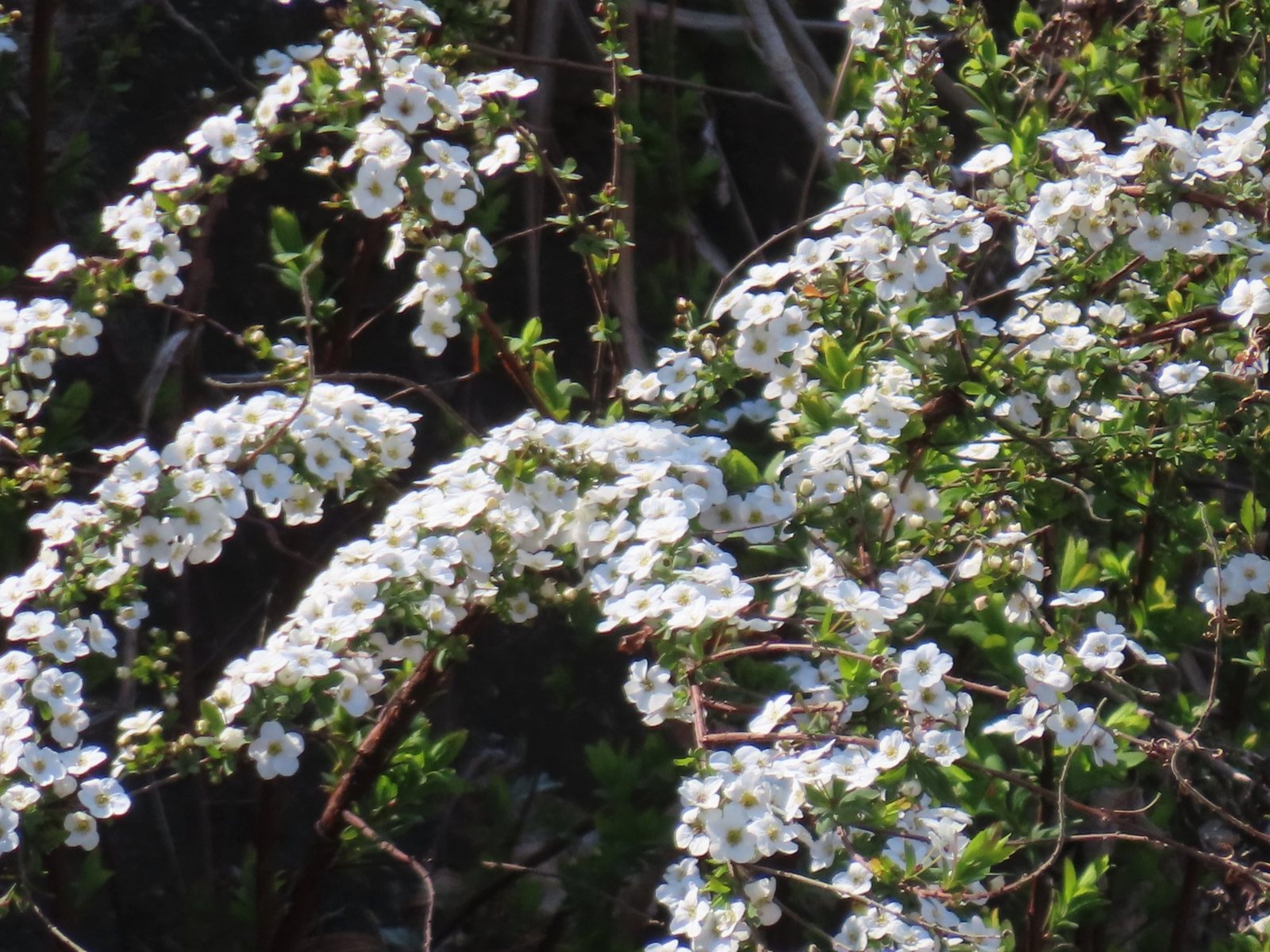
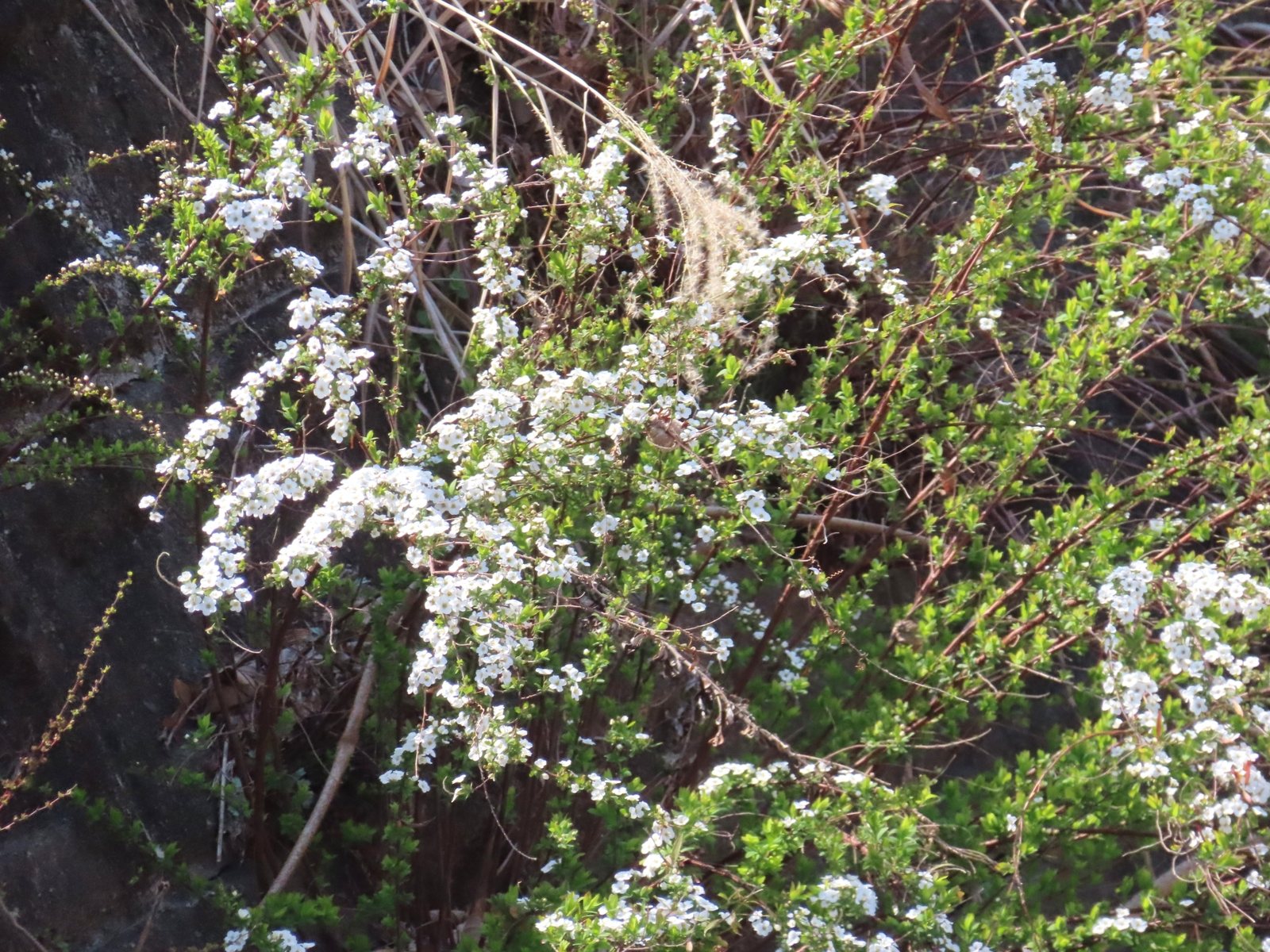
A deciduous shrub with slender, arching branches, narrow golden leaves and small white spring flowers. Gardeners grow it mainly for its fine-textured foliage, which brightens mixed borders and turns orange-yellow in autumn.
At a glance
- Sun
- Full sun to partial shade. Sun gives the strongest golden colour; light afternoon shade can help prevent leaf scorch in hot climates.
- Water
- Moderate; keep the root zone evenly moist while establishing, then water during prolonged dry spells.
- Soil
- Well-drained loam, clay or sandy soil. Tolerates a range of soil pH, but dislikes persistent waterlogging.
- Height
- 3-5 ft (0.9-1.5 m)
- Spread
- 3-5 ft (0.9-1.5 m)
- Flowers
- Small white flowers clustered along the branches in early to mid-spring, sometimes beginning in late winter in mild climates.
- Foliage
- Narrow, finely toothed leaves emerge yellow to yellow-green, often with bronze tints, and become greener in shade. Autumn colour is yellow to orange; leaves may persist late into autumn in mild areas.
- Growth
- Moderate to fast
- Care needed
- Low
The year at a glance
- Pollinators
- Deer resistant
- Drought tolerant
- Cold hardy
- Low allergen
| J | F | M | A | M | J | J | A | S | O | N | D | |
|---|---|---|---|---|---|---|---|---|---|---|---|---|
| Flowers | ||||||||||||
| Plant |
Northern hemisphere months. In Australia, shift them by six.
- Difficulty
- Easy
- Toughness
- Very tough
Will it suit your garden?
Pick your zone, country, light and whether you have pets.
Full sun is 6 or more hours of direct sun a day, part shade 3 to 6 hours, shade under 3.
How it grows
Planting day
1.6 ft (0.5 m)
After 1 year
2.2 ft (0.68 m)
After 2 years
2.8 ft (0.85 m)
After 3 years
3 ft (1 m)
After 5 years
4 ft (1.2 m)
full size
About 4 years to full size.
From a typical nursery size, at an average rate for this kind of plant. A rule of thumb, not a forecast.
Good to know
- Cats and dogs
- Safe
- Growth rate
- Fast
Care
Jobs through the year
- WaterApr–May, Sep–Oct, every 14 days
- Water established ground shrubs in prolonged dry spells; keep newly planted roots evenly moist.
- WaterJun–Aug, every 7 days
- During drought, water established ground shrubs deeply if soil is dry below the surface.
- MulchMar–Apr
- Add a light compost dressing and maintain 5–8 cm of organic mulch clear of stems.
- PruneApr–May
- After flowering, remove dead wood and up to one-third of the oldest stems if crowded.
- Water deeply during dry weather for the first growing season; check soil moisture rather than watering on a fixed schedule.
- Apply 2-3 in (5-8 cm) of organic mulch, keeping it clear of the stems.
- Water established plants during prolonged drought, especially in hot, exposed positions.
- Top-dress with compost in spring; use a balanced fertiliser only if growth is weak on poor soil.
- Leave room for the arching branches rather than repeatedly shearing the shrub to fit a narrow space.
Pruning. Prune immediately after flowering because the flowers form on older wood. Remove dead or damaged stems and, when the shrub becomes crowded, cut up to one-third of the oldest stems to ground level while retaining its natural arching shape.
Through the year
- Early spring
- Top up mulch and add a light compost dressing without burying the stem bases.
- Spring
- Enjoy the white flowers; wait until flowering finishes before shaping the shrub.
- Late spring
- After flowering, thin crowded growth and remove selected old stems at ground level.
- Summer
- Check soil during dry spells and water deeply if it is dry below the surface.
- Early summer
- Take softwood cuttings from healthy, non-flowering shoots if you want more plants.
- Autumn
- Plant container-grown shrubs while soil is workable, water them in thoroughly and mulch.
In the garden
- Place in a mixed shrub border beside dark green or purple foliage for a clear colour contrast.
- Plant as a loose, informal low hedge, allowing the branches to arch rather than clipping them into a box.
- Use behind spring bulbs and low perennials so its foliage provides a backdrop after the flowers fade.
- Position near a path or seating area where the fine leaves and small spring flowers can be seen closely.
Garden styles it suits: Cottage garden, English country, Japanese, Romantic rose garden, Low-maintenance and Pastel border.
Plant it with: Daffodils, Cranesbill geraniums, Catmint, Purple-leaved ninebark, Siberian iris and Japanese forest grass.
Wildlife: The spring flowers provide pollen and nectar for visiting insects, including small bees and flies. The branching growth offers some shelter for small garden animals.
Problems to watch for
- Aphids can cluster on soft new shoots; wash small colonies off with water and encourage ladybirds and other predators.
- Powdery mildew can affect crowded or stressed plants; improve airflow, water the soil during drought and avoid wetting foliage unnecessarily.
- Leaf scorch can brown the edges of golden leaves in hot, dry conditions; maintain soil moisture and provide light afternoon shade in very hot sites.
- Root rot can develop in waterlogged soil; improve drainage or move the shrub to a better-drained position rather than continuing to water.
Safety
Not known to be toxic to cats, dogs, horses or people; no part is recognised as a significant poisoning hazard. It is an ornamental plant, not a food crop, and eating plant material may still cause stomach upset.
Easily confused with
Goldmound Japanese spirea (Spiraea japonica 'Goldmound')
Also has golden foliage, but its leaves are broader and it bears flat clusters of pink flowers in summer rather than white flowers along slender branches in spring.
Snowmound spirea (Spiraea nipponica 'Snowmound')
Has broader, dark green leaves and denser clusters of white flowers in late spring to early summer; it lacks the narrow golden foliage.
Van Houtte spirea (Spiraea × vanhouttei)
Usually grows much larger, with broader, often lobed green leaves and rounded white flower clusters later in spring.
The name
The species name honours Swedish botanist Carl Peter Thunberg, and the cultivar name 'Ogon' is Japanese for gold.
Propagation. Take softwood cuttings in early summer or semi-ripe cuttings later in summer. Layering low branches is another option; seedlings will not reliably retain the cultivar's golden foliage.
Checked against open data
- Accepted botanical name
- Spiraea thunbergii
- Native range
- Japan and Korea.
- Measured
- Average height 150 cm.
Sources: GBIF (CC BY 4.0) and Trefle (CC BY 4.0). The care and design notes are LandscapeGPT's own.
See it in your own yard.
Upload a photo of your yard and see it redesigned with plants that suit your climate, each checked against your zone.