Mexican heather
Cuphea hyssopifolia. Family Lythraceae. Shrub.
Also called False heather, Elfin herb.
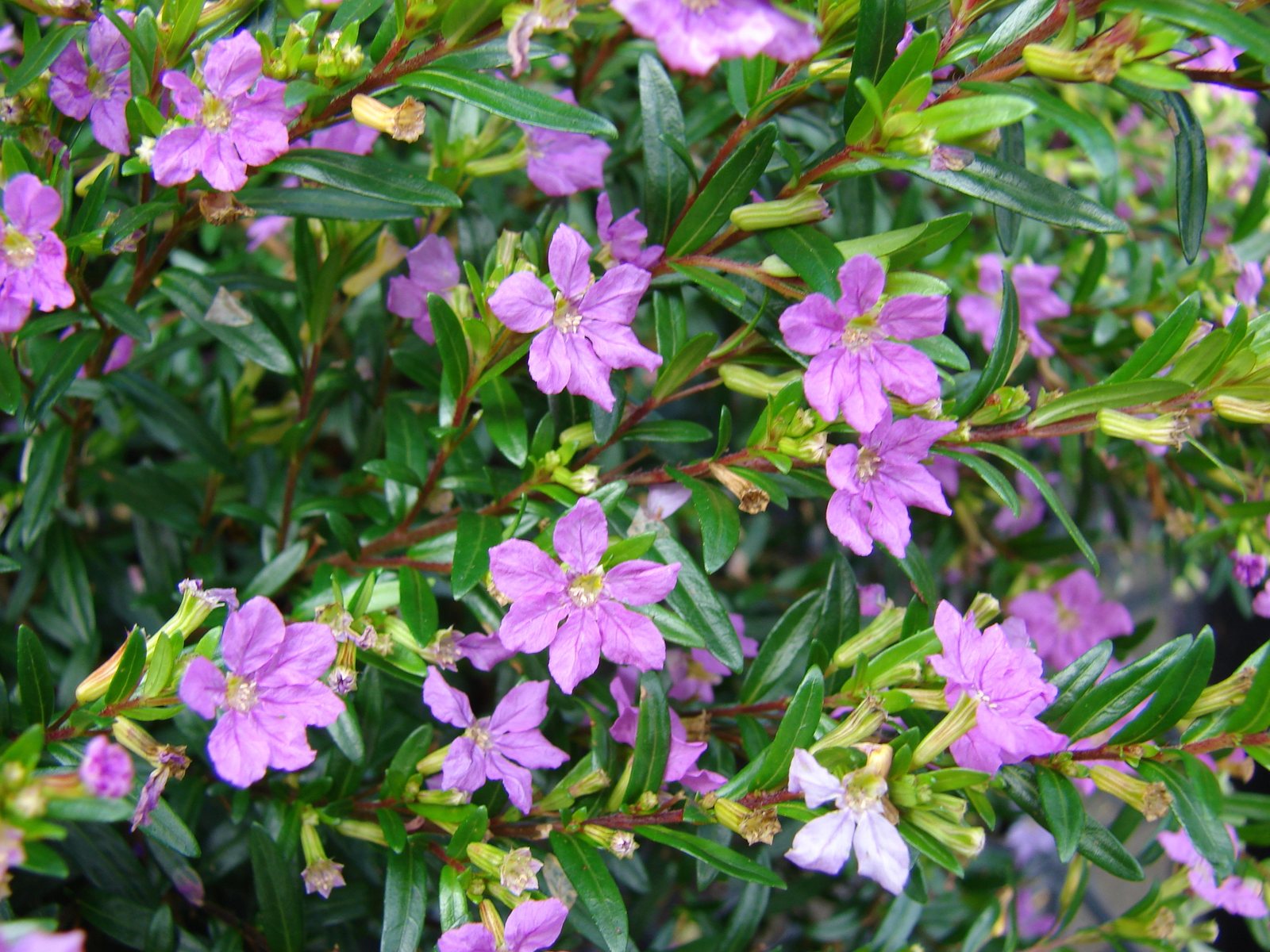
Mexican heather is a small evergreen shrub with fine, glossy foliage and tiny flowers that cover the stems through warm weather. Gardeners use it for low edging, containers and bedding; in cold climates it is grown as an annual or overwintered indoors. Despite its name, it is not a true heather and does not need acidic soil.
At a glance
- Sun
- Full sun to partial shade; afternoon shade helps in very hot, dry gardens.
- Water
- Keep moderately moist while establishing. Once established, water when the surface soil dries; prolonged drought reduces flowering.
- Soil
- Well-drained soil with moderate fertility; tolerates slightly acidic to slightly alkaline conditions. Avoid waterlogged ground.
- Height
- 1-2 ft (0.3-0.6 m)
- Spread
- 1-3 ft (0.3-0.9 m)
- Flowers
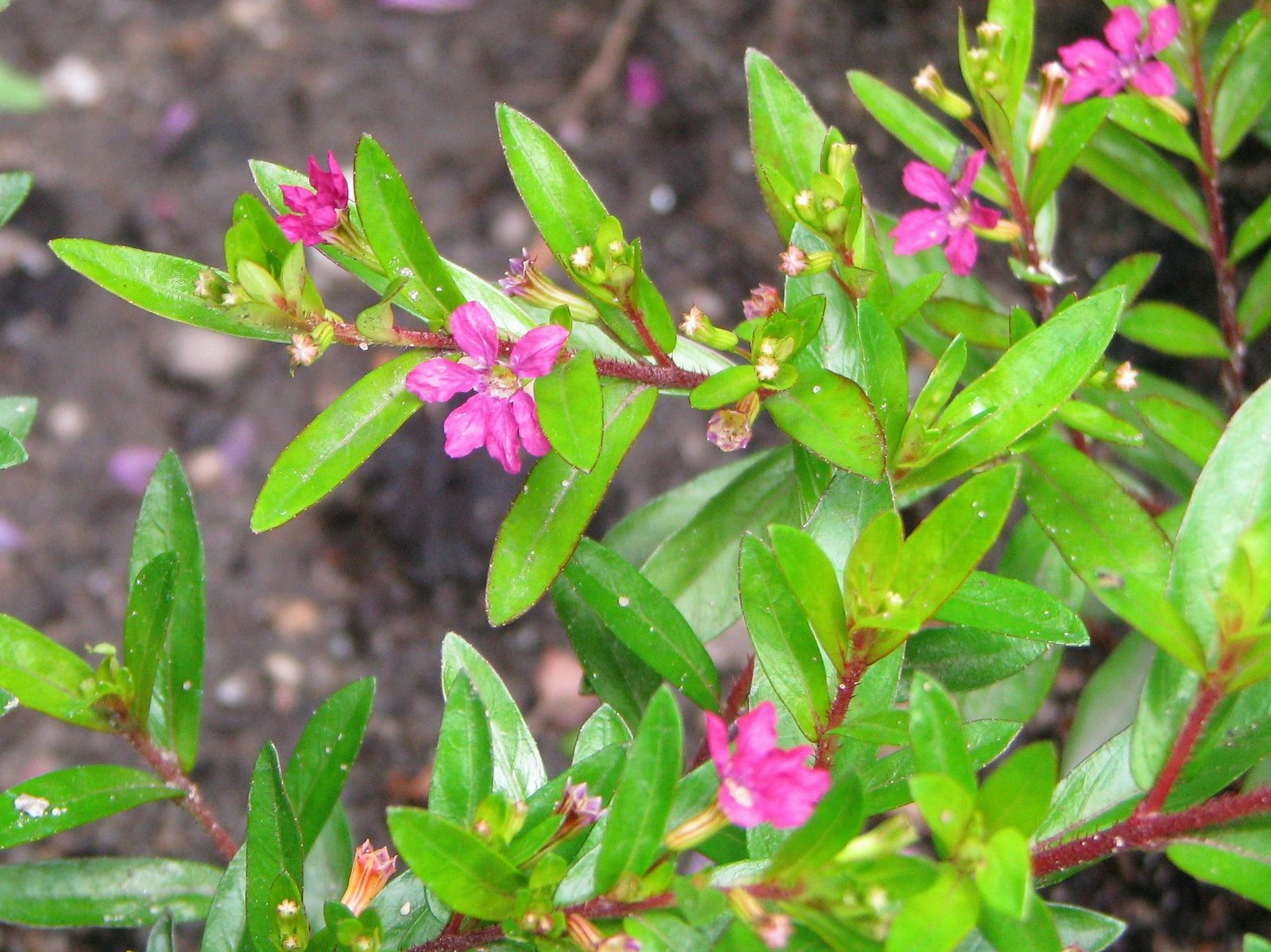
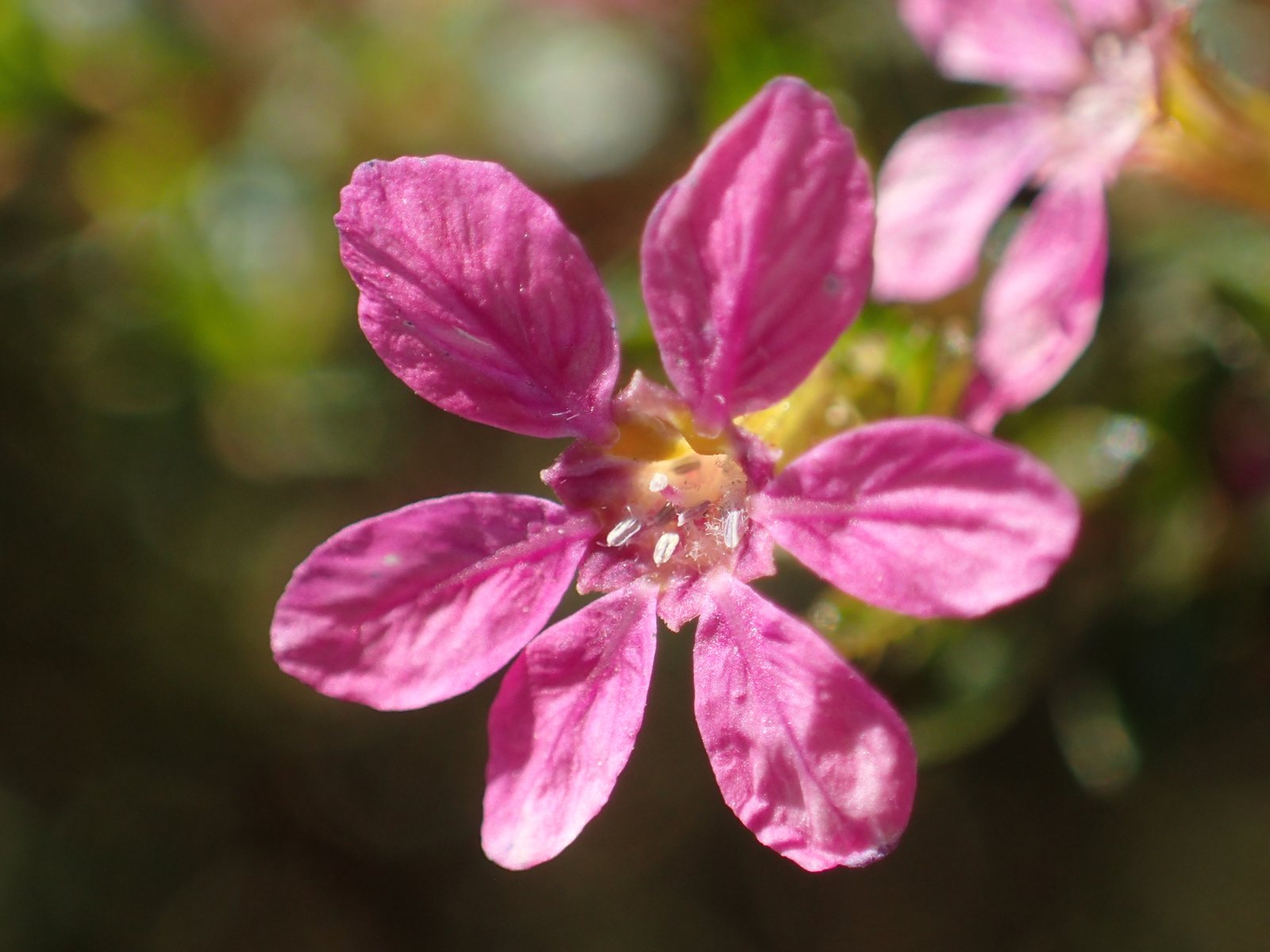
- Small purple to lavender flowers from late spring until frost; flowering can continue much of the year in frost-free climates. White and pink forms are also available.
- Foliage
- Evergreen. Small, narrow, glossy dark-green leaves densely arranged along fine, branching stems.
- Growth
- Moderate to fast in warm weather.
- Care needed
- Low
The year at a glance
- Pollinators
- Heat tolerant
- Low allergen
| J | F | M | A | M | J | J | A | S | O | N | D | |
|---|---|---|---|---|---|---|---|---|---|---|---|---|
| Flowers | ||||||||||||
| Plant |
Northern hemisphere months. In Australia, shift them by six.
- Difficulty
- Easy
- Toughness
- Fairly tough
Will it suit your garden?
Pick your zone, country, light and whether you have pets.
Full sun is 6 or more hours of direct sun a day, part shade 3 to 6 hours, shade under 3.
How it grows
Planting day
1.5 ft (0.45 m)
full size
About 4 years to full size.
From a typical nursery size, at an average rate for this kind of plant. A rule of thumb, not a forecast.
Good to know
- Cats and dogs
- Safe
- Invasive in
- Australia
- In the garden
- Spreads vigorously: plan to contain it.
- Growth rate
- Fast
Care
Jobs through the year
- WaterMay, Sep–Oct, every 7 days
- Water established ground plants when surface soil dries; water new plants more frequently.
- WaterJun–Aug, every 5 days
- Water established ground plants deeply when surface soil dries; adjust for rainfall and avoid saturation.
- FeedMay
- Apply a light dressing of balanced fertilizer; avoid heavy feeding.
- MulchMay–Jun
- Spread a thin mulch around plants, keeping stems clear.
- PruneMar–Apr
- Lightly shape overwintered plants as growth resumes and remove dead stems.
- PruneJul–Aug
- Lightly trim leggy growth after a flowering flush if needed; deadheading is unnecessary.
- ProtectSep–Oct
- Treat as seasonal bedding or pot up and move to bright, frost-free shelter before frost.
- Plant outdoors after frost danger has passed and the soil has warmed.
- Water deeply when the surface soil dries; check containers more often during hot weather.
- Apply a light dressing of balanced fertiliser in spring; avoid heavy feeding.
- Spread a thin layer of mulch around plants, keeping it away from the stems.
- In frosty areas, bring container plants into a bright, frost-free place before autumn frosts and reduce watering.
Pruning. Lightly trim in spring as new growth starts to maintain a compact shape, removing dead or frost-damaged stems. A light trim after a flush of flowers can tidy leggy plants; deadheading is unnecessary.
Through the year
- Early spring
- Trim overwintered plants as growth resumes and remove dead stems.
- Spring
- Refresh container compost or apply a light feed to established garden plants.
- Late spring
- Plant out after the last frost, allowing room for the plants to spread.
- Summer
- Check soil moisture regularly and water containers before they dry out completely.
- Summer
- Take non-flowering softwood cuttings if you want replacement plants.
- Autumn
- Move plants you want to keep into bright, frost-free shelter before the first frost.
- Winter
- Keep sheltered plants just moist and do not leave pots standing in water.
In the garden
- Edge paths and borders with a low, informal ribbon of fine foliage and small flowers.
- Plant around larger tropical foliage plants to soften their base without hiding their leaves.
- Use in patio pots with compact salvias or begonias for a long flowering season.
- Mass beneath taller shrubs in bright, lightly shaded beds for a soft, continuous ground layer.
Garden styles it suits: Cottage garden, Tropical, Modern courtyard, Pollinator garden, Small-space and Mexican hacienda.
Plant it with: Salvia, Angelonia, Wax begonia, Pentas, Coleus and Dwarf agapanthus.
Wildlife: The small flowers provide nectar for bees and other flower-visiting insects, including butterflies.
Problems to watch for
- Root rot in wet soil: improve drainage, empty pot saucers and let the surface dry between waterings.
- Spider mites in hot, dry conditions or indoors: look for stippled leaves and fine webbing, rinse leaf undersides and use insecticidal soap if needed.
- Yellowing or leaf drop after chilling: move containers to frost-free shelter and avoid planting out too early.
- Sparse flowering and leggy growth in deep shade: move to a brighter position and lightly trim to encourage branching.
Safety
Not known to be toxic to cats, dogs, horses or people. No part is recognised as poisonous, but it is an ornamental rather than a food plant, and eating substantial amounts may cause digestive upset.
Where it spreads. Can escape cultivation and self-seed in warm, moist climates. It is regarded as an environmental weed in parts of Queensland and New South Wales, Australia, and is naturalised in Hawaii. Check local advice before planting near bushland or waterways.
Easily confused with
Common heather (Calluna vulgaris)
True heather has tiny, scale-like leaves and flowers grouped along upright shoots; Mexican heather has glossy, flat leaves and individual flowers in the leaf axils.
Cigar plant (Cuphea ignea)
Cigar plant has conspicuous, long red-orange tubular flowers with pale tips, rather than Mexican heather's tiny, open purple, pink or white flowers.
The name
The name hyssopifolia means hyssop-leaved, while Mexican heather refers to its native region and its superficial resemblance to true heathers.
Propagation. Take softwood cuttings in late spring or summer and root them in moist, free-draining propagation compost under bright, indirect light. Seed is another option, but seedlings may not match named varieties.
Checked against open data
- Accepted botanical name
- Cuphea hyssopifolia
- In the US and Canada
- Introduced in Hawaii and Puerto Rico.
- Native range
- Belize, Costa Rica, El Salvador, Guatemala, Honduras, Mexico Central, Mexico Gulf, Mexico Northeast, Mexico Northwest, Mexico Southeast, Mexico Southwest and Nicaragua.
Sources: GBIF (CC BY 4.0), USDA PLANTS and Trefle (CC BY 4.0). The care and design notes are LandscapeGPT's own.
See it in your own yard.
Upload a photo of your yard and see it redesigned with plants that suit your climate, each checked against your zone.