Mezereon (February daphne)
Daphne mezereum. Family Thymelaeaceae. Shrub.
Also called February daphne, Mezereon daphne.
Mezereon is a small deciduous shrub grown for intensely fragrant pink-purple flowers that open along bare stems in late winter or early spring. Bright red berries follow in summer, but all parts are highly poisonous. It suits cool gardens with well-drained soil and is best planted where it can remain undisturbed.
At a glance
- Sun
- Partial shade or full sun in cool climates; shelter from hot afternoon sun.
- Water
- Keep evenly moist but never waterlogged; water during dry spells, especially while establishing.
- Soil
- Humus-rich, well-drained soil, preferably neutral to alkaline; avoid heavy, wet ground.
- Height
- 3-5 ft (0.9-1.5 m)
- Spread
- 3-4 ft (0.9-1.2 m)
- Flowers
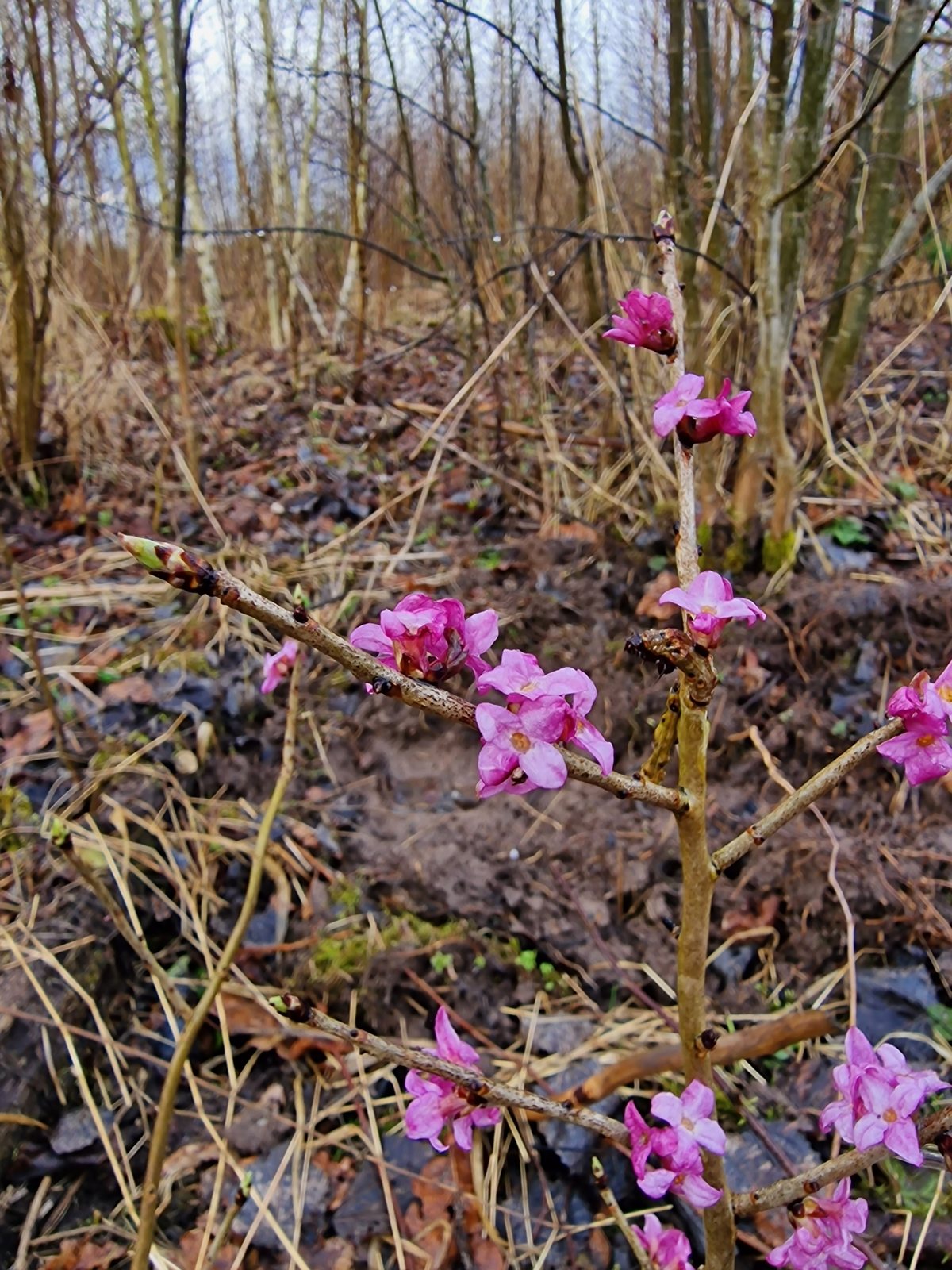
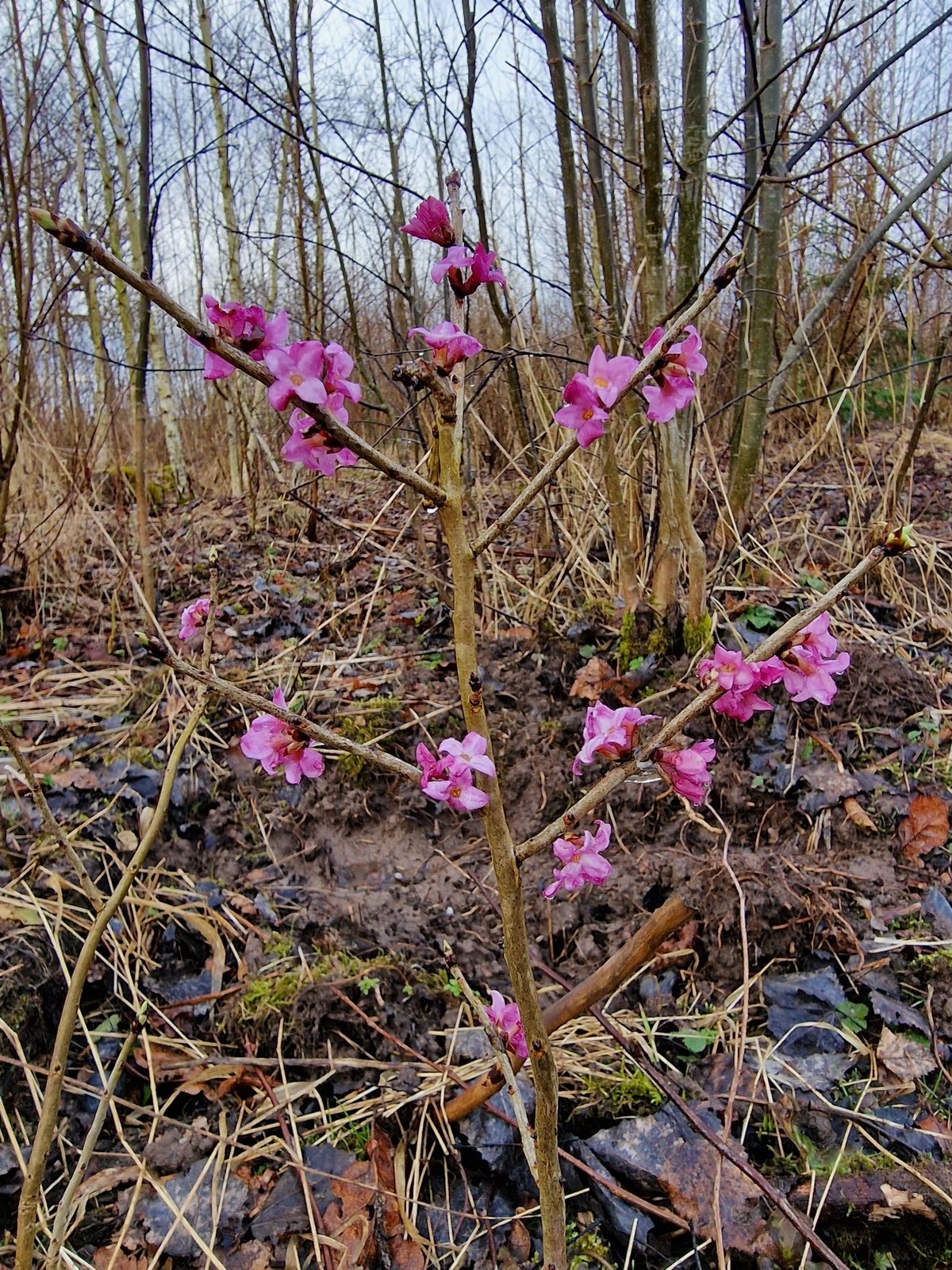
- Late winter to early spring, depending on climate; strongly fragrant pink-purple flowers, occasionally white, along bare stems.
- Foliage
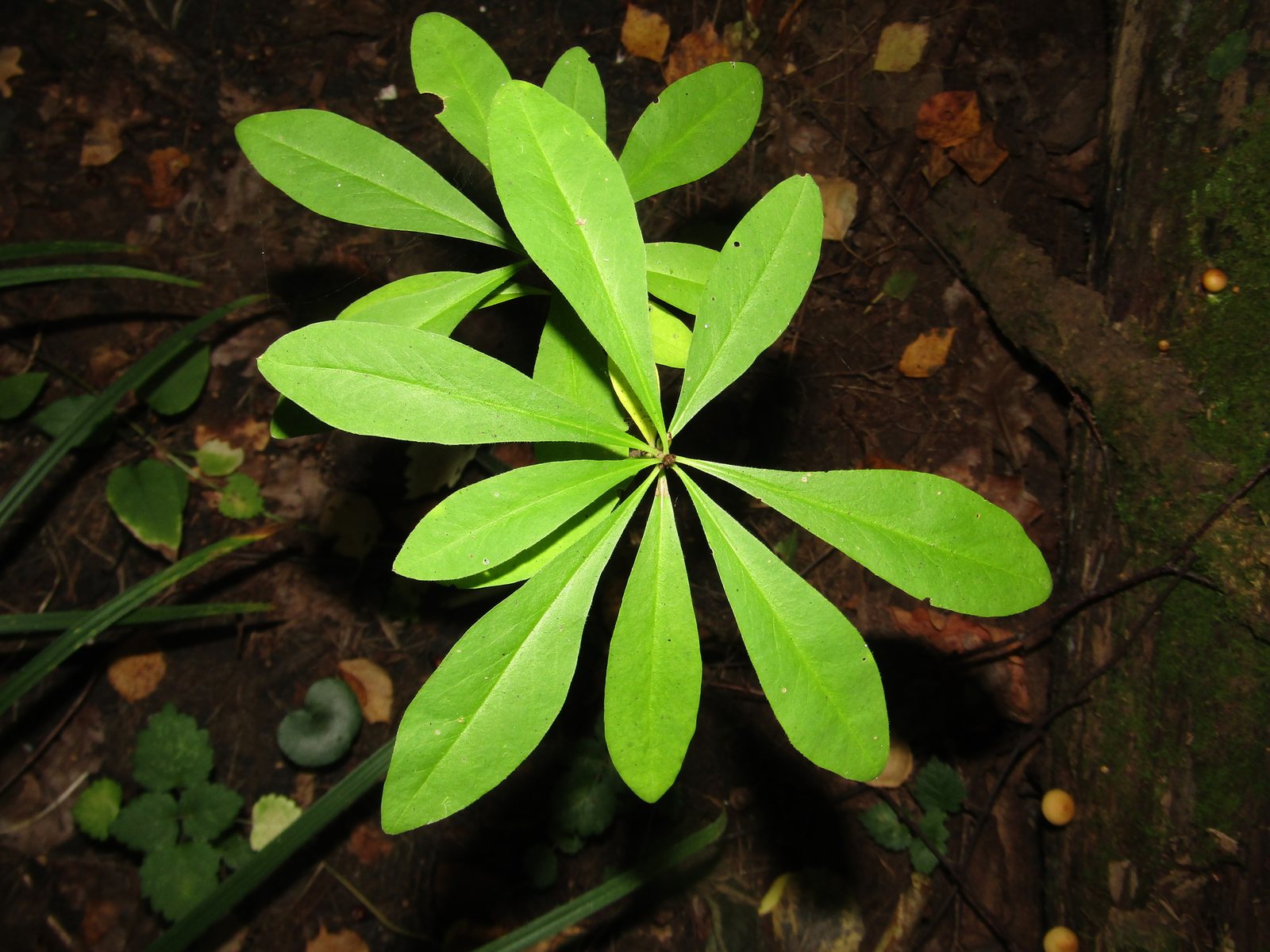
- Narrow, soft green leaves clustered toward shoot tips; deciduous.
- Growth
- Slow
- Care needed
- Medium
The year at a glance
- Pollinators
- Deer resistant
- Cold hardy
- Wildlife
- Low allergen
- Fragrant
| J | F | M | A | M | J | J | A | S | O | N | D | |
|---|---|---|---|---|---|---|---|---|---|---|---|---|
| Flowers | ||||||||||||
| Fruit | ||||||||||||
| Plant |
Northern hemisphere months. In Australia, shift them by six.
- Difficulty
- Moderate
- Toughness
- Needs looking after
Will it suit your garden?
Pick your zone, country, light and whether you have pets.
Full sun is 6 or more hours of direct sun a day, part shade 3 to 6 hours, shade under 3.
How it grows
Planting day
1.6 ft (0.5 m)
After 1 year
1.9 ft (0.59 m)
After 2 years
2.2 ft (0.68 m)
After 3 years
2.5 ft (0.76 m)
After 5 years
3 ft (0.94 m)
About 8 years to full size.
From a typical nursery size, at an average rate for this kind of plant. A rule of thumb, not a forecast.
Good to know
- Cats and dogs
- Toxic
- Native to
- the UK
- Invasive in
- the US and Canada
- Growth rate
- Slow
Care
Jobs through the year
- WaterApr–May, Sep–Oct, every 14 days
- Water established shrubs during dry spells; keep young plants evenly moist without saturation.
- WaterJun–Aug, every 7 days
- Water deeply when soil starts drying; avoid both drought and waterlogging.
- MulchApr
- Apply a light leaf-mould or compost mulch without covering stems or disturbing roots.
- PruneApr
- After flowering, remove only dead or damaged wood; wear gloves and avoid hard pruning.
- ProtectJun–Aug
- If children or pets can reach the shrub, remove poisonous berries with gloves and dispose securely.
- Plant a small, container-grown specimen in its permanent position; established plants resent moving.
- Water deeply during dry spells without leaving the root zone saturated.
- Apply a light mulch of leaf mould or compost in spring, keeping it clear of the stems.
- Avoid digging around the shallow roots or applying heavy fertiliser.
- Wear gloves when handling or pruning, and keep berries away from children and pets.
Pruning. Prune as little as possible. Immediately after flowering, remove dead or damaged wood and only lightly shorten an awkward shoot; avoid hard renovation pruning.
Through the year
- Early autumn
- Plant in well-drained soil while the ground is moist, choosing a permanent position.
- Late winter
- Check drainage around the plant and enjoy the flowers without cutting substantial branches.
- Spring
- After flowering, remove dead or damaged growth and apply a light organic mulch.
- Summer
- Water during prolonged dry weather, especially during the first two growing seasons.
- Summer
- Remove developing berries with gloves if children or pets could reach them, and dispose of them securely.
- Autumn
- Check nearby ground for unwanted seedlings, particularly where the plant has naturalised locally.
In the garden
- Place within scenting distance of a quiet path, but beyond easy reach of children and pets.
- Use as a small focal shrub at a lightly shaded woodland edge.
- Underplant with snowdrops and winter aconites for flowers beneath its bare, scented stems.
- Set against dark evergreen foliage to make the early flowers stand out.
Garden styles it suits: Woodland, Cottage garden, English country, Traditional, Winter interest and Sensory garden.
Plant it with: Snowdrops, Winter aconites, Hellebores, Hardy cyclamen and Lungwort.
Wildlife: Early flowers provide nectar and pollen for insects active in mild weather. Birds eat the berries and can spread the seeds into surrounding woodland.
Problems to watch for
- Root and crown rot in wet soil: improve drainage before planting, keep mulch away from the crown and avoid overwatering.
- Aphids on new shoots: wash off small colonies with water and encourage natural predators.
- Leaf spots: remove affected fallen leaves and improve air circulation without heavy pruning.
- Sudden dieback or collapse: daphnes can fail abruptly, especially after root disturbance or drainage problems; remove dead growth and replace a collapsed plant rather than trying hard pruning.
Safety
Highly poisonous to people, cats, dogs and horses. All parts are toxic, especially the berries and bark; ingestion can cause severe mouth irritation, vomiting, diarrhoea and potentially life-threatening poisoning. Sap can irritate or blister skin. Seek urgent medical or veterinary advice after ingestion.
Where it spreads. Naturalised and locally invasive in parts of northeastern North America, including Maine and Ontario, where bird-sown seedlings can establish in woodland. Check local invasive-plant guidance before planting.
Easily confused with
Winter daphne (Daphne odora)
Evergreen, with leathery leaves and rounded flower clusters at shoot tips; mezereon loses its leaves and flowers along bare stems.
Spurge laurel (Daphne laureola)
Has evergreen, glossy leaves, small yellow-green flowers and black berries rather than mezereon's usually pink-purple flowers and red berries.
The name
Daphne comes from the Greek word for laurel, referring to the laurel-like leaves of some members of the genus.
Propagation. Sow freshly ripe seed outdoors in a protected pot; germination can be slow and irregular. Semi-ripe cuttings are possible but often difficult to root. Wear gloves when handling fruit and seeds.
Checked against open data
- Accepted botanical name
- Daphne mezereum
- In the US and Canada
- Introduced in Canada and the lower 48 states.
- Native range
- Albania, Altay, Austria, Baltic States, Belarus, Belgium, Bulgaria, Central European Rus, Czechoslovakia, East European Russia, Finland and France.
- Measured
- Soil pH 7 to 7.5. Average height 70 cm.
Sources: GBIF (CC BY 4.0), USDA PLANTS and Trefle (CC BY 4.0). The care and design notes are LandscapeGPT's own.
See it in your own yard.
Upload a photo of your yard and see it redesigned with plants that suit your climate, each checked against your zone.