Michaelmas daisy
Symphyotrichum novi-belgii. Family Asteraceae. Perennial.
Also called New York aster, New Belgian aster, Aster novi-belgii.
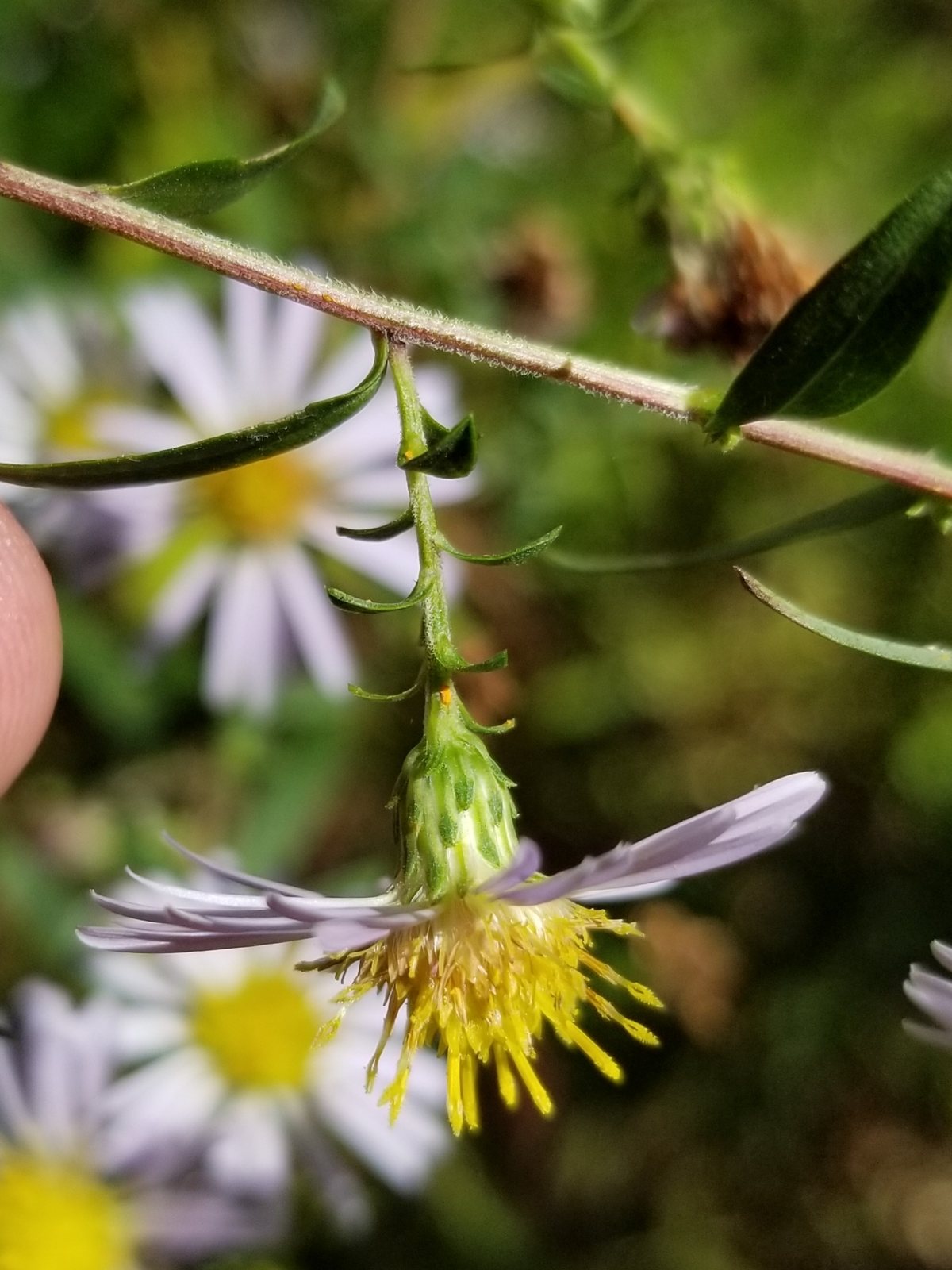
Michaelmas daisy is a spreading, herbaceous perennial native to eastern North America, grown for masses of small daisies in late summer and autumn. Its flowers provide late-season nectar and colour, but the clumps need room, regular division and attention to powdery mildew. Garden selections vary considerably in height and flower colour, and many sold under this name have hybrid ancestry.
At a glance
- Sun
- Full sun gives the strongest stems and best flowering; light shade is tolerated but can encourage flopping and mildew.
- Water
- Keep the soil evenly moist, especially during establishment and summer dry spells. Established plants tolerate brief dry periods, but prolonged drought often spoils the lower foliage.
- Soil
- Moist, fertile, well-drained soil; tolerates clay if it is not persistently waterlogged. Suitable for mildly acidic to alkaline soils.
- Height
- 3-5 ft (0.9-1.5 m); dwarf garden selections are shorter
- Spread
- 2-3 ft (0.6-0.9 m), expanding farther through underground rhizomes if left unchecked
- Flowers
- Late summer to mid-autumn; the species usually has violet-blue rays around yellow centres, while garden selections include purple, pink, white and reddish pink.
- Foliage
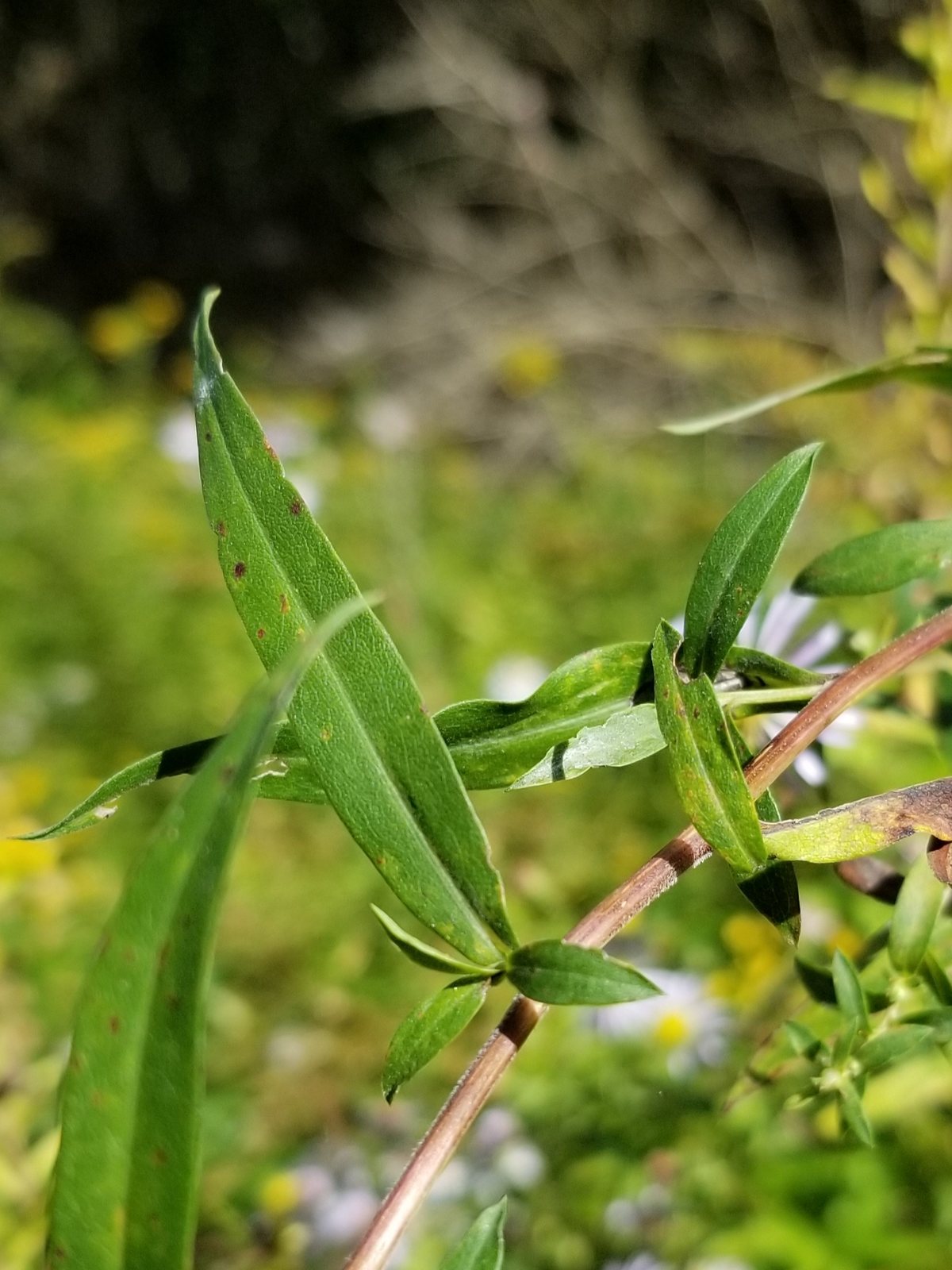
- Narrow, green, mostly smooth leaves on branching stems; upper leaves clasp the stems. Top growth dies back for winter.
- Growth
- Fast; forms a substantial clump within a few growing seasons.
- Care needed
- Medium
The year at a glance
- Pollinators
- Cold hardy
- Wildlife
- Low allergen
| J | F | M | A | M | J | J | A | S | O | N | D | |
|---|---|---|---|---|---|---|---|---|---|---|---|---|
| Flowers | ||||||||||||
| Fruit | ||||||||||||
| Plant |
Northern hemisphere months. In Australia, shift them by six.
- Difficulty
- Moderate
- Toughness
- Fairly tough
Will it suit your garden?
Pick your zone, country, light and whether you have pets.
Full sun is 6 or more hours of direct sun a day, part shade 3 to 6 hours, shade under 3.
How it grows
Planting day
1 ft (0.3 m)
After 1 year
2.5 ft (0.76 m)
After 2 years
4 ft (1.2 m)
full size
About 2 years to full size.
From a typical nursery size, at an average rate for this kind of plant. A rule of thumb, not a forecast.
Good to know
- Cats and dogs
- Safe
- Native to
- the US and Canada
- In the garden
- Spreads vigorously: plan to contain it.
- Growth rate
- Fast
Care
Jobs through the year
- WaterApr–May, Sep–Oct, every 14 days
- Soak established clumps during dry spells; newly planted divisions need more frequent watering.
- WaterJun–Aug, every 7 days
- Water deeply at soil level if rain is insufficient, preventing prolonged drying and wet foliage.
- MulchMar–Apr
- Apply compost and a moisture-retaining mulch, leaving emerging shoots and crowns clear.
- PruneFeb–Mar
- Cut old stems near ground level before new growth and dispose of diseased debris.
- PruneMay
- Optionally shorten stems by one-third for bushier growth and slightly later flowering.
- DivideMar–Apr
- Divide every two to three years, replanting vigorous outer sections and removing unwanted spreading shoots.
- ProtectMay–Jun
- Install twiggy stakes or a plant ring around tall selections before stems flop.
- DeadheadAug–Oct, every 7 days
- Remove selected faded heads to limit seedlings, or retain healthy seed heads and stems for winter habitat.
- Water deeply during dry spells, directing water to the soil rather than over the leaves.
- Apply compost and a moisture-retaining mulch in spring, keeping the crown clear.
- Avoid heavy nitrogen feeding, which encourages weak stems and excessive leafy growth.
- Support tall selections with twiggy stakes or a plant ring before stems become tall.
- Divide congested clumps every two to three years in spring, replanting vigorous outer pieces.
- Remove wandering shoots where the clump is crowding neighbouring plants.
Pruning. For shorter, bushier plants, cut stems back by about one-third in late spring; this can delay flowering slightly. Cut dead stems to near ground level in late winter or early spring, or remove them earlier if badly diseased.
Through the year
- Late winter
- Cut down old stems before new shoots emerge; remove badly mildewed plant debris.
- Early spring
- Plant or divide clumps, water thoroughly and mulch with compost.
- Late spring
- Install supports and optionally shorten stems to encourage a bushier habit.
- Summer
- Water during dry spells and check lower leaves for mildew.
- Late summer
- Enjoy flowering and remove selected faded heads if you want to reduce self-seeding.
- Autumn
- Mark spreading clumps for spring division; leave healthy stems standing for winter habitat.
In the garden
- Plant through the middle or back of a sunny mixed border to carry colour beyond summer.
- Combine with ornamental grasses and sedums for contrasting flower shapes and autumn seedheads.
- Use repeated groups in a cottage garden with phlox and rudbeckias for a loose, layered effect.
- Include in a pollinator border with other late-flowering perennials, allowing space for its spreading roots.
Garden styles it suits: Cottage garden, English country, New perennial (prairie), Pollinator garden, Autumn colour and Blues and silvers.
Plant it with: Black-eyed Susan, Garden phlox, Autumn stonecrop, Switchgrass, Feather reed grass and Japanese anemone.
Wildlife: Open flowers attract bees, hoverflies, butterflies and other late-season pollinators. Dense, double-flowered selections usually offer less accessible pollen and nectar. Retained stems provide shelter for overwintering invertebrates.
Problems to watch for
- Powdery mildew: give plants full sun, maintain soil moisture, divide crowded clumps and choose mildew-resistant selections.
- Aster rust: remove affected leaves and fallen debris, improve airflow and avoid wetting foliage when watering.
- Slugs and snails: protect emerging spring shoots with hand-picking or iron-phosphate bait used according to the label.
- Flopping stems: provide early support, avoid rich nitrogen feeds and shorten shoots in late spring if needed.
Safety
Not known to be toxic to people, cats, dogs or horses. No part is recognised as seriously poisonous, although eating garden plants can cause stomach upset and they should not be treated as food.
Where it spreads. Spreads vigorously by rhizomes in moist, fertile soil. It is naturalised and can be invasive in parts of Europe, including Belgium and Germany, especially in damp grassland and along waterways. Escaped plants may be hybrids rather than the pure species; keep garden clumps contained and do not dump divisions in the countryside.
Easily confused with
New England aster (Symphyotrichum novae-angliae)
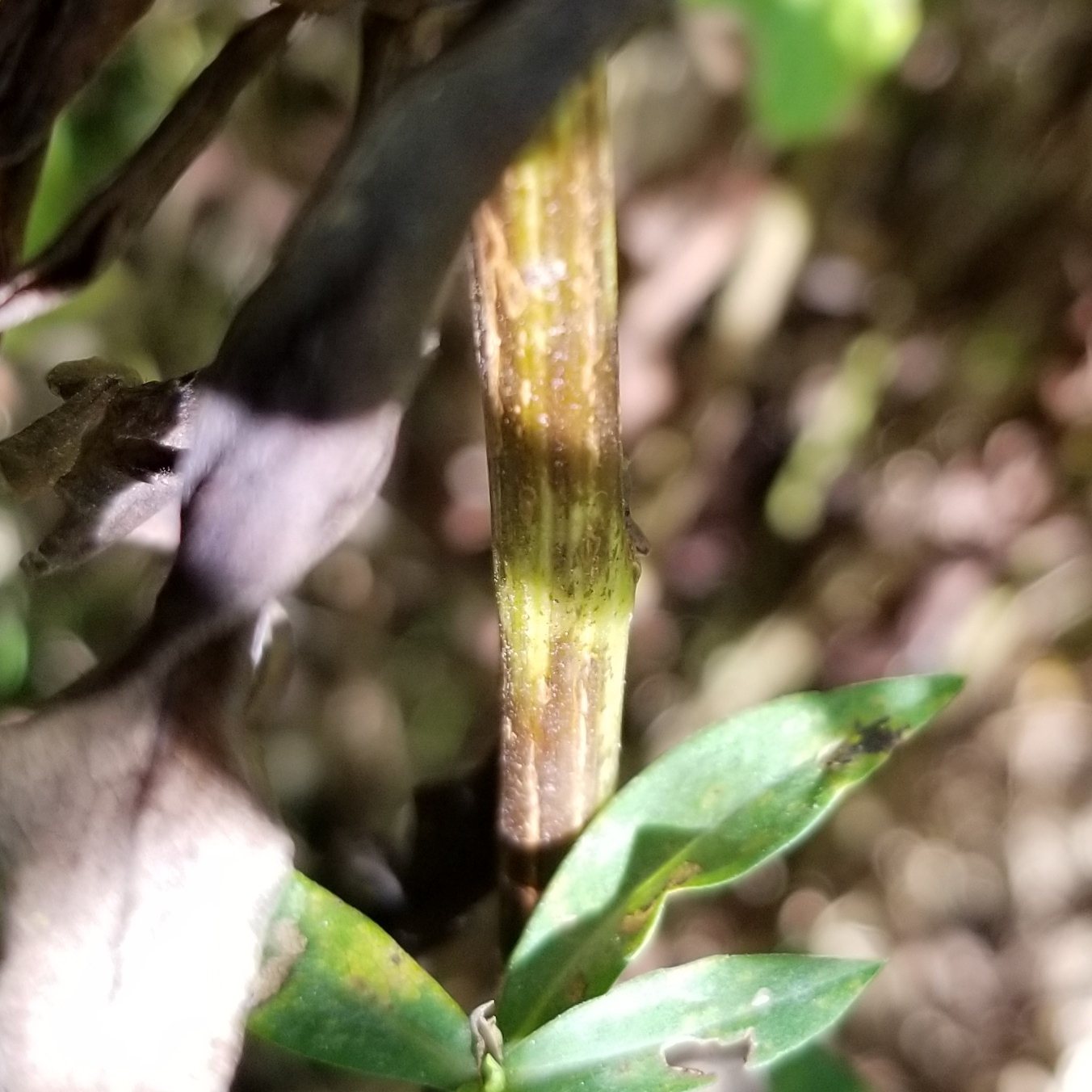
Usually has conspicuously hairy stems and rough, hairy leaves; Michaelmas daisy generally has smoother stems and leaves.
Smooth aster (Symphyotrichum laeve)
Typically has conspicuously blue-green, waxy leaves and stems, with broad, clasping leaf bases; Michaelmas daisy is usually greener and less waxy.
The name
Michaelmas daisy refers to flowering around the feast of St Michael on 29 September in the Northern Hemisphere, while novi-belgii means 'of New Belgium', an old name associated with the Dutch colonial region around present-day New York.
Propagation. Divide in spring or take basal cuttings from young shoots. Seed can be sown in spring, but seedlings from named selections will not reliably match the parent.
Checked against open data
- Accepted botanical name
- Symphyotrichum novi-belgii
- In the US and Canada
- Native in Canada, the lower 48 states and St. Pierre and Miquelon.
- Native range
- Connecticut, Labrador, Maine, Maryland, Masachusettes, New Brunswick, New Hampshire, New Jersey, New York, Newfoundland, North Carolina and Nova Scotia.
- Measured
- Soil pH 7 to 7.5. Average height 79 cm.
Sources: GBIF (CC BY 4.0), USDA PLANTS and Trefle (CC BY 4.0). The care and design notes are LandscapeGPT's own.
See it in your own yard.
Upload a photo of your yard and see it redesigned with plants that suit your climate, each checked against your zone.