Milky bellflower
Campanula lactiflora. Family Campanulaceae. Perennial.
Also called Milk-flowered bellflower.
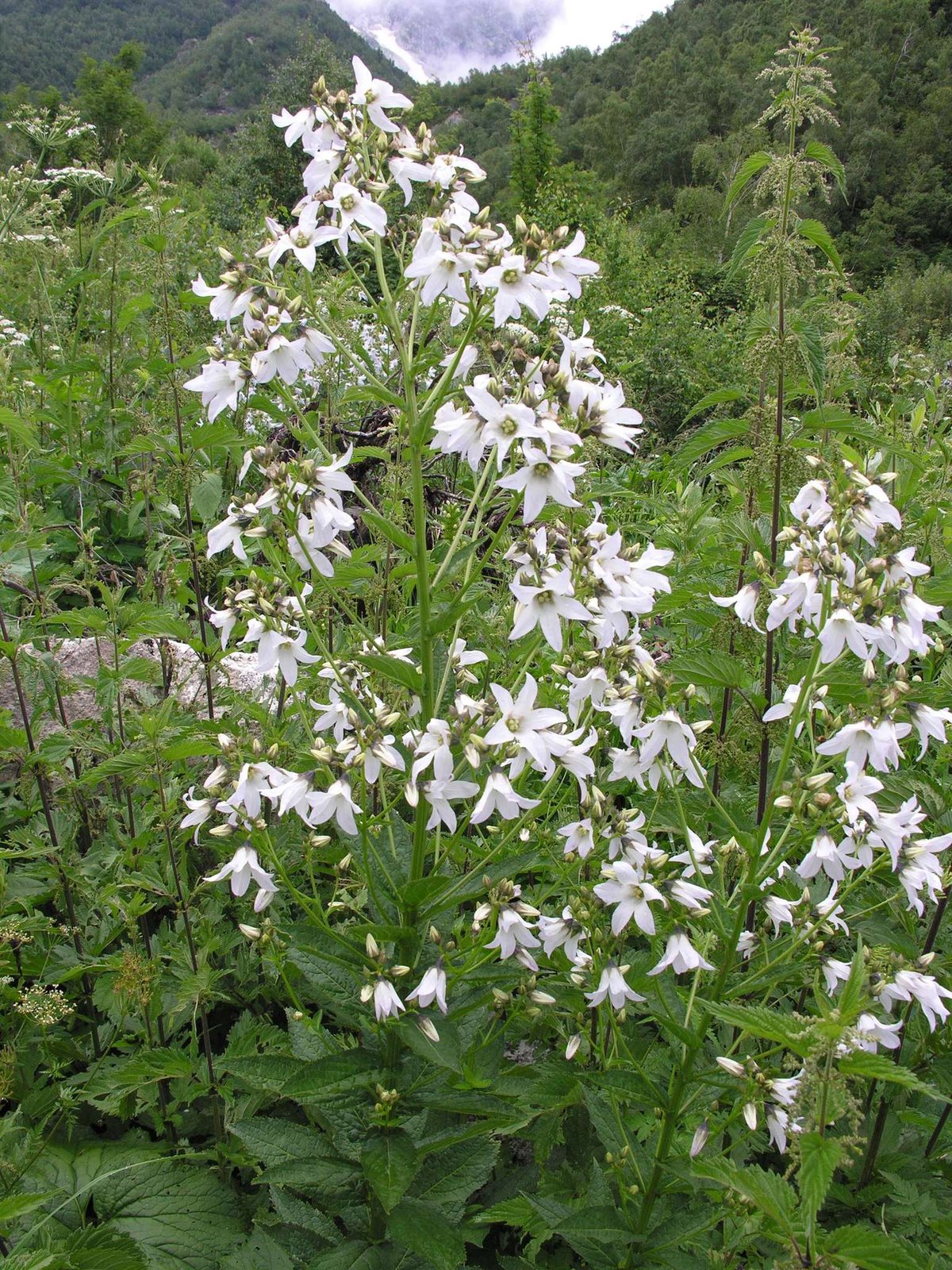
Milky bellflower is a tall, clump-forming perennial grown for its branching sprays of pale blue, lilac or white bell-shaped flowers in summer. It brings height and a soft, airy effect to borders, especially where the soil stays moist without becoming waterlogged.
At a glance
- Sun
- Full sun to partial shade; afternoon shade is helpful in warmer climates.
- Water
- Keep evenly moist during growth and flowering. Water deeply during dry spells, especially in the first growing season.
- Soil
- Fertile, moisture-retentive but well-drained soil; tolerates clay, loam and chalk if drainage is adequate.
- Height
- 3-5 ft (0.9-1.5 m)
- Spread
- 2-3 ft (0.6-0.9 m)
- Flowers
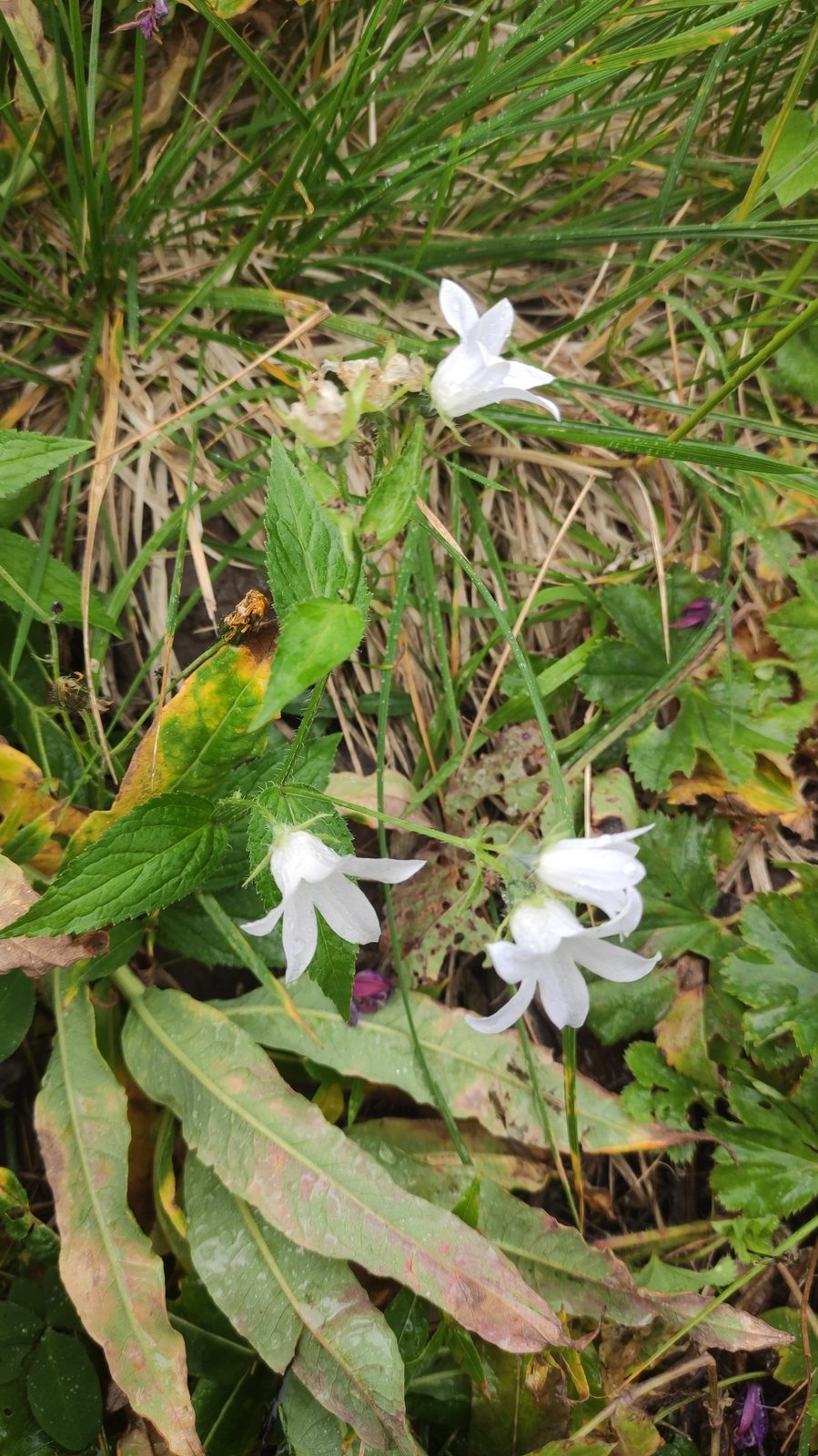
- Early to late summer, sometimes continuing into early autumn; pale blue, lilac-blue or white.
- Foliage
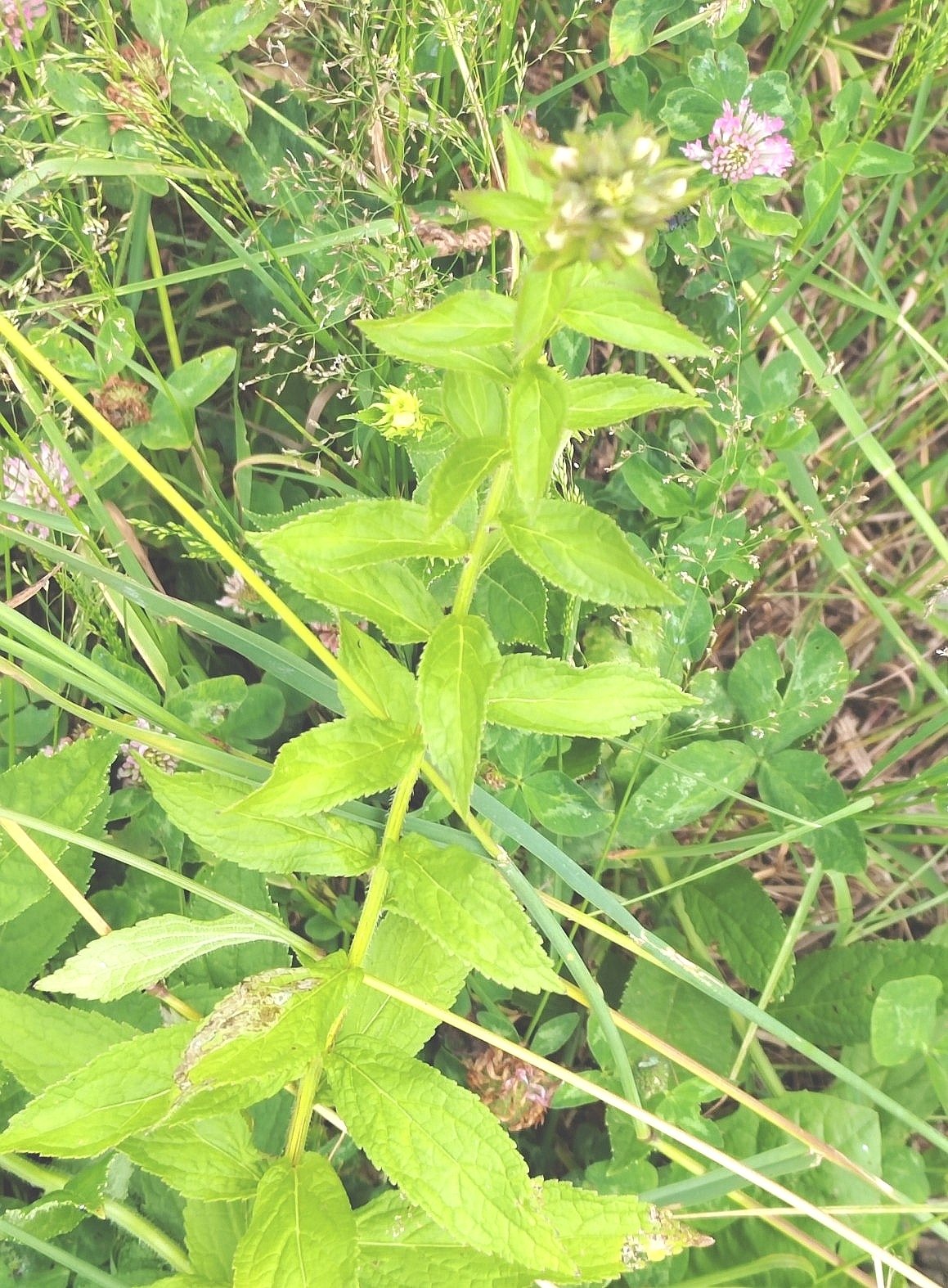
- Green, pointed, toothed leaves carried along upright, branching stems; dies back for winter.
- Growth
- Moderate; forms a substantial flowering clump over two to three years.
- Care needed
- Medium
The year at a glance
- Pollinators
- Wildlife
- Low allergen
| J | F | M | A | M | J | J | A | S | O | N | D | |
|---|---|---|---|---|---|---|---|---|---|---|---|---|
| Flowers | ||||||||||||
| Plant |
Northern hemisphere months. In Australia, shift them by six.
- Difficulty
- Moderate
- Toughness
- Fairly tough
Will it suit your garden?
Pick your zone, country, light and whether you have pets.
Full sun is 6 or more hours of direct sun a day, part shade 3 to 6 hours, shade under 3.
How it grows
Planting day
1 ft (0.3 m)
After 1 year
2 ft (0.6 m)
After 2 years
3 ft (0.9 m)
After 3 years
4 ft (1.2 m)
full size
About 3 years to full size.
From a typical nursery size, at an average rate for this kind of plant. A rule of thumb, not a forecast.
Good to know
- Cats and dogs
- Safe
- Native to
- Canada
- Growth rate
- Moderate
Care
Jobs through the year
- WaterApr–May, Sep–Oct, every 7 days
- Water established clumps when rain is insufficient; do not let newly planted clumps dry out.
- WaterJun–Aug, every 5 days
- Water established clumps deeply in dry weather to keep roots evenly moist, not waterlogged.
- MulchMar–Apr
- Apply compost around clumps, keeping emerging shoots clear.
- FeedApr
- Only on poor soil, apply a light balanced feed; excess feeding causes floppy stems.
- DivideMar–Apr
- Divide crowded clumps every three to five years or when flowering declines.
- DeadheadJun–Sep, every 7 days
- Remove faded flower sprays to prolong flowering and limit self-seeding.
- PruneFeb–Mar
- Cut dead stems close to the ground before new shoots lengthen.
- ProtectApr–May
- Fit twiggy supports or a perennial support before tall stems lengthen.
- ProtectMar–May, every 7 days
- Check emerging shoots for slugs and snails and remove pests.
- Water at soil level during dry weather; do not let newly planted clumps dry out.
- Mulch in spring with compost, keeping it clear of emerging shoots.
- Use a light spring feed only if the soil is poor; excessive feeding encourages floppy growth.
- Fit twiggy supports or a perennial support around tall plants before the stems lengthen.
- Divide crowded clumps in spring every three to five years, or when flowering declines.
Pruning. Remove faded flower sprays to encourage further bloom and limit self-seeding. Cut dead stems close to the ground in late autumn or late winter, before new shoots emerge.
Through the year
- Early spring
- Remove remaining dead stems before new growth becomes tall.
- Spring
- Plant or divide clumps, water well and mulch with compost.
- Late spring
- Install supports and check young shoots for slugs and snails.
- Summer
- Water during dry spells and remove faded flower sprays.
- Early autumn
- Remove unwanted seedlings; leave a few seedheads only if you want seed.
- Late autumn
- Cut down collapsed stems, or leave sound stems until late winter for sheltering insects.
In the garden
- Plant in the middle or back of a mixed border for summer height without a dense, heavy outline.
- Combine with shrub roses and hardy geraniums for a layered cottage-garden planting.
- Repeat small groups among upright perennials to link blue, mauve and pink flowers through a border.
- Use beside a lightly shaded path or woodland edge where the soil remains moist.
Garden styles it suits: English country, Cottage garden, Romantic rose garden, Pollinator garden, Blues and silvers and Pastel border.
Plant it with: Shrub roses, Hardy geraniums, Astrantia, Phlox, Lady's mantle and Foxgloves.
Wildlife: The flowers provide pollen and nectar for bees, including bumblebees. Standing dead stems can shelter overwintering insects.
Problems to watch for
- Slugs and snails can strip emerging shoots: inspect at dusk, hand-pick and use wildlife-conscious slug controls where needed.
- Powdery mildew can affect leaves in dry, crowded conditions: water the soil during drought and divide congested clumps to improve airflow.
- Rust may cause orange-brown pustules on leaves: remove affected foliage and clear infected debris.
- Tall stems can flop in shade, rich soil or exposed sites: provide early support, avoid heavy feeding and choose a sheltered position.
Safety
Not known to be toxic to people, cats, dogs or horses; no parts are recognised as poisonous. It is an ornamental plant rather than a recommended food, and eating plant material may still cause digestive upset.
Easily confused with
Peach-leaved bellflower (Campanula persicifolia)
Has narrow, peach-like leaves and larger, more widely spaced bells on relatively unbranched stems; milky bellflower carries many smaller flowers in branching sprays.
Clustered bellflower (Campanula glomerata)
Its flowers are packed into tight heads, usually deep violet, rather than the loose, branching sprays of milky bellflower.
Creeping bellflower (Campanula rapunculoides)
Has nodding purple bells arranged mainly along one side of a stem and spreads strongly by underground roots; milky bellflower forms a clump with branching flower sprays.
The name
Campanula means 'little bell', referring to the flower shape, and lactiflora means 'milk-flowered', referring to the pale flowers.
Propagation. Divide established clumps in spring or take basal cuttings from young shoots in spring. Sow seed in spring; seedlings may differ from the parent, so propagate named cultivars by division or cuttings.
Checked against open data
- Accepted botanical name
- Campanula lactiflora
- In the US and Canada
- Native in Canada. Introduced in the lower 48 states.
- Native range
- Iran, North Caucasus, Transcaucasus and Turkey.
Sources: GBIF (CC BY 4.0), USDA PLANTS and Trefle (CC BY 4.0). The care and design notes are LandscapeGPT's own.
See it in your own yard.
Upload a photo of your yard and see it redesigned with plants that suit your climate, each checked against your zone.