Million bells
Calibrachoa 'Million Bells'. Family Solanaceae. Annual.
Also called Calibrachoa, Trailing petunia.
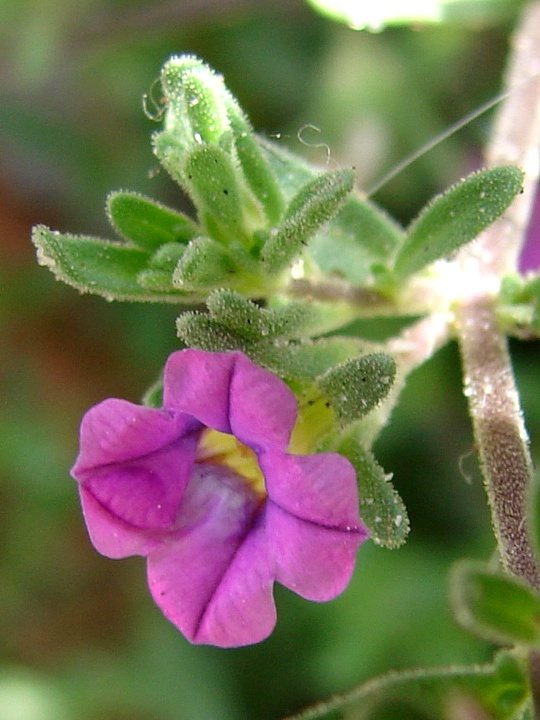
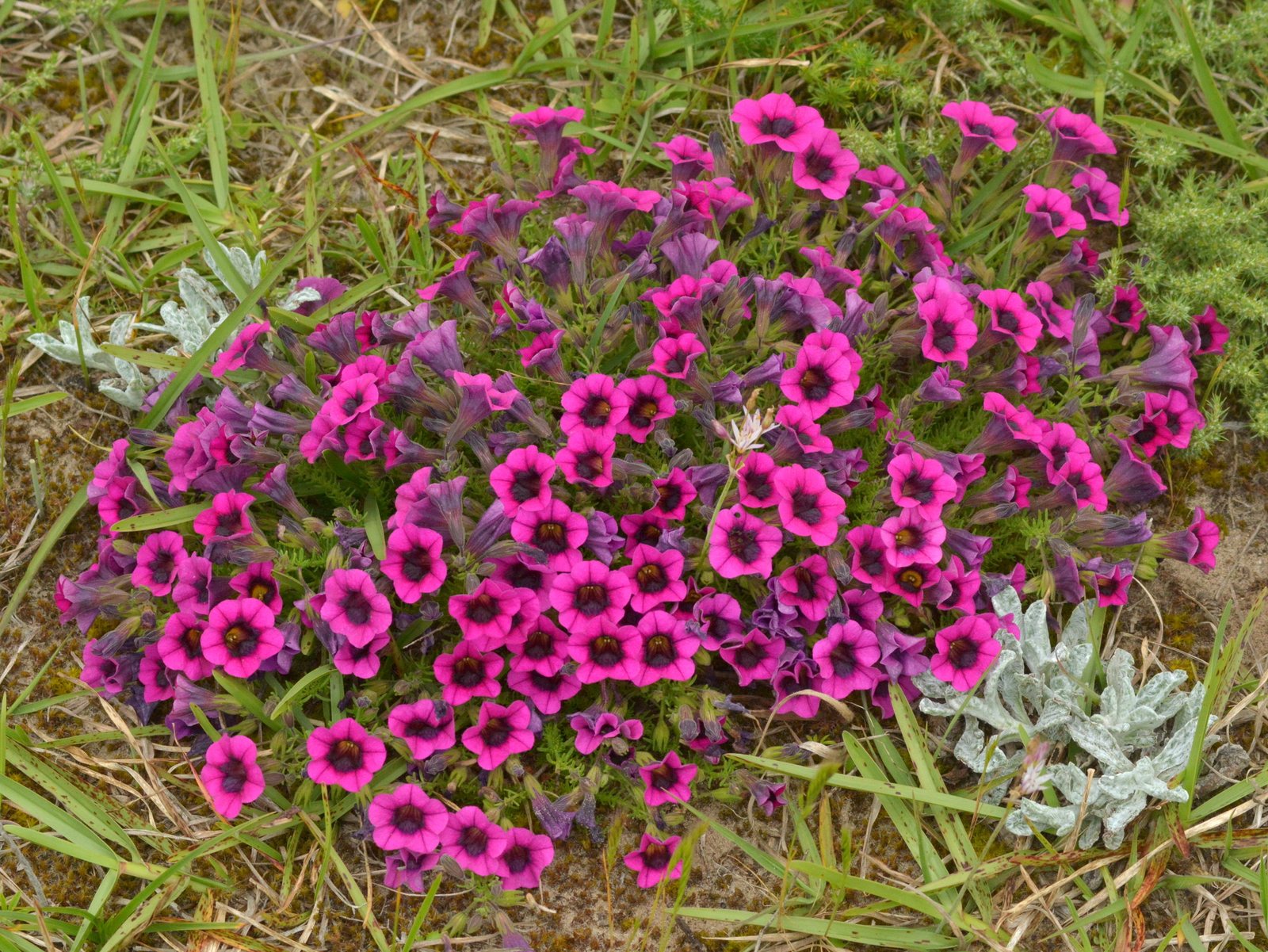
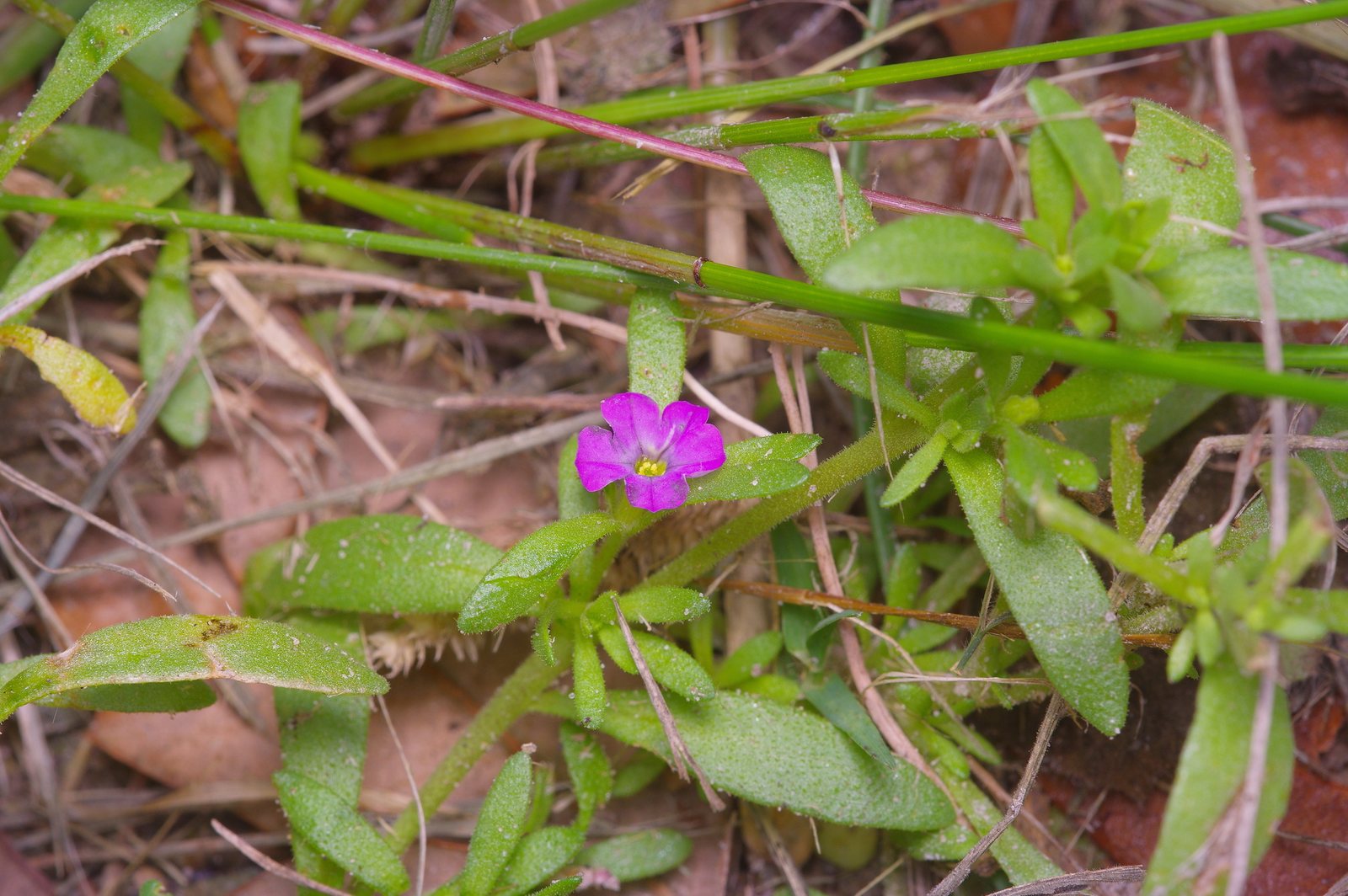
Million bells is a tender, trailing perennial usually grown as an annual for its small, petunia-like flowers from late spring until frost. Million Bells is a commercial series rather than a single cultivar; its many colours and compact, cascading growth suit hanging baskets, window boxes and pots.
At a glance
- Sun
- Full sun gives the most flowers; light afternoon shade helps in very hot climates.
- Water
- Keep the root zone evenly moist but never waterlogged. Water thoroughly when the surface begins to dry; hanging baskets may need daily checking in hot or windy weather.
- Soil
- Free-draining, moderately fertile, slightly acidic soil or container mix, ideally pH 5.5-6.5. Avoid heavy, wet soil and strongly alkaline conditions.
- Height
- 0.5-1 ft (0.15-0.3 m)
- Spread
- 1-2 ft (0.3-0.6 m)
- Flowers
- Late spring to autumn frost; colours vary by selection and include white, yellow, orange, pink, red, purple and patterned combinations.
- Foliage
- Small, narrow to oval green leaves on branching, trailing stems; foliage can remain evergreen where winters are frost-free.
- Growth
- Fast during warm weather
- Care needed
- Medium
The year at a glance
- Pollinators
- Heat tolerant
- Low allergen
| J | F | M | A | M | J | J | A | S | O | N | D | |
|---|---|---|---|---|---|---|---|---|---|---|---|---|
| Flowers | ||||||||||||
| Plant |
Northern hemisphere months. In Australia, shift them by six.
- Difficulty
- Moderate
- Toughness
- Needs looking after
Will it suit your garden?
Pick your zone, country, light and whether you have pets.
Full sun is 6 or more hours of direct sun a day, part shade 3 to 6 hours, shade under 3.
How it grows
Planting day
0.5 ft (0.15 m)
After 1 year
0.7 ft (0.22 m)
full size
Full size in one season.
From a typical nursery size, at an average rate for this kind of plant. A rule of thumb, not a forecast.
Good to know
- Cats and dogs
- Safe
- Growth rate
- Fast
Care
Jobs through the year
- WaterMay, Sep–Oct, every 7 days
- For established plants in the ground, water when the surface dries; check new plants and pots more often.
- WaterJun–Aug, every 3 days
- Water ground-grown plants if soil is drying; check baskets daily and never leave roots waterlogged.
- FeedMay–Sep, every 14 days
- Feed containers with flowering-plant fertilizer at label strength; feed ground plantings only as needed.
- PruneJul–Aug
- Shorten straggly stems by about one-third; routine deadheading is unnecessary.
- ProtectMay
- Harden off young plants and keep sheltered until frost danger has passed.
- Plant outside after frost danger has passed and nights are consistently mild.
- Use containers with drainage holes and an airy potting mix; do not leave pots standing in water.
- Water the mix rather than repeatedly wetting the foliage, and let excess water drain away.
- Feed container plants every one to two weeks with a flowering-plant fertiliser at the label rate.
- Check baskets frequently in hot weather, but avoid watering again while the mix is still wet.
Pruning. Pinch young shoots if needed to encourage branching. In midsummer, shorten straggly stems by about one-third; routine deadheading is usually unnecessary.
Through the year
- Early spring
- Buy young plants and grow them in bright, frost-free conditions until outdoor temperatures are suitable.
- Late spring
- Gradually acclimatise plants to outdoor conditions, then plant after the last frost.
- Early summer
- Begin regular feeding and check container moisture frequently.
- Midsummer
- Trim leggy growth and inspect shoot tips for aphids.
- Autumn
- Remove frost-damaged annual plants; in frost-free areas, reduce feeding as growth slows.
- Winter
- If keeping plants, provide bright, frost-free shelter and water sparingly without letting the roots dry completely.
In the garden
- Trail over hanging baskets and window boxes for a long season of colour.
- Soften container rims beneath upright plants such as zonal geraniums or salvia.
- Edge sunny raised beds where the stems can spill over a well-drained wall.
- Repeat one colour through patio pots for a coordinated display.
Garden styles it suits: Cottage garden, Modern courtyard, Urban city garden, Small-space, Pastel border and Hot border.
Plant it with: Zonal geranium, Sweet alyssum, Lobelia, Verbena, Angelonia and Blue salvia.
Wildlife: Flowers attract some bees and other nectar-feeding insects, although their value varies with the flower form and local wildlife.
Problems to watch for
- Yellow leaves with green veins: alkaline conditions can restrict iron uptake. Use a slightly acidic potting mix and an appropriate chelated iron treatment; also check for waterlogged roots.
- Wilting in wet soil or dark, rotting roots: improve drainage, stop frequent watering and discard badly affected plants and their potting mix.
- Aphids on young shoots: wash off small colonies or use insecticidal soap according to the label, avoiding open flowers and visiting insects.
- Sparse flowers or stretched stems: move into stronger light, trim lightly and check feeding; avoid excessive nitrogen.
Safety
Calibrachoa is not known to be toxic to cats, dogs, horses or people. No particular poisonous part is established, but published toxicity information is limited; it is not an edible plant, and eating plant material may cause stomach upset.
Easily confused with
Petunia (Petunia × atkinsiana)
Most petunias have larger flowers and broader, noticeably sticky leaves; small-flowered forms can be difficult to separate by appearance alone.
Petchoa (× Petchoa)
These petunia-calibrachoa hybrids generally have larger flowers than million bells, with intermediate foliage; the plant label is often the most reliable distinction.
The name
Calibrachoa honours the Mexican botanist Antonio de la Cal y Bracho, while Million Bells refers to the abundance of small, bell-like flowers.
Propagation. Usually propagated from soft stem-tip cuttings in warm, bright conditions out of direct sun. Seed does not reliably reproduce named selections, and many produce little seed. Check plant breeders' rights or patent restrictions before taking cuttings.
Checked against open data
- Accepted botanical name
- Calibrachoa
Sources: GBIF (CC BY 4.0). The care and design notes are LandscapeGPT's own.
See it in your own yard.
Upload a photo of your yard and see it redesigned with plants that suit your climate, each checked against your zone.