Mirror bush
Coprosma repens. Family Rubiaceae. Shrub.
Also called Looking-glass plant, Taupata, New Zealand laurel.
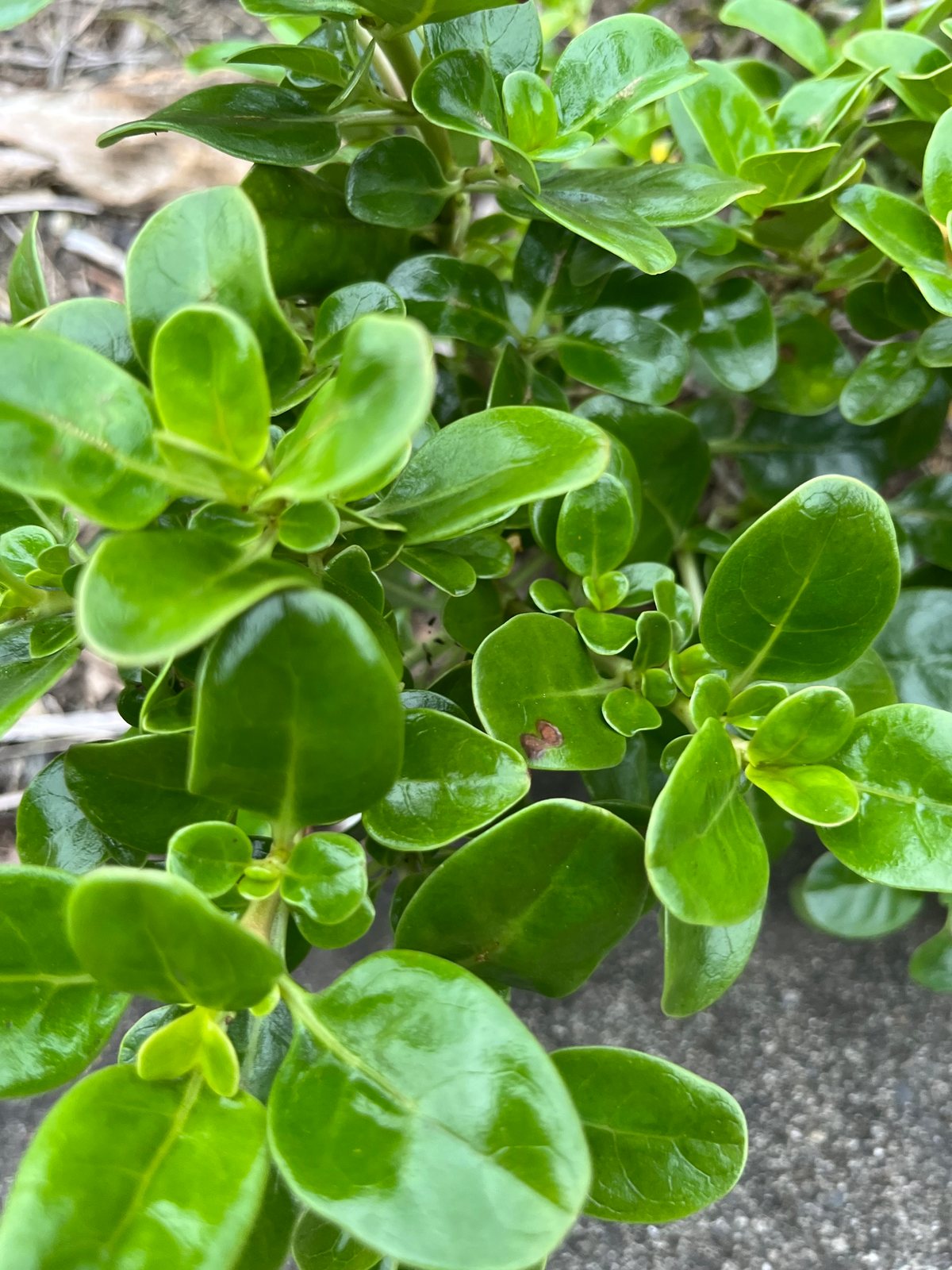
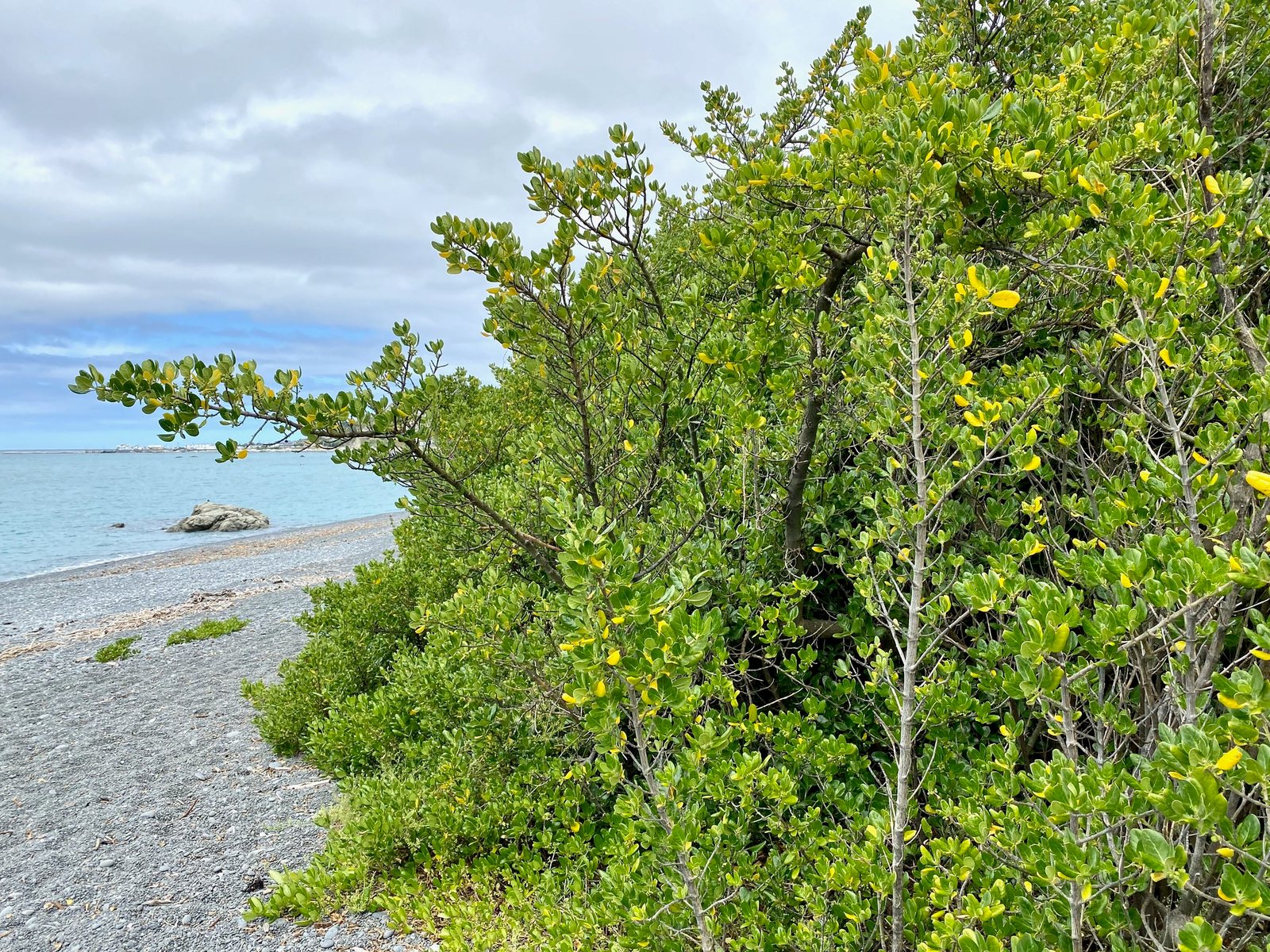
Mirror bush is a dense evergreen shrub from New Zealand, grown for its exceptionally glossy leaves and tolerance of coastal wind and salt spray. The species has green foliage, while many garden selections have cream, yellow, pink or bronze colouring. It makes a useful hedge in mild climates but needs winter protection in colder areas and can become invasive in some coastal regions.
At a glance
- Sun
- Full sun to partial shade; coloured foliage usually develops best in sun.
- Water
- Water regularly while establishing, then during prolonged dry spells. Container plants need more frequent watering, but must not stand in water.
- Soil
- Well-drained soil, including sandy coastal soil; tolerates a range of soil pH. Avoid persistently wet ground.
- Height
- 6-12 ft (1.8-3.7 m), sometimes taller in sheltered, frost-free sites; compact cultivars remain much smaller.
- Spread
- 6-10 ft (1.8-3 m), depending on cultivar and pruning.
- Foliage
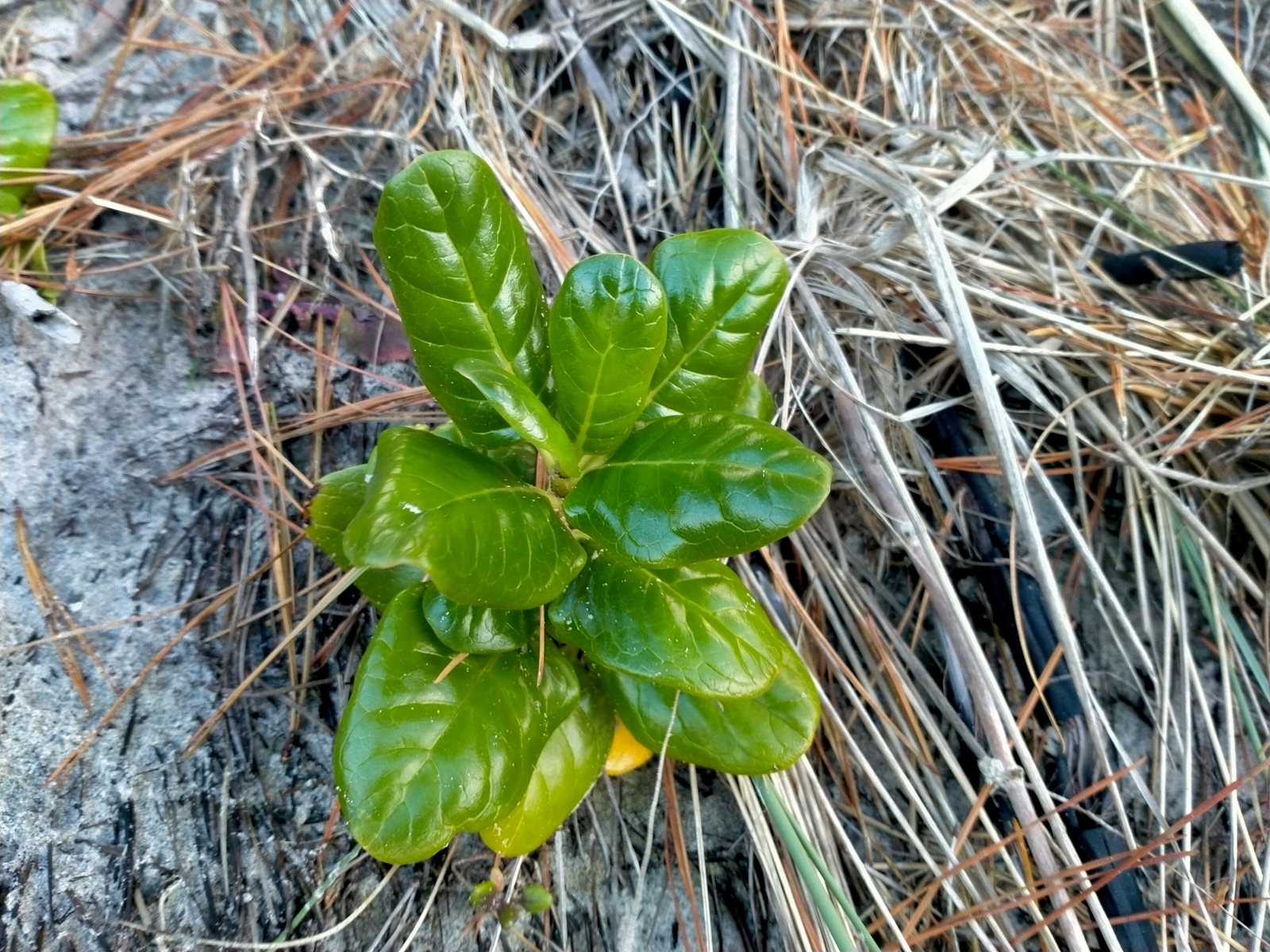
- Evergreen. Thick, rounded to oval leaves with a highly polished surface. The species is green; variegated and coloured cultivars may deepen in colour during cool weather.
- Growth
- Moderate to fast in mild conditions.
- Care needed
- Low
The year at a glance
- Drought tolerant
- Heat tolerant
- Wildlife
| J | F | M | A | M | J | J | A | S | O | N | D | |
|---|---|---|---|---|---|---|---|---|---|---|---|---|
| Fruit | ||||||||||||
| Plant |
Northern hemisphere months. In Australia, shift them by six.
- Difficulty
- Moderate
- Toughness
- Fairly tough
Will it suit your garden?
Pick your zone, country, light and whether you have pets.
Full sun is 6 or more hours of direct sun a day, part shade 3 to 6 hours, shade under 3.
How it grows
Planting day
1.6 ft (0.5 m)
After 1 year
3 ft (1.1 m)
After 2 years
5 ft (1.6 m)
After 3 years
7 ft (2.2 m)
After 5 years
9 ft (2.8 m)
full size
About 4 years to full size.
From a typical nursery size, at an average rate for this kind of plant. A rule of thumb, not a forecast.
Good to know
- Cats and dogs
- Safe
- Invasive in
- the US and Australia
- In the garden
- Spreads vigorously: plan to contain it.
- Growth rate
- Fast
Care
Jobs through the year
- WaterApr–May, Sep–Oct, every 21 days
- For established plants in the ground, water only if the root zone is dry; young plants and pots need more frequent checks.
- WaterJun–Aug, every 14 days
- Water established ground plants deeply during prolonged dry spells; let the surface dry between waterings.
- WaterJan–Mar, Nov–Dec, every 21 days
- Check overwintering pots and water sparingly only as needed to keep roots barely moist.
- FeedMay
- Apply a light balanced feed only if growth is weak; avoid heavy feeding.
- MulchMay
- Mulch the root area without covering the stems.
- PruneMay–Jul
- Shape after frost risk passes; remove green reversions at their origin and assess frost damage after new growth appears.
- ProtectJan–Apr, Oct–Dec
- Not winter-hardy in zones 6–7; grow in a movable pot and overwinter in bright, frost-free shelter.
- Water deeply through the first growing season, allowing the soil surface to dry slightly between waterings.
- Apply a light dressing of balanced fertiliser in spring if growth is weak; avoid heavy feeding.
- Mulch around the roots, keeping mulch clear of the stems.
- Use a container with drainage holes and free-draining potting mix.
- Move container plants into a bright, frost-free place before hard frosts in cold-winter areas.
- Remove plain-green shoots from variegated plants at their point of origin.
Pruning. Trim hedges and shape shrubs in spring after the main frost risk has passed, with a light summer trim if needed. Wait until new growth shows before cutting back frost-damaged stems, and avoid hard pruning in autumn.
Through the year
- Spring
- Plant after the main frost risk, water thoroughly and mulch around the root zone.
- Mid-spring
- Prune frost damage once live growth is visible, and shape established shrubs.
- Late spring
- Give container plants a light feed and check that drainage holes remain clear.
- Summer
- Water young plants during dry weather and lightly trim hedges if necessary.
- Late summer
- Take semi-ripe cuttings from healthy, non-flowering shoots.
- Autumn
- Move pots under cover before damaging frost and reduce watering as growth slows.
- Winter
- Keep sheltered container plants bright and barely moist; check for scale insects.
In the garden
- Clip into a dense hedge or wind-filtering screen in mild coastal gardens.
- Use compact coloured cultivars in containers beside entrances or on sheltered terraces.
- Combine glossy foliage with New Zealand flax and ornamental grasses for contrasting leaf shapes.
- Plant green-leaved forms as an evergreen background to flowering shrubs and perennials.
Garden styles it suits: Coastal, Modern, Architectural minimal, Modern courtyard, Low-maintenance and Winter interest.
Plant it with: New Zealand flax, Coastal rosemary, Lomandra, Agapanthus, Lavender and Pittosporum.
Wildlife: Small, inconspicuous flowers are followed by orange-red fruit on female plants when a male plant is nearby. Birds eat the fruit and can spread the seeds into surrounding habitats.
Problems to watch for
- Frost damage: leaves blacken and shoot tips die after hard freezes; shelter plants and prune damaged growth in spring.
- Root rot: wet soil causes yellowing, wilting and root decline; improve drainage and avoid standing water.
- Scale insects: inspect stems and leaf undersides; remove small infestations by hand or use a labelled horticultural oil as directed.
- Green reversion: vigorous green shoots can overwhelm variegated growth; remove them completely at their origin.
Safety
Not known to be toxic to people, cats, dogs or horses. No part is recognised as a serious poisoning hazard, but it is an ornamental plant rather than a food crop; eating plant material may still cause stomach upset.
Where it spreads. Spreads by bird-carried seed and is an environmental weed in coastal California and parts of Australia, including New South Wales, Victoria, South Australia and Western Australia. Check local guidance before planting, especially near dunes, coastal scrub or bushland.
Easily confused with
Japanese spindle (Euonymus japonicus)
Also has glossy, opposite leaves, but their margins have fine teeth; mirror bush leaves have smooth margins.
New Zealand broadleaf (Griselinia littoralis)
Has leathery, glossy leaves arranged alternately rather than in opposite pairs, often with an uneven leaf base.
Dwarf mirror bush (Coprosma kirkii)
Usually forms a low, spreading shrub with much smaller, narrower leaves than the broad, rounded leaves of Coprosma repens.
The name
Mirror bush refers to the reflective leaves; Coprosma comes from Greek words for dung and smell, referring to the odour of some species, while repens means creeping.
Propagation. Take semi-ripe cuttings in late summer and root them in a free-draining medium under humid conditions. Seed can be used for the species, but seedlings will not reliably retain a cultivar's foliage colour or compact habit.
Checked against open data
- Accepted botanical name
- Coprosma repens
- In the US and Canada
- Introduced in the lower 48 states.
- Native range
- New Zealand North and New Zealand South.
Sources: GBIF (CC BY 4.0), USDA PLANTS and Trefle (CC BY 4.0). The care and design notes are LandscapeGPT's own.
See it in your own yard.
Upload a photo of your yard and see it redesigned with plants that suit your climate, each checked against your zone.