Mock orange 'Virginal'
Philadelphus 'Virginal'. Family Hydrangeaceae. Shrub.
Also called Virginal mock orange, Double mock orange, Philadelphus × virginalis 'Virginal'.
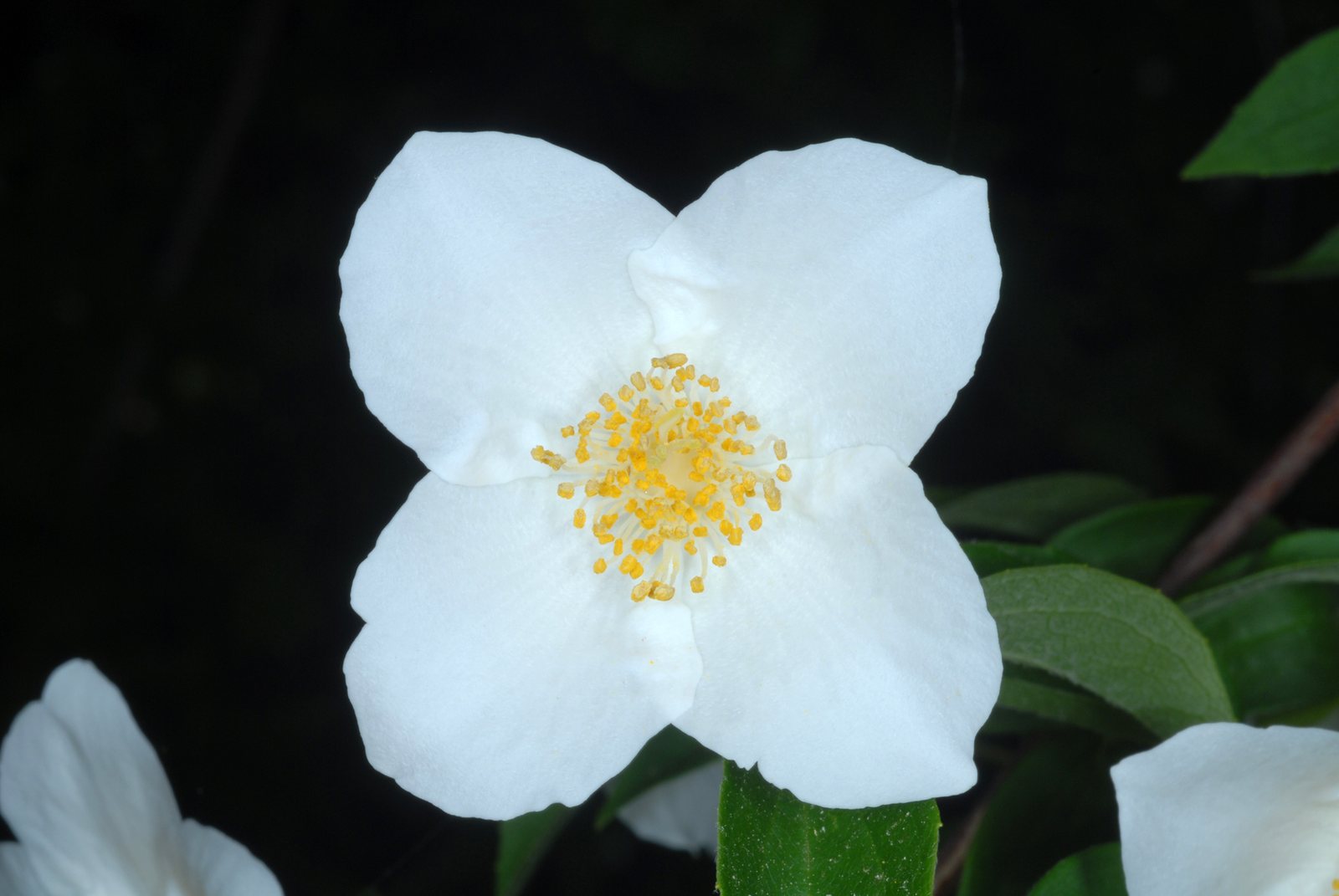
'Virginal' is a large, deciduous shrub grown for clusters of double white flowers with a strong, sweet scent. Its upright stems become arching with age, making it useful behind smaller plants or in an informal flowering hedge. Give it room to reach its natural size rather than clipping it into a tight shape.
At a glance
- Sun
- Full sun to partial shade; flowering is best with at least six hours of direct sun.
- Water
- Moderate; keep newly planted shrubs evenly moist, then water established plants deeply during prolonged dry weather.
- Soil
- Moist but well-drained soil, including clay improved for drainage; tolerates acidic, neutral and alkaline conditions.
- Height
- 8-10 ft (2.4-3 m)
- Spread
- 6-10 ft (1.8-3 m)
- Flowers
- Late spring to early summer; fragrant, double white flowers in clusters.
- Foliage
- Opposite, oval, pointed green leaves with toothed edges; autumn colour is usually modest.
- Growth
- Moderate to fast
- Care needed
- Medium
The year at a glance
- Cold hardy
- Wildlife
- Low allergen
- Fragrant
| J | F | M | A | M | J | J | A | S | O | N | D | |
|---|---|---|---|---|---|---|---|---|---|---|---|---|
| Flowers | ||||||||||||
| Plant |
Northern hemisphere months. In Australia, shift them by six.
- Difficulty
- Easy
- Toughness
- Very tough
Will it suit your garden?
Pick your zone, country, light and whether you have pets.
Full sun is 6 or more hours of direct sun a day, part shade 3 to 6 hours, shade under 3.
How it grows
Planting day
1.6 ft (0.5 m)
After 1 year
3 ft (1.1 m)
After 2 years
5 ft (1.6 m)
After 3 years
7 ft (2.2 m)
After 5 years
9 ft (2.7 m)
full size
About 4 years to full size.
From a typical nursery size, at an average rate for this kind of plant. A rule of thumb, not a forecast.
Good to know
- Cats and dogs
- Safe
- Growth rate
- Fast
Care
Jobs through the year
- WaterApr–May, Sep–Oct, every 14 days
- Water established shrubs only if soil is drying; keep new plants more consistently moist.
- WaterJun–Aug, every 7 days
- During prolonged drought, soak established roots deeply rather than watering little and often.
- MulchMar–Apr
- Top-dress with 5–8 cm of compost, keeping it away from stems.
- PruneMar
- Remove dead or damaged wood only; leave healthy stems carrying flower buds.
- PruneJun–Jul
- Immediately after flowering, shorten flowered shoots and remove up to one-third of the oldest stems.
- Water deeply through the first growing season whenever the root zone begins to dry.
- Apply 2-3 in (5-8 cm) of organic mulch in spring, keeping it clear of the stems.
- Top-dress with compost in spring; avoid heavy nitrogen feeding, which encourages leafy growth at the expense of flowers.
- During prolonged drought, soak the root zone rather than watering little and often.
- Allow space for arching branches so repeated trimming is unnecessary.
Pruning. Prune immediately after flowering: shorten flowered shoots to strong new growth and remove up to one-third of the oldest stems at ground level. Avoid routine winter or early-spring pruning, which removes wood carrying the coming season's flowers.
Through the year
- Autumn
- Plant while the soil is workable and moist; in very cold regions, leave planting until spring.
- Early spring
- Remove dead or damaged wood and check that mulch is not piled against the stems.
- Spring
- Top-dress with compost and renew the mulch.
- Late spring to early summer
- Enjoy the flowers and check soft shoot tips for aphids.
- After flowering
- Prune flowered shoots and thin out some of the oldest stems.
- Summer
- Water during prolonged dry spells and take softwood cuttings from healthy, non-flowering shoots.
In the garden
- Place near a path or seating area where the flower scent can be enjoyed, leaving room for its mature spread.
- Use at the back of a mixed border, with summer-flowering perennials in front to provide interest after flowering.
- Combine with lilacs, weigelas and roses in an informal flowering hedge.
- Use as a tall white-flowered backdrop in a cottage garden or white garden.
Garden styles it suits: English country, Cottage garden, Traditional, Native hedgerow, Sensory garden and White garden.
Plant it with: Lilac, Weigela, Shrub roses, Hardy geraniums, Lady's mantle and Catmint.
Wildlife: Branches provide shelter for small birds. The double flowers offer less accessible pollen and nectar than single-flowered mock oranges, so this is not a first choice for pollinator planting.
Problems to watch for
- Aphids can cluster on soft shoots; wash them off with water and encourage ladybirds and other predators.
- Powdery mildew may affect crowded or drought-stressed plants; improve airflow, water the root zone and remove badly affected fallen leaves.
- Few flowers usually follow pruning at the wrong time, deep shade or excessive nitrogen; prune only after flowering and avoid rich lawn fertiliser around the roots.
- Waterlogged soil can cause root decline; improve drainage or move the shrub rather than keeping the roots persistently wet.
Safety
Not known to be toxic to people, cats, dogs or horses. No part is recognised as significantly poisonous, but it is an ornamental plant, not a food plant; eating substantial amounts may cause stomach upset.
Easily confused with
Sweet mock orange (Philadelphus coronarius)
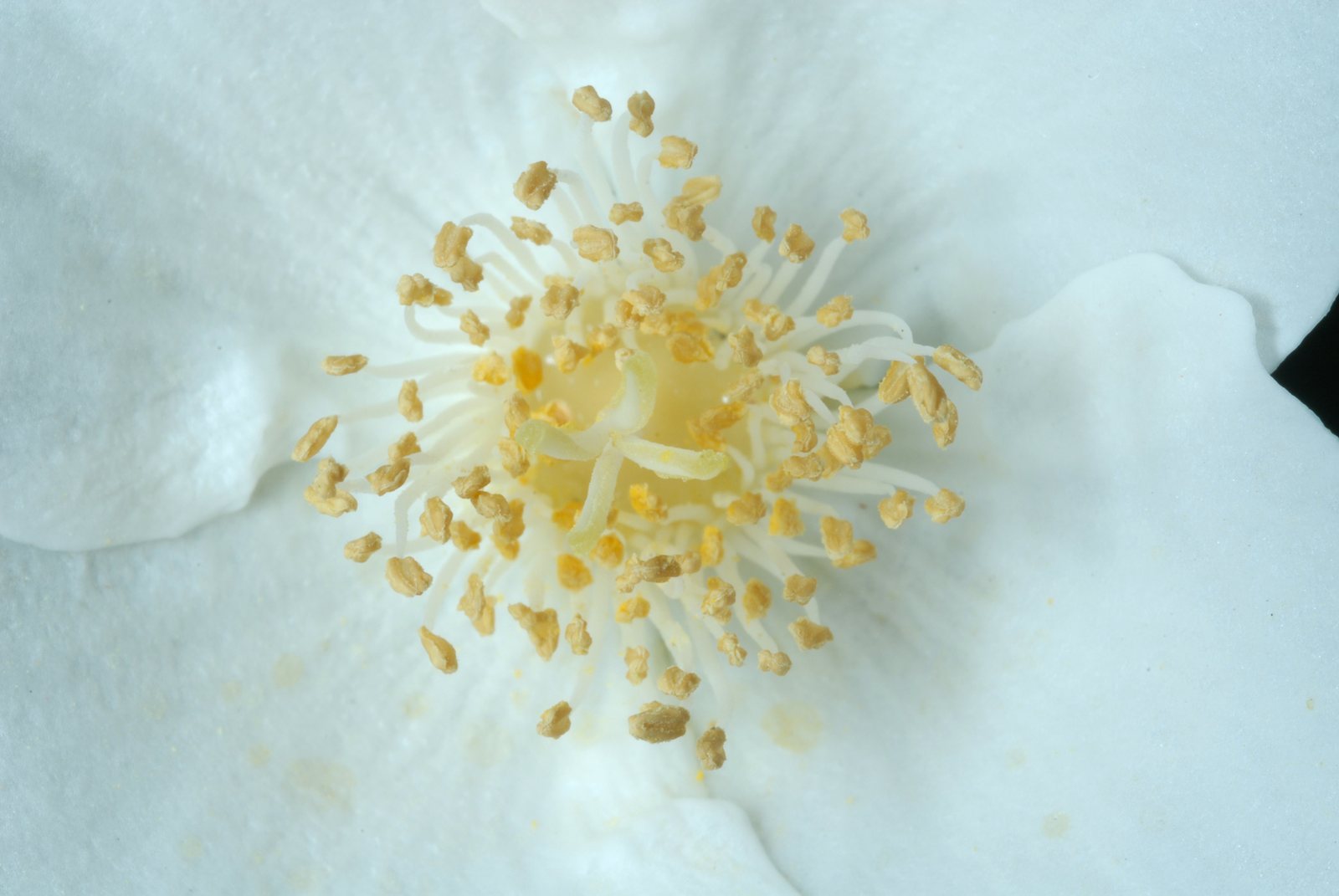
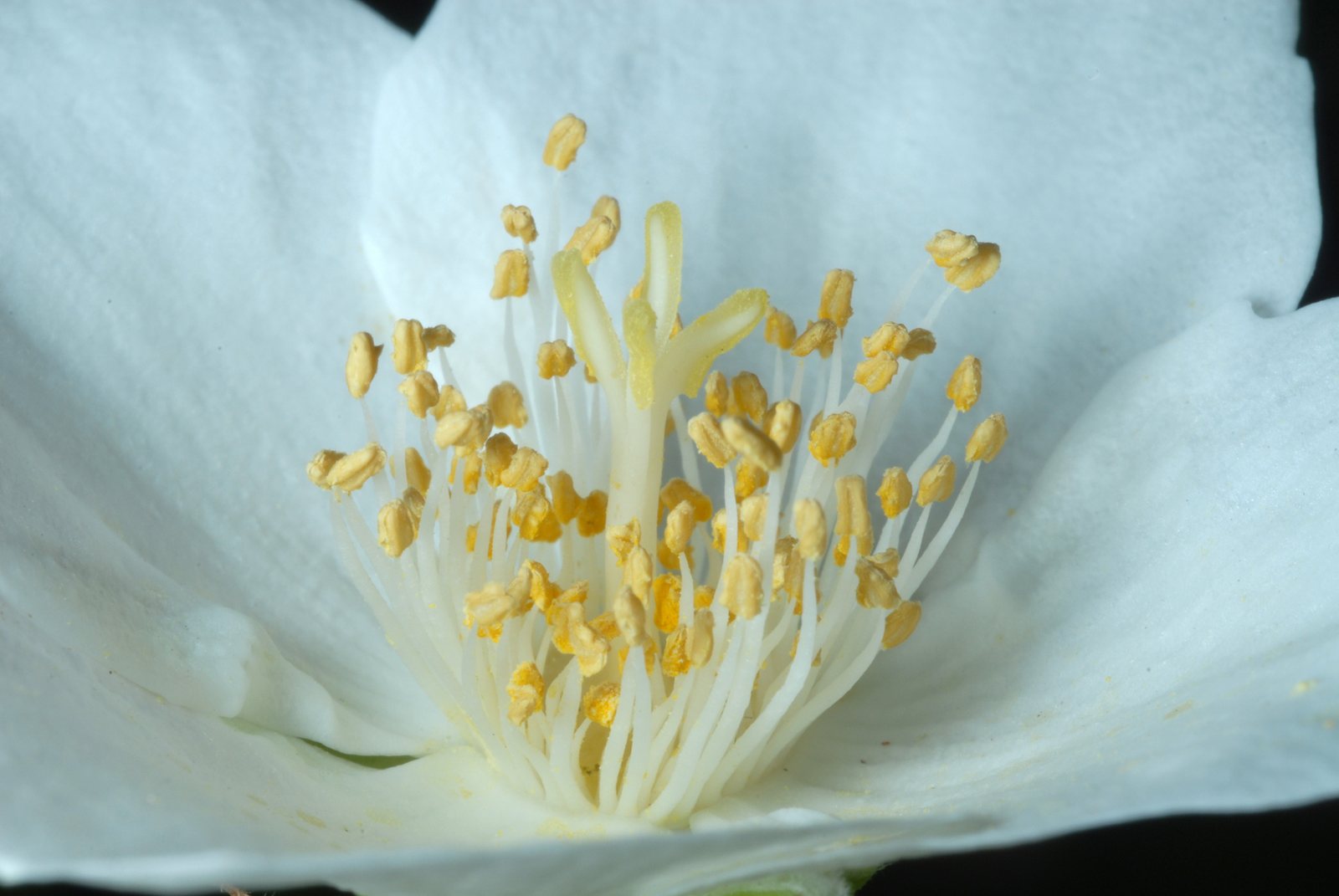
The typical species has single flowers with four petals and clearly visible yellow stamens; 'Virginal' has many-petalled, double flowers.
Mexican orange blossom (Choisya ternata)
Mexican orange blossom is evergreen, with glossy leaves divided into three leaflets; 'Virginal' loses its simple, toothed leaves in winter.
Rough deutzia (Deutzia scabra)
Deutzia has rough, often duller leaves and generally smaller, more star-shaped flowers without mock orange's strong orange-like scent; double-flowered forms can look particularly similar.
The name
The common name mock orange refers to the flowers' resemblance in scent and appearance to orange blossom, although the plants are unrelated.
Propagation. Take softwood cuttings in late spring or early summer, or hardwood cuttings during dormancy. Layering a low branch also works; seed will not reliably reproduce 'Virginal'.
Checked against open data
- Accepted botanical name
- Philadelphus
Sources: GBIF (CC BY 4.0). The care and design notes are LandscapeGPT's own.
See it in your own yard.
Upload a photo of your yard and see it redesigned with plants that suit your climate, each checked against your zone.