Montmorency cherry
Prunus cerasus 'Montmorency'. Family Rosaceae. Tree.
Also called Montmorency sour cherry, Montmorency tart cherry, Montmorency pie cherry.
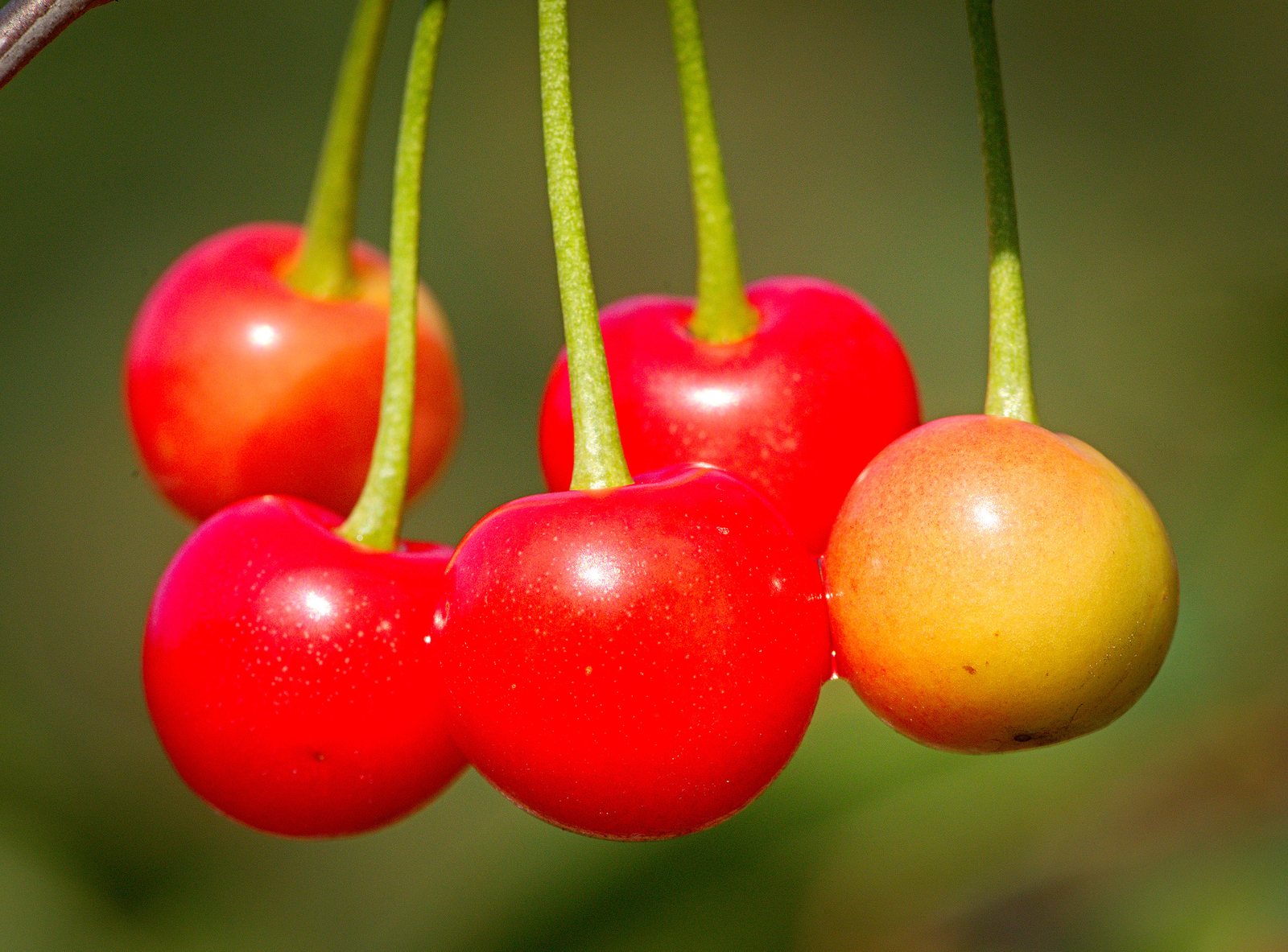
A deciduous sour cherry grown for bright red, tart fruit with pale flesh, especially useful for pies, preserves and freezing. It is self-fertile, so one tree can crop alone, but needs a cold winter and a sunny, well-drained site; it is poorly suited to warm-winter climates.
At a glance
- Sun
- Full sun, ideally at least 6-8 hours of direct sun daily.
- Water
- Water deeply during establishment and dry spells, especially while fruit is swelling. Avoid waterlogged soil and frequent shallow watering.
- Soil
- Well-drained loam with moderate fertility; tolerates some clay if drainage is good. Aim for pH 6.0-7.0.
- Height
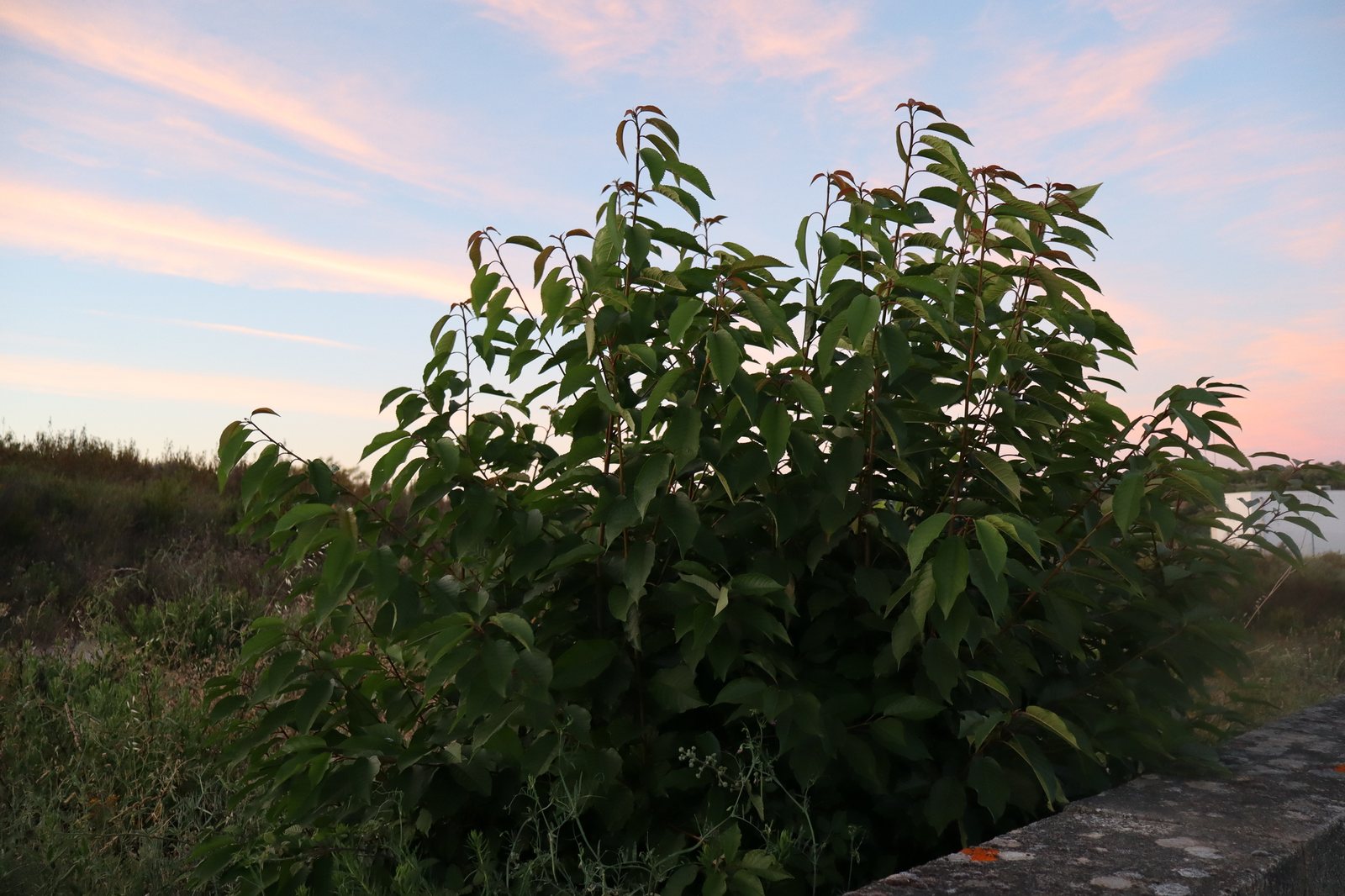
- 12-18 ft (3.7-5.5 m), depending on rootstock and pruning
- Spread
- 12-18 ft (3.7-5.5 m), depending on rootstock and pruning
- Flowers
- White flowers in mid-spring, usually before or as the leaves emerge; timing varies with climate.
- Foliage
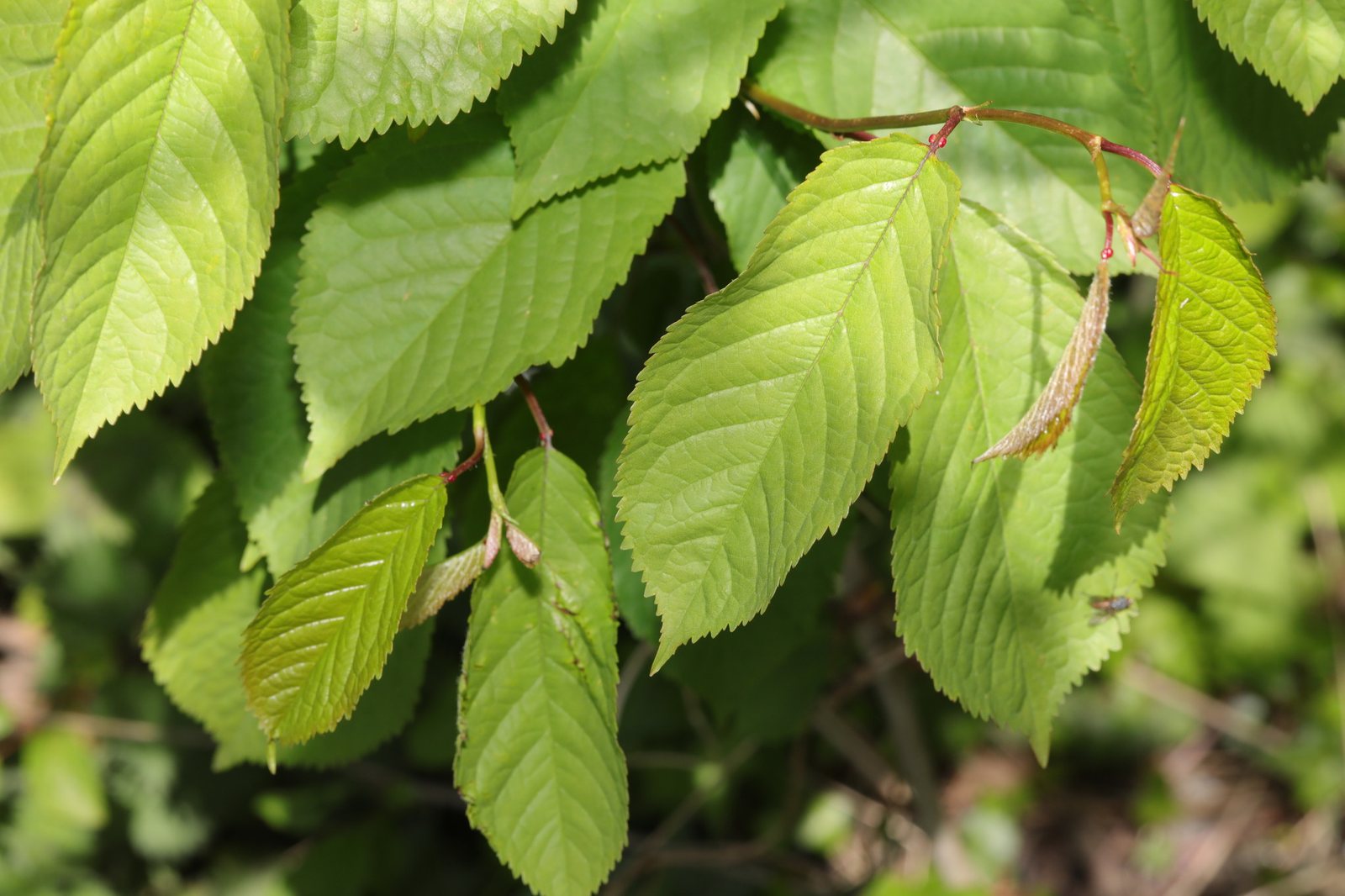
- Oval, pointed, toothed green leaves, often turning yellow in autumn.
- Growth
- Moderate; usually begins cropping within a few years of planting.
- Care needed
- Medium
The year at a glance
- Pollinators
- Cold hardy
- Wildlife
- Low allergen
- Edible
| J | F | M | A | M | J | J | A | S | O | N | D | |
|---|---|---|---|---|---|---|---|---|---|---|---|---|
| Flowers | ||||||||||||
| Fruit | ||||||||||||
| Plant |
Northern hemisphere months. In Australia, shift them by six.
- Difficulty
- Moderate
- Toughness
- Fairly tough
Will it suit your garden?
Pick your zone, country, light and whether you have pets.
Full sun is 6 or more hours of direct sun a day, part shade 3 to 6 hours, shade under 3.
How it grows
Planting day
7 ft (2 m)
After 1 year
7 ft (2.1 m)
After 2 years
7 ft (2.3 m)
After 3 years
8 ft (2.4 m)
After 5 years
9 ft (2.7 m)
About 20 years to full size.
From a typical nursery size, at an average rate for this kind of plant. A rule of thumb, not a forecast.
Good to know
- Cats and dogs
- Toxic
- Growth rate
- Moderate
Care
Jobs through the year
- WaterApr–May, Sep–Oct, every 14 days
- Water established trees deeply during dry spells; water young trees more often.
- WaterJun–Aug, every 7 days
- Water deeply when rainfall is insufficient, especially while fruit swells.
- FeedMar
- Feed lightly only if growth is weak or soil testing shows a need.
- MulchMar
- Spread 5–8 cm of organic mulch, keeping it away from the trunk.
- ProtectApr
- Avoid insecticides while blossom is open.
- ProtectMay–Jul
- Protect colouring fruit with taut, framed wildlife-safe mesh; check daily.
- HarvestJun–Jul
- Pick fully red, juicy cherries with stalks attached; ripe fruit remains tart.
- PruneJul–Aug
- Prune after harvest in dry weather, opening the crown and renewing older fruiting wood.
- PruneApr–Aug
- Remove rootstock suckers as they appear.
- ProtectOct–Nov
- Collect fallen leaves and fruit and remove mummified cherries.
- ProtectFeb–Mar
- Check stakes, ties and trunk guards before growth starts.
- Plant with the graft union above soil level; choose a site away from frost pockets.
- Water deeply through the first two growing seasons and during prolonged dry weather thereafter.
- Spread 2-3 in (5-8 cm) of organic mulch over the root area, keeping it clear of the trunk.
- Feed lightly in spring only if growth is weak or a soil test shows a need; excess nitrogen encourages leafy growth.
- Remove root suckers promptly and keep grass away from the trunk.
- Use taut, wildlife-safe bird netting on a supporting frame as fruit colours, checking it daily.
Pruning. Prune in dry weather after harvest, rather than in winter, to reduce silver leaf and bacterial canker risk. Maintain an open framework, remove dead or crossing branches, and gradually replace some older fruiting wood while retaining healthy young shoots.
Harvest
Pick cherries when fully red, juicy and easily detached; taste a few, as they remain tart even when ripe. Harvest is usually in early to midsummer, often June-July in the Northern Hemisphere or December-January in suitable Australian districts; pick with stalks attached for better keeping.
Through the year
- Late autumn
- Collect fallen leaves and remove shrivelled fruit to reduce disease carryover.
- Winter
- Plant bare-root trees while dormant if the ground is neither frozen nor waterlogged.
- Early spring
- Refresh mulch, check tree ties and feed lightly only if needed.
- Spring
- Watch for blossom damage and disease; avoid insecticides while flowers are open.
- Early summer
- Water during dry spells and protect colouring fruit from birds.
- Summer
- Harvest ripe cherries and prune after picking during a dry spell.
In the garden
- Plant as a small orchard tree with enough space around it for picking and netting.
- Use as a flowering and fruiting focal point in an edible garden.
- Train as a fan against a sunny wall or sturdy wires where space is limited.
- Combine with low flowering herbs outside the mulched trunk area to support pollinating insects.
Garden styles it suits: Backyard orchard, Edible landscape, Potager (kitchen garden), Cottage garden, Homestead and Traditional.
Plant it with: Chives, Thyme, Yarrow, Calendula and Sweet alyssum.
Wildlife: Flowers provide pollen and nectar for bees and other insects. Birds eat ripe cherries and may take much of the crop unless it is protected.
Problems to watch for
- Brown rot: blossoms die and fruit develops brown decay with spore cushions. Remove infected and mummified fruit, improve airflow and seek locally approved treatment if outbreaks persist.
- Cherry leaf spot: small purple spots, yellowing and premature leaf fall. Clear fallen leaves, avoid wetting foliage and use local disease-management advice where it recurs.
- Bacterial canker: sunken bark, dying shoots and gum, sometimes with damaged blossoms. Prune affected branches back to healthy wood in dry summer weather and disinfect tools between cuts.
- Fruit flies, including spotted wing drosophila where present: larvae spoil ripening cherries. Harvest promptly, remove spoiled fruit and use suitable fine-mesh exclusion netting after flowering.
Safety
The ripe flesh is edible, but the stones contain cyanogenic compounds and should not be chewed or crushed. Leaves, stems and seeds can poison people, cats, dogs and horses if eaten; wilted foliage is especially hazardous to grazing animals, and serious poisoning can be fatal. Keep prunings away from livestock.
Easily confused with
Sweet cherry (Prunus avium)
Usually a larger tree with larger leaves and sweet rather than sharply tart ripe fruit; two small glands are often conspicuous near the top of the leaf stalk.
Morello cherry (Prunus cerasus 'Morello')
Produces dark red fruit with dark flesh and juice; 'Montmorency' has bright red skin with much paler flesh and juice.
The name
The cultivar name refers to Montmorency in France, historically associated with sour cherry growing.
Propagation. Propagate by budding or grafting onto a suitable cherry rootstock. Seedlings do not reliably reproduce 'Montmorency', and suckers from a grafted tree usually belong to the rootstock.
Checked against open data
- Accepted botanical name
- Prunus cerasus
- In the US and Canada
- Introduced in Canada and the lower 48 states.
- Native range
- North Caucasus.
- Measured
- Average height 1000 cm.
Sources: GBIF (CC BY 4.0), USDA PLANTS and Trefle (CC BY 4.0). The care and design notes are LandscapeGPT's own.
See it in your own yard.
Upload a photo of your yard and see it redesigned with plants that suit your climate, each checked against your zone.