Moonshadow wintercreeper
Euonymus fortunei 'Moonshadow'. Family Celastraceae. Shrub.
Also called Moonshadow euonymus, Euonymus fortunei 'Moonshadow'.
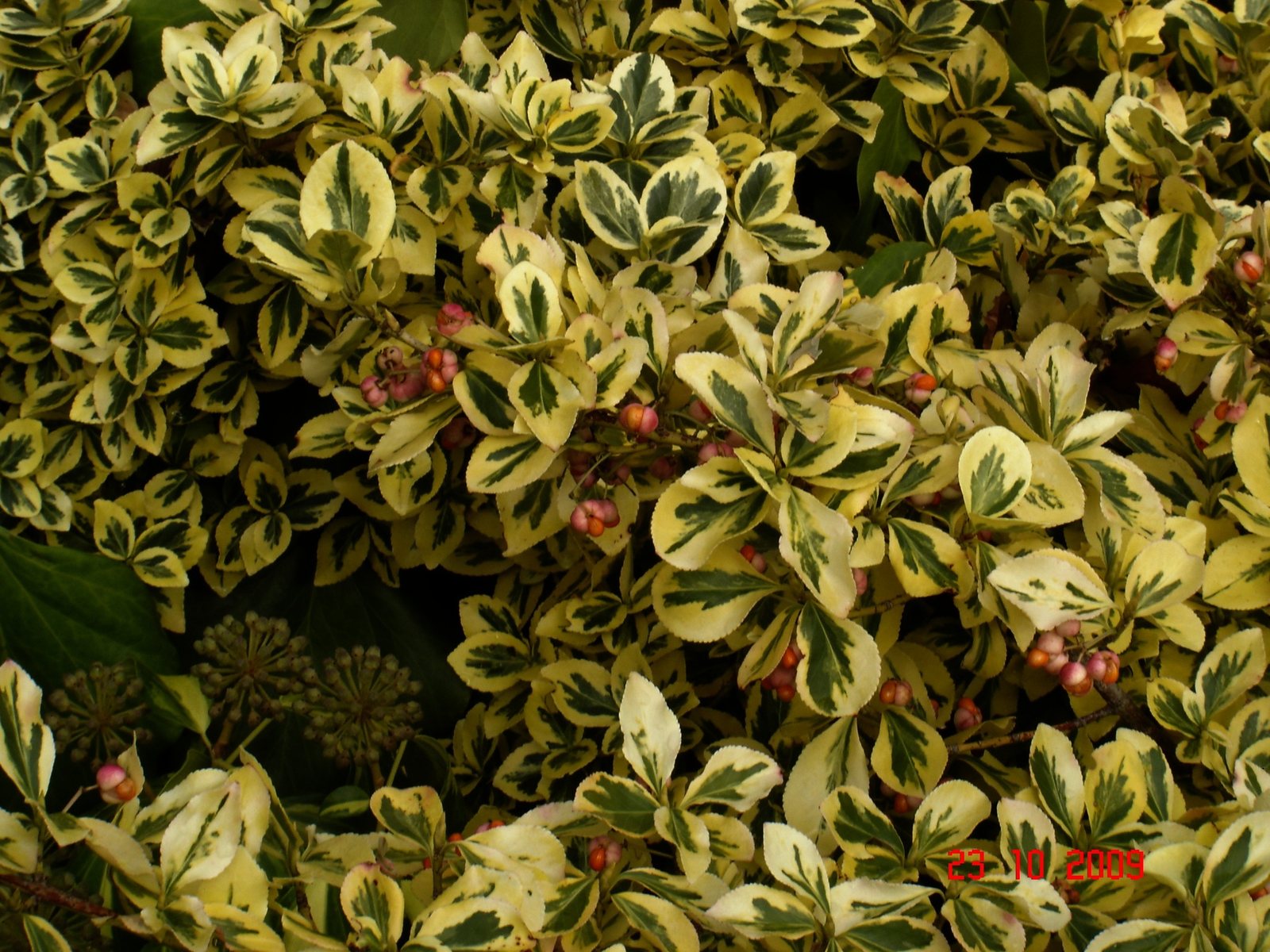
A low, spreading evergreen shrub grown for small leaves with yellow centres and dark green edges. It provides year-round colour beneath taller shrubs or along borders, but its stems can root wherever they touch soil and may climb nearby supports. Wintercreeper is invasive in parts of North America, so check local guidance before planting.
At a glance
- Sun
- Full sun to partial shade; light afternoon shade helps in hot climates. Dense shade reduces colour and encourages loose growth.
- Water
- Water regularly while establishing, then during prolonged dry spells. Avoid persistently wet soil.
- Soil
- Most well-drained soils, including clay improved for drainage; tolerates acidic to alkaline conditions.
- Height
- 1-2 ft (0.3-0.6 m) as a low shrub; potentially taller if allowed to climb
- Spread
- 3-5 ft (0.9-1.5 m), eventually wider where stems root
- Foliage
- Evergreen. Small, leathery, oval leaves with irregular yellow centres and dark green margins. Yellow areas may become cream with age, and foliage can develop pink tones in cold weather.
- Growth
- Moderate
- Care needed
- Medium
The year at a glance
- Drought tolerant
- Heat tolerant
- Wildlife
| J | F | M | A | M | J | J | A | S | O | N | D | |
|---|---|---|---|---|---|---|---|---|---|---|---|---|
| Plant |
Northern hemisphere months. In Australia, shift them by six.
- Difficulty
- Moderate
- Toughness
- Very tough
Will it suit your garden?
Pick your zone, country, light and whether you have pets.
Full sun is 6 or more hours of direct sun a day, part shade 3 to 6 hours, shade under 3.
How it grows
Planting day
1.5 ft (0.45 m)
full size
About 5 years to full size.
From a typical nursery size, at an average rate for this kind of plant. A rule of thumb, not a forecast.
Good to know
- Cats and dogs
- Toxic
- Invasive in
- the US
- In the garden
- Spreads vigorously: plan to contain it.
- Growth rate
- Moderate
Care
Jobs through the year
- WaterApr–May, Sep–Oct, every 14 days
- Water established shrubs only if soil is drying; newly planted shrubs need more frequent watering.
- WaterJun–Aug, every 14 days
- Water established shrubs deeply during prolonged dry spells, avoiding waterlogging.
- MulchMar–Apr
- Apply a thin compost layer and organic mulch, leaving the main stems clear.
- PruneMar–Apr
- After severe frosts, remove dead stems and shorten long shoots to leafy side shoots.
- PruneMay–Oct, every 30 days
- Remove green reversions at their origin and unwanted rooted or climbing stems; prevent escape where invasive.
- Water deeply during the first growing season whenever the upper soil begins to dry.
- Apply a thin layer of compost in spring; feed only if growth is poor.
- Mulch around the roots, keeping mulch clear of the main stems.
- Remove solid-green shoots at their point of origin before they overtake the variegated growth.
- Keep trailing stems away from tree trunks and remove unwanted rooted sections.
Pruning. Trim in spring after the worst frosts to maintain a compact outline, cutting long shoots back to leafy side shoots. Remove reverted green growth, dead stems and unwanted climbing shoots whenever noticed.
Through the year
- Early spring
- Check for winter damage and prune dead or damaged stems once severe frosts have passed.
- Spring
- Plant in well-drained ground, water thoroughly and apply mulch.
- Late spring
- Inspect stems and leaf undersides for scale insects; remove solid-green shoots.
- Summer
- Water new plants during dry weather and trim shoots spreading beyond their allotted space.
- Late summer
- Take semi-ripe cuttings from healthy, clearly variegated shoots if propagation is permitted locally.
- Autumn
- Remove unwanted rooted stems and check that growth is not climbing nearby trees.
- Winter
- Check container plants during dry, frost-free spells and water if the compost is drying out.
In the garden
- Use as a low edging beside paths where regular trimming can keep the outline clear.
- Plant beneath taller shrubs to brighten their lower branches with yellow-and-green foliage.
- Combine with dark-leaved heucheras or green ferns for foliage contrast.
- Grow in a large container to display trailing stems while limiting spread.
Garden styles it suits: Traditional, Formal, Modern courtyard, Small-space, Winter interest and Urban city garden.
Plant it with: Heuchera, Hellebores, Japanese forest grass, Hardy geraniums, Christmas fern and Dwarf Japanese holly.
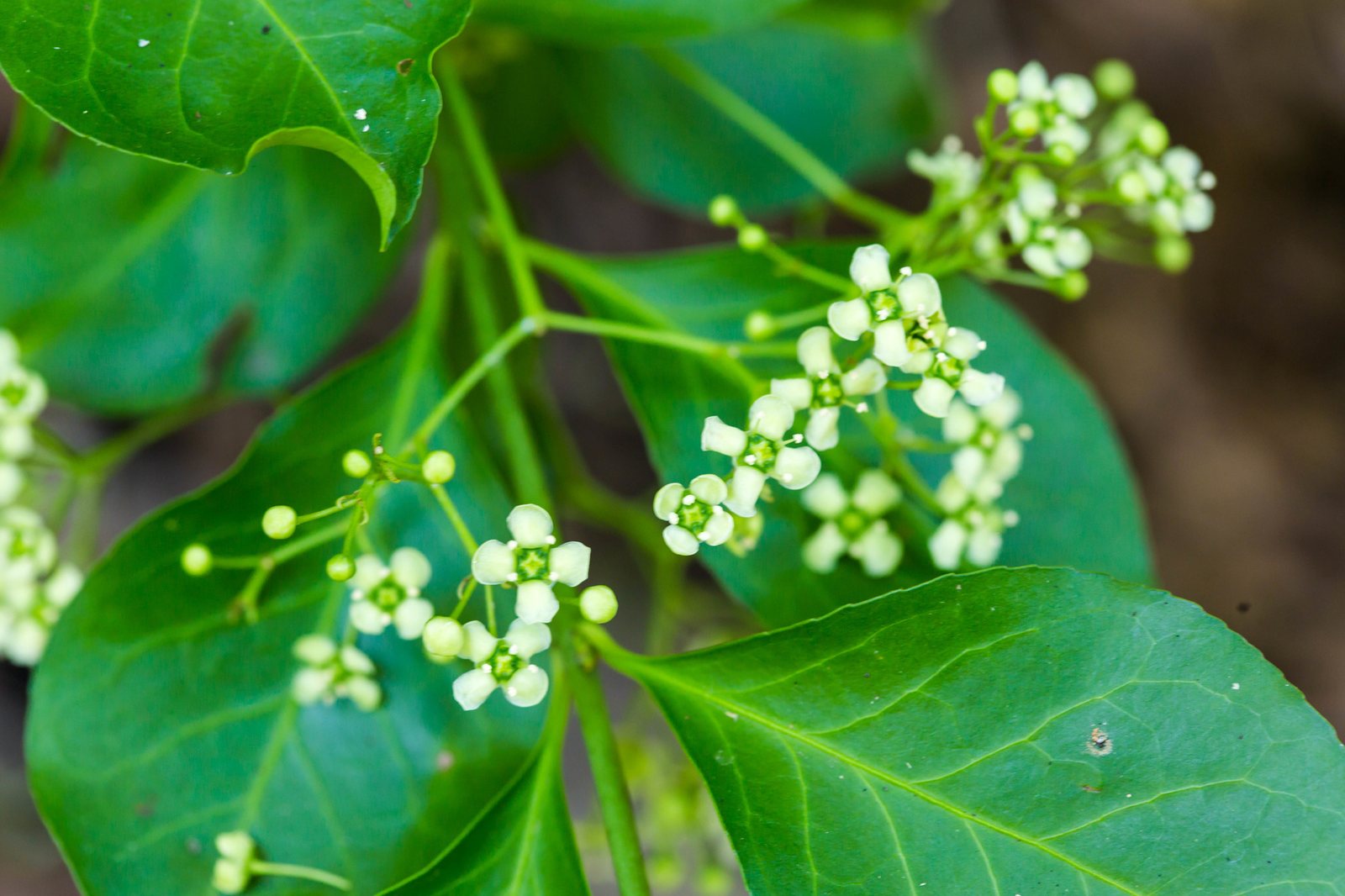
Wildlife: Small greenish flowers can attract insects, and birds may eat the fruit and disperse its seeds. Low, regularly trimmed plants often flower little; this is not a good choice for habitat planting where wintercreeper is invasive.
Problems to watch for
- Euonymus scale: look for white or brown scale covers on stems and leaves. Prune heavily infested growth and use a labelled horticultural oil at the appropriate stage, following temperature restrictions.
- Powdery mildew: white patches may develop in sheltered, crowded growth. Improve airflow, avoid excessive feeding and remove badly affected shoots.
- Root rot: yellowing and dieback can follow prolonged waterlogging. Improve drainage and avoid planting in persistently wet ground.
- Loss of variegation or excessive spread: cut solid-green shoots back to their origin and lift unwanted rooted stems before they establish.
Safety
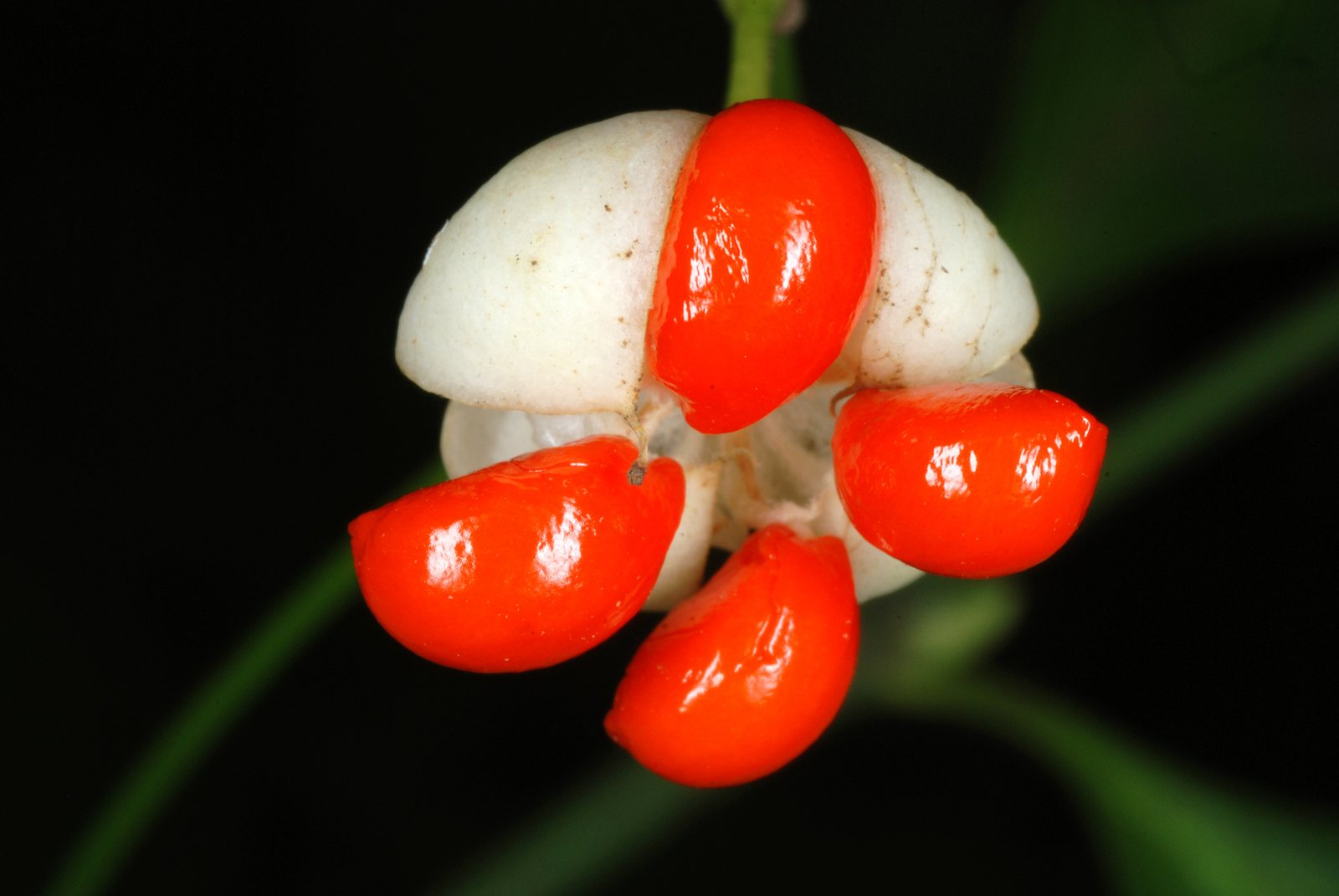
Treat all parts as toxic if eaten by people, cats, dogs or horses, especially the fruit and seeds. Ingestion can cause vomiting, diarrhoea and abdominal pain; substantial amounts may cause serious effects, including heart disturbances. Seek medical or veterinary advice after ingestion.
Where it spreads. Euonymus fortunei spreads aggressively and is listed as invasive in many eastern, southeastern and midwestern US states, including Maryland, Virginia, Kentucky, Tennessee and Indiana. It escapes cultivation, roots along trailing stems and climbs trees; birds can spread seeds from mature flowering growth. 'Moonshadow' is not a reliably non-invasive exception.
Easily confused with
Emerald 'n' Gold wintercreeper (Euonymus fortunei 'Emerald 'n' Gold')
Its leaves have green centres and yellow margins, the reverse of Moonshadow's usual pattern.
Emerald Gaiety wintercreeper (Euonymus fortunei 'Emerald Gaiety')
Its leaves have green centres edged in white rather than yellow centres edged in green.
Golden Japanese spindle (Euonymus japonicus 'Aureomarginatus')
It forms a more upright shrub with larger leaves edged in yellow and does not usually form rooting groundcover stems.
The name
The species name fortunei honours plant collector Robert Fortune, while wintercreeper describes its evergreen foliage and creeping growth.
Propagation. Root semi-ripe cuttings in summer or separate naturally rooted stems in spring. Select shoots with the correct variegation, and do not propagate where planting wintercreeper is restricted or discouraged.
Checked against open data
- Accepted botanical name
- Euonymus fortunei
- In the US and Canada
- Introduced in Canada and the lower 48 states.
- Native range
- Assam, China North-Central, China South-Central, China Southeast, Hainan, Japan, Jawa, Korea, Laos, Lesser Sunda Is., Manchuria and Myanmar.
- Measured
- Soil pH 5 to 7.5. Average height 305 cm.
Sources: GBIF (CC BY 4.0), USDA PLANTS and Trefle (CC BY 4.0). The care and design notes are LandscapeGPT's own.
See it in your own yard.
Upload a photo of your yard and see it redesigned with plants that suit your climate, each checked against your zone.