Moorpark apricot
Prunus armeniaca 'Moorpark'. Family Rosaceae. Tree.
Also called Moor Park apricot.
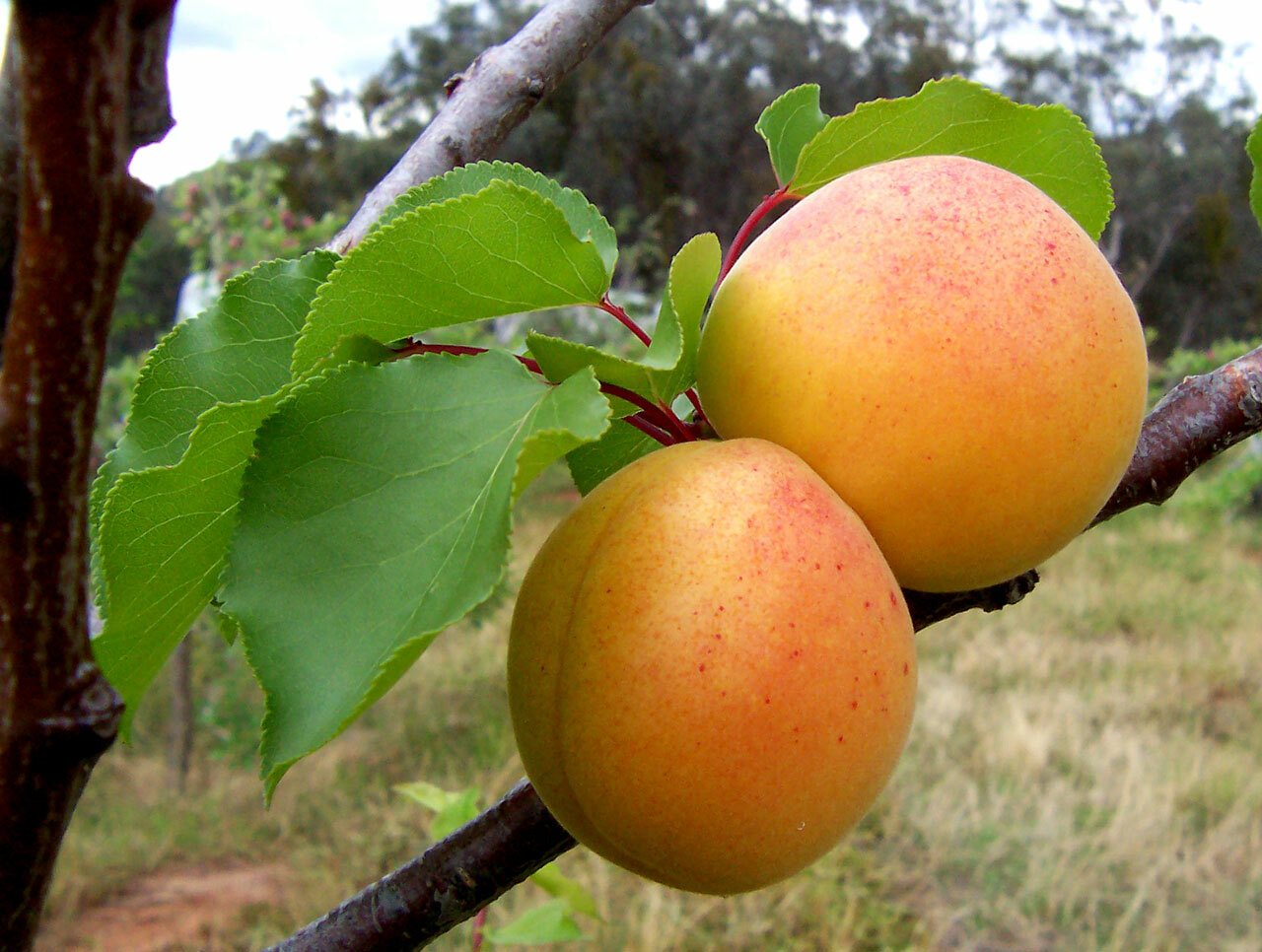
Moorpark is a deciduous, self-fertile apricot grown for its large, orange-yellow fruit with rich, sweet flesh, useful fresh, dried or cooked. It needs winter chilling and a warm summer to crop well; early blossom is vulnerable to frost, so a tree can survive winter yet produce little fruit.
At a glance
- Sun
- Full sun; choose a warm, sheltered position with good air circulation and no frost pocket.
- Water
- Water deeply during establishment and dry spells, especially as fruit swells. Keep the soil evenly moist rather than saturated.
- Soil
- Deep, fertile, well-drained loam, ideally near neutral to slightly alkaline. Avoid waterlogged ground and improve drainage before planting.
- Height
- 15-20 ft (4.6-6.1 m), depending on rootstock and pruning
- Spread
- 15-20 ft (4.6-6.1 m), depending on rootstock and training
- Flowers
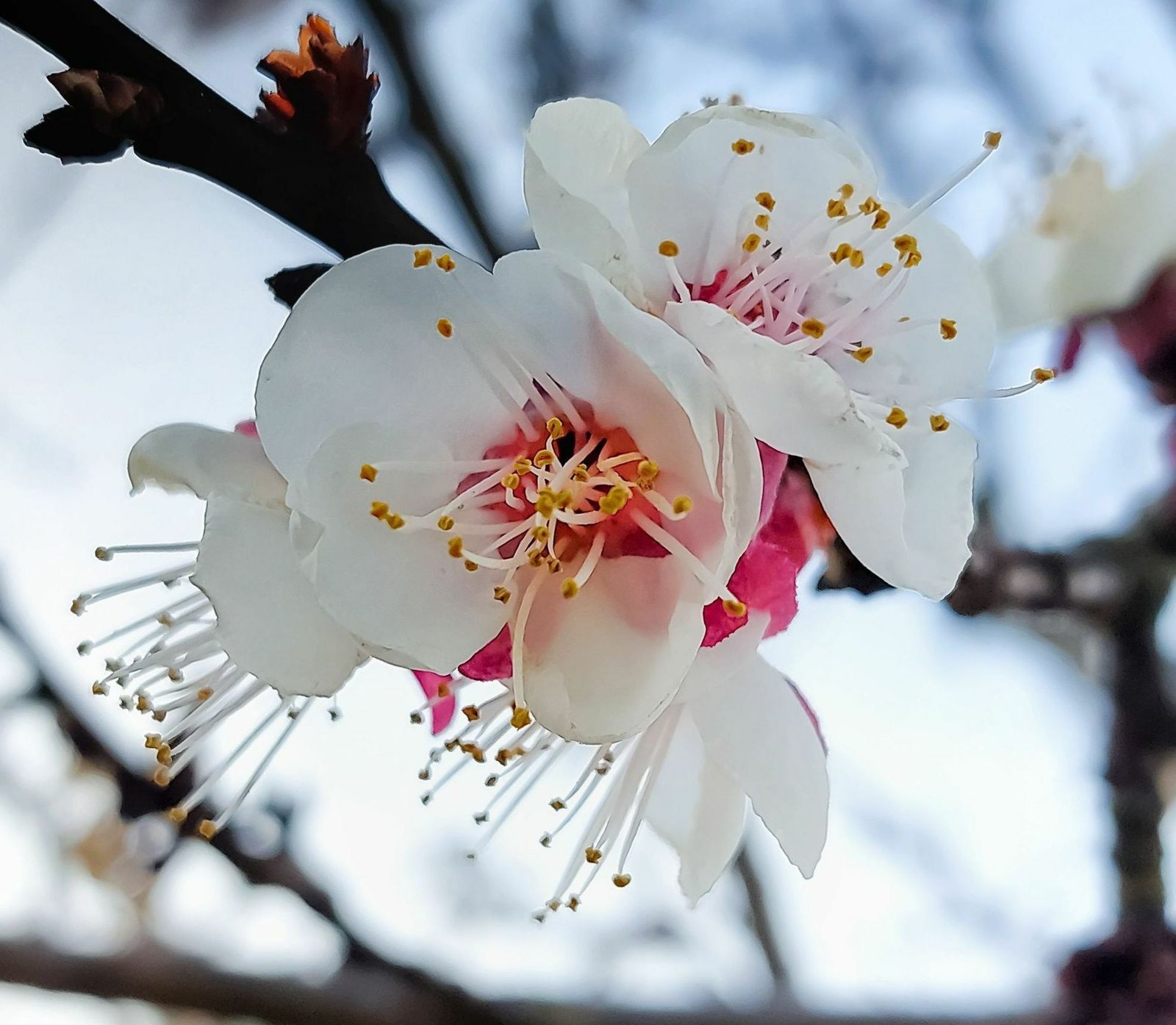
- Pale pink buds opening to white or pink-flushed flowers in late winter or early spring, before the leaves.
- Foliage
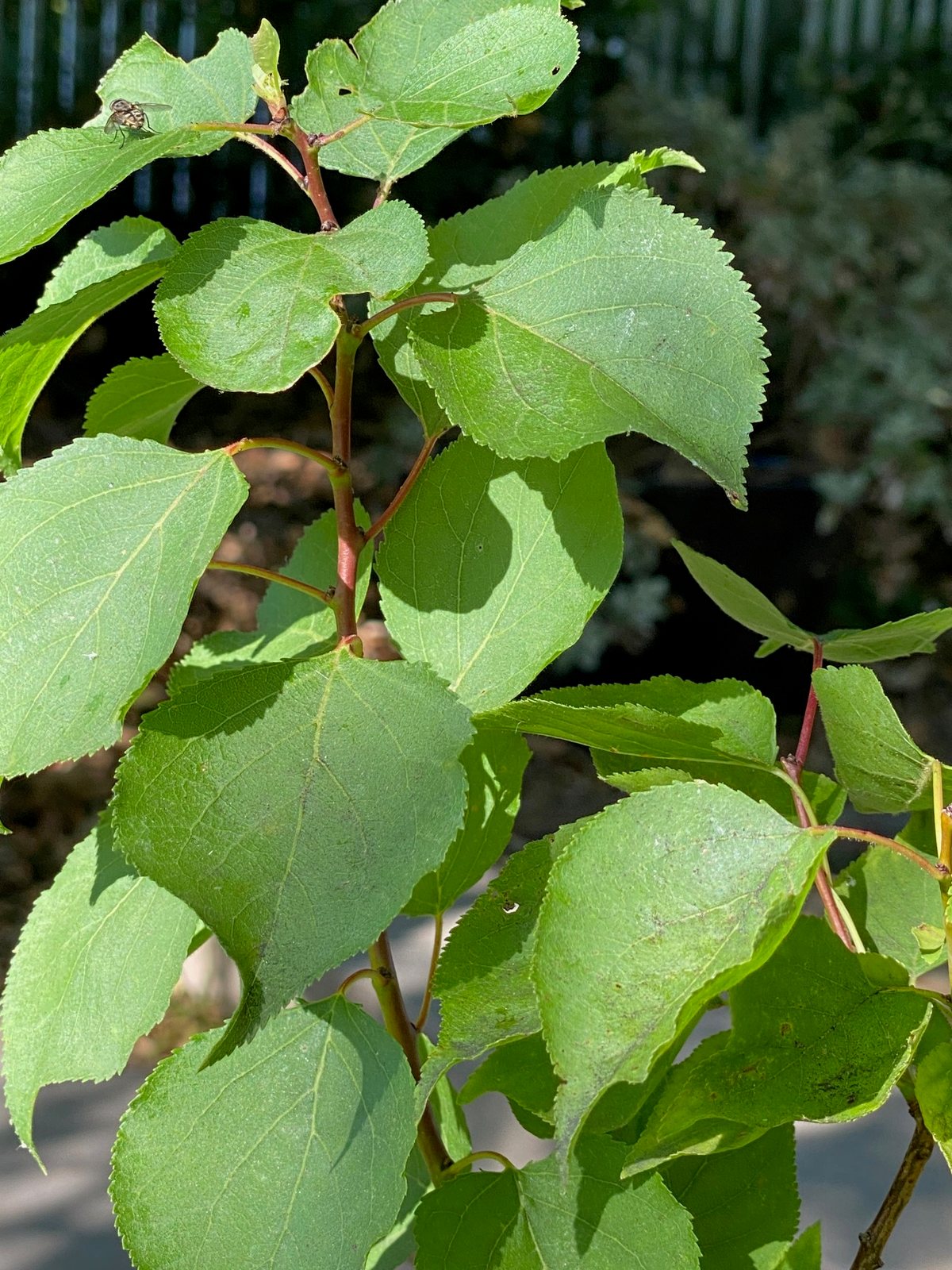
- Broad, rounded to heart-shaped green leaves with pointed tips and finely toothed edges; often yellow in autumn.
- Growth
- Moderate
- Care needed
- High
The year at a glance
- Pollinators
- Wildlife
- Low allergen
- Edible
| J | F | M | A | M | J | J | A | S | O | N | D | |
|---|---|---|---|---|---|---|---|---|---|---|---|---|
| Flowers | ||||||||||||
| Fruit | ||||||||||||
| Plant |
Northern hemisphere months. In Australia, shift them by six.
- Difficulty
- Hard
- Toughness
- Needs looking after
Will it suit your garden?
Pick your zone, country, light and whether you have pets.
Full sun is 6 or more hours of direct sun a day, part shade 3 to 6 hours, shade under 3.
How it grows
Planting day
7 ft (2 m)
After 1 year
7 ft (2.2 m)
After 2 years
8 ft (2.3 m)
After 3 years
8 ft (2.5 m)
After 5 years
9 ft (2.8 m)
About 20 years to full size.
From a typical nursery size, at an average rate for this kind of plant. A rule of thumb, not a forecast.
Good to know
- Cats and dogs
- Toxic
- Growth rate
- Moderate
Care
Jobs through the year
- WaterApr–May, Sep–Oct, every 14 days
- Water established trees deeply if soil is dry; young trees need more frequent watering.
- WaterJun–Aug, every 7 days
- Water during dry spells, especially while fruit swells; avoid saturated soil.
- FeedMar–Apr
- Apply one light spring feed only if growth is weak.
- MulchMar–Apr
- Refresh organic mulch over the root zone, keeping the trunk clear.
- PruneMay–Aug
- Prune once in dry weather to remove crowded or damaged growth and retain fruiting spurs.
- PruneMay–Jun
- Thin developing apricots to 8-10 cm apart after the natural fruit drop.
- ProtectFeb–Apr
- Cover blossom on frosty nights and remove fleece during the day for pollinators.
- HarvestJul–Aug
- Pick fragrant orange-yellow apricots that soften slightly and release with a gentle lift.
- ProtectSep–Nov
- Clear diseased leaves and fallen or mummified fruit, and check drainage.
- Plant with the graft union above soil level; stake young trees only where needed and remove support once firmly rooted.
- Water young trees deeply through their first two growing seasons, and established trees during prolonged dry weather.
- Apply organic mulch over the root zone, keeping it clear of the trunk.
- Feed lightly in spring if growth is weak; avoid excess nitrogen, which encourages soft growth rather than fruit.
- Thin young fruit to about 3-4 in (8-10 cm) apart to improve size and reduce branch breakage.
- Protect blossom on small trees with frost fleece on cold nights, removing it during the day so pollinators can reach the flowers.
Pruning. Prune in dry weather during late spring or summer, rather than winter, to reduce the risk of silver leaf and bacterial canker. Train an open-centred tree or wall fan, removing dead, crossing and crowded growth while retaining productive short fruiting spurs.
Harvest
Pick in mid- to late summer when the fruit is fully orange-yellow, fragrant, slightly yielding and releases with a gentle lift; the exact season varies with climate. Handle carefully because ripe apricots bruise easily and keep only briefly. Grafted trees usually give their first worthwhile crop about 3-5 years after planting, although frost or poor growing conditions can delay this.
Through the year
- Late autumn
- Plant dormant trees where soil is workable and well drained; in very cold regions, wait until spring.
- Late winter
- Check stakes and ties, and prepare frost protection before flower buds open.
- Early spring
- Protect open blossom during frosty nights and allow pollinator access during the day.
- Spring
- Refresh mulch, feed only if needed, and water during dry weather.
- Late spring
- Thin crowded fruit after the natural fruit drop and check shoots for aphids.
- Summer
- Harvest ripe fruit and prune in dry weather; remove diseased shoots and mummified fruit.
- Autumn
- Clear fallen diseased fruit and leaves, and check that drainage remains free.
In the garden
- Train as a fan against a sunny, equator-facing wall to improve ripening in cooler climates.
- Use as a small orchard tree with enough space for its mature canopy and harvesting access.
- Make it a productive focal point in a kitchen garden, with low herbs outside the mulched trunk area.
- Combine with low flowering plants around the canopy edge for seasonal colour and pollinator forage.
Garden styles it suits: Backyard orchard, Edible landscape, Potager (kitchen garden), Cottage garden, Homestead and Traditional.
Plant it with: Chives, Thyme, Lavender, Calendula and Sweet alyssum.
Wildlife: Early flowers provide pollen and nectar for bees when weather allows them to fly. Birds and squirrels may take ripening fruit; if protection is needed, use tightly secured wildlife-safe mesh without loose loops.
Problems to watch for
- Blossom frost damage: flowers or tiny fruit blacken and drop. Avoid frost pockets and protect small trees during cold nights; protection cannot guarantee a crop.
- Brown rot and blossom blight: flowers die and fruit develops spreading brown decay. Remove affected fruit and mummified fruit, prune out infected shoots in dry weather, and keep the canopy open.
- Bacterial canker: sunken bark, gum and dying branches may develop. Prune affected wood back to healthy growth in dry summer weather, clean tools between cuts and avoid winter pruning.
- Aphids: colonies curl young leaves and leave sticky honeydew. Encourage predators, avoid excess nitrogen and wash off small infestations with water.
Safety
Leaves, stems and especially the kernels inside the stones contain cyanogenic compounds and can cause serious or fatal poisoning in people, cats, dogs and horses if eaten. Wilted leaves are particularly hazardous to livestock. Ripe fruit flesh is edible, but remove the stones and do not eat the kernels; stones also pose choking and intestinal blockage risks to pets.
Easily confused with
Peach (Prunus persica)
Peaches have long, narrow leaves rather than the apricot's broad, rounded leaves; their fruit usually has a more deeply grooved stone.
Japanese apricot (Prunus mume)
It often flowers earlier with strongly fragrant white or pink blooms, and its fruit is usually firm and sour rather than sweet when ripe. Leaf shape alone is not a reliable distinction.
Other apricot cultivars (Prunus armeniaca)
Many have nearly identical leaves, flowers and fruit. Fruit size and ripening time offer clues, but a reliable nursery label or documented graft source is needed to confirm Moorpark.
The name
Moorpark takes its name from the Moor Park estate in Hertfordshire, England, while armeniaca means 'Armenian', reflecting the apricot's historical association with Armenia.
Propagation. Propagate by budding or grafting onto a compatible apricot or plum rootstock suited to local soil and climate. Seedlings do not come true to Moorpark and take longer to fruit.
Checked against open data
- Accepted botanical name
- Prunus armeniaca
- In the US and Canada
- Introduced in the lower 48 states.
- Native range
- China North-Central, China South-Central, Inner Mongolia, Kazakhstan, Kirgizstan, Kriti, Manchuria, Qinghai, Uzbekistan and Xinjiang.
- Measured
- Soil pH 7 to 7.5. Average height 410 cm.
Sources: GBIF (CC BY 4.0), USDA PLANTS and Trefle (CC BY 4.0). The care and design notes are LandscapeGPT's own.
See it in your own yard.
Upload a photo of your yard and see it redesigned with plants that suit your climate, each checked against your zone.