Moss phlox
Phlox douglasii. Family Polemoniaceae. Groundcover.
Also called Douglas's phlox, Dwarf phlox, Tufted phlox.
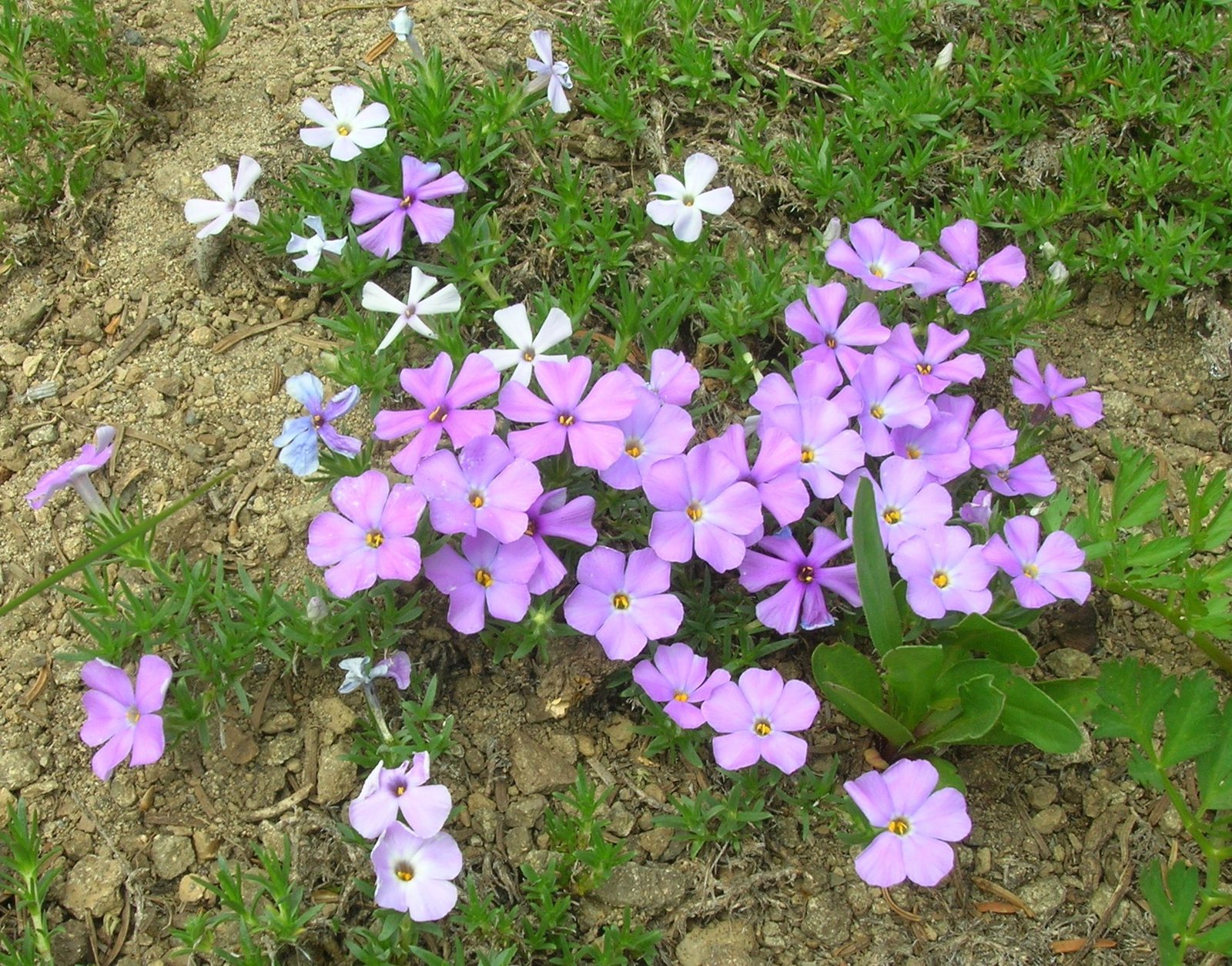
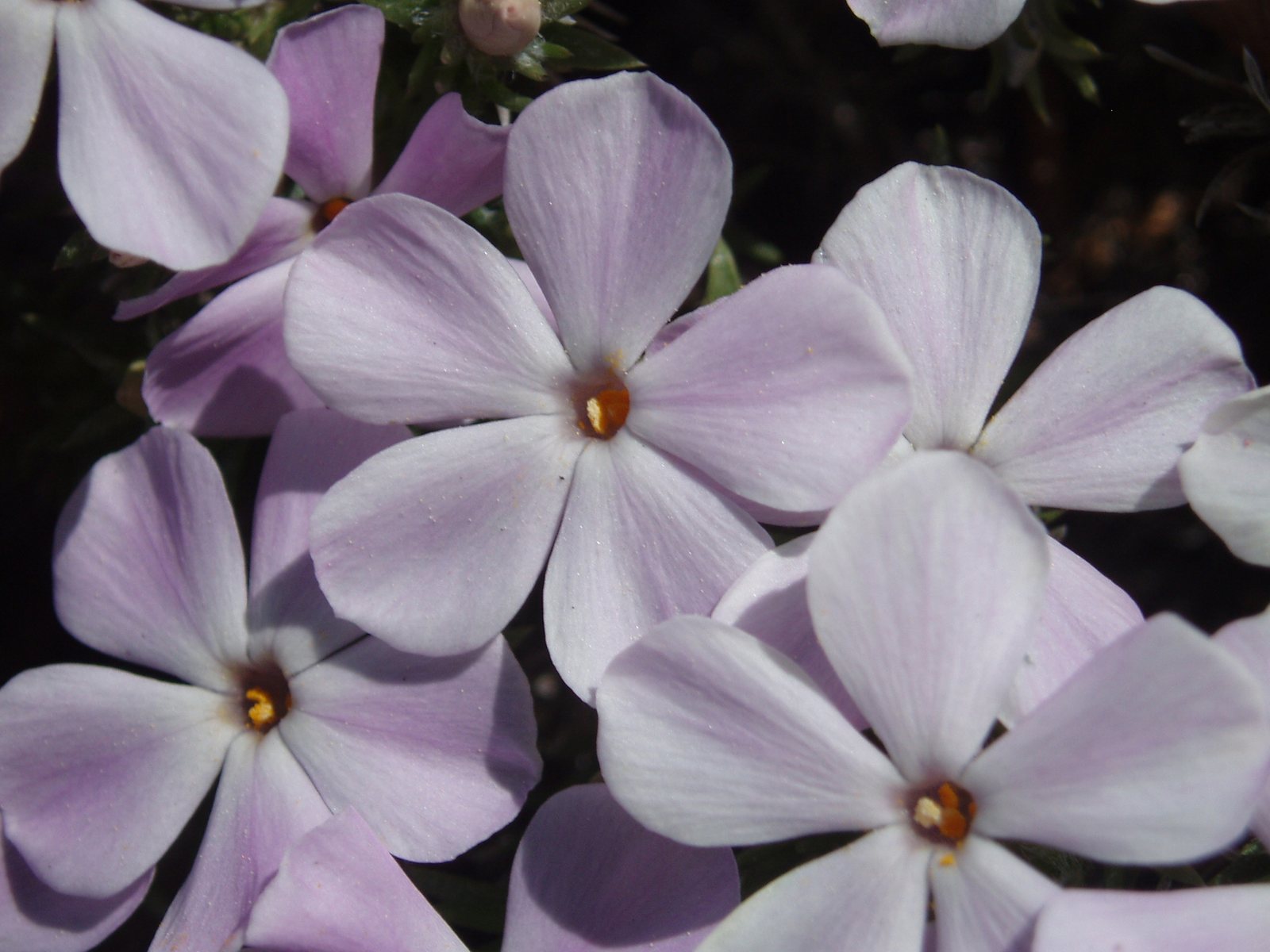
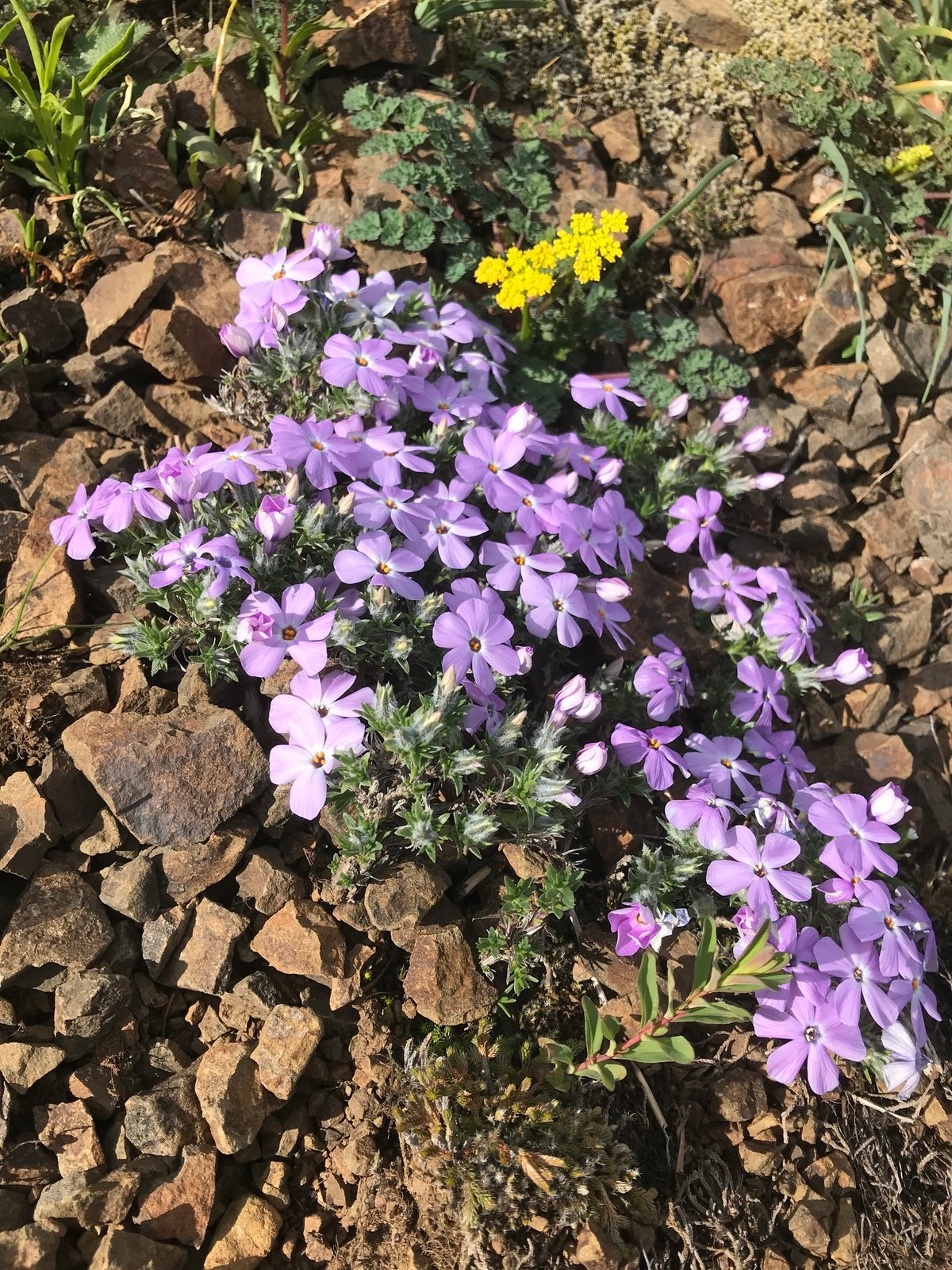
Moss phlox (Phlox douglasii) is a low, evergreen perennial from western North America that forms firm cushions of tiny, narrow leaves. Gardeners grow it for its dense spring flowers and its ability to soften rock gardens, gravel edges and sunny walls. It tolerates cold better than wet winter soil.
At a glance
- Sun
- Full sun; light afternoon shade can help in hot summers, but too much shade reduces flowering.
- Water
- Water regularly while establishing, then only during prolonged dry spells. Avoid persistently damp soil, especially in winter.
- Soil
- Very well-drained, gritty or sandy soil with low to moderate fertility; tolerates slightly acidic through alkaline conditions.
- Height
- 0.2-0.4 ft (0.06-0.12 m)
- Spread
- 1-1.5 ft (0.3-0.45 m)
- Flowers
- Mid- to late spring; small, five-petalled flowers in pink, lavender, purple or white, depending on the selection.
- Foliage
- Evergreen. Tiny, stiff, narrow green leaves packed closely along short stems; foliage may bronze or brown in severe winter weather.
- Growth
- Slow to moderate, forming a gradually widening cushion.
- Care needed
- Low
The year at a glance
- Pollinators
- Deer resistant
- Drought tolerant
- Cold hardy
- Low allergen
| J | F | M | A | M | J | J | A | S | O | N | D | |
|---|---|---|---|---|---|---|---|---|---|---|---|---|
| Flowers | ||||||||||||
| Plant |
Northern hemisphere months. In Australia, shift them by six.
- Difficulty
- Easy
- Toughness
- Very tough
Will it suit your garden?
Pick your zone, country, light and whether you have pets.
Full sun is 6 or more hours of direct sun a day, part shade 3 to 6 hours, shade under 3.
How it grows
Planting day
0.1 ft (0.02 m)
After 1 year
0.1 ft (0.04 m)
After 2 years
0.2 ft (0.06 m)
After 3 years
0.3 ft (0.08 m)
After 5 years
0.3 ft (0.09 m)
full size
About 3 years to full size.
From a typical nursery size, at an average rate for this kind of plant. A rule of thumb, not a forecast.
Good to know
- Cats and dogs
- Safe
- Native to
- the US and Canada
- Growth rate
- Slow
Care
Jobs through the year
- WaterApr–May, Sep, every 14 days
- Water established plants only if soil is dry after little rain; water new plants more often.
- WaterJun–Aug, every 14 days
- Water established cushions only during prolonged drought, avoiding soggy soil.
- MulchMar–Apr
- Use a thin gravel mulch around the cushion, keeping the crown clear.
- PruneMar
- Remove dead foliage and winter-damaged tips without cutting into bare old stems.
- PruneMay–Jun
- Lightly shear after flowering, removing spent blooms and straggly green tips.
- ProtectOct–Nov
- Clear fallen leaves and keep drainage open to prevent winter crown rot.
- Plant with the crown at soil level in a sunny position with sharp drainage.
- Water at the base during establishment, letting the soil begin to dry between waterings.
- Avoid rich manure and heavy feeding; use a light spring feed only if growth is weak on very poor soil.
- Use a thin gravel mulch rather than moisture-holding mulch against the cushion.
- Remove weeds by hand before they become rooted through the mat.
Pruning. Immediately after flowering, lightly shear off spent flowers and straggly green tips to keep the cushion compact. Avoid cutting deeply into old, leafless stems, which may not regrow.
Through the year
- Early spring
- Remove dead foliage and check that winter rain has not left the crown sitting in wet soil.
- Spring
- Plant into free-draining soil and water until roots establish.
- Late spring
- Trim lightly after flowering to remove spent blooms and tidy the cushion.
- Summer
- Water during prolonged drought and check hot, dry plants for spider mites.
- Summer
- Take short, non-flowering shoot cuttings for new plants.
- Autumn
- Clear fallen leaves from the foliage and keep drainage channels open before winter.
In the garden
- Plant between rocks in a sunny alpine garden for compact cushions and concentrated spring colour.
- Set along the top of a low retaining wall so the flowering edges spill slightly over the stone.
- Edge gravel paths with small groups, keeping plants clear of foot traffic.
- Combine with dwarf bulbs and other low alpines in a trough with generous drainage holes.
Garden styles it suits: Alpine rock garden, Dry gravel garden, Cottage garden, Low-maintenance, Small-space and Mountain lodge.
Plant it with: Rock cress, Candytuft, Sea thrift, Dwarf bearded iris, Species tulips and Low-growing stonecrops.
Wildlife: Spring flowers provide nectar for visiting bees and butterflies. The low cushions offer some shelter for small invertebrates.
Problems to watch for
- Crown or root rot in wet soil: improve drainage, keep mulch away from the crown and replace badly affected plants in a drier position.
- Spider mites in hot, dry weather: look for fine stippling and webbing; rinse foliage thoroughly in the morning and use insecticidal soap if needed, following the label.
- Sparse flowering and loose growth in shade: move to a sunnier position and avoid excessive nitrogen feeding.
- Brown or bare centres as cushions age: remove dead material and raise replacement plants from healthy shoot cuttings.
Safety
Not known to be toxic to people, cats, dogs or horses. No part is recognised as poisonous, but it is an ornamental plant rather than a food crop.
Easily confused with
Creeping phlox (Phlox subulata)
Usually makes a broader, looser carpet with longer, needle-like leaves; Phlox douglasii generally forms tighter, lower cushions with shorter leaves.
Woodland creeping phlox (Phlox stolonifera)
Has broader, oval to spoon-shaped leaves and flower stems held distinctly above a creeping mat; it prefers more shade and moisture.
The name
Phlox comes from the Greek word for flame, referring to flower colour in the genus, while douglasii honours the Scottish plant collector David Douglas.
Propagation. Take short, non-flowering shoot cuttings in summer and root them in a gritty, freely draining mix. Seed is possible, but named selections may not come true from seed.
Checked against open data
- Accepted botanical name
- Phlox douglasii
- In the US and Canada
- Native in Canada and the lower 48 states.
- Native range
- British Columbia, California, Oregon and Washington.
Sources: GBIF (CC BY 4.0), USDA PLANTS and Trefle (CC BY 4.0). The care and design notes are LandscapeGPT's own.
See it in your own yard.
Upload a photo of your yard and see it redesigned with plants that suit your climate, each checked against your zone.