Muscadine grape
Vitis rotundifolia. Family Vitaceae. Climber.
Also called Muscadine, Southern fox grape.
A vigorous, deciduous vine native to the southeastern United States, grown for thick-skinned grapes that ripen in late summer and autumn. It needs a strong support and a long, hot growing season; outdoor fruiting is unreliable in most of the United Kingdom and Canada, even where the vine survives winter.
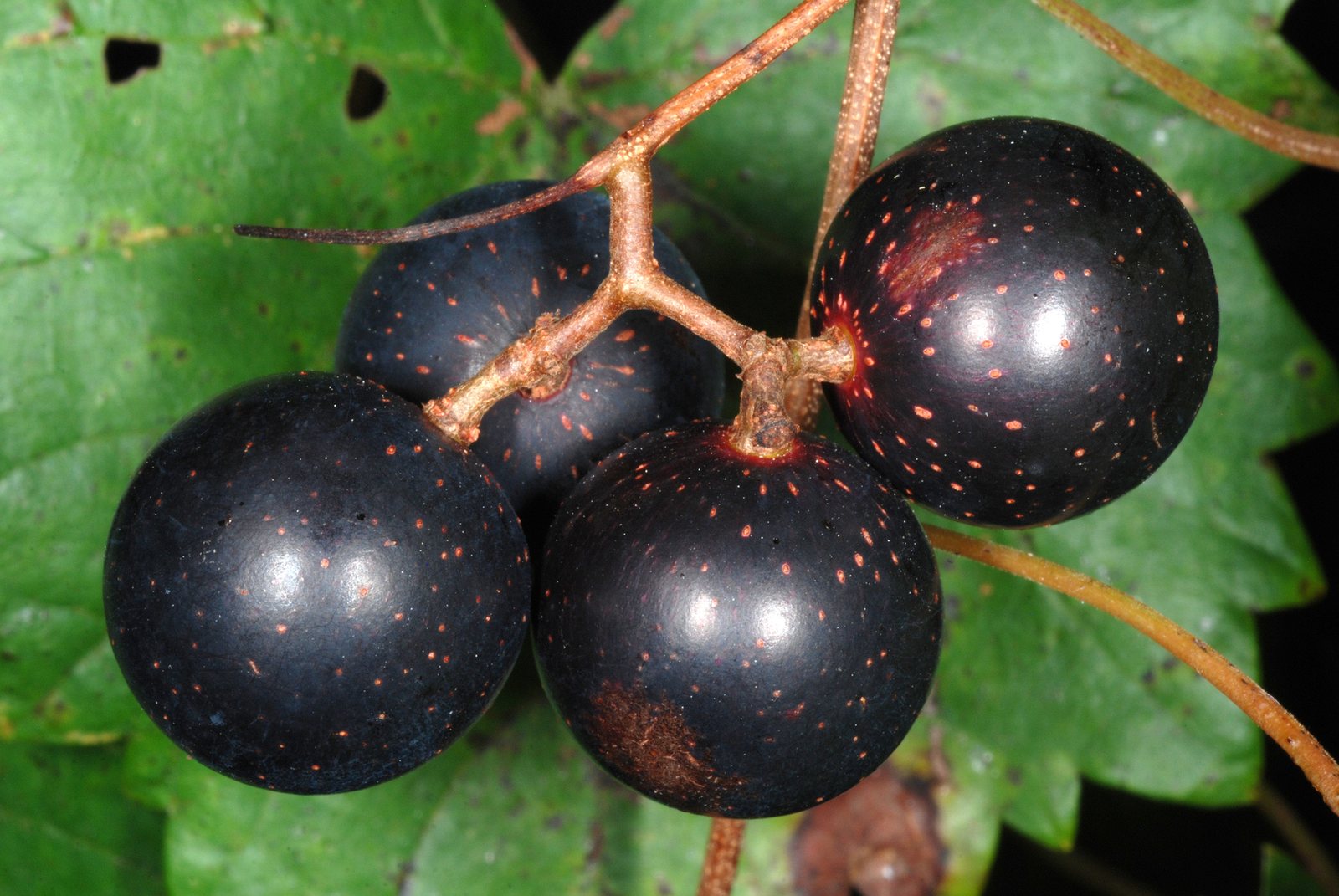
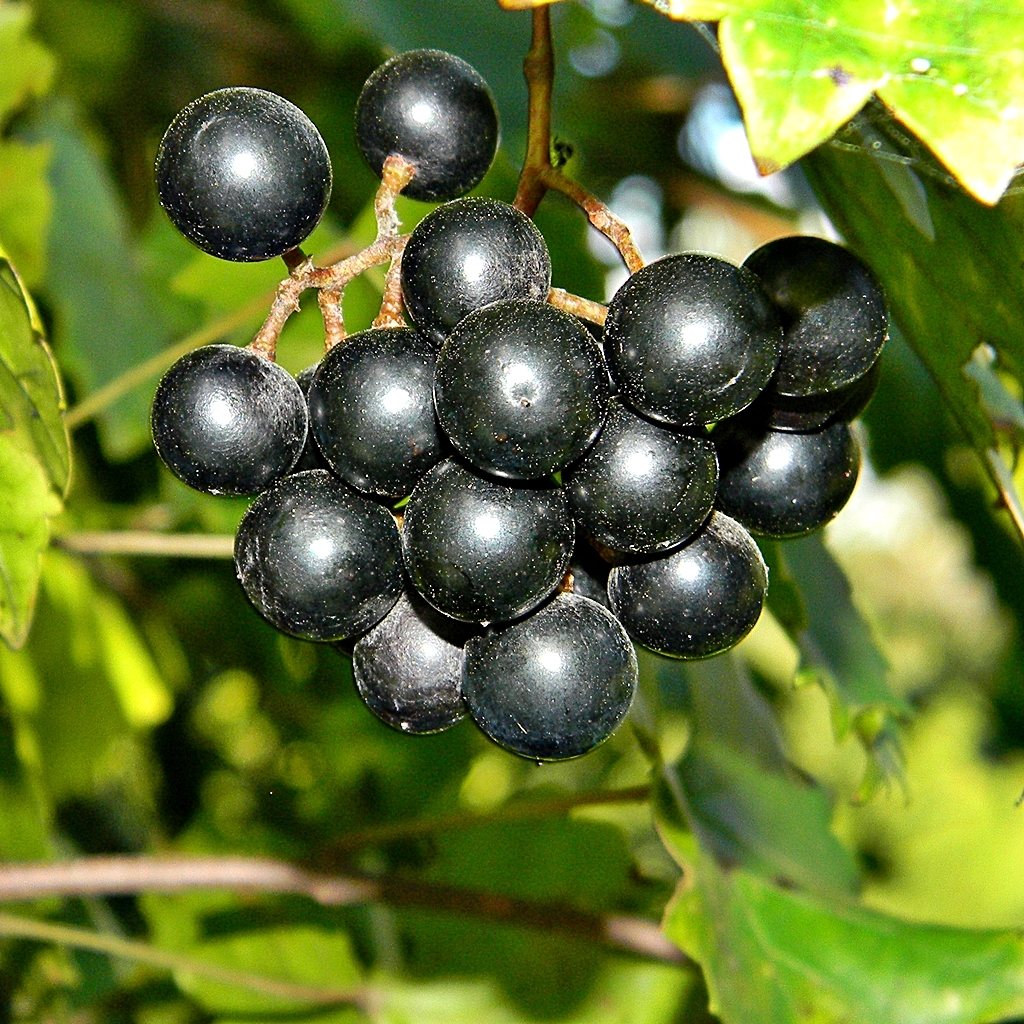

At a glance
- Sun
- Full sun; allow at least 6-8 hours of direct sunlight for good fruiting.
- Water
- Water regularly during establishment and dry spells, especially while fruit develops; avoid waterlogged roots.
- Soil
- Well-drained sandy or loamy soil, preferably slightly acidic, around pH 5.5-6.5. Poor drainage and strongly alkaline soil cause problems.
- Height
- 6-10 ft (1.8-3 m) on a garden support; unpruned vines can climb 60 ft (18 m) or more into trees.
- Spread
- 15-20 ft (4.6-6.1 m) per trained vine; considerably more if left unpruned.
- Flowers
- Small, inconspicuous greenish flowers in late spring to early summer.
- Foliage
- Rounded, glossy green leaves with coarse teeth; usually yellow in autumn.
- Growth
- Fast once established.
- Care needed
- High
The year at a glance
- Heat tolerant
- Disease resistant
- Wildlife
- Edible
| J | F | M | A | M | J | J | A | S | O | N | D | |
|---|---|---|---|---|---|---|---|---|---|---|---|---|
| Flowers | ||||||||||||
| Fruit | ||||||||||||
| Plant |
Northern hemisphere months. In Australia, shift them by six.
- Difficulty
- Hard
- Toughness
- Fairly tough
Will it suit your garden?
Pick your zone, country, light and whether you have pets.
Full sun is 6 or more hours of direct sun a day, part shade 3 to 6 hours, shade under 3.
How it grows
Planting day
2 ft (0.6 m)
After 1 year
3 ft (1.1 m)
After 2 years
5 ft (1.5 m)
After 3 years
6 ft (1.8 m)
full size
About 3 years to full size.
From a typical nursery size, at an average rate for this kind of plant. A rule of thumb, not a forecast.
Good to know
- Cats and dogs
- Toxic
- Native to
- the US
- Growth rate
- Fast
Care
Jobs through the year
- WaterApr–May, Sep–Oct, every 14 days
- Water established vines deeply during dry spells; water young vines more frequently.
- WaterJun–Aug, every 7 days
- During dry weather, soak established roots, especially while fruit develops.
- FeedMar–Apr
- Apply balanced fertiliser according to a soil test; avoid late nitrogen.
- MulchApr, Nov
- Maintain organic mulch over roots without covering the trunk.
- PruneFeb–Mar
- Retain permanent arms and shorten side shoots to two or three buds; remove crowded spurs.
- PruneMay–Jul, every 21 days
- Remove lower-trunk shoots and keep new growth confined to its support.
- ProtectJan–Feb, Nov–Dec
- Protect young roots with mulch; zone 6 sites require winter shelter and locally proven cultivars.
- ProtectAug–Oct
- Use securely fitted wildlife-safe netting where animals take the crop.
- HarvestAug–Oct
- Pick individual sweet, slightly soft grapes as they colour fully and release easily.
- Install a sturdy trellis or arbor before planting, and train one main trunk to the support.
- Choose a self-fertile cultivar, or plant a female cultivar within about 50 ft (15 m) of a self-fertile muscadine; ordinary bunch grapes are not suitable pollinizers.
- Water young vines deeply during dry weather and irrigate established vines during prolonged drought.
- Apply a balanced fertilizer in spring according to soil-test results; avoid heavy late-season nitrogen feeding.
- Mulch the root area, keeping mulch clear of the trunk, and control competing grass and weeds.
Pruning. In late winter, train permanent horizontal arms and shorten the previous season's side shoots to spurs with 2-3 buds. Remove dead wood, crowded spurs and unwanted trunk shoots; sap bleeding after pruning is usually harmless.
Harvest
Pick individual grapes in late summer or autumn as they reach their cultivar's full bronze, red-purple or dark purple colour, soften slightly and taste sweet; they do not all ripen together. Fruit should release with a gentle pull and will not become sweeter after picking. A first substantial crop usually comes about 3-4 years after planting.
Through the year
- Late winter
- Prune dormant vines and inspect trellis posts, wires and ties.
- Early spring
- Plant dormant vines when soil is workable, and feed established plants according to a soil test.
- Late spring
- Tie new growth to the support and remove shoots growing from the lower trunk.
- Summer
- Water during dry spells and keep growth from covering nearby shrubs or trees.
- Late summer to autumn
- Harvest ripe grapes frequently and remove damaged or rotting fruit.
- Late autumn
- Clear fallen fruit and diseased leaves, and renew mulch without covering the trunk.
In the garden
- Train over a sturdy arbor for summer shade and an edible canopy.
- Grow along a freestanding wire trellis at the edge of a kitchen garden.
- Use as a seasonal screen beside an outdoor sitting area, allowing access for pruning and picking.
- Include in a spacious edible landscape with low flowering perennials outside the main root and access area.
Garden styles it suits: Southern, Edible landscape, Homestead, Potager (kitchen garden), Farmhouse and Food forest.
Plant it with: Black-eyed Susan, Purple coneflower, Yarrow and Butterfly weed.
Wildlife: Birds, raccoons and other mammals eat the grapes. Flowers attract small insects, and the foliage supports native caterpillars in its North American range; use wildlife-safe netting if protecting the crop.
Problems to watch for
- Little or no fruit: check whether the vine is female and needs a compatible muscadine pollinizer; insufficient sun, summer warmth or incorrect pruning can also prevent cropping.
- Fruit rots, including ripe rot and bitter rot: remove infected and fallen fruit, prune for airflow and keep irrigation off the canopy; use locally recommended treatments if losses persist.
- Japanese beetles in affected parts of North America: hand-pick small infestations and protect young vines with suitable insect netting after flowering.
- Winter injury near the cold limit: choose locally proven cultivars and a sheltered site; avoid late nitrogen feeding and replace dead wood after growth resumes.
Safety
Grapes and dried grapes can cause life-threatening kidney failure in dogs; keep fruit, fallen grapes and food scraps out of reach and seek urgent veterinary advice after ingestion. Toxicity in cats is less well established, so keep grapes away from them too. Muscadine is not known to be toxic to horses or people, and ripe fruit is edible.
Easily confused with
Summer grape (Vitis aestivalis)
Usually has larger, sometimes lobed leaves with a hairy underside and grapes in larger bunches; muscadine has rounded, usually unlobed leaves and small, loose fruit clusters.
Fox grape (Vitis labrusca)
Leaves usually have a densely hairy, pale underside and fruit forms fuller bunches; muscadine leaves are glossier and its tendrils are unbranched.
Canada moonseed (Menispermum canadense)
A poisonous vine with smoother-edged, often lobed leaves and no grape-like tendrils. Its fruit contains a crescent-shaped stone; never eat unidentified wild grape-like fruit.
The name
The botanical epithet rotundifolia means 'round-leaved', referring to the rounded shape of the leaves.
Propagation. Layer a low shoot into moist soil and separate it once well rooted, or take softwood cuttings under humid conditions. Seed-grown vines vary in fruit quality and flower type; use vegetative propagation to preserve a named cultivar.
Checked against open data
- Accepted botanical name
- Vitis rotundifolia
- In the US and Canada
- Native in the lower 48 states.
- Native range
- Alabama, Arkansas, Bahamas, Delaware, Florida, Georgia, Kentucky, Louisiana, Maryland, Mexico Gulf, Mexico Northeast and Mexico Northwest.
- Measured
- Soil pH 6 to 8. Average height 914 cm.
Sources: GBIF (CC BY 4.0), USDA PLANTS and Trefle (CC BY 4.0). The care and design notes are LandscapeGPT's own.
See it in your own yard.
Upload a photo of your yard and see it redesigned with plants that suit your climate, each checked against your zone.