Natchez crape myrtle
Lagerstroemia 'Natchez'. Family Lythraceae. Tree.
Also called Natchez crepe myrtle.
Natchez is a deciduous, usually multi-stemmed small tree grown for its white summer flowers, cinnamon-brown peeling bark and orange-red autumn colour. A hybrid of Lagerstroemia indica and L. fauriei, it has good resistance to powdery mildew and needs a hot, sunny position to flower well. It is best suited to warm summers; flowering can be disappointing in cool parts of the UK and Canada.
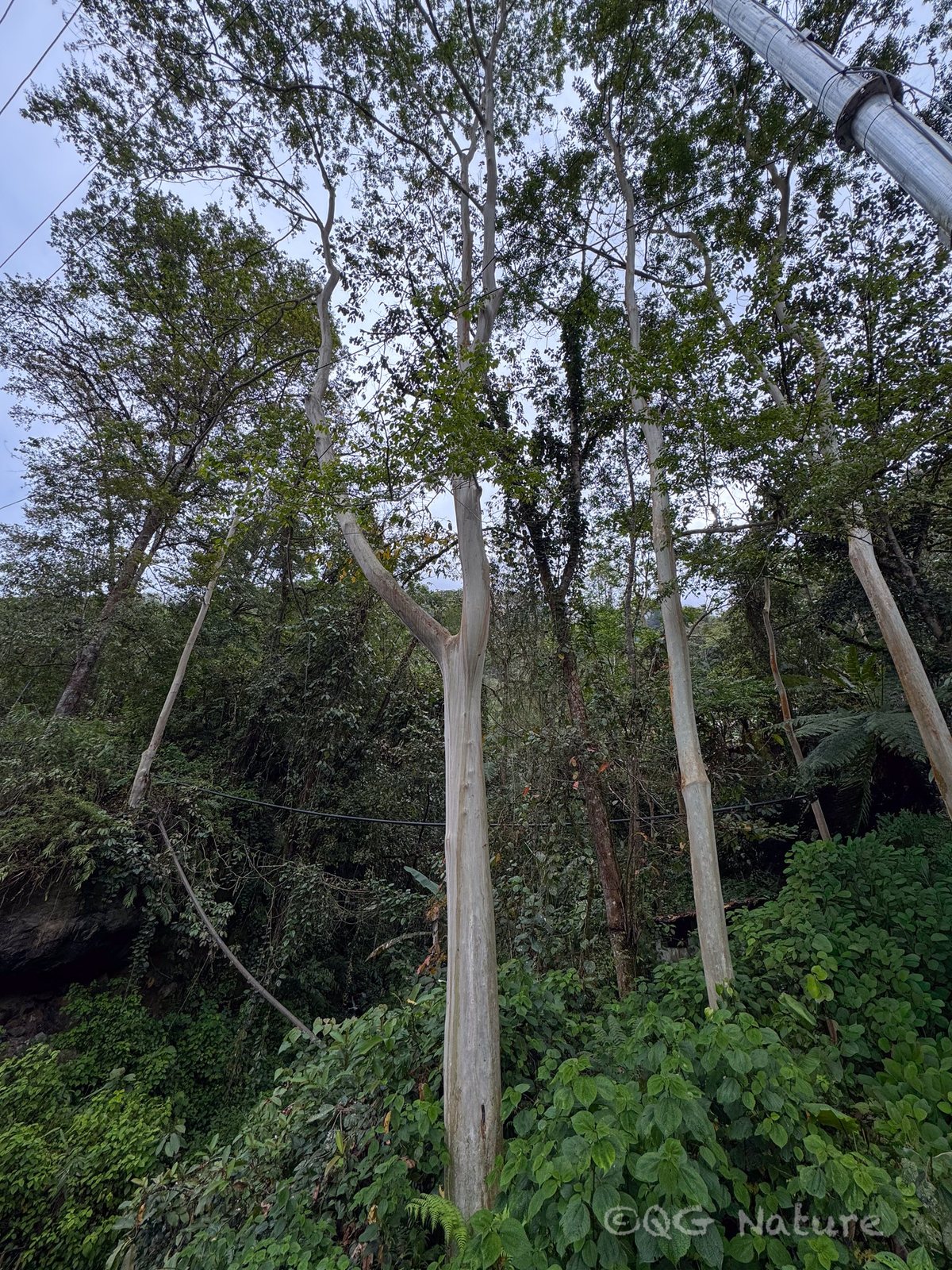
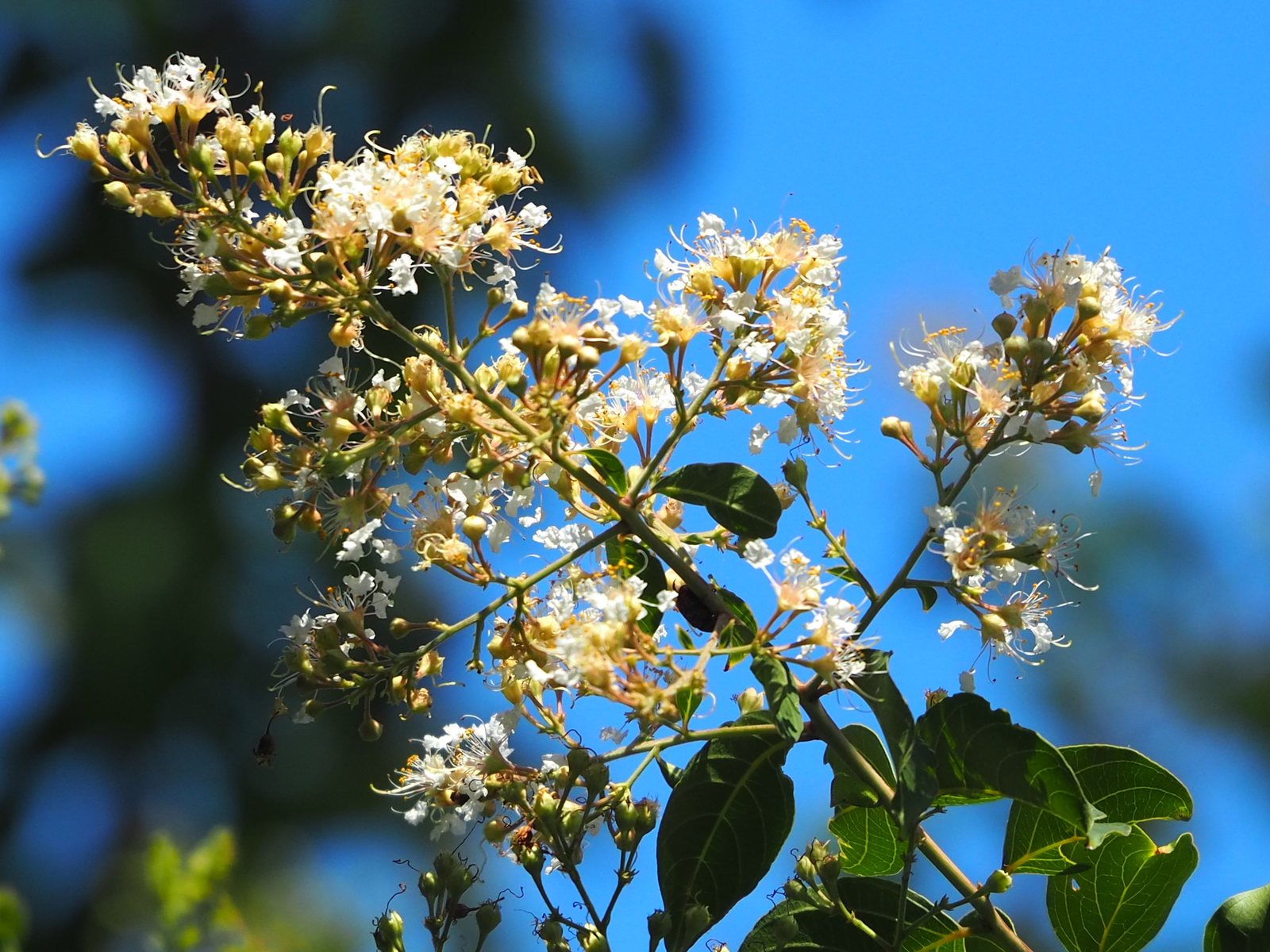
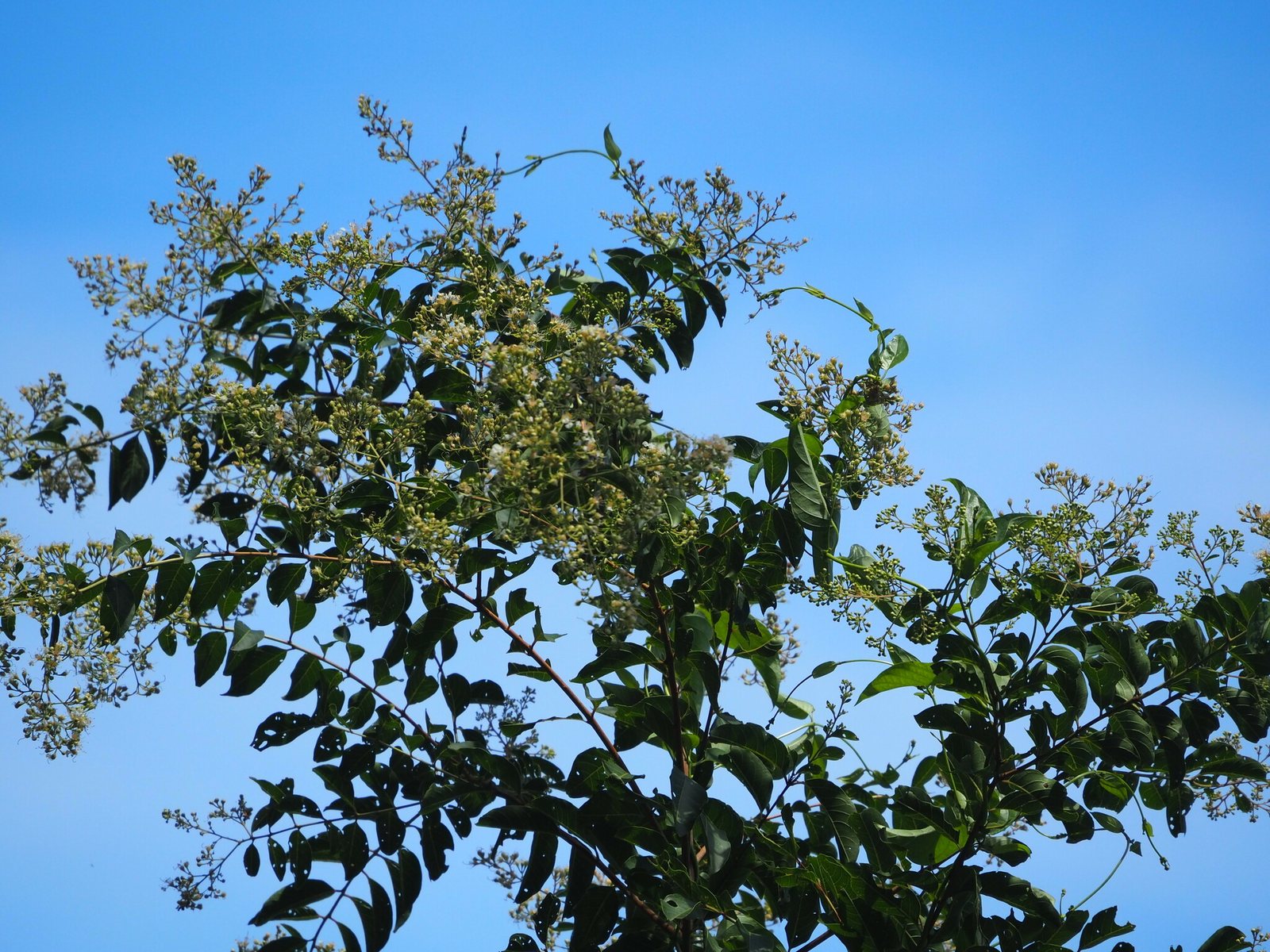
At a glance
- Sun
- Full sun, ideally at least 6 hours of direct sun daily; shelter from cold winds in cooler climates.
- Water
- Water regularly while establishing; moderately drought-tolerant once established, but flowers better with deep watering during prolonged dry weather.
- Soil
- Well-drained loam, clay or sandy soil; prefers moderately fertile, slightly acidic soil but tolerates a range of pH levels. Avoid waterlogged ground.
- Height
- 20-30 ft (6-9 m)
- Spread
- 15-25 ft (4.5-7.5 m)
- Flowers
- Large clusters of white, crinkled flowers from midsummer into early autumn; the season is shorter in cooler climates.
- Foliage
- Glossy green, oval leaves emerge relatively late in spring and turn orange to red in autumn; colour varies with climate and growing conditions.
- Growth
- Moderate to fast in warm climates with adequate moisture.
- Care needed
- Low
The year at a glance
- Pollinators
- Drought tolerant
- Heat tolerant
- Disease resistant
- Wildlife
- Low allergen
| J | F | M | A | M | J | J | A | S | O | N | D | |
|---|---|---|---|---|---|---|---|---|---|---|---|---|
| Flowers | ||||||||||||
| Fruit | ||||||||||||
| Plant |
Northern hemisphere months. In Australia, shift them by six.
- Difficulty
- Moderate
- Toughness
- Fairly tough
Will it suit your garden?
Pick your zone, country, light and whether you have pets.
Full sun is 6 or more hours of direct sun a day, part shade 3 to 6 hours, shade under 3.
How it grows
Planting day
7 ft (2 m)
After 1 year
8 ft (2.3 m)
After 2 years
9 ft (2.7 m)
After 3 years
10 ft (3 m)
After 5 years
12 ft (3.7 m)
About 16 years to full size.
From a typical nursery size, at an average rate for this kind of plant. A rule of thumb, not a forecast.
Good to know
- Cats and dogs
- Safe
- Growth rate
- Fast
Care
Jobs through the year
- WaterApr–May, Sep, every 14 days
- Water established trees only if dry; water young trees more regularly for two growing seasons.
- WaterJun–Aug, every 7 days
- Water deeply during prolonged drought to support flowering; skip when soil is moist.
- FeedApr
- Feed lightly only on poor soil or for weak growth; avoid excess nitrogen.
- PruneFeb–Mar
- Remove dead or crossing branches and unwanted basal shoots; never top the main framework.
- MulchNov
- Maintain 5–8 cm of organic mulch over roots, keeping trunks uncovered.
- ProtectJan–Mar, Nov–Dec
- Protect young plants from severe cold; zone 6 is marginal and cool summers may limit flowering.
- Water deeply through the first two growing seasons whenever the root zone starts to dry.
- Spread 2-3 in (5-8 cm) of organic mulch over the root area, keeping it clear of the trunks.
- Feed lightly in spring only if growth is weak or soil is poor; excess nitrogen encourages leafy growth rather than flowers.
- Allow room for the mature crown rather than planting where regular size reduction will be needed.
- In colder areas, plant in spring in a sheltered, sunny position; protect young trunks from physical damage.
Pruning. Prune in late winter or early spring, removing dead, crossing or damaged branches and unwanted basal shoots while preserving the natural framework. Do not top the tree or cut its main branches back to stubs; flowers form on the current season's growth without this treatment.
Through the year
- Late winter
- Inspect the bare framework and remove dead, rubbing or poorly placed branches.
- Spring
- Plant in cooler regions once severe frost has passed, then water thoroughly and mulch.
- Late spring
- Allow time for late leaf emergence before deciding that a branch has died; remove basal shoots if maintaining a clear-trunked tree.
- Summer
- Water deeply during prolonged drought and inspect shoots and bark for aphids or scale.
- Early autumn
- Avoid nitrogen feeding or hard pruning that could encourage tender growth before winter.
- Late autumn
- Refresh mulch where needed, leaving the trunks uncovered.
In the garden
- Use as a lawn specimen where the spreading crown and peeling bark can be seen from the house.
- Plant beside a sunny terrace with enough clearance for its mature canopy; expect some fallen flowers and leaves.
- Repeat along a broad drive or boundary to create a loose avenue with summer flowers and winter bark interest.
- Underplant with ornamental grasses, catmint or salvia for a sunny border with contrasting fine textures.
Garden styles it suits: Southern, Traditional, Modern courtyard, White garden, Mediterranean and Winter interest.
Plant it with: Catmint, Autumn sage, Switchgrass, Lilyturf, Society garlic and Russian sage.
Wildlife: Flowers provide pollen for bees and other visiting insects, although they offer little nectar. Branches provide perching and nesting cover for small birds.
Problems to watch for
- Poor flowering: shade, cool summers or excess nitrogen are common causes; provide the sunniest, warmest suitable position and avoid unnecessary feeding.
- Aphids and sooty mould: aphid honeydew supports a black surface coating; wash small infestations off with water and conserve ladybirds and other predators.
- Crape myrtle bark scale: in affected parts of the United States, white felt-like insects on bark can cause heavy honeydew and sooty mould; confirm identification and follow local extension guidance for treatment.
- Powdery mildew: Natchez is resistant, not immune; give the crown good airflow and full sun, and avoid excessive nitrogen.
Safety
Not known to be toxic to cats, dogs, horses or people. No part is recognised as a significant poisoning hazard, but the plant is not intended for eating.
Easily confused with
Acoma crape myrtle (Lagerstroemia 'Acoma')
Also has white flowers, but stays much smaller and has a distinctly spreading, arching habit rather than developing the tall framework of Natchez.
Japanese crape myrtle (Lagerstroemia fauriei)
Shares white flowers and richly coloured peeling bark, but generally has smaller flower clusters and can become a larger tree. Young plants can be difficult to distinguish without a reliable label.
The name
The cultivar name 'Natchez' honours the Natchez Native American people.
Propagation. Take softwood cuttings in late spring or semi-ripe cuttings in summer and root under humid conditions in a free-draining medium. Seedlings will not reliably retain the characteristics of Natchez.
Checked against open data
- Accepted botanical name
- Lagerstroemia
Sources: GBIF (CC BY 4.0). The care and design notes are LandscapeGPT's own.
See it in your own yard.
Upload a photo of your yard and see it redesigned with plants that suit your climate, each checked against your zone.