Native fuchsia
Correa reflexa. Family Rutaceae. Shrub.
Also called Common correa, Common native fuchsia.
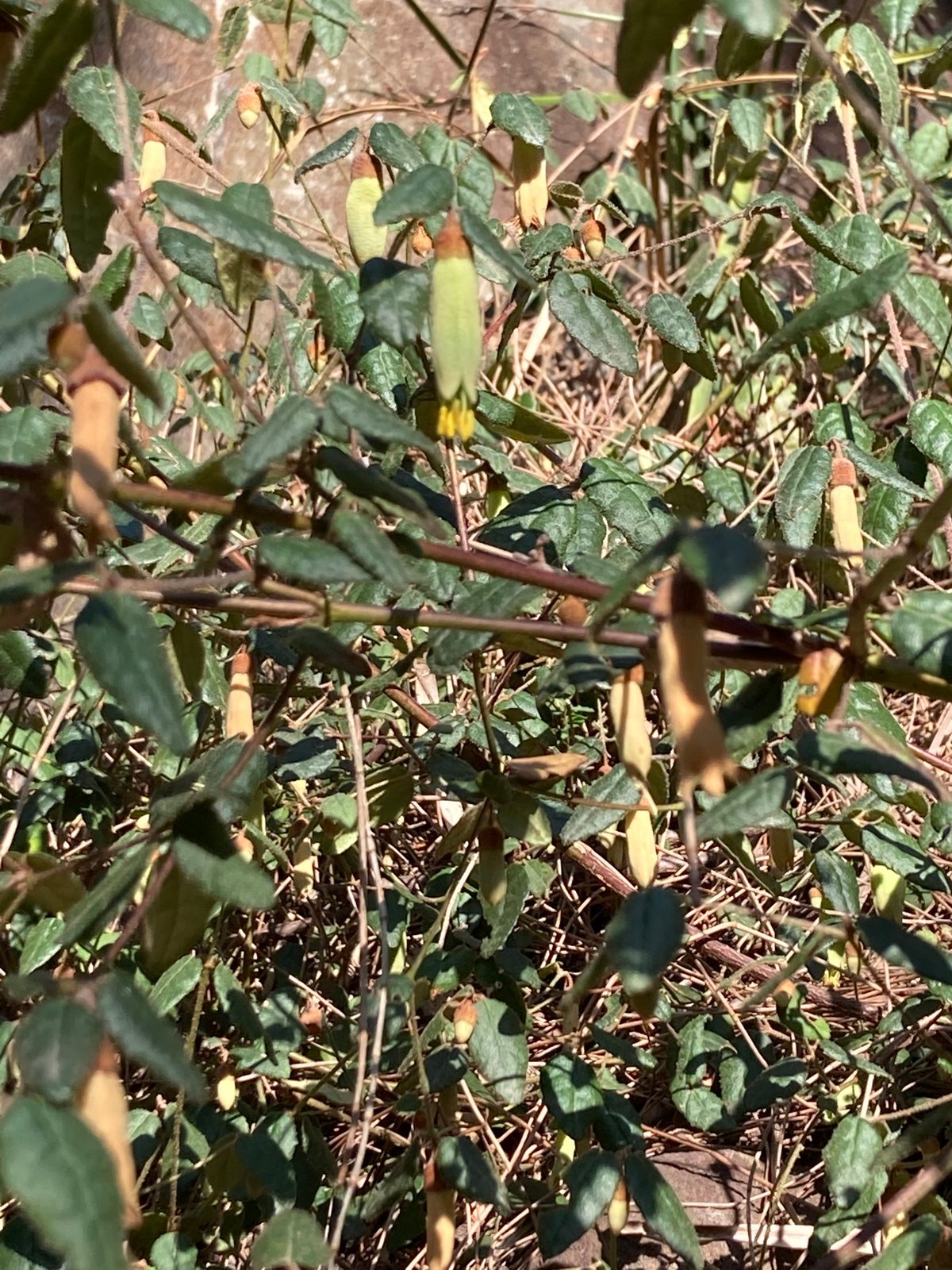
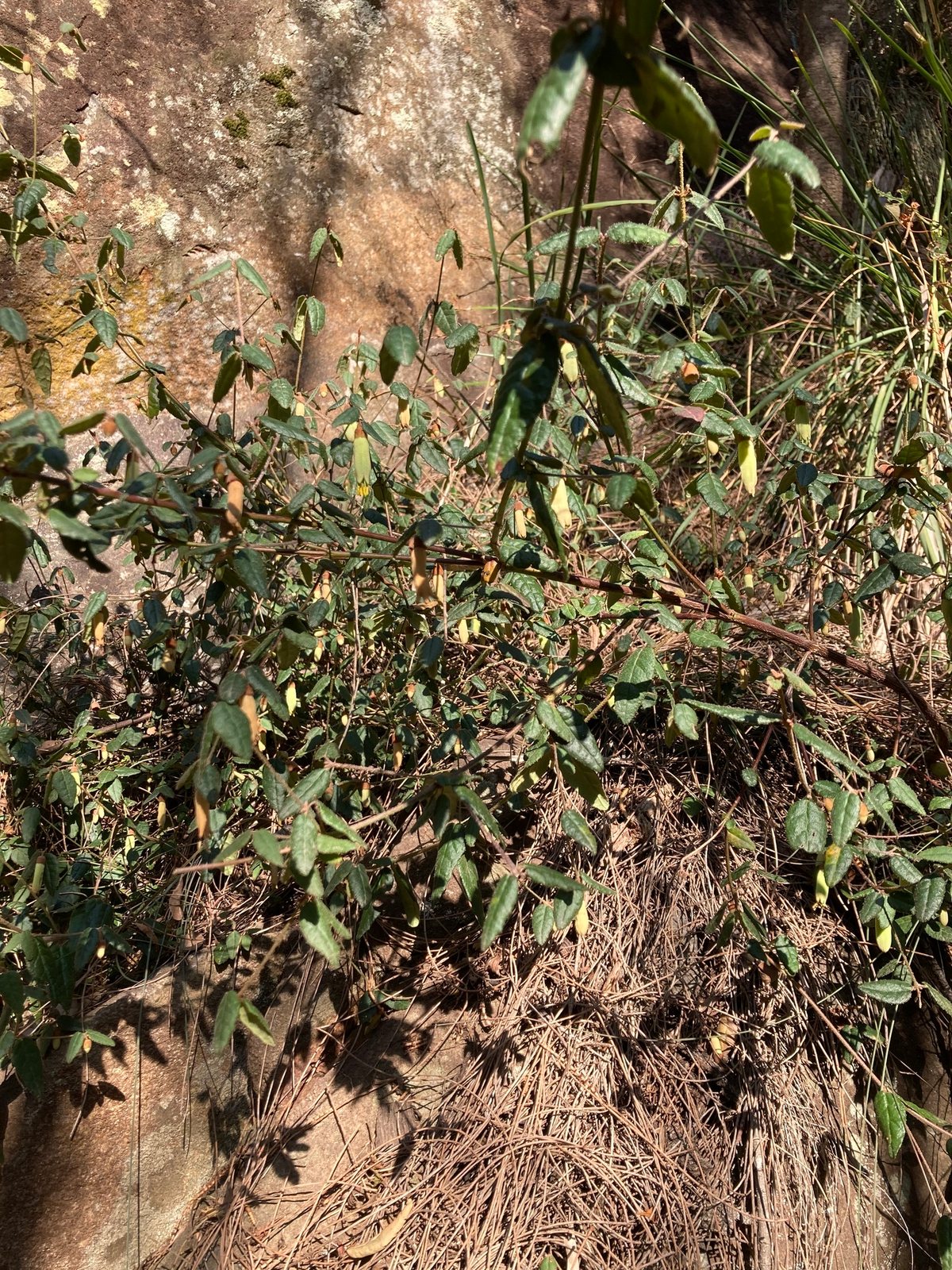
An Australian evergreen shrub grown for its hanging, tubular flowers, usually red with green or yellow-green tips, though some forms flower entirely green. Its long flowering season and nectar make it useful in sheltered borders and wildlife gardens; it is not a true fuchsia. Plant size, flower colour and frost tolerance vary considerably between forms.
At a glance
- Sun
- Partial shade or full sun; give afternoon shade in hot inland gardens and shelter from cold, drying winds.
- Water
- Water regularly while establishing. Once established, water deeply during prolonged dry spells, allowing the soil to dry somewhat between waterings.
- Soil
- Well-drained sandy or loamy soil, preferably slightly acidic to neutral. Avoid waterlogged ground and heavy applications of fertiliser.
- Height
- 2-6.5 ft (0.6-2 m), depending on the form
- Spread
- 2-6.5 ft (0.6-2 m), depending on the form
- Flowers
- Mainly autumn through spring, with occasional flowers at other times; tubular red flowers with green or yellow-green tips, or entirely green flowers, depending on the form.
- Foliage
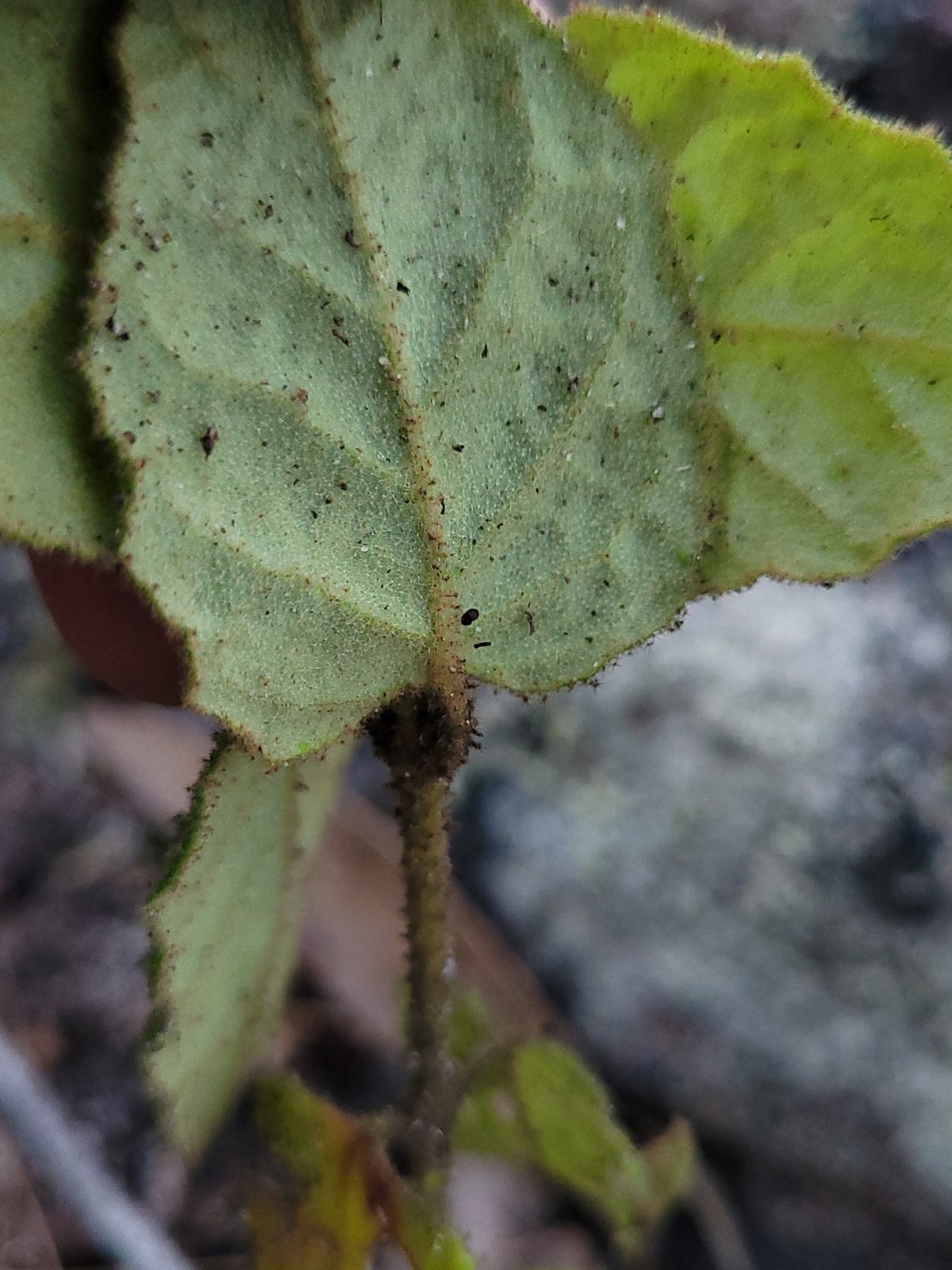
- Evergreen. Opposite, small oval leaves, usually dark green above and paler beneath, with a variable covering of fine hairs.
- Growth
- Slow to moderate
- Care needed
- Low
The year at a glance
- Pollinators
- Drought tolerant
- Heat tolerant
- Wildlife
- Low allergen
| J | F | M | A | M | J | J | A | S | O | N | D | |
|---|---|---|---|---|---|---|---|---|---|---|---|---|
| Flowers | ||||||||||||
| Plant |
Northern hemisphere months. In Australia, shift them by six.
- Difficulty
- Moderate
- Toughness
- Fairly tough
Will it suit your garden?
Pick your zone, country, light and whether you have pets.
Full sun is 6 or more hours of direct sun a day, part shade 3 to 6 hours, shade under 3.
How it grows
Planting day
1.6 ft (0.5 m)
After 1 year
2 ft (0.62 m)
After 2 years
2.4 ft (0.75 m)
After 3 years
2.9 ft (0.87 m)
After 5 years
4 ft (1.1 m)
About 7 years to full size.
From a typical nursery size, at an average rate for this kind of plant. A rule of thumb, not a forecast.
Good to know
- Cats and dogs
- Safe
- Native to
- Australia
- Growth rate
- Slow
Care
Jobs through the year
- WaterApr–May, Sep, every 14 days
- Water established plants if dry; allow some drying between soakings and water new plants more often.
- WaterJun–Aug, every 7 days
- Water established plants deeply during prolonged dry spells; pots need closer monitoring.
- WaterJan–Mar, Oct–Dec, every 14 days
- Check overwintering pots and water sparingly when partly dry, never leaving them saturated.
- FeedApr
- Feed lightly with low-phosphorus native-plant fertiliser only if growth is weak.
- MulchMay
- Apply a light organic mulch, keeping the stem base clear.
- PruneMay–Jun
- Trim lightly after the main flowering flush; avoid cutting into old leafless wood.
- ProtectJan–Apr, Oct–Dec
- Not reliably hardy here: keep in a movable pot and overwinter somewhere bright, cool and frost-free.
- Plant in autumn in mild climates or in spring where winter frost is a concern.
- Water the root zone regularly through the first growing season; avoid keeping it constantly wet.
- Apply a light mulch, keeping it clear of the stem base.
- If growth is weak, feed lightly in spring with a low-phosphorus fertiliser suitable for Australian native plants.
- In colder regions, grow in a pot and move it to a bright, cool, frost-free place for winter.
Pruning. Lightly trim after the main flowering flush to encourage branching and keep the shrub compact. Remove dead or damaged stems, but avoid cutting hard into old, leafless wood.
Through the year
- Spring
- Plant in frost-prone areas once hard frosts have passed; feed lightly if needed.
- Late spring
- Trim lightly after the main flowering flush, adjusting the timing if your plant flowers later.
- Summer
- Check soil moisture during dry spells and water deeply rather than little and often.
- Summer
- Take semi-ripe cuttings from healthy, non-flowering shoots.
- Autumn
- Plant in mild regions while the soil is still warm, and refresh mulch without covering the stem base.
- Winter
- Protect from severe frost and check that pots and planting beds drain freely.
In the garden
- Plant beneath open-canopied trees for evergreen structure and flowers in light shade.
- Combine with lomandra and other small Australian shrubs in an informal, low-water border.
- Use a compact form beside a path or seating area where the hanging flowers can be seen closely.
- Grow in a well-drained container in a sheltered courtyard, with winter protection where necessary.
- Include in a mixed wildlife border to provide nectar during the cooler months.
Garden styles it suits: Australian native, Wildlife garden, Woodland, Coastal, Low-maintenance and Winter interest.
Plant it with: Lomandra, Flax lily, Coastal rosemary, Waxflower and Crowea.
Wildlife: Flowers provide nectar for honeyeaters and other nectar-feeding birds in Australia, and may attract hummingbirds where grown in North America. Bees also visit the flowers, and dense foliage offers cover for small birds.
Problems to watch for
- Root rot and sudden collapse in wet soil: improve drainage before planting, avoid frequent irrigation and discard badly affected plants.
- Frost scorch: choose a sheltered position, cover young plants during cold snaps and wait until spring to remove damaged growth.
- Scale insects: inspect stems and leaf undersides; remove small infestations by hand or use a labelled horticultural oil as directed.
- Sparse, leggy growth: provide brighter light and lightly trim after flowering rather than cutting back hard.
Safety
Not known to be toxic to people, cats, dogs or horses. Species-specific safety information is limited, so do not treat the leaves, flowers or fruit as food.
Easily confused with
Salmon correa (Correa pulchella)
Usually has smaller, smoother leaves and salmon-pink to orange tubular flowers, generally without the strongly contrasting green tips common in Correa reflexa.
Rock correa (Correa glabra)
Usually has smoother, less hairy leaves that are aromatic when crushed; its tubular flowers are often greenish yellow, though some forms have red colouring.
White correa (Correa alba)
Has rounded, grey-green leaves and white flowers whose petals spread open rather than remaining in a long, narrow tube.
The name
Correa honours the Portuguese botanist José Correia da Serra, while reflexa means bent back and refers to the turned-back calyx lobes.
Propagation. Take semi-ripe cuttings in summer or early autumn and root them in a free-draining propagation mix under humid conditions. Seed germination can be slow and erratic; cuttings are the better choice for retaining a particular flower colour or growth habit.
Checked against open data
- Accepted botanical name
- Correa reflexa
- Native range
- New South Wales, Queensland, South Australia, Tasmania and Victoria.
- Measured
- Average height 100 cm.
Sources: GBIF (CC BY 4.0) and Trefle (CC BY 4.0). The care and design notes are LandscapeGPT's own.
See it in your own yard.
Upload a photo of your yard and see it redesigned with plants that suit your climate, each checked against your zone.