Nellie Stevens holly
Ilex 'Nellie R. Stevens'. Family Aquifoliaceae. Tree.
Also called Nellie R. Stevens holly.
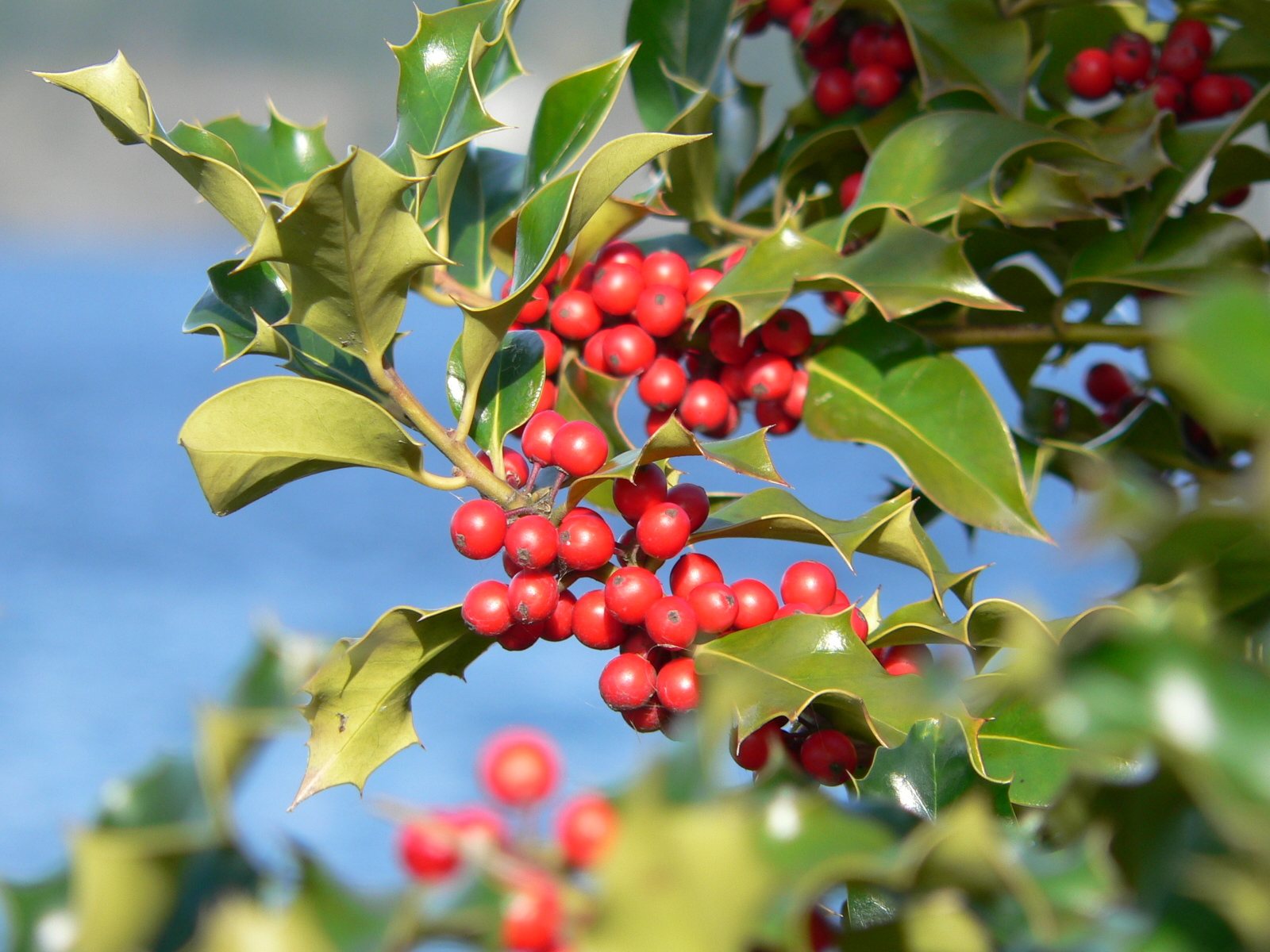
Nellie Stevens holly is a dense evergreen holly with a naturally pyramidal shape, glossy leaves and red berries that often last into winter. Gardeners grow it as a substantial screen, tall hedge or specimen tree; allow room for its mature width. This female hybrid can produce berries without a male holly nearby, although a compatible male flowering at the same time can improve the crop.
At a glance
- Sun
- Full sun to partial shade; the densest growth and heaviest berry crops usually develop in full sun.
- Water
- Water regularly during establishment; once established, water deeply during prolonged dry spells. Avoid persistently wet roots.
- Soil
- Moist, well-drained, acidic to neutral soil; tolerates clay if drainage is adequate. Alkaline soil can cause yellow leaves.
- Height
- 15-25 ft (4.6-7.6 m)
- Spread
- 10-15 ft (3-4.6 m)
- Flowers
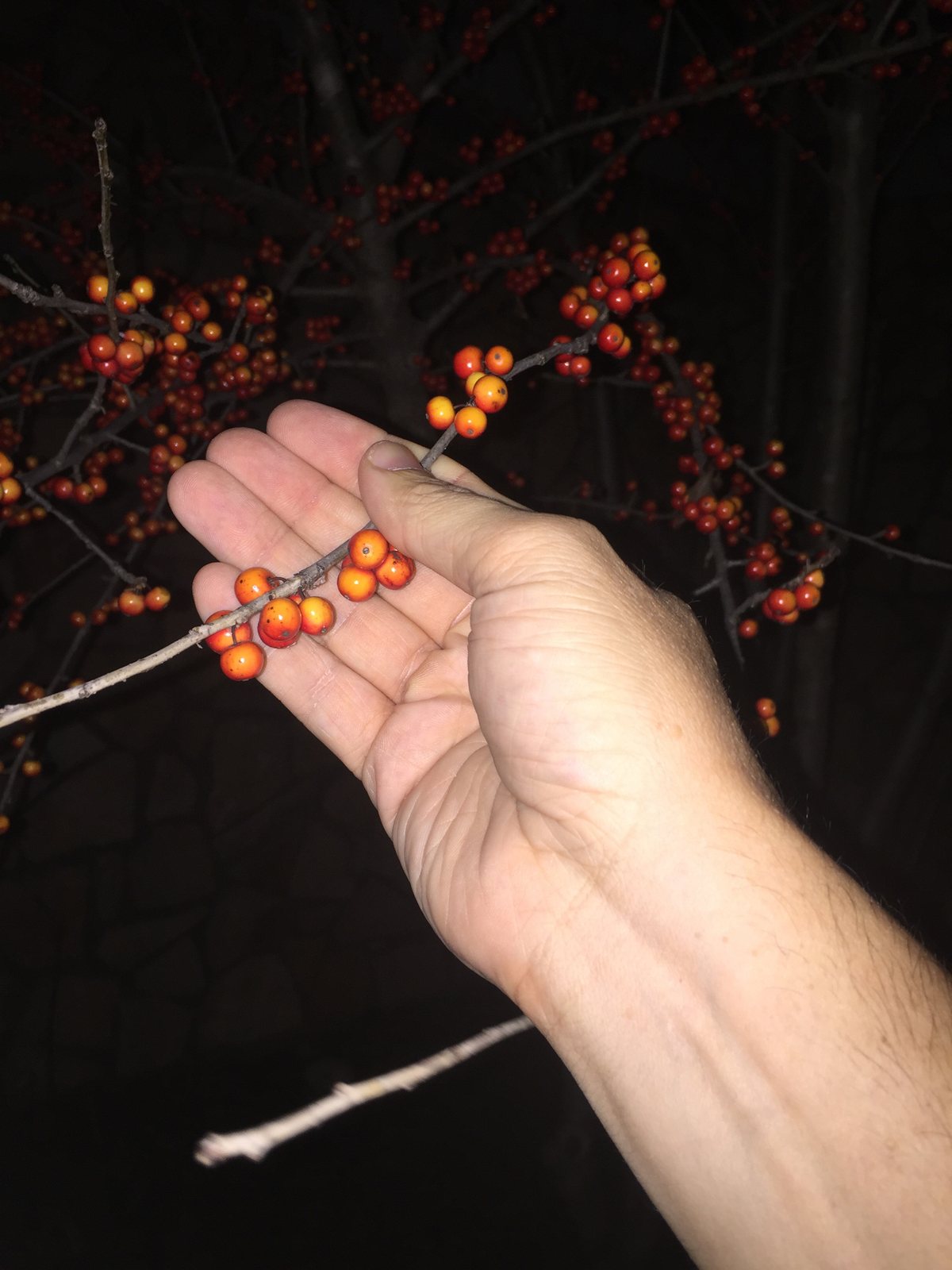
- Small, creamy-white flowers in spring, followed by red berries that colour in autumn.
- Foliage
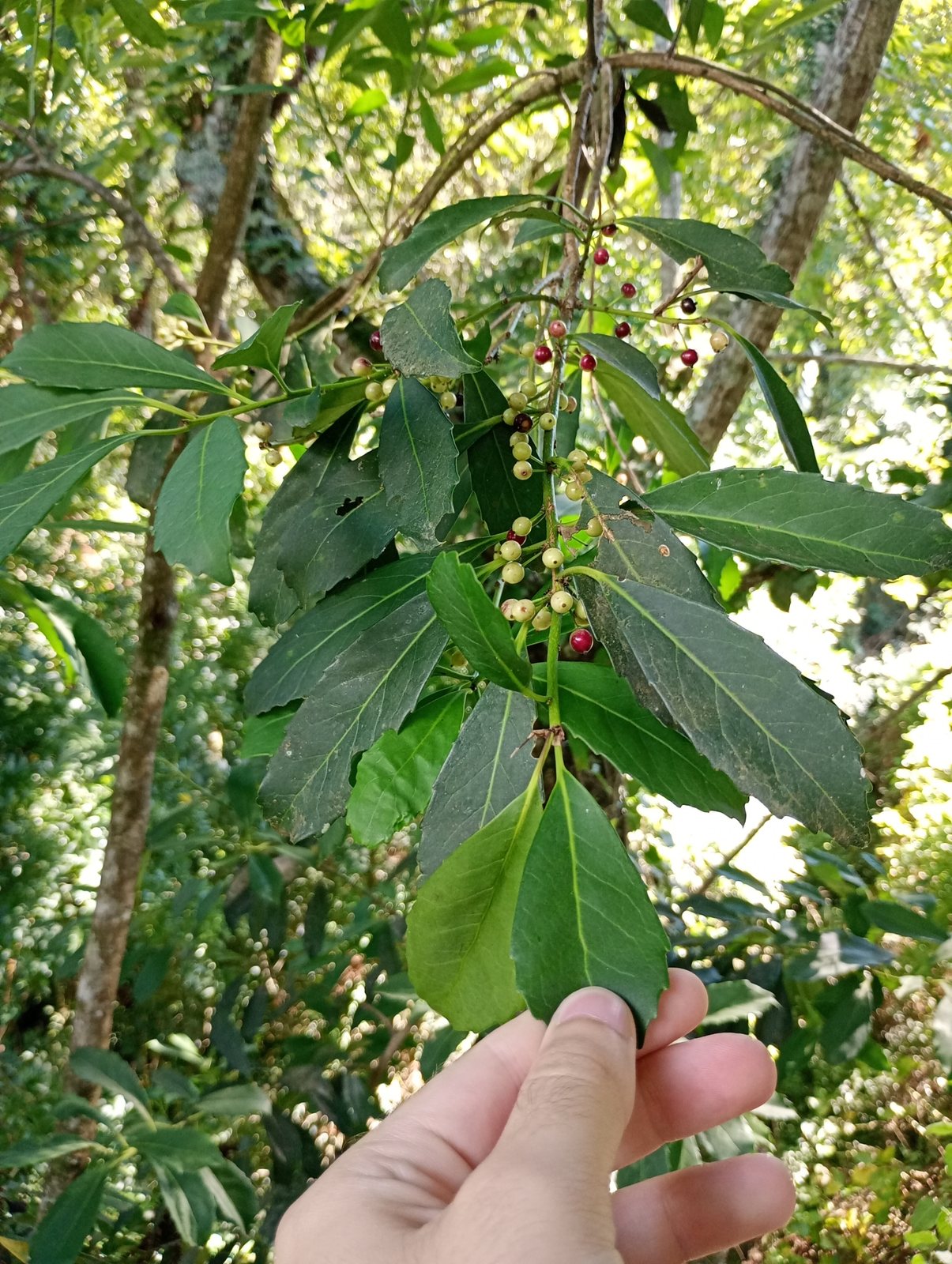
- Evergreen. Glossy, dark green, leathery leaves with a few sharp teeth along the margins.
- Growth
- Fast when young, often 1-3 ft (0.3-0.9 m) a year in favourable conditions.
- Care needed
- Low
The year at a glance
- Pollinators
- Deer resistant
- Drought tolerant
- Heat tolerant
- Wildlife
- Low allergen
| J | F | M | A | M | J | J | A | S | O | N | D | |
|---|---|---|---|---|---|---|---|---|---|---|---|---|
| Flowers | ||||||||||||
| Fruit | ||||||||||||
| Plant |
Northern hemisphere months. In Australia, shift them by six.
- Difficulty
- Easy
- Toughness
- Very tough
Will it suit your garden?
Pick your zone, country, light and whether you have pets.
Full sun is 6 or more hours of direct sun a day, part shade 3 to 6 hours, shade under 3.
How it grows
Planting day
7 ft (2 m)
After 1 year
8 ft (2.3 m)
After 2 years
9 ft (2.6 m)
After 3 years
10 ft (2.9 m)
After 5 years
12 ft (3.6 m)
About 13 years to full size.
From a typical nursery size, at an average rate for this kind of plant. A rule of thumb, not a forecast.
Good to know
- Cats and dogs
- Toxic
- Growth rate
- Fast
Care
Jobs through the year
- WaterMar–May, Sep–Nov, every 21 days
- Water established trees during prolonged dry spells; water new trees more frequently for two years.
- WaterJun–Aug, every 14 days
- Soak established roots during prolonged drought, skipping watering when soil remains moist.
- PruneFeb–Mar
- Remove damaged, crossing or misplaced branches before growth begins; avoid shearing if berries are wanted.
- MulchMar–Apr
- Spread 5-8 cm of organic mulch over the root area, keeping it away from the trunk.
- FeedApr
- Feed lightly only if growth is weak or a soil test identifies a deficiency.
- ProtectJan–Feb, Nov–Dec
- Shield recently planted trees from drying winter winds in cold, exposed gardens.
- Water deeply through the first two growing seasons whenever the root zone begins to dry.
- Spread 2-3 in (5-8 cm) of organic mulch over the root area, keeping it clear of the trunk.
- Allow for the mature spread rather than planting close to walls, paths or overhead wires.
- Feed lightly in spring only if growth is weak or a soil test indicates a deficiency.
- In colder locations, choose shelter from drying winter winds.
Pruning. Prune in late winter or early spring before new growth, removing dead, crossing or badly placed branches and shortening selected shoots to preserve the natural outline. Repeated shearing reduces flowers and berries; for a hedge, keep the base wider than the top.
Through the year
- Late winter
- Remove damaged or crossing branches and carry out any necessary size reduction before new growth begins.
- Spring
- Plant in cold-winter regions, water thoroughly and mulch the root area.
- Late spring
- Check new growth for scale insects and inspect yellowing leaves for drainage or soil-pH problems.
- Summer
- Water young plants during dry weather and take semi-ripe cuttings if you want more plants.
- Autumn
- Plant in mild-winter regions while the soil remains warm; leave berries for winter display and birds.
- Late autumn
- Water thoroughly before the ground freezes if autumn has been dry, especially for recently planted trees.
In the garden
- Plant as a tall evergreen boundary screen, allowing enough width to avoid constant clipping.
- Use a single specimen as a pyramidal focal point on a lawn or at the back of a large border.
- Form a formal hedge that provides a dark backdrop for flowering shrubs and pale perennials.
- Combine with camellias, azaleas and shade-tolerant ground planting in an acidic-soil garden.
Garden styles it suits: Formal, Traditional, Southern, Grand estate, Woodland and Winter interest.
Plant it with: Camellia, Azalea, Oakleaf hydrangea, Japanese forest grass, Autumn fern and Flowering dogwood.
Wildlife: Spring flowers attract bees and other insects. Birds eat the berries, often later in winter, and the dense evergreen branches provide shelter and nesting cover.
Problems to watch for
- Scale insects can cause sticky honeydew and black sooty mould: inspect stems and leaf undersides, encourage natural predators and use a labelled horticultural oil when appropriate.
- Spider mites may cause fine stippling during hot, dry weather: rinse foliage thoroughly and avoid unnecessary broad-spectrum insecticides.
- Root rot can develop in waterlogged soil: improve drainage before planting and avoid frequent watering of already wet ground.
- Yellow leaves with green veins often indicate iron deficiency in alkaline soil: test the soil and correct the underlying pH problem rather than repeatedly adding general fertiliser.
Safety
Treat the berries and leaves as toxic to people, cats, dogs and horses. Berries are the main ingestion risk and can cause nausea, vomiting, abdominal pain or diarrhoea; larger amounts may cause more serious illness. Do not eat the fruit, and seek medical or veterinary advice after a significant ingestion.
Easily confused with
Burford Chinese holly (Ilex cornuta 'Burfordii')
Its leaves are usually broad and rounded, with a single sharp terminal spine; Nellie Stevens typically has several additional teeth along the leaf margins.
English holly (Ilex aquifolium)
Typical English holly has more strongly waved leaf margins and more numerous sharp spines, although upper branches can carry nearly spineless leaves.
The name
The cultivar honours Nellie Robinson Stevens of Maryland, who raised the original plant from seed.
Propagation. Take semi-ripe cuttings in summer and root them under humid conditions in a free-draining medium. Seedlings will not reliably retain the cultivar's characteristics.
Checked against open data
- Accepted botanical name
- Ilex
Sources: GBIF (CC BY 4.0). The care and design notes are LandscapeGPT's own.
See it in your own yard.
Upload a photo of your yard and see it redesigned with plants that suit your climate, each checked against your zone.