Nettle-leaved mullein
Verbascum chaixii. Family Scrophulariaceae. Perennial.
Also called Nettle-leaf mullein.
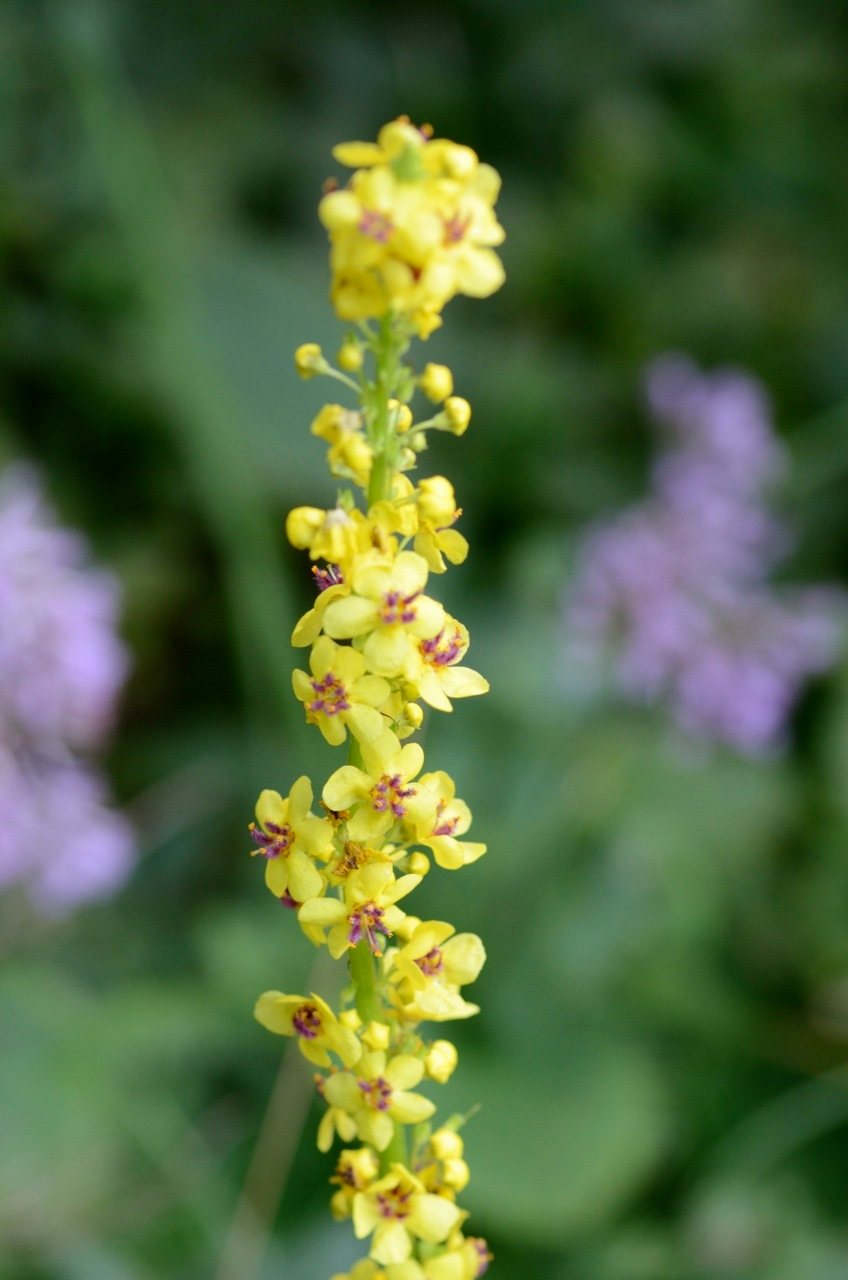
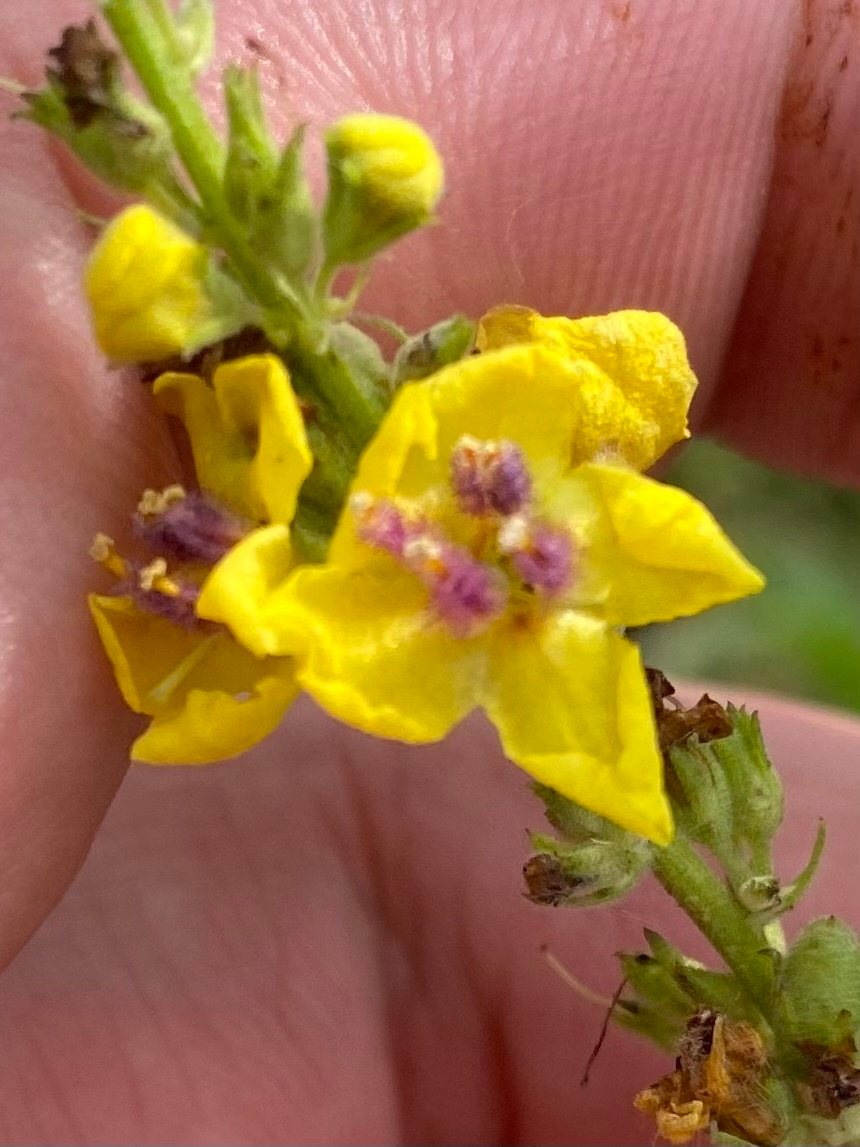
Nettle-leaved mullein is a usually short-lived perennial with branching spires of small yellow flowers, each with contrasting purple-haired stamens. Gardeners grow it for airy summer height in sunny borders and gravel gardens, where it tolerates dry soil once established.
At a glance
- Sun
- Full sun.
- Water
- Low once established; water young plants regularly and established plants during prolonged drought.
- Soil
- Well-drained, lean to moderately fertile soil; tolerates sandy, stony and chalky ground. Avoid waterlogged soil, especially in winter.
- Height
- 3-4 ft (0.9-1.2 m)
- Spread
- 1-2 ft (0.3-0.6 m)
- Flowers
- Early to late summer; small pale yellow flowers with purple-haired stamens open progressively along branching spikes.
- Foliage
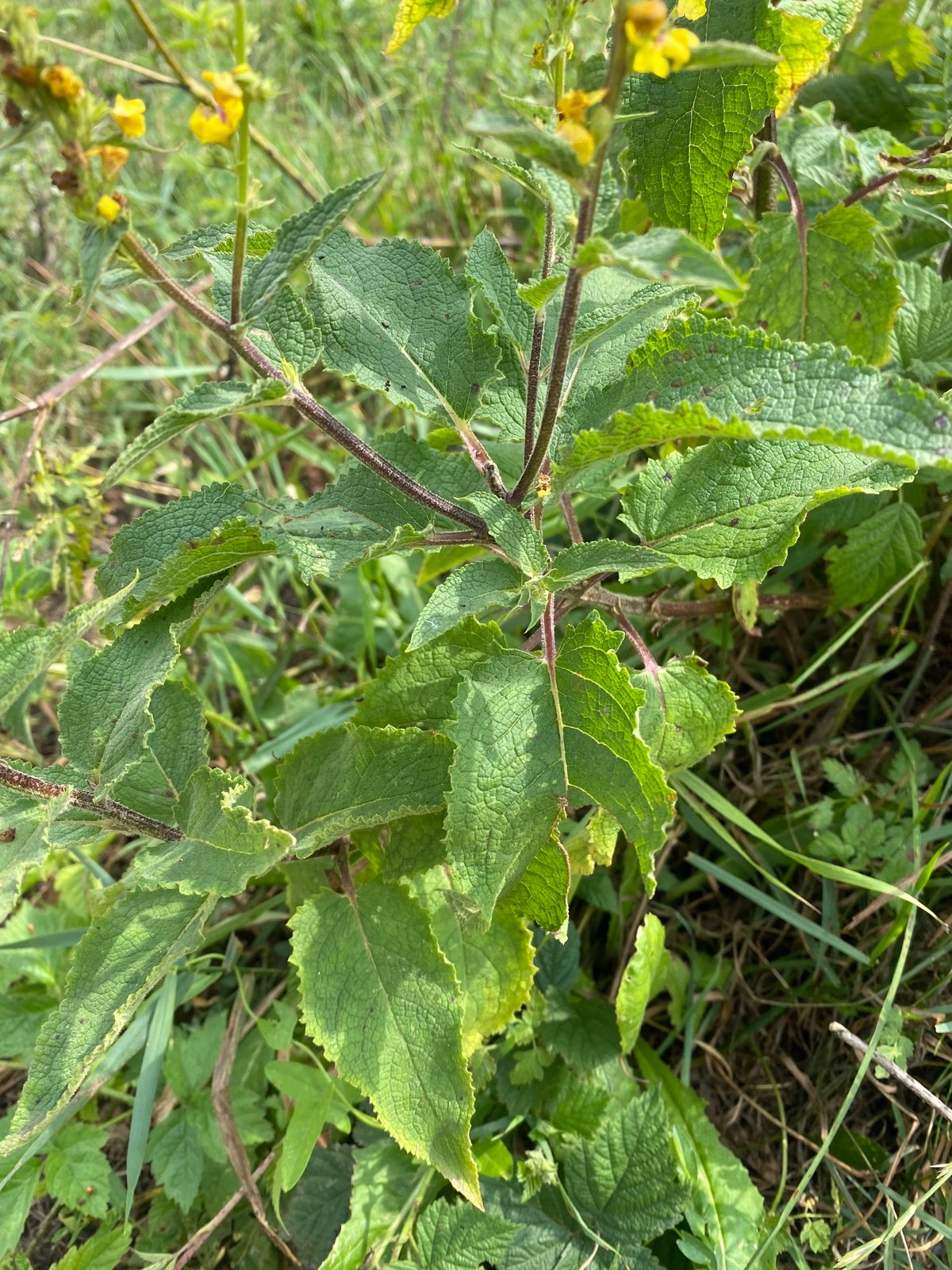
- A basal rosette of coarse, wrinkled, toothed green leaves, with smaller leaves up the stems. Usually dies back in cold winters but may retain some basal foliage in mild climates.
- Growth
- Moderate; flowering stems develop quickly during spring and early summer.
- Care needed
- Low
The year at a glance
- Pollinators
- Deer resistant
- Drought tolerant
- Wildlife
- Low allergen
| J | F | M | A | M | J | J | A | S | O | N | D | |
|---|---|---|---|---|---|---|---|---|---|---|---|---|
| Flowers | ||||||||||||
| Fruit | ||||||||||||
| Plant |
Northern hemisphere months. In Australia, shift them by six.
- Difficulty
- Easy
- Toughness
- Very tough
Will it suit your garden?
Pick your zone, country, light and whether you have pets.
Full sun is 6 or more hours of direct sun a day, part shade 3 to 6 hours, shade under 3.
How it grows
Planting day
1 ft (0.3 m)
After 1 year
1.8 ft (0.55 m)
After 2 years
2.6 ft (0.8 m)
After 3 years
3 ft (1.1 m)
full size
About 3 years to full size.
From a typical nursery size, at an average rate for this kind of plant. A rule of thumb, not a forecast.
Good to know
- Cats and dogs
- Safe
- Growth rate
- Moderate
Care
Jobs through the year
- WaterApr–May, Sep, every 21 days
- Water established plants only in prolonged drought; water first-year plants more often.
- WaterJun–Aug, every 14 days
- Water during prolonged drought, letting the soil surface dry between soakings.
- PruneFeb–Mar
- Remove dead stems and damaged basal leaves without cutting into the crown.
- MulchApr
- Apply a thin gravel mulch, keeping the crown uncovered.
- ProtectMay
- Support developing stems on windy sites before they lean.
- DeadheadJun–Aug, every 14 days
- Cut spent stems to basal leaves for possible repeat bloom; retain a few only if seed is wanted.
- PruneSep–Oct
- Remove excess seedlings, retaining a few replacements for short-lived plants.
- ProtectOct–Nov
- Clear wet leaf litter from crowns to reduce winter rot.
- Plant in full sun with the crown at soil level and plenty of drainage.
- Water through the first growing season, allowing the surface soil to dry between waterings.
- Avoid rich feeding; excess fertility encourages soft growth and flopping.
- Use a light gravel mulch rather than piling damp organic mulch against the crown.
- Support stems early in exposed gardens if they begin to lean.
- Keep a few seedlings as replacements, since individual plants can be short-lived.
Pruning. Cut spent flower stems back to the basal leaves after the main flush to encourage further flowering, or leave a few stems for seed. Remove dead stems and damaged foliage in late winter or early spring without cutting into the crown.
Through the year
- Early spring
- Remove dead stems and damaged basal leaves; check that the crown has not remained wet over winter.
- Spring
- Plant young plants in a sunny, freely draining position and water them in.
- Late spring
- Install discreet supports where wind or richer soil makes the developing stems lean.
- Summer
- Cut back fading flower spikes for a possible second flush, leaving selected stems if seed is wanted.
- Late summer
- Collect ripe seed when the capsules turn brown and begin to open.
- Autumn
- Remove unwanted seedlings and clear wet leaf litter from around the crowns.
In the garden
- Plant in loose groups through a sunny mixed border for slender vertical accents without a dense screen.
- Combine with lavender, catmint and low grasses in a gravel garden for contrasting flower shapes and foliage textures.
- Use among salvias and yarrow in an informal cottage border for a long summer flowering sequence.
- Place behind low-growing plants near a path so the purple flower centres can be seen closely.
Garden styles it suits: Cottage garden, Dry gravel garden, Mediterranean, Pollinator garden, New perennial (prairie) and English country.
Plant it with: Lavender, Catmint, Yarrow, Perennial salvia, Blue fescue and Hardy geranium.
Wildlife: Flowers provide pollen for bees. In the UK, the foliage can feed mullein moth caterpillars; leaving a little feeding damage supports their life cycle.
Problems to watch for
- Crown or root rot in wet ground: improve drainage or move plants to a raised, gritty bed; avoid wet mulch against the crown.
- Mullein moth caterpillars, especially in the UK, can strip leaves: tolerate some feeding for wildlife or hand-pick caterpillars if damage is severe.
- Powdery mildew can coat leaves in crowded conditions: improve air circulation and water the soil rather than the foliage.
- Flopping stems in shade or rich soil: provide full sun, avoid heavy feeding and add discreet supports where needed.
Safety
Not known to be toxic to people, cats, dogs or horses, but reliable species-specific safety information is limited. Do not treat the leaves, flowers, roots or seeds as edible, and discourage pets from chewing them.
Easily confused with
Dark mullein (Verbascum nigrum)
Also has yellow flowers with purple-haired stamens, but usually has less-branched flower spikes and lower leaves with more distinctly heart-shaped bases.
Great mullein (Verbascum thapsus)
Has thick, densely woolly grey leaves and a stout, usually unbranched flower spike, unlike the greener leaves and airy branching stems of nettle-leaved mullein.
Olympic mullein (Verbascum olympicum)
Forms a much larger silver-grey rosette and a broad, heavily branched candelabra of yellow flowers.
The name
The species name chaixii honours the French botanist Dominique Chaix, while nettle-leaved refers to the toothed leaves, which resemble nettle foliage but do not sting.
Propagation. Sow seed thinly on the surface of seed compost in spring or late summer, pressing it in without burying it deeply. Transplant seedlings while small; plants may also self-seed in open gravel or bare soil. Named forms may not come true from seed and are better propagated by root cuttings taken during dormancy.
Checked against open data
- Accepted botanical name
- Verbascum chaixii
- In the US and Canada
- Introduced in the lower 48 states.
- Native range
- Austria, Bulgaria, Central European Rus, Czechoslovakia, East European Russia, France, Greece, Hungary, Italy, Kazakhstan, Kirgizstan and Krym.
- Measured
- Average height 105 cm.
Sources: GBIF (CC BY 4.0), USDA PLANTS and Trefle (CC BY 4.0). The care and design notes are LandscapeGPT's own.
See it in your own yard.
Upload a photo of your yard and see it redesigned with plants that suit your climate, each checked against your zone.