New Guinea impatiens
Impatiens hawkeri. Family Balsaminaceae. Annual.
Also called New Guinea busy Lizzie.
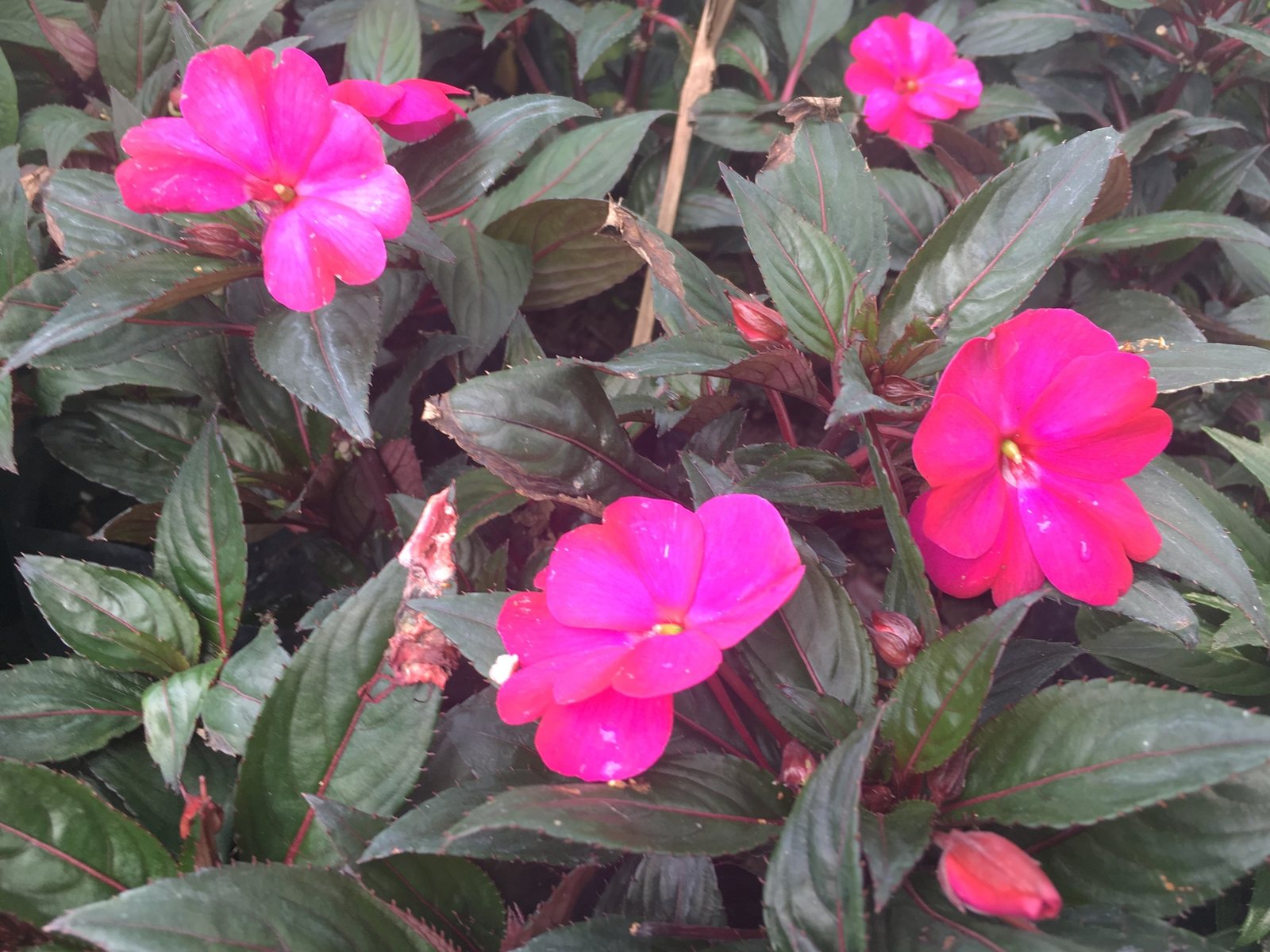
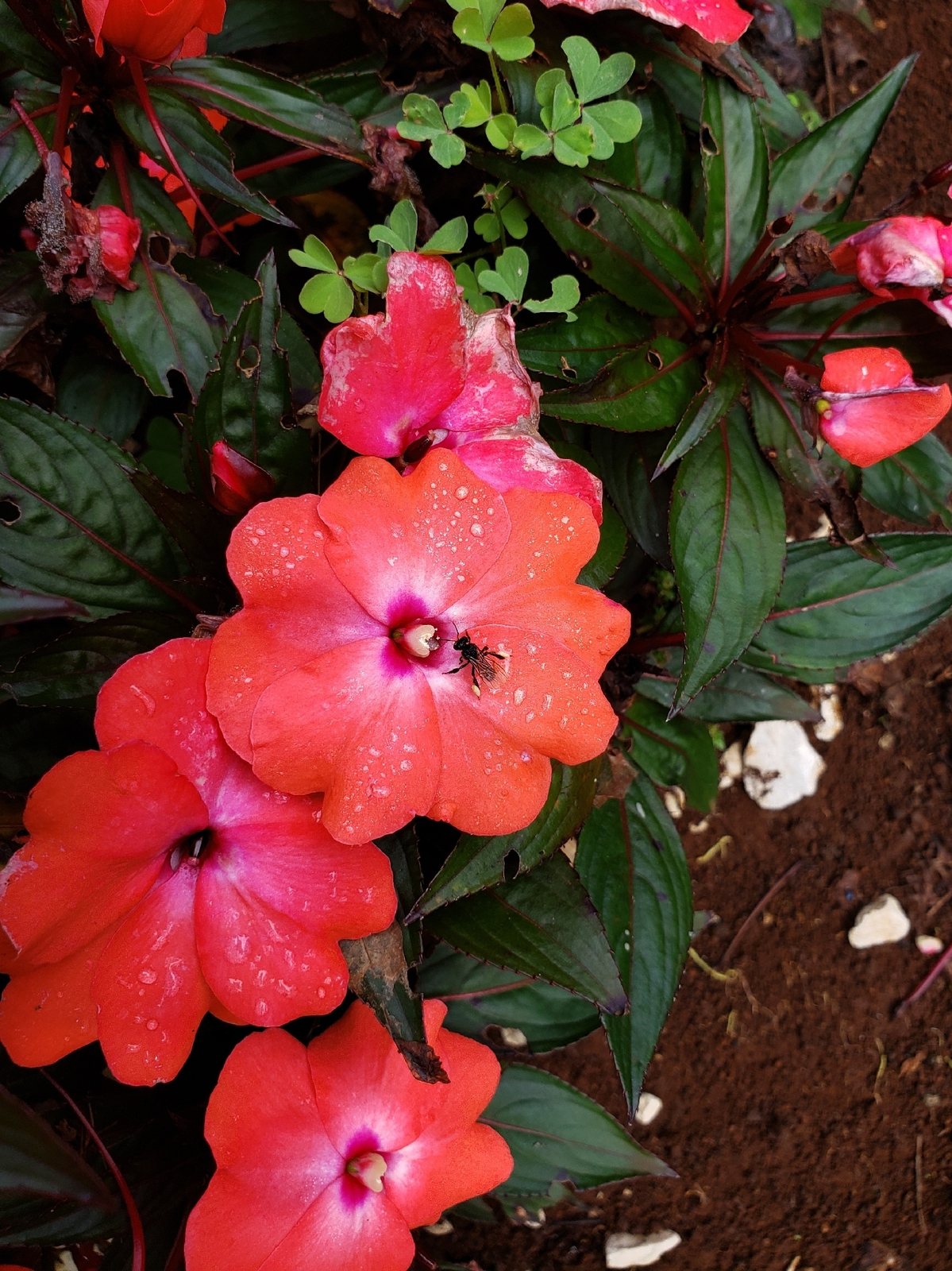
New Guinea impatiens is a frost-tender, evergreen perennial grown as an annual in most gardens. Its large, flat flowers and glossy foliage bring long-lasting colour to sheltered beds and containers, especially in morning sun or bright, filtered shade. Many plants sold under this name are hybrids rather than the wild species.
At a glance
- Sun
- Partial shade, ideally morning sun and afternoon shade. Avoid strong afternoon sun in hot climates; ordinary New Guinea impatiens are less sun-tolerant than some specially bred hybrid groups.
- Water
- Keep evenly moist but never waterlogged. Containers may need daily watering during hot weather; check the compost before watering.
- Soil
- Fertile, moisture-retentive but well-drained soil or container compost, preferably slightly acidic to neutral.
- Height
- 1-2 ft (0.3-0.6 m)
- Spread
- 1-2 ft (0.3-0.6 m)
- Flowers
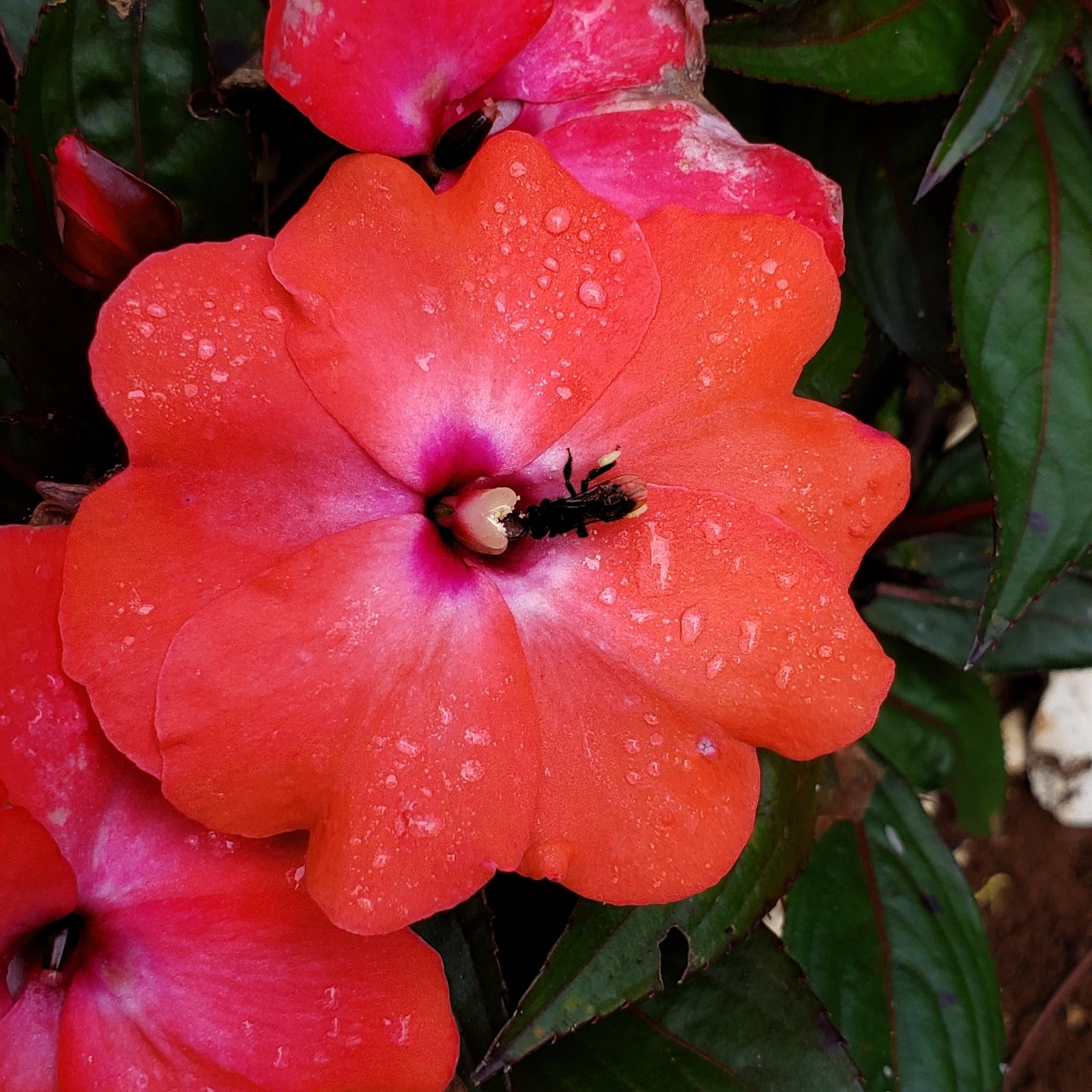
- Late spring to autumn, until cold weather stops growth; potentially year-round in frost-free tropical conditions. Flowers come in white, pink, red, orange, salmon, lavender and purple, including bicolours.
- Foliage
- Evergreen. Glossy, pointed leaves with toothed edges, often dark green, bronze or reddish; some cultivated forms have cream or yellow variegation.
- Growth
- Fast during warm weather.
- Care needed
- Medium
The year at a glance
- Pollinators
- Low allergen
| J | F | M | A | M | J | J | A | S | O | N | D | |
|---|---|---|---|---|---|---|---|---|---|---|---|---|
| Flowers | ||||||||||||
| Plant |
Northern hemisphere months. In Australia, shift them by six.
- Difficulty
- Moderate
- Toughness
- Needs looking after
Will it suit your garden?
Pick your zone, country, light and whether you have pets.
Full sun is 6 or more hours of direct sun a day, part shade 3 to 6 hours, shade under 3.
How it grows
Planting day
0.5 ft (0.15 m)
After 1 year
1.5 ft (0.45 m)
full size
Full size in one season.
From a typical nursery size, at an average rate for this kind of plant. A rule of thumb, not a forecast.
Good to know
- Cats and dogs
- Safe
- Growth rate
- Fast
Care
Jobs through the year
- WaterMay, Sep–Oct, every 4 days
- For established bedding plants, water when the surface starts drying; skip if moist and check young plants more often.
- WaterJun–Aug, every 2 days
- Keep established plants evenly moist, adjusting for rain; young plants and pots need more frequent checks.
- FeedJun–Sep, every 28 days
- Feed container plants with balanced liquid fertilizer; feed bedding only if soil is poor.
- MulchMay–Jun
- Apply a thin organic mulch, keeping it away from soft stems.
- PruneMay–Aug
- Pinch young tips or shorten leggy stems only as needed; routine deadheading is unnecessary.
- ProtectSep–Oct
- If keeping plants, bring indoors before cold nights and maintain a bright position above 10°C.
- Plant out after frost danger has passed and nights are consistently above about 10°C (50°F); harden plants off first.
- Water at soil level when the surface begins to dry, soaking the root zone without leaving pots standing in water.
- Feed containers every two to four weeks with a balanced liquid fertiliser at the label rate; avoid overfeeding.
- Apply a thin organic mulch around bedding plants, keeping it clear of their soft stems.
- Give plants enough space for air circulation and shelter them from strong wind.
Pruning. Pinch young shoot tips if plants need more branching, and shorten leggy stems during the growing season. Remove damaged growth; routine deadheading is usually unnecessary.
Through the year
- Early spring
- Start purchased plugs or rooted cuttings indoors in warm, bright conditions, away from direct midday sun.
- Late spring
- Harden off and plant outdoors once frost has passed and nights are reliably warm.
- Summer
- Check container moisture frequently and feed regularly while plants are actively growing.
- Late summer
- Take cuttings from healthy plants if you want to keep them under cover through winter.
- Autumn
- Before cold nights arrive, move plants you wish to keep into a warm, bright indoor position; compost frost-killed plants.
- Winter
- Keep overwintered plants frost-free, ideally above 10°C (50°F), and reduce watering without letting the root ball dry out.
In the garden
- Mass beneath lightly shaded trees where irrigation can offset competition from tree roots.
- Fill sheltered patio pots with a single flower colour for a clear, repeated accent.
- Edge shaded paths with compact plants for colour close to eye level when seated.
- Combine with ferns, hostas and begonias to contrast bright flowers with broad or finely divided foliage.
Garden styles it suits: Tropical, Modern tropical, Modern courtyard, Cottage garden, Traditional and Small-space.
Plant it with: Hostas, Japanese painted fern, Coleus, Wax begonias, Torenia and Heuchera.
Wildlife: Flowers may be visited by bees, butterflies and, where present, hummingbirds. It is not a native habitat plant in the United States, the United Kingdom, Canada or Australia.
Problems to watch for
- Wilting and scorched leaves: check soil moisture first. Water a dry root ball thoroughly and move plants out of harsh afternoon sun; do not add water to already soggy soil.
- Root and stem rots: improve drainage, empty saucers and let the compost surface begin to dry between waterings. Remove badly affected plants.
- Spider mites: look for pale stippling and fine webbing in hot, dry conditions. Rinse leaf undersides and use a labelled insecticidal soap if needed.
- Thrips: distorted flowers and silvery leaf marks can indicate feeding. Remove badly damaged flowers and use a locally approved treatment; discard plants showing persistent virus-like distortion or ring patterns.
Safety
Not known to be toxic to cats, dogs, horses or people. No part is generally regarded as poisonous, but it is not a food plant and eating garden plants can still cause stomach upset.
Easily confused with
Busy Lizzie (Impatiens walleriana)
Usually has smaller, softer green leaves and smaller flowers. New Guinea impatiens generally has larger, firmer, more pointed leaves, often with bronze colouring.
SunPatiens (Impatiens hybrids)
These closely related hybrids can look almost identical but are bred for greater sun tolerance and often stronger growth. The plant label is more reliable than appearance.
Balsam (Impatiens balsamina)
Has a more upright habit, narrow leaves and flowers clustered close to the main stems rather than displayed across a broad, leafy mound.
The name
Impatiens comes from the Latin for 'impatient', referring to the ripe seed capsules that spring open when touched, while New Guinea identifies the plant's native region.
Propagation. Take soft stem-tip cuttings in spring or late summer and root them in moist, free-draining compost in warm, bright shade. Some strains can be raised from seed, but seed-grown plants may not match the parent. Check plant breeders' rights or patent restrictions before propagating named cultivars.
Checked against open data
- Accepted botanical name
- Impatiens hawkeri
- Native range
- Bismarck Archipelago, New Guinea and Solomon Is..
Sources: GBIF (CC BY 4.0) and Trefle (CC BY 4.0). The care and design notes are LandscapeGPT's own.
See it in your own yard.
Upload a photo of your yard and see it redesigned with plants that suit your climate, each checked against your zone.