New Zealand burr
Acaena microphylla. Family Rosaceae. Groundcover.
Also called New Zealand bur, Small-leaved acaena.
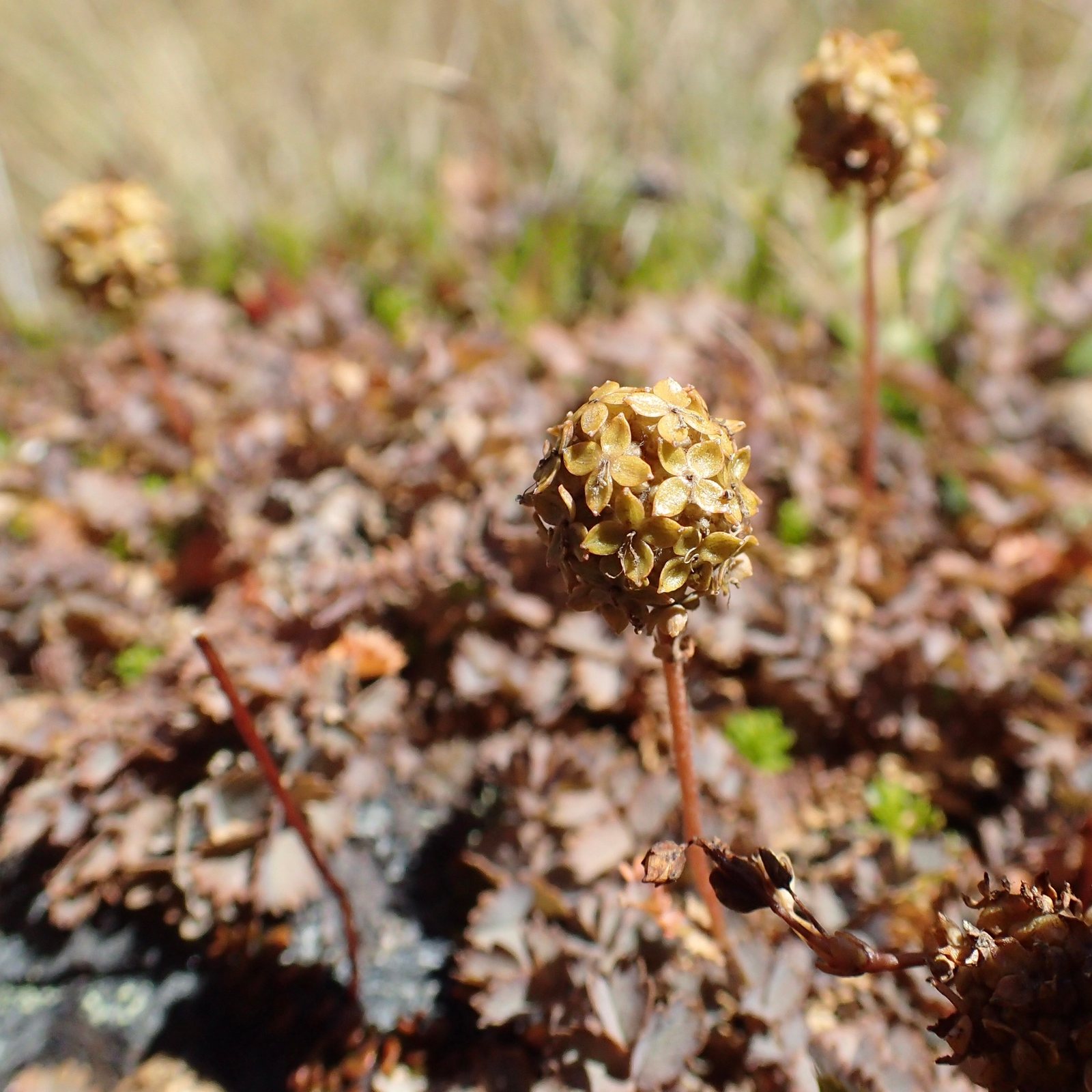
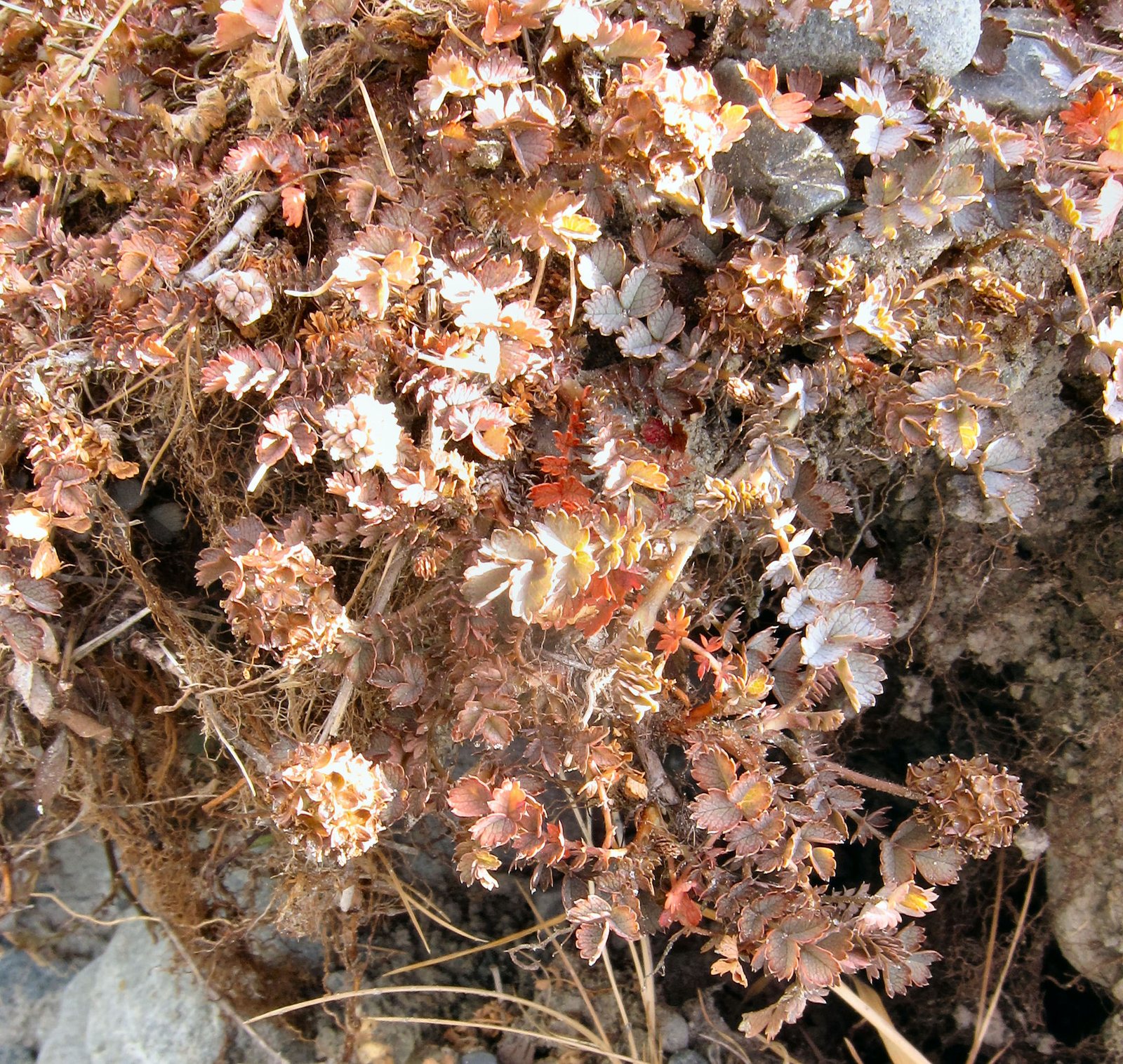
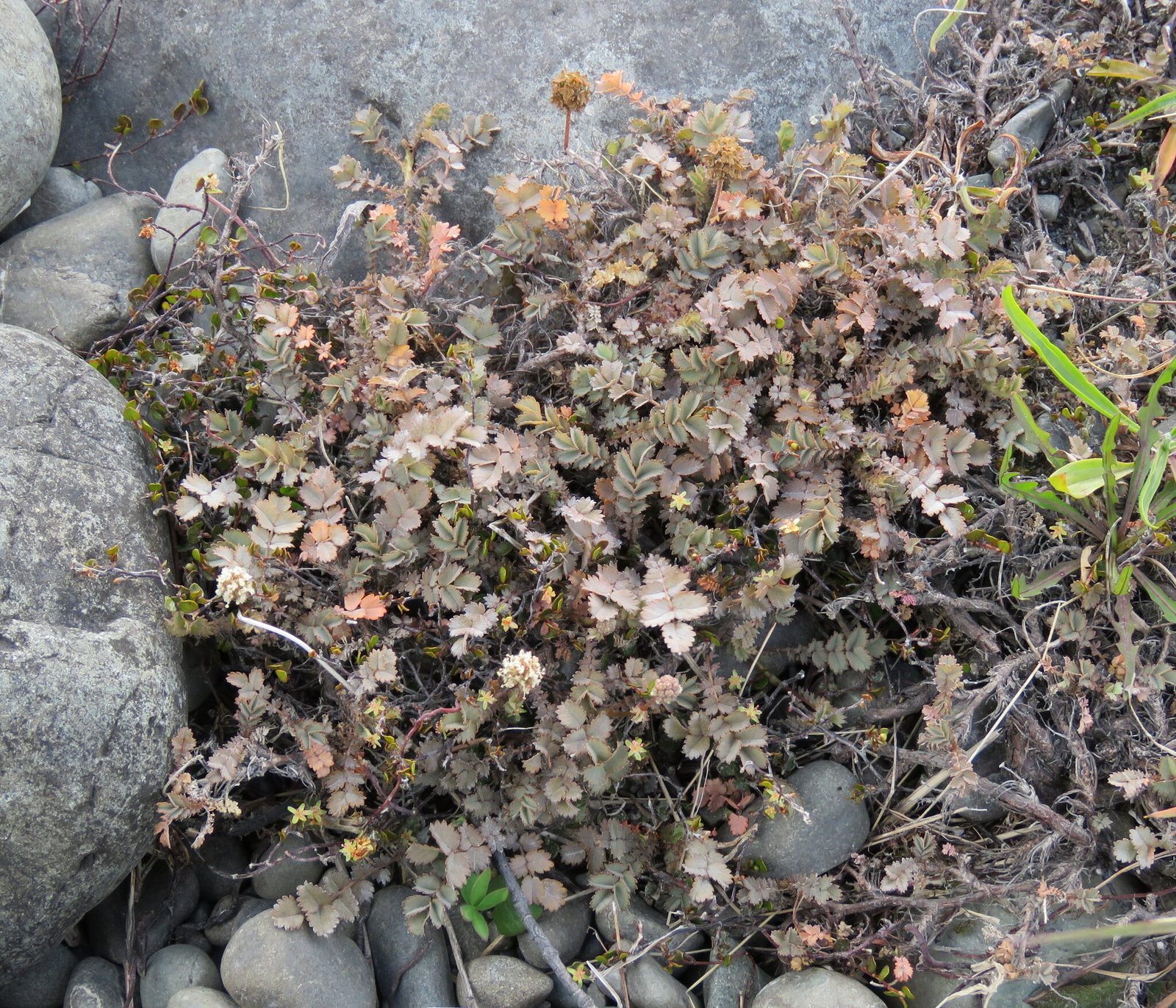
New Zealand burr is a low, creeping perennial grown for its finely divided, bronze-green leaves and reddish, spiny seed heads. It makes a close carpet in gravel gardens, rock gardens and around paving, but its rooting stems need watching near small, slow-growing plants.
At a glance
- Sun
- Full sun to partial shade; foliage usually colours best in sun.
- Water
- Water regularly while establishing, then during prolonged dry spells. Avoid persistently wet soil, especially in winter.
- Soil
- Well-drained sandy, gritty or loamy soil; tolerates modest fertility and a range of soil pH.
- Height
- 0.2-0.3 ft (0.05-0.1 m)
- Spread
- 1.5-3 ft (0.45-0.9 m), spreading farther over time
- Flowers
- Small, inconspicuous greenish flowers in early to midsummer, followed by conspicuous reddish, spiny seed heads.
- Foliage
- Tiny, pinnate leaves with toothed leaflets form a dense bronze-green carpet. Usually evergreen in mild climates, but foliage may thin or die back in cold winters.
- Growth
- Moderate to fast once established, with creeping stems rooting as they spread.
- Care needed
- Low
The year at a glance
- Wildlife
- Low allergen
| J | F | M | A | M | J | J | A | S | O | N | D | |
|---|---|---|---|---|---|---|---|---|---|---|---|---|
| Flowers | ||||||||||||
| Fruit | ||||||||||||
| Plant |
Northern hemisphere months. In Australia, shift them by six.
- Difficulty
- Easy
- Toughness
- Fairly tough
Will it suit your garden?
Pick your zone, country, light and whether you have pets.
Full sun is 6 or more hours of direct sun a day, part shade 3 to 6 hours, shade under 3.
How it grows
Planting day
0.1 ft (0.02 m)
After 1 year
0.2 ft (0.05 m)
After 2 years
0.2 ft (0.08 m)
full size
About 2 years to full size.
From a typical nursery size, at an average rate for this kind of plant. A rule of thumb, not a forecast.
Good to know
- Cats and dogs
- Safe
- In the garden
- Spreads vigorously: plan to contain it.
- Growth rate
- Fast
Care
Jobs through the year
- WaterApr–May, Sep–Oct, every 21 days
- Water established groundcover only during prolonged dry weather; young plants need more frequent watering.
- WaterJun–Aug, every 14 days
- During extended drought, water deeply if the soil is dry; skip after useful rain.
- PruneMar
- Trim winter-damaged foliage and shorten wandering stems.
- PruneMay–Sep, every 30 days
- Lift rooted runners extending into neighbouring plants.
- DivideMar–May
- If propagation or containment is needed, lift rooted sections and replant in well-drained soil.
- DeadheadAug–Sep
- Clip fading seed heads before burrs disperse if self-seeding or snagging is unwanted.
- ProtectOct–Nov
- Clear fallen leaves from the mat and keep winter drainage unobstructed.
- Water new plants when the soil surface starts to dry until they are well rooted.
- Improve drainage before planting in heavy soil; avoid sites that stay wet through winter.
- Feed only if growth is weak; rich feeding encourages unwanted spread.
- Keep gravel mulch light and avoid burying the foliage under bark or compost.
- Lift rooted runners at the edges before they grow into neighbouring plants.
Pruning. In early spring, trim away winter-damaged foliage and shorten wandering stems. Clip off seed heads after their colour fades if you want to reduce burrs and self-seeding.
Through the year
- Early spring
- Trim winter-damaged growth and remove stems spreading beyond the intended area.
- Spring
- Plant or divide into well-drained soil, then water until established.
- Early summer
- Weed between young plants before the carpet closes over.
- Summer
- Water during prolonged drought and keep runners clear of small neighbouring plants.
- Late summer
- Remove unwanted seed heads before burrs disperse.
- Autumn
- Clear fallen leaves from the mat and check that water drains away freely.
In the garden
- Use as a low bronze carpet between widely spaced stepping stones where foot traffic is light.
- Plant around rocks and gravel to soften hard edges without hiding the stonework.
- Combine with blue-grey grasses and small sedums for contrasting foliage textures.
- Let it trail over the edge of a raised bed or low retaining wall, keeping it clear of delicate alpines.
Garden styles it suits: Dry gravel garden, Alpine rock garden, Modern, Modern courtyard, Small-space and Low-maintenance.
Plant it with: Blue fescue, Thrift, Rock rose, Hardy ice plant and Low-growing sedums.
Wildlife: The dense mat provides shelter for small ground-dwelling invertebrates. Its burrs can be carried on animal fur; it is not a major nectar plant.
Problems to watch for
- Winter rot in waterlogged soil: improve drainage or move plants to a raised, gritty bed.
- Unwanted spread into nearby plants: lift rooted runners and trim the perimeter regularly.
- Scorched or thinning foliage during hot droughts: water deeply during extended dry weather and provide afternoon shade in hot climates.
- Burrs catching in fur or clothing: remove seed heads before they mature and avoid planting beside pet routes.
Safety
Not known to be toxic to people, cats, dogs or horses, although species-specific toxicity information is limited. The spiny seed heads are a physical nuisance and may irritate skin or become caught in fur; they are not food.
Easily confused with
Spineless acaena (Acaena inermis)
Its fruiting heads lack the conspicuous long spines of New Zealand burr; foliage colour varies between forms.
Bidgee-widgee (Acaena novae-zelandiae)
Usually has larger, greener leaves and a coarser, more vigorous habit; its burrs have hooked spines.
The name
Acaena comes from a Greek word meaning thorn, referring to the spiny fruits, while microphylla means small-leaved.
Propagation. Divide established mats in spring or early autumn, keeping roots attached to each section. Rooted pieces of creeping stem can be lifted and replanted; seed is another option, but seedlings may vary.
Checked against open data
- Accepted botanical name
- Acaena microphylla
- Native range
- New Zealand North and New Zealand South.
Sources: GBIF (CC BY 4.0) and Trefle (CC BY 4.0). The care and design notes are LandscapeGPT's own.
See it in your own yard.
Upload a photo of your yard and see it redesigned with plants that suit your climate, each checked against your zone.