New Zealand flax 'Platt's Black'
Phormium 'Platt's Black'. Family Liliaceae. Perennial.
Also called Black New Zealand flax, Phormium 'Platt's Black'.
An evergreen, clump-forming perennial with arching, strap-shaped leaves in deep chocolate-purple, appearing almost black in strong light. Grow it for year-round foliage contrast and a strong architectural shape in borders or containers. It needs winter protection in colder regions, especially where soil stays wet.
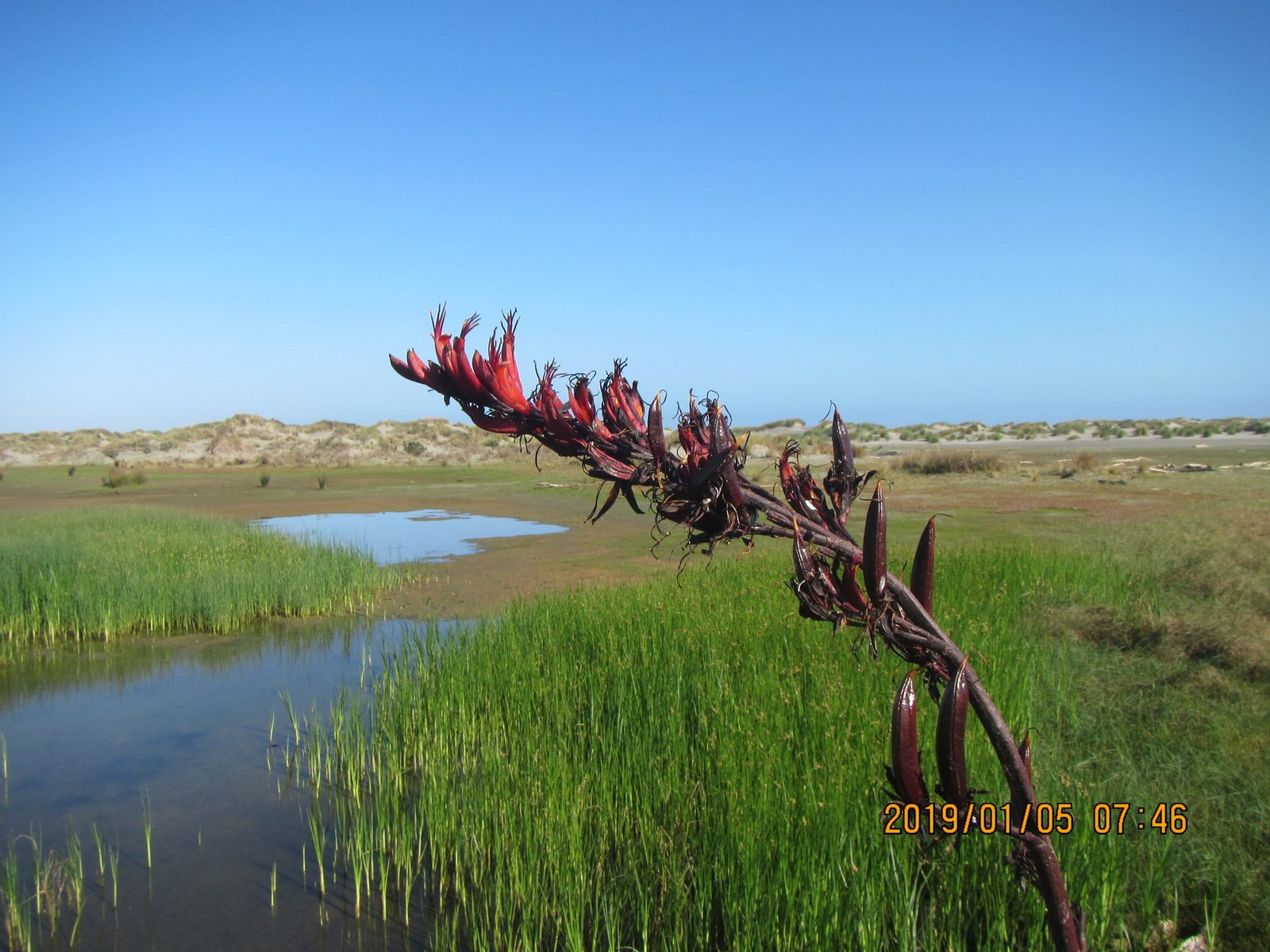
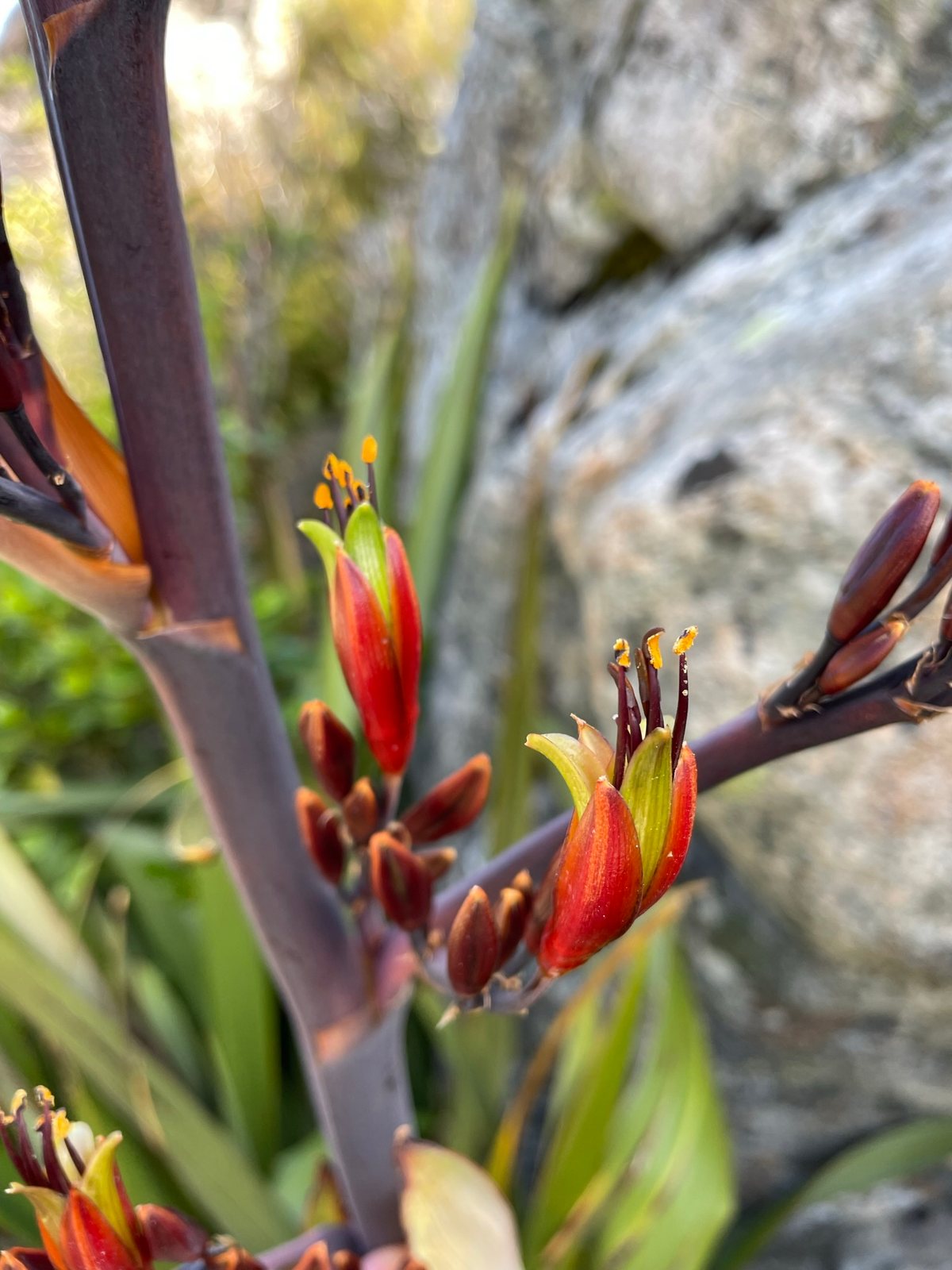
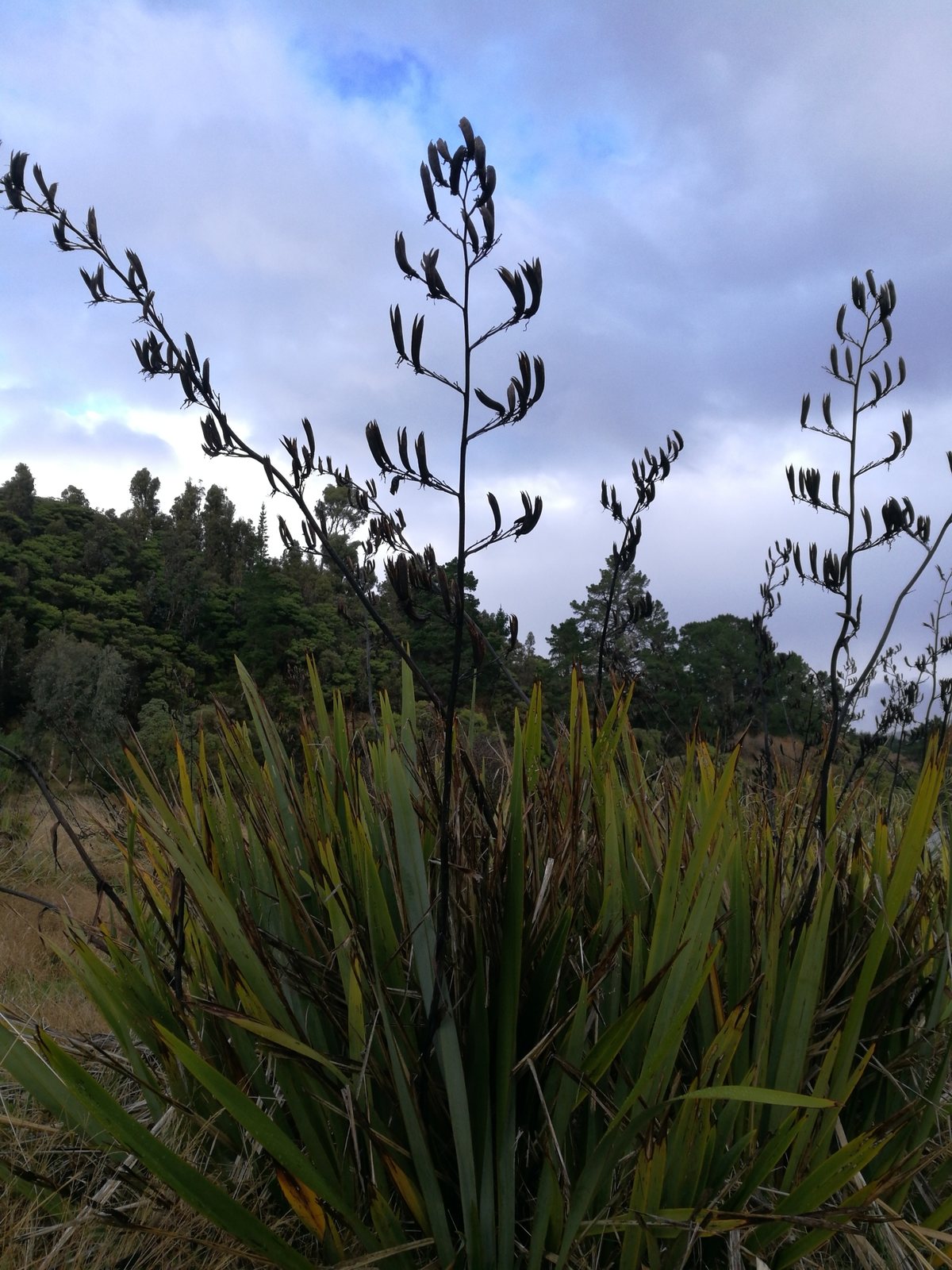
At a glance
- Sun
- Full sun to partial shade; foliage colour is usually strongest in sun. Shelter from cold, drying winds.
- Water
- Water regularly during the first growing season. Established plants tolerate short dry spells, but container plants need watering whenever the upper compost dries.
- Soil
- Well-drained soil, including sandy or loamy ground; avoid waterlogged clay. Use a free-draining potting mix in containers.
- Height
- 3-4 ft (0.9-1.2 m)
- Spread
- 3-4 ft (0.9-1.2 m)
- Foliage
- Evergreen. Long, leathery, sword-shaped leaves form an upright-to-arching fan. Leaves are deep purple-brown to near-black, sometimes showing reddish tones in sunlight.
- Growth
- Moderate; slower in cool climates or dry soil.
- Care needed
- Low
The year at a glance
- Deer resistant
- Drought tolerant
- Heat tolerant
- Low allergen
| J | F | M | A | M | J | J | A | S | O | N | D | |
|---|---|---|---|---|---|---|---|---|---|---|---|---|
| Plant |
Northern hemisphere months. In Australia, shift them by six.
- Difficulty
- Moderate
- Toughness
- Fairly tough
Will it suit your garden?
Pick your zone, country, light and whether you have pets.
Full sun is 6 or more hours of direct sun a day, part shade 3 to 6 hours, shade under 3.
How it grows
Planting day
1 ft (0.3 m)
After 1 year
1.6 ft (0.49 m)
After 2 years
2.2 ft (0.68 m)
After 3 years
2.9 ft (0.88 m)
After 5 years
3 ft (1.1 m)
full size
About 4 years to full size.
From a typical nursery size, at an average rate for this kind of plant. A rule of thumb, not a forecast.
Good to know
- Cats and dogs
- Safe
- Growth rate
- Slow
Care
Jobs through the year
- WaterApr–May, Sep–Oct, every 14 days
- Water established plants when soil is dry; first-year plants and containers need more frequent checks.
- WaterJun–Aug, every 10 days
- Deep-water established plants during dry spells, allowing the surface to dry slightly between waterings.
- FeedApr–May
- Give one light spring application of balanced fertilizer; avoid heavy feeding.
- MulchMay
- Apply a light mulch around the clump, keeping the crown clear.
- PruneApr–May
- Cut dead or badly damaged leaves individually at the base; never shear the whole clump.
- DivideApr–May
- Divide crowded clumps after severe frosts, retaining several healthy fans and roots per division.
- ProtectJan–Mar, Oct–Dec
- Not reliably hardy in zones 6–7; grow in a movable container and overwinter in bright, frost-free shelter.
- Water deeply while establishing, allowing the soil surface to dry slightly between waterings.
- Apply a light dressing of balanced fertiliser in spring; avoid heavy feeding.
- Keep mulch clear of the crown to discourage rot.
- Move containers into a bright, frost-free place where winters fall below its hardiness range.
- Divide crowded clumps in spring, keeping several healthy fans and roots on each division.
Pruning. In spring, cut dead or badly damaged leaves individually at the base, taking care not to damage new shoots. Remove spent flower stalks at ground level; do not shear across the whole clump.
Through the year
- Spring
- Remove winter-damaged leaves and give a light application of balanced fertiliser.
- Spring
- Plant or divide once severe frosts have passed and the soil is warming.
- Summer
- Check containers frequently and water thoroughly when the upper compost dries.
- Autumn
- Check drainage and move tender container specimens under cover before hard frosts.
- Winter
- Keep sheltered container plants just moist and remove snow loads gently from the leaves.
In the garden
- Use as a dark focal point in a large container beside an entrance or on a sheltered terrace.
- Contrast its broad, dark leaves with fine-textured ornamental grasses.
- Set against silver foliage or pale gravel to make its colour and outline stand out.
- Repeat small groups through a coastal or architectural border for year-round structure.
Garden styles it suits: Architectural minimal, Contemporary minimal, Coastal, Dry gravel garden, Modern courtyard and Winter interest.
Plant it with: Lavender, Santolina, Blue fescue, Japanese forest grass, Agapanthus and Wormwood.
Wildlife: Mature plants may occasionally produce tall flower stalks with nectar-rich flowers that attract visiting birds and insects. Flowering is irregular, so do not rely on it as a main nectar source.
Problems to watch for
- Crown or root rot in wet soil: improve drainage, keep mulch away from the crown and avoid standing pots in water.
- Frost damage: remove dead leaves in spring and protect the crown or overwinter containers under cover.
- Mealybugs hidden between leaf bases: inspect closely, remove small infestations by hand and use a labelled treatment if needed.
- Brown leaf tips from drought or wind exposure: water consistently during dry spells and provide shelter from drying winds.
Safety
Not known to be toxic to cats, dogs, horses or people. The tough, fibrous leaves are not food and can cause choking or digestive trouble if swallowed.
Easily confused with
Purple New Zealand flax (Phormium tenax 'Purpureum')
Usually forms a much taller, more upright clump with broader, bronze-purple leaves rather than the smaller, darker, arching habit of 'Platt's Black'.
Purple cabbage palm (Cordyline australis 'Red Star')
Its leaves form rosettes that eventually sit on a woody trunk; phormium keeps producing leaf fans from a ground-level clump.
Black mondo grass (Ophiopogon planiscapus 'Nigrescens')
A much shorter plant with narrow, grasslike leaves, usually under 1 ft (0.3 m) tall, rather than broad, upright leaf fans.
The name
The common name New Zealand flax refers to its New Zealand origin and the strong leaf fibres traditionally used for weaving and cordage, not to a relationship with true flax.
Propagation. Divide established clumps in spring using a sharp spade or knife, retaining roots and several leaf fans on each piece. Seed-grown plants will not reliably retain this cultivar's dark foliage or habit.
Checked against open data
- Accepted botanical name
- Phormium
Sources: GBIF (CC BY 4.0). The care and design notes are LandscapeGPT's own.
See it in your own yard.
Upload a photo of your yard and see it redesigned with plants that suit your climate, each checked against your zone.