New Zealand spinach
Tetragonia tetragonioides. Family Aizoaceae. Annual.
Also called Warrigal greens, New Zealand ice plant, Sea spinach.
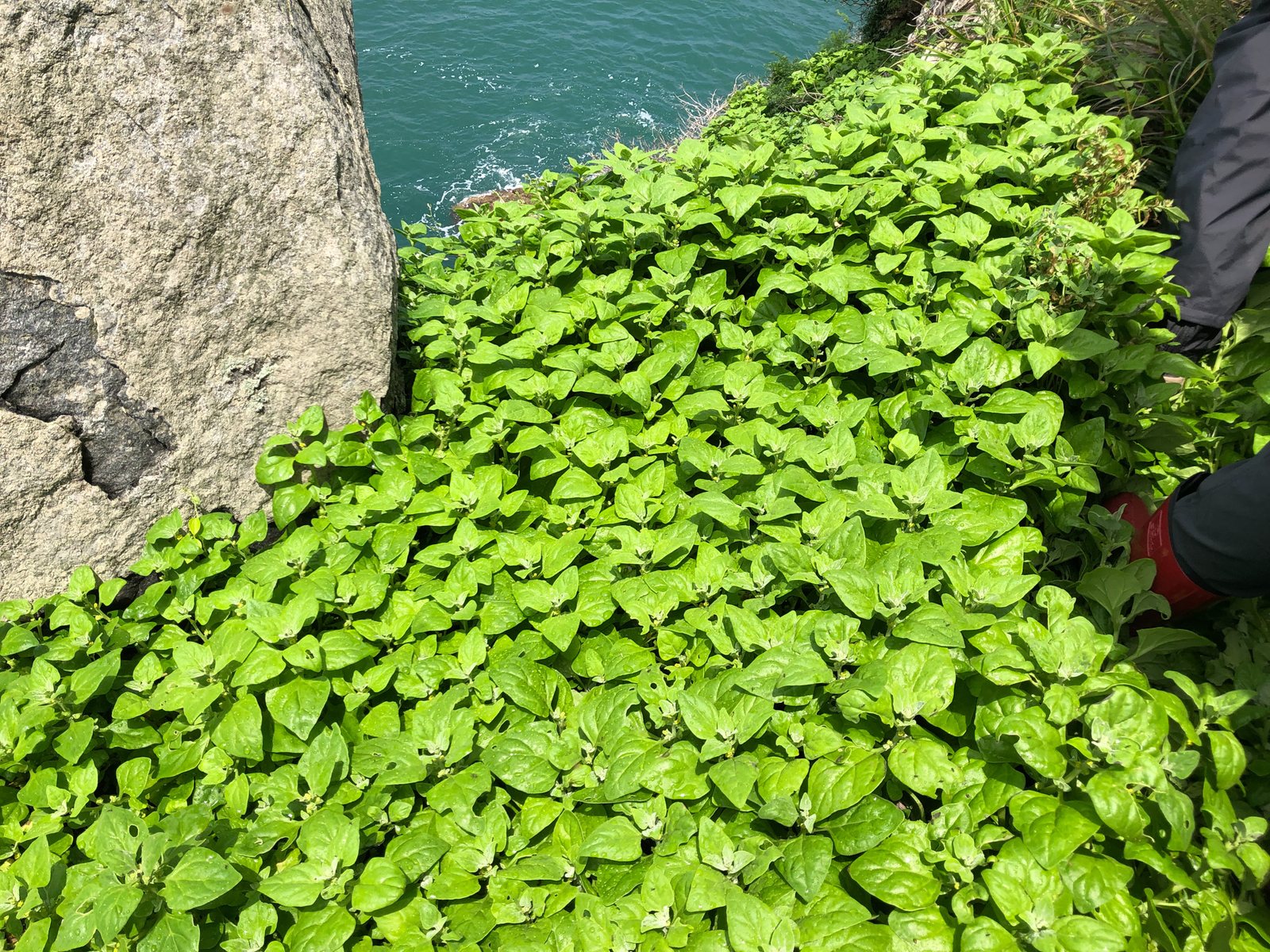
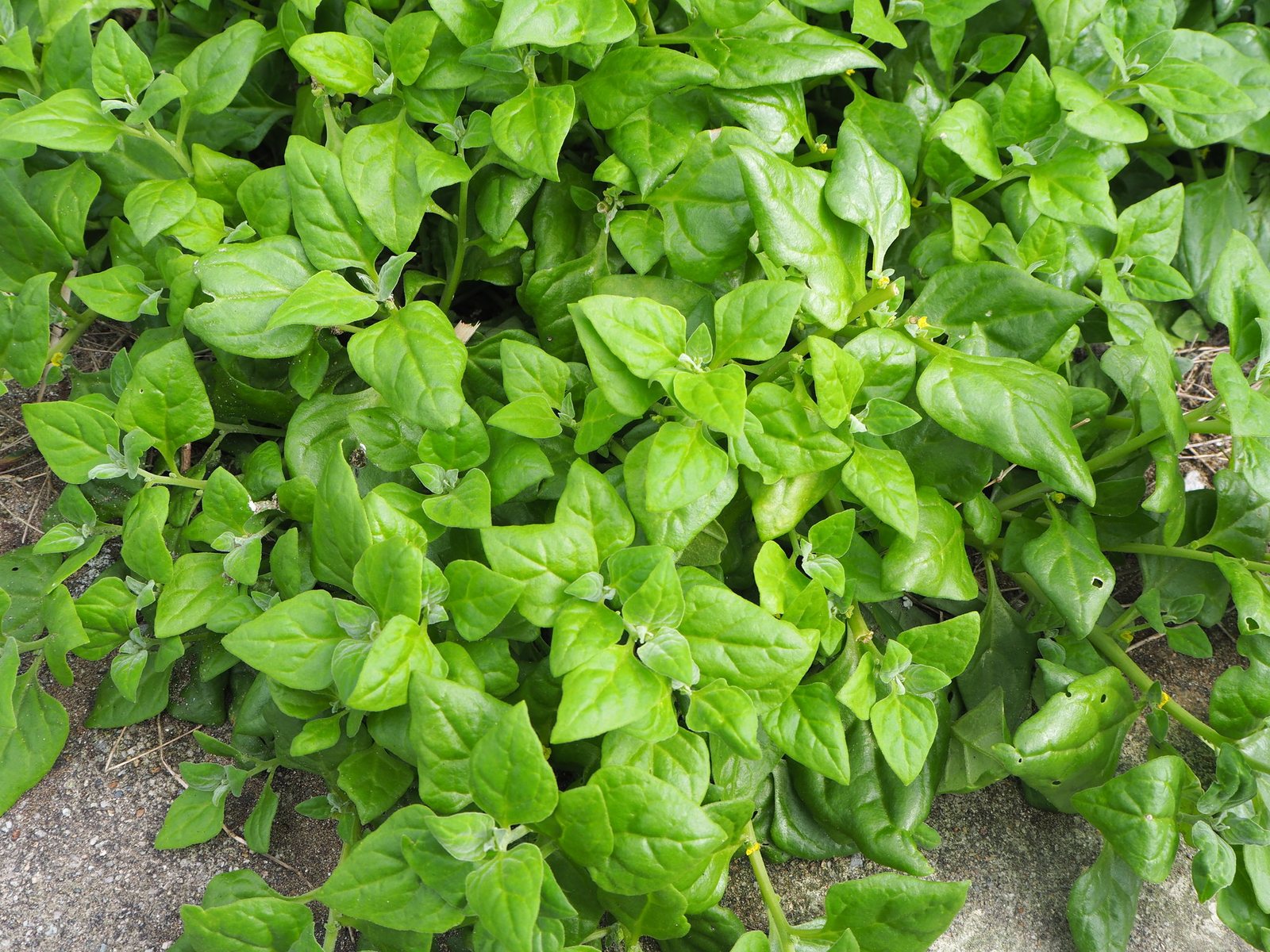
New Zealand spinach is a frost-tender, trailing perennial usually grown as an annual for its edible leaves and shoot tips. It provides cooking greens through warm weather, when ordinary spinach often bolts, and needs room to spread.
At a glance
- Sun
- Full sun; light afternoon shade is helpful in very hot climates.
- Water
- Water regularly for tender leaves, allowing the soil surface to dry slightly between waterings. Established plants tolerate short dry spells but become less productive.
- Soil
- Well-drained soil enriched with compost; tolerates sandy soils and some coastal salt exposure, but not prolonged waterlogging.
- Height
- 1-2 ft (0.3-0.6 m)
- Spread
- 2-4 ft (0.6-1.2 m)
- Foliage
- Fleshy, triangular to diamond-shaped green leaves with a slightly crystalline-looking surface, carried on branching, spreading stems.
- Growth
- Fast once established in warm soil; slow in cool weather.
- Care needed
- Low
The year at a glance
- Drought tolerant
- Heat tolerant
- Low allergen
- Edible
| J | F | M | A | M | J | J | A | S | O | N | D | |
|---|---|---|---|---|---|---|---|---|---|---|---|---|
| Fruit | ||||||||||||
| Plant |
Northern hemisphere months. In Australia, shift them by six.
- Difficulty
- Easy
- Toughness
- Fairly tough
Will it suit your garden?
Pick your zone, country, light and whether you have pets.
Full sun is 6 or more hours of direct sun a day, part shade 3 to 6 hours, shade under 3.
How it grows
Planting day
0.5 ft (0.15 m)
After 1 year
1.5 ft (0.45 m)
full size
Full size in one season.
From a typical nursery size, at an average rate for this kind of plant. A rule of thumb, not a forecast.
Good to know
- Cats and dogs
- Toxic
- Invasive in
- the US
- In the garden
- Spreads vigorously: plan to contain it.
- Growth rate
- Moderate
Care
Jobs through the year
- WaterMay–Jun, Sep, every 7 days
- For rooted plants in the ground, water during dry weather; young transplants need closer attention.
- WaterJul–Aug, every 5 days
- Water established plants for tender leaves, letting the surface dry slightly and adjusting for rain.
- MulchJun
- Mulch warm soil to retain moisture and keep trailing shoots clean.
- PruneJun
- Pinch established growing tips to encourage branching.
- PruneAug–Oct, every 14 days
- Remove developing seed units if self-seeding or escape is a concern.
- HarvestJul–Oct, every 7 days
- Pick young leaves and tips before frost; blanch and discard the water to reduce soluble oxalates.
- Plant out after frost danger has passed and the soil has warmed; space plants about 2 ft (0.6 m) apart.
- Water at soil level during dry weather to keep new growth tender.
- Work compost into the bed before planting; feed lightly if growth becomes pale or weak.
- Mulch after the soil warms to conserve moisture and keep trailing shoots clean.
- Remove unwanted seedlings and prevent seed formation where the plant could escape into coastal habitats.
Pruning. Pinch out growing tips once plants are established to encourage branching. During the growing season, shorten sprawling stems just above a leaf joint, leaving plenty of leafy growth for regrowth.
Harvest
Pick tender shoot tips and young leaves once plants are well branched, usually about 6-8 weeks after planting out in warm conditions. Harvest little and often, leaving the lower leaves and stems to regrow. Blanch the greens in boiling water and discard the water before further cooking to reduce soluble oxalates.
Through the year
- Early spring
- In short-summer areas, soak the hard seed units in warm water for 12-24 hours, then sow indoors in warmth.
- Late spring
- Harden off seedlings and plant outside after the last frost, once soil is consistently warm.
- Early summer
- Mulch, water during dry spells and pinch growing tips to encourage branching.
- Summer
- Harvest young leaves and shoot tips regularly; check sheltered growth for slugs and snails.
- Early autumn
- Remove developing seed units if self-seeding is unwanted, or save fully mature brown ones for sowing.
- Late autumn
- In frosty climates, clear plants after frost kills the shoots.
In the garden
- Plant along the sunny edge of a vegetable bed, allowing stems to trail into a clear path margin.
- Grow in a large container or raised bed where the leafy stems can spill over the sides.
- Use as a seasonal edible groundcover beneath widely spaced, upright vegetables without crowding their stems.
- Include in a coastal kitchen garden for summer greens where ordinary spinach struggles with heat.
Garden styles it suits: Potager (kitchen garden), Edible landscape, Homestead, Coastal, Cottage garden and Australian native.
Plant it with: Tomatoes, Peppers, Eggplants, Basil, Spring onions and Marigolds.
Wildlife: The small yellow flowers may attract small insects, but this is primarily a food crop rather than a major nectar plant. Dense growth provides shelter for ground-dwelling invertebrates.
Problems to watch for
- Slow or uneven germination: soak seed units before sowing, keep the compost warm and evenly moist, and allow several weeks for emergence.
- Slugs and snails eating seedlings: check after dark, remove hiding places and use an appropriate labelled control if needed.
- Coarse leaves and weak regrowth during drought: water deeply and harvest younger shoots rather than old leaves.
- Rotting roots or stem bases in wet soil: improve drainage and avoid frequent watering while the soil remains saturated.
Safety
The edible leaves and stems contain oxalates; large quantities, especially raw, can be harmful to people and may be unsuitable for anyone advised to restrict dietary oxalates. Blanching and discarding the water reduces soluble oxalates but does not remove them completely. Reliable species-specific toxicity information for cats, dogs and horses is limited; do not assume it is safe forage, and prevent substantial consumption.
Where it spreads. It can self-seed freely in mild coastal climates and is listed as invasive in California, where it can spread into coastal dunes and bluffs. Keep it contained near natural coastal vegetation and check local guidance before planting.
Easily confused with
Spinach (Spinacia oleracea)
Ordinary spinach forms an upright rosette of thinner leaves and prefers cool weather; New Zealand spinach has fleshy triangular leaves on spreading, branching stems.
Warrigal cabbage (Tetragonia implexicoma)
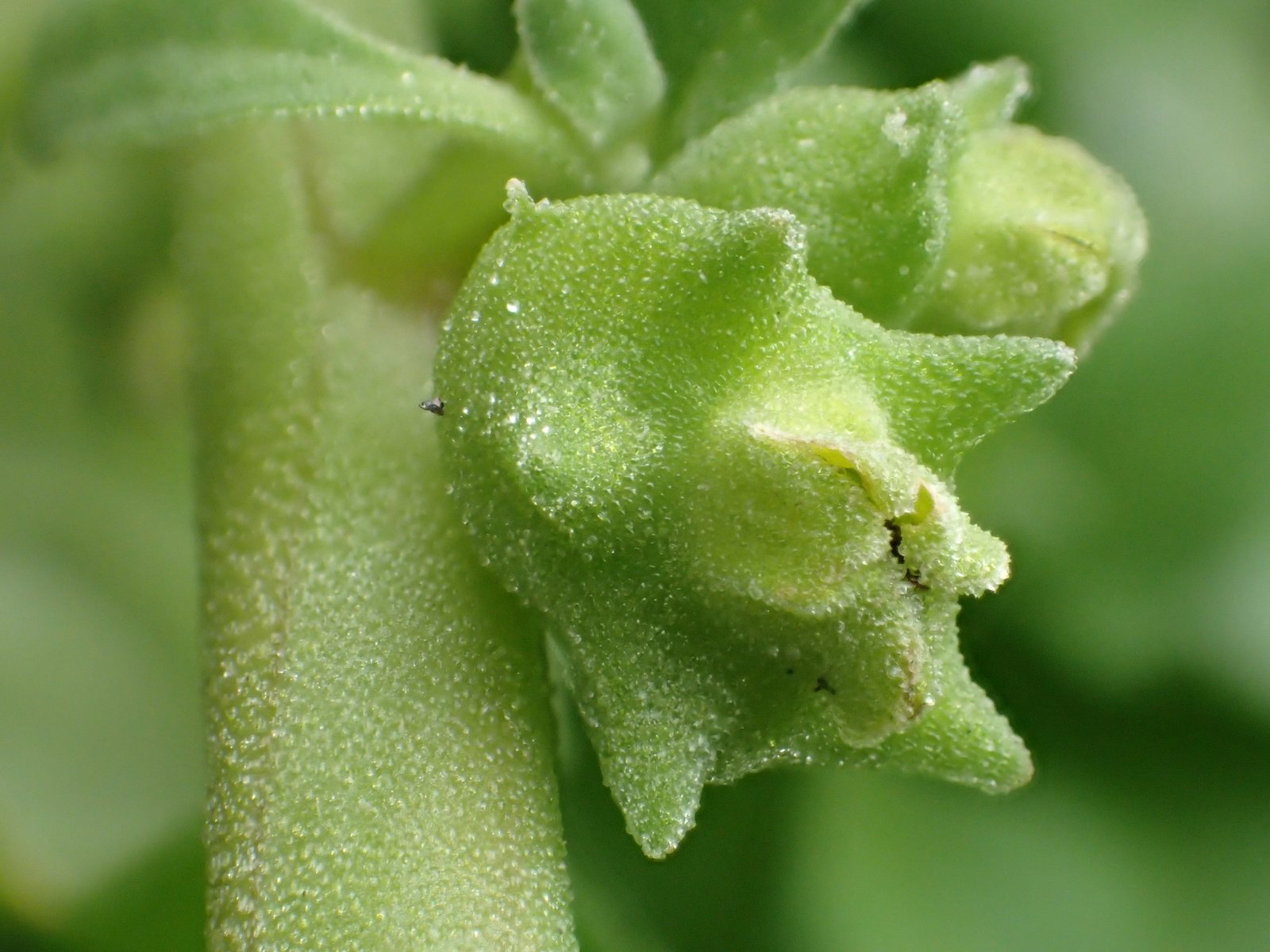
This related coastal plant has a scrambling, often woody habit and produces fleshy red or orange fruits; New Zealand spinach produces dry, hard, horned fruit units.
The name
Tetragonia refers to the four-angled fruit, while New Zealand spinach names its use as a spinach substitute and its association with New Zealand.
Propagation. Grow from seed, usually sold as hard, horned fruit units that can contain several seeds. Soak for 12-24 hours before sowing in warm conditions; germination can be slow and uneven. Thin clustered seedlings and transplant carefully while young.
Checked against open data
- Accepted botanical name
- Tetragonia tetragonioides
- In the US and Canada
- Introduced in Hawaii, the lower 48 states, Pacific Basin and Puerto Rico.
- Measured
- Average height 24 cm.
Sources: GBIF (CC BY 4.0), USDA PLANTS and Trefle (CC BY 4.0). The care and design notes are LandscapeGPT's own.
See it in your own yard.
Upload a photo of your yard and see it redesigned with plants that suit your climate, each checked against your zone.