Nikko deutzia
Deutzia gracilis 'Nikko'. Family Hydrangeaceae. Shrub.
Also called Dwarf slender deutzia, Nikko slender deutzia.
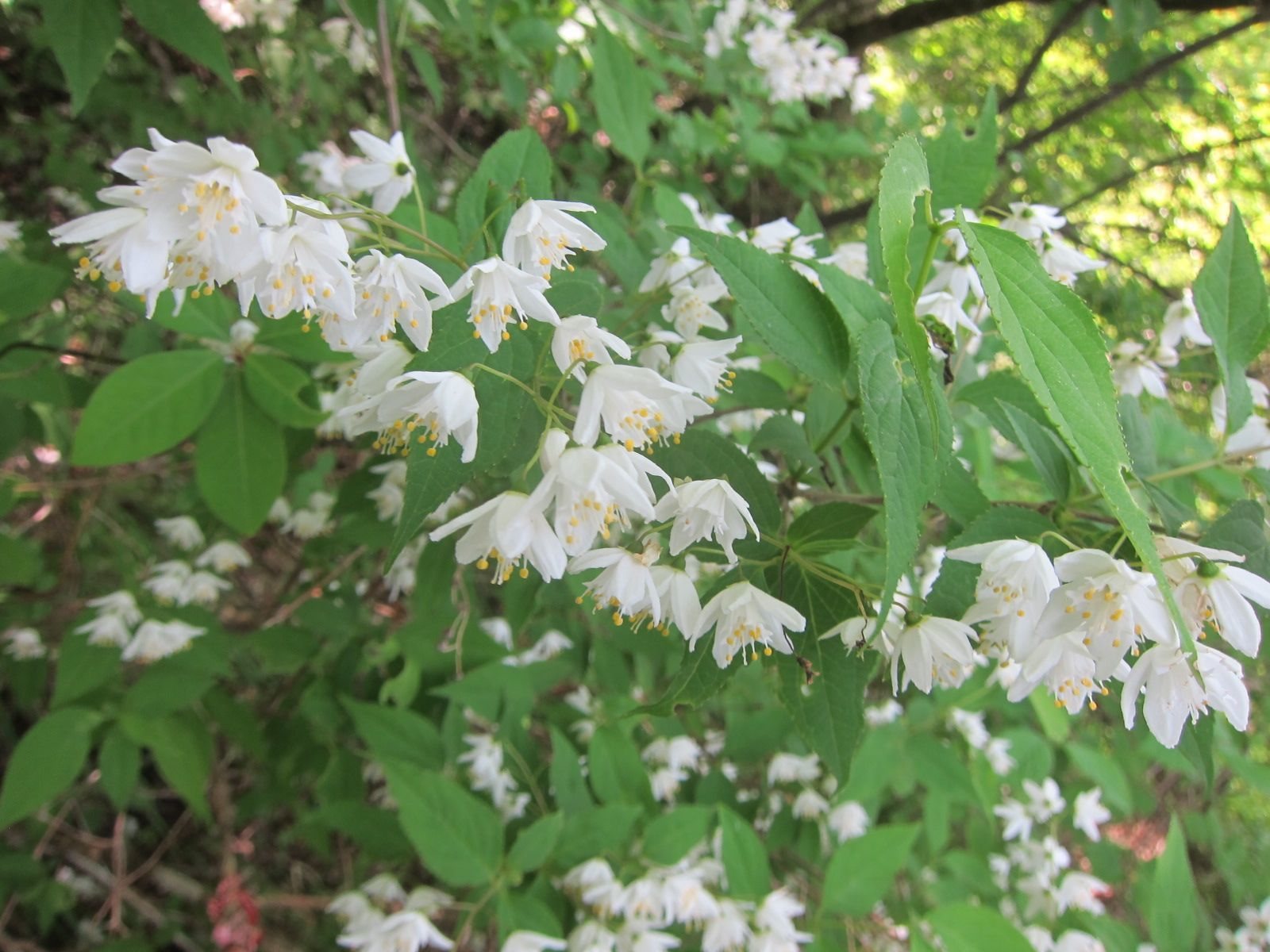
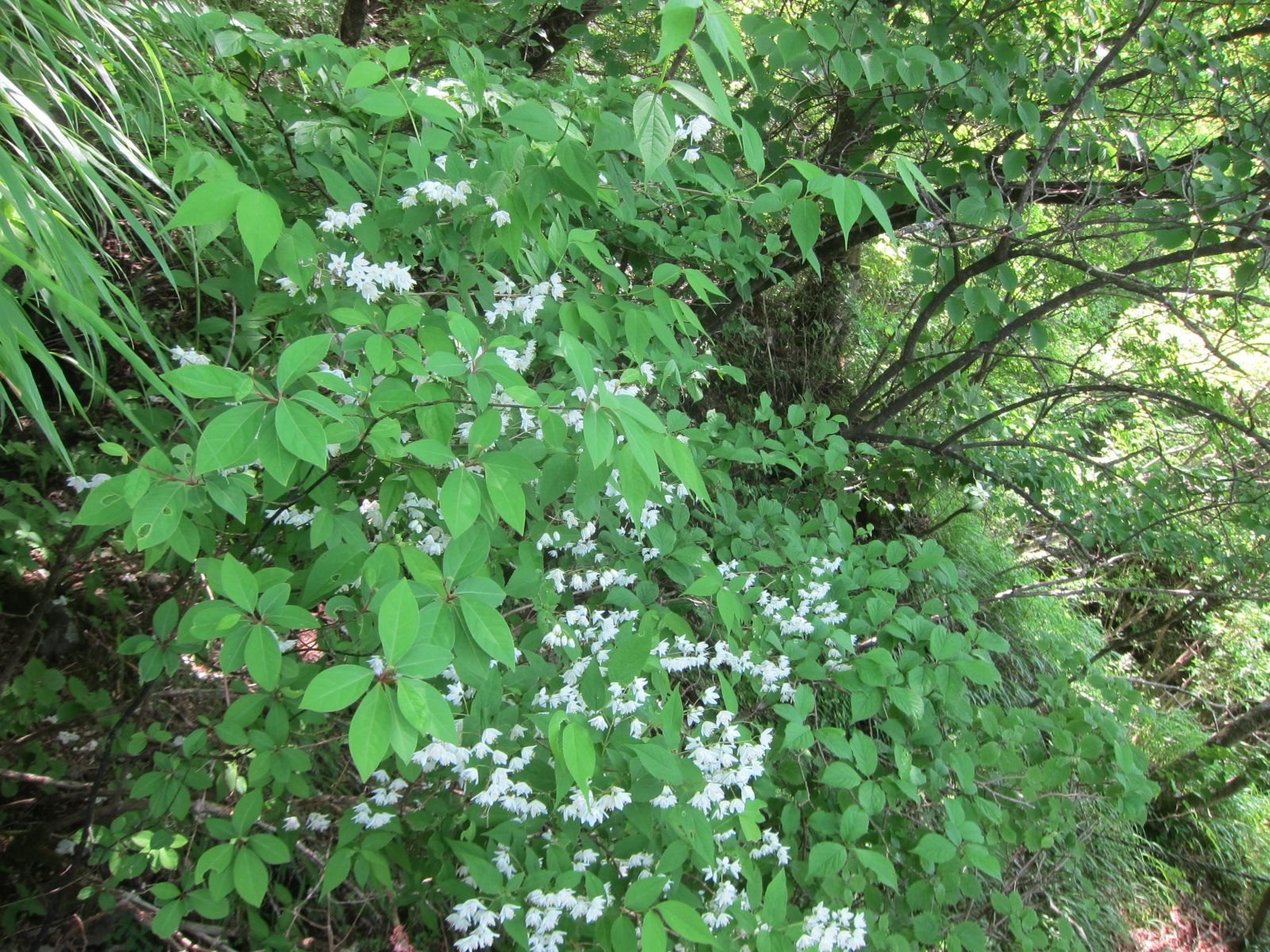
Nikko deutzia is a low, spreading deciduous shrub covered with small white flowers in late spring. Grow it along paths, at the front of shrub borders or in groups on gentle slopes for its compact shape and seasonal flowers; its leaves can turn burgundy in autumn.
At a glance
- Sun
- Full sun to partial shade; flowering is heaviest in sun. Afternoon shade helps in hot climates.
- Water
- Keep the soil evenly moist while establishing. Once established, water during prolonged dry spells; avoid waterlogged ground.
- Soil
- Moist, well-drained soil enriched with organic matter; tolerates clay, loam and sandy soil provided drainage is adequate.
- Height
- 1-2 ft (0.3-0.6 m)
- Spread
- 2-5 ft (0.6-1.5 m)
- Flowers
- Clusters of small, white, five-petalled flowers in late spring to early summer.
- Foliage
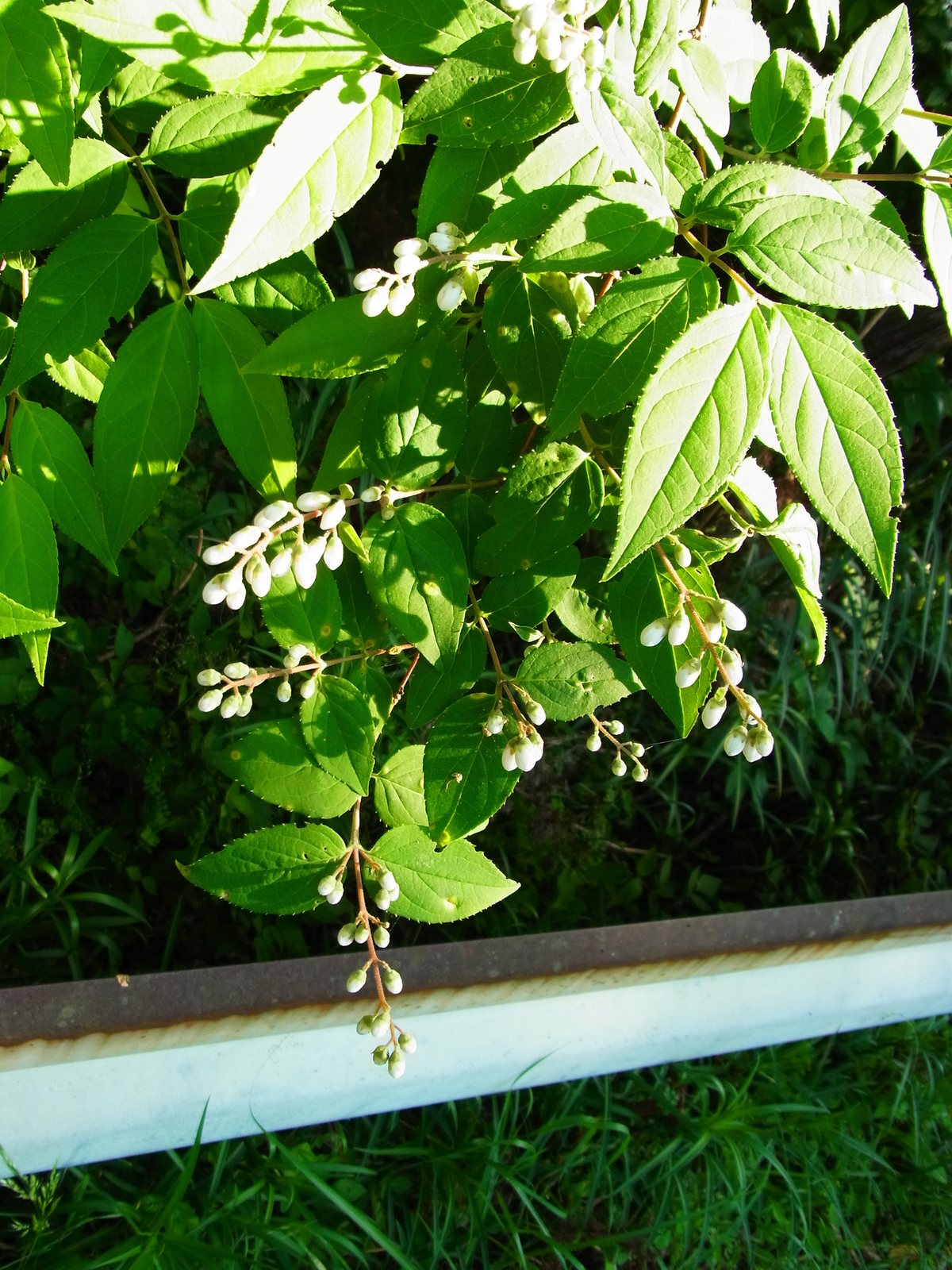
- Small, opposite, narrowly oval green leaves with toothed edges; autumn colour may be burgundy to purple, but varies with conditions.
- Growth
- Slow to moderate
- Care needed
- Low
The year at a glance
- Pollinators
- Deer resistant
- Wildlife
- Low allergen
| J | F | M | A | M | J | J | A | S | O | N | D | |
|---|---|---|---|---|---|---|---|---|---|---|---|---|
| Flowers | ||||||||||||
| Plant |
Northern hemisphere months. In Australia, shift them by six.
- Difficulty
- Easy
- Toughness
- Very tough
Will it suit your garden?
Pick your zone, country, light and whether you have pets.
Full sun is 6 or more hours of direct sun a day, part shade 3 to 6 hours, shade under 3.
How it grows
Planting day
1.5 ft (0.45 m)
full size
About 7 years to full size.
From a typical nursery size, at an average rate for this kind of plant. A rule of thumb, not a forecast.
Good to know
- Cats and dogs
- Safe
- Growth rate
- Slow
Care
Jobs through the year
- WaterApr–May, Sep–Oct, every 14 days
- Water established shrubs only when soil is dry; check newly planted shrubs more often.
- WaterJun–Aug, every 14 days
- Water established shrubs deeply during prolonged dry spells; keep young plants evenly moist.
- FeedMar–Apr
- Top-dress with compost; use balanced fertiliser only if growth is weak and soil is poor.
- PruneJun
- Immediately after flowering, remove damaged stems and thin a few old stems if needed.
- MulchApr
- Refresh organic mulch to 5–8 cm deep without covering stem bases.
- Water deeply during dry weather through the first growing season.
- Apply 2-3 in (5-8 cm) of organic mulch, keeping it clear of the stem bases.
- Top-dress with compost in spring; use a balanced fertiliser only if growth is weak and soil fertility is low.
- Allow room for the spreading branches rather than repeatedly clipping them back.
Pruning. Prune immediately after flowering because next year's flowers form on older wood. Remove dead or damaged stems and, when needed, cut a few of the oldest stems to the base; avoid routine winter pruning or shearing.
Through the year
- Spring
- Plant when the soil is workable, water thoroughly and mulch.
- Early spring
- Top-dress established plants with compost and refresh mulch.
- Late spring
- Enjoy the flowers and check young shoots for aphids.
- Early summer
- Prune just after flowering if thinning or size control is needed.
- Summer
- Water during prolonged dry spells, especially around recently planted shrubs.
- Autumn
- Plant in mild regions while the soil is still warm; remove fallen leaves if leaf spot has been troublesome.
In the garden
- Plant along paths or at the front of borders, where its low branches soften hard edges without blocking views.
- Mass on gentle slopes for a broad cover of foliage and a sheet of white spring flowers.
- Combine with spring bulbs and hardy geraniums for successive flowers around its spreading branches.
- Use beneath taller, open-canopied shrubs where it receives plenty of light rather than deep shade.
Garden styles it suits: Cottage garden, English country, Japanese, White garden, Low-maintenance and Small-space.
Plant it with: Daffodils, Hardy geraniums, Coral bells, Catmint, Spirea and Lady's mantle.
Wildlife: Flowers provide pollen and nectar for visiting insects, including bees. The low, twiggy growth offers some shelter for small garden animals.
Problems to watch for
- Few flowers: deep shade or pruning in winter can remove the display; give it more light and prune only just after flowering.
- Aphids on soft shoots: dislodge small colonies with water and encourage ladybirds and other predators.
- Leaf spots: remove affected fallen leaves, improve airflow and water the soil rather than the foliage.
- Wilting or dieback in wet soil: check drainage and move the shrub to a better-drained position if the root zone stays saturated.
Safety
Not known to be toxic to people, cats, dogs or horses; no part is recognised as a significant poisoning hazard. It is ornamental, not edible, and detailed animal-toxicity information is limited.
Easily confused with
Mock orange (Philadelphus coronarius)
Usually much taller, with larger, strongly fragrant white flowers that normally have four petals; Nikko has small, five-petalled flowers.
Fuzzy deutzia (Deutzia scabra)
Forms a much taller, upright shrub with larger, noticeably rough leaves; Nikko stays low and spreading with smaller leaves.
Weigela (Weigela florida)
Has tubular or trumpet-shaped flowers, usually pink or red, rather than Nikko's small, open, star-shaped white flowers.
The name
Deutzia honours Johann van der Deutz, a Dutch patron of botanical exploration, and gracilis means slender or graceful.
Propagation. Take softwood cuttings in late spring or early summer, or layer a low branch into the soil. Propagate vegetatively to retain the characteristics of 'Nikko'.
Checked against open data
- Accepted botanical name
- Deutzia gracilis
- In the US and Canada
- Introduced in the lower 48 states.
- Native range
- Japan.
- Measured
- Soil pH 5 to 7. Average height 91 cm.
Sources: GBIF (CC BY 4.0), USDA PLANTS and Trefle (CC BY 4.0). The care and design notes are LandscapeGPT's own.
See it in your own yard.
Upload a photo of your yard and see it redesigned with plants that suit your climate, each checked against your zone.