Northern beech fern
Phegopteris connectilis. Family Thelypteridaceae. Fern.
Also called Long beech fern, Narrow beech fern.
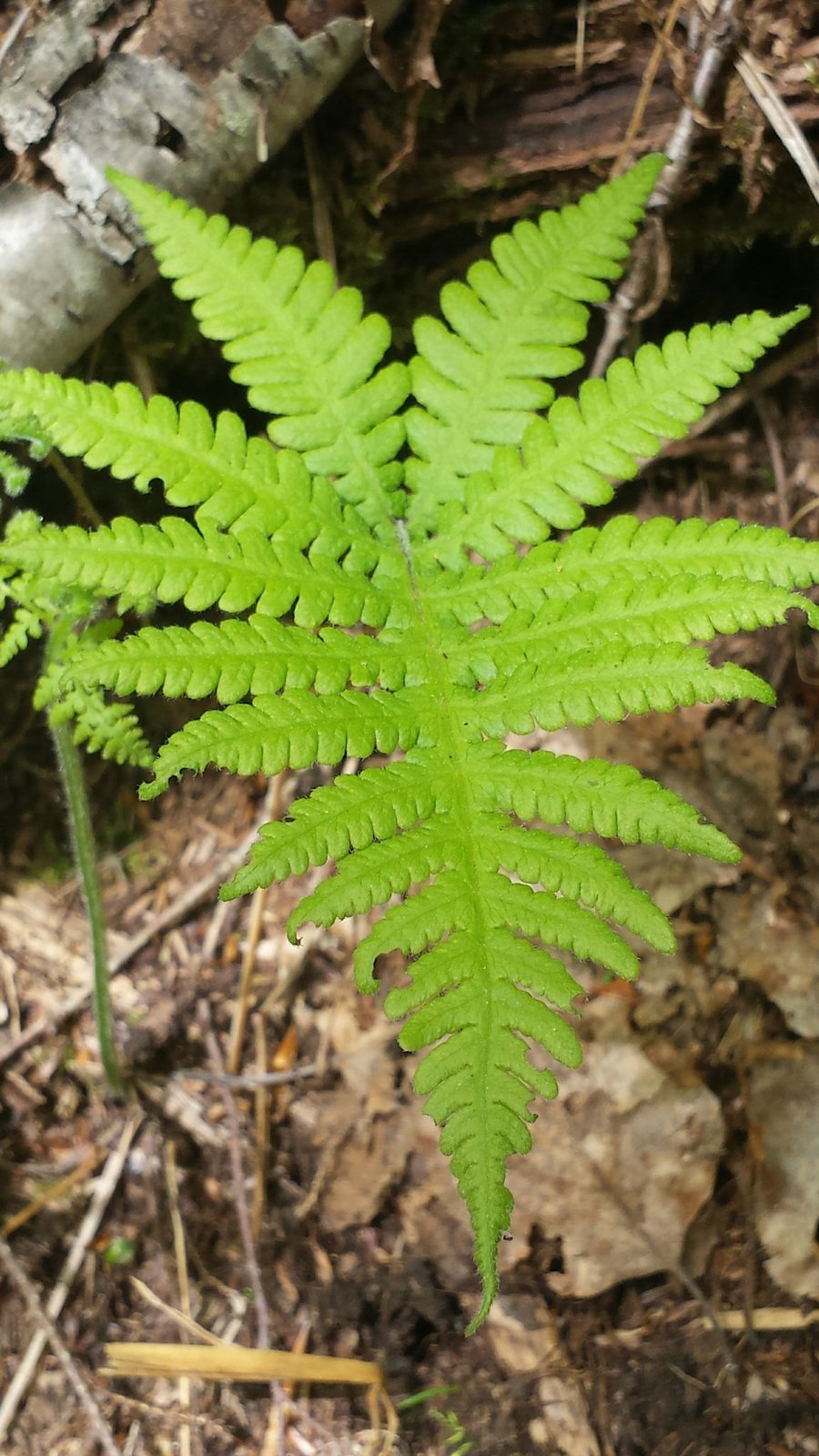
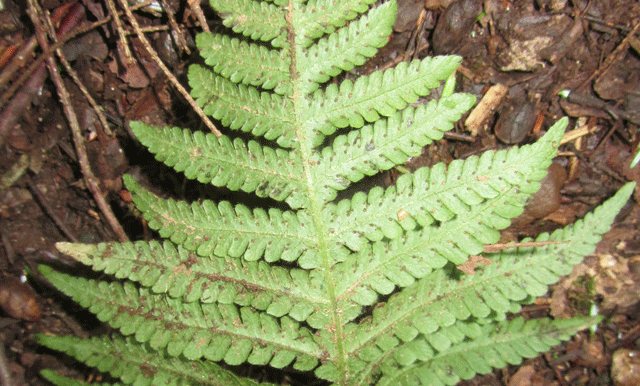
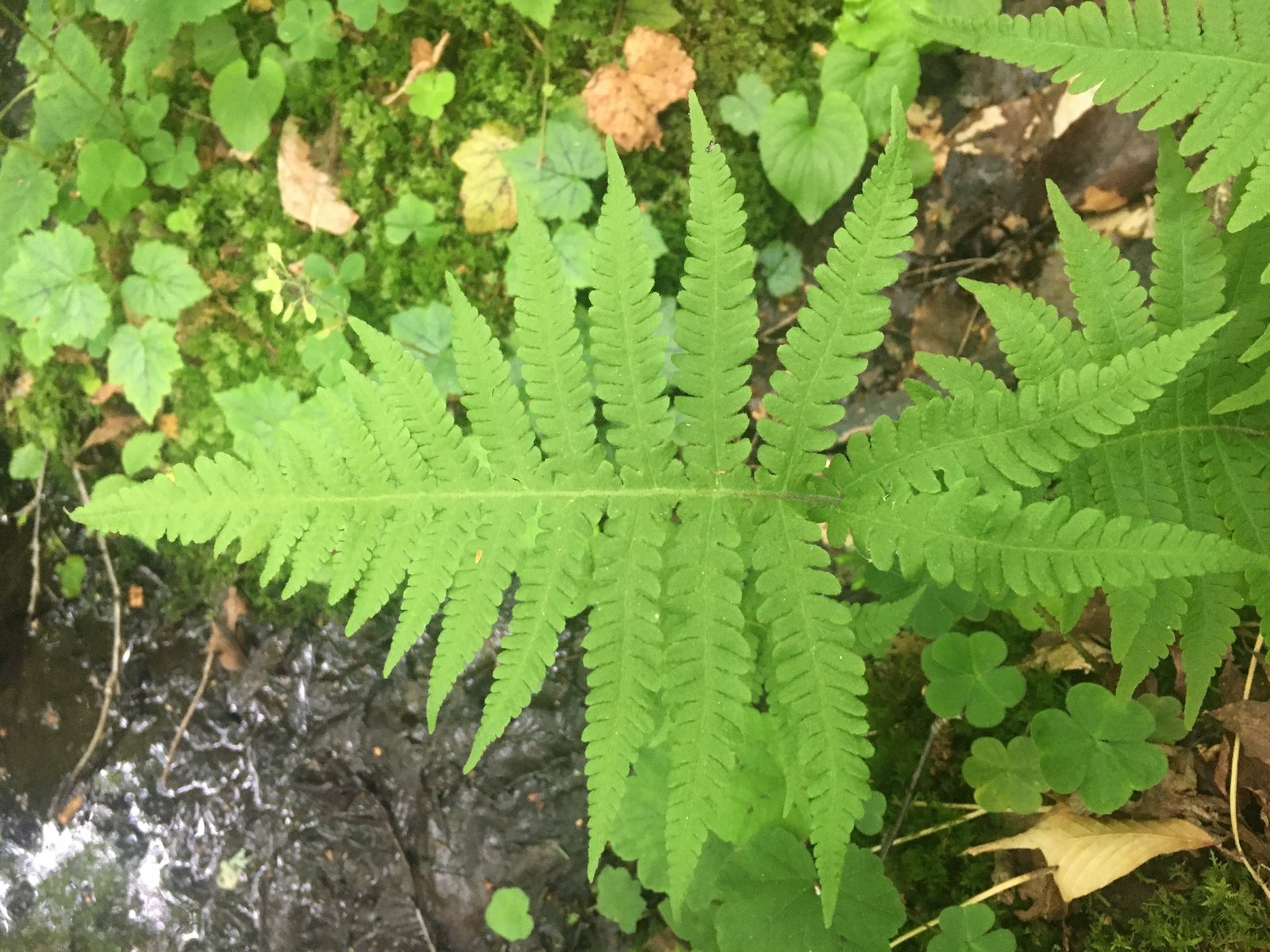
Northern beech fern is a deciduous woodland fern with soft, triangular fronds and a creeping underground stem. Gardeners grow it for its fresh green foliage and its ability to form loose colonies in cool, moist shade. It is best suited to cooler climates and struggles in hot, dry gardens.
At a glance
- Sun
- Partial to full shade; gentle morning sun is suitable where the soil stays moist.
- Water
- Keep consistently moist but not waterlogged; water during dry spells before the soil dries through.
- Soil
- Humus-rich, well-drained soil, preferably acidic to neutral; avoid dry, compacted ground.
- Height
- 1-2 ft (0.3-0.6 m)
- Spread
- 1-3 ft (0.3-0.9 m), eventually wider through creeping rhizomes
- Foliage
- Soft green, triangular, finely divided fronds with a distinctive lowest pair of leaflets angled downward and backward; dies back for winter.
- Growth
- Moderate in cool, moist conditions
- Care needed
- Low
The year at a glance
- Deer resistant
- Cold hardy
- Wildlife
| J | F | M | A | M | J | J | A | S | O | N | D | |
|---|---|---|---|---|---|---|---|---|---|---|---|---|
| Plant |
Northern hemisphere months. In Australia, shift them by six.
- Difficulty
- Easy
- Toughness
- Fairly tough
Will it suit your garden?
Pick your zone, country, light and whether you have pets.
Full sun is 6 or more hours of direct sun a day, part shade 3 to 6 hours, shade under 3.
How it grows
Planting day
1 ft (0.3 m)
After 1 year
1.1 ft (0.35 m)
After 2 years
1.3 ft (0.4 m)
After 3 years
1.5 ft (0.45 m)
full size
About 3 years to full size.
From a typical nursery size, at an average rate for this kind of plant. A rule of thumb, not a forecast.
Good to know
- Cats and dogs
- Safe
- Native to
- the US, Canada and the UK
- In the garden
- Spreads vigorously: plan to contain it.
- Growth rate
- Moderate
Care
Jobs through the year
- WaterApr–May, Sep–Oct, every 7 days
- Water established colonies when rainfall is insufficient to keep soil moist; check new plants more often.
- WaterJun–Aug, every 4 days
- Water established colonies during dry weather before soil dries through; avoid waterlogging.
- MulchMar–Apr
- Add a thin layer of leaf mould or compost, keeping emerging fronds uncovered.
- PruneFeb–Mar
- Remove collapsed dead fronds before new growth; leave healthy green fronds intact.
- DivideMar–Apr
- Divide colonies in spring only when crowded or spreading into neighbouring plants.
- ProtectApr–May
- Check emerging fronds for slugs and snails and hand-pick pests when needed.
- Water deeply during dry weather to keep the root zone evenly moist.
- Apply a thin layer of leaf mould or well-rotted compost each spring.
- Keep mulch loose around emerging fronds rather than covering them.
- Avoid strong fertilisers; an annual organic mulch is usually sufficient.
- Divide spreading colonies in spring if they crowd neighbouring plants.
Pruning. Remove dead fronds in late winter or early spring before new growth emerges. Leave healthy green fronds intact, even if some older ones look untidy.
Through the year
- Late winter
- Cut away collapsed dead fronds before new shoots appear.
- Spring
- Plant or divide into moist, humus-rich soil and water thoroughly.
- Mid-spring
- Top-dress with leaf mould and check emerging fronds for slug damage.
- Summer
- Water during dry spells and watch for browning caused by heat or dry soil.
- Autumn
- Leave a light covering of fallen leaves around the plants to protect and enrich the soil.
In the garden
- Plant beneath deciduous trees where light reaches the ground in spring and shade deepens in summer.
- Use as a loose groundcover between larger woodland perennials in reliably moist soil.
- Pair with broad-leaved hostas for contrasting leaf shapes.
- Grow beside a shaded path or among mossy rocks where its delicate fronds can be seen closely.
Garden styles it suits: Woodland, Moss and fern garden, Japanese, Secret garden, Green on green and Pacific Northwest woodland.
Plant it with: Hostas, Foamflower, Solomon's seal, Lungwort, Trilliums and Lady fern.
Wildlife: Dense colonies provide damp shelter for small woodland animals and invertebrates. It produces spores rather than flowers, so offers no nectar or pollen.
Problems to watch for
- Slugs and snails may damage emerging fronds; check after dark, remove pests and use iron-phosphate bait according to the label if needed.
- Dry soil causes browned edges or early dieback; water deeply and maintain a leaf-mould mulch.
- Strong sun and hot winds scorch foliage; provide afternoon shade and a sheltered position.
- Stagnant, waterlogged soil can rot rhizomes; improve drainage or move the plant to moist but aerated ground.
Safety
Not known to be toxic to people, cats, dogs or horses, but species-specific safety information is limited. Do not treat the fronds or rhizomes as edible; prevent pets and livestock from eating substantial quantities.
Easily confused with
Broad beech fern (Phegopteris hexagonoptera)
Usually has broader fronds and leafy wings connecting the lowest pair of leaflets to the pair above. Northern beech fern has a distinctly separated lowest pair, often pointing backward.
Oak fern (Gymnocarpium dryopteris)
Its delicate frond divides into three conspicuous main sections. Northern beech fern has a single triangular blade with leaflets arranged along a central stalk.
The name
Phegopteris comes from Greek words meaning beech and fern, echoed in the common name beech fern.
Propagation. Divide established colonies in spring, taking pieces of rhizome with roots and a growing point. Replant promptly and keep moist. Spores can also be sown on a sterile, moist medium, but this is slower and requires careful humidity control.
Checked against open data
- Accepted botanical name
- Phegopteris connectilis
- In the US and Canada
- Native in Alaska, Canada, Greenland, the lower 48 states and St. Pierre and Miquelon.
- Native range
- Alaska, Albania, Alberta, Altay, Austria, Baltic States, Belarus, Belgium, British Columbia, Bulgaria, Buryatiya and Central European Rus.
- Measured
- Soil pH 5 to 5.5. Average height 20 cm.
Sources: GBIF (CC BY 4.0), USDA PLANTS and Trefle (CC BY 4.0). The care and design notes are LandscapeGPT's own.
See it in your own yard.
Upload a photo of your yard and see it redesigned with plants that suit your climate, each checked against your zone.