Norway spruce
Picea abies. Family Pinaceae. Tree.
Also called European spruce.
Norway spruce is a large evergreen conifer with a conical crown, dark green needles and hanging branchlets that become more pronounced with age. Gardeners grow it for year-round screening, shelter and a strong winter silhouette, but the species needs substantial space and a cool climate.
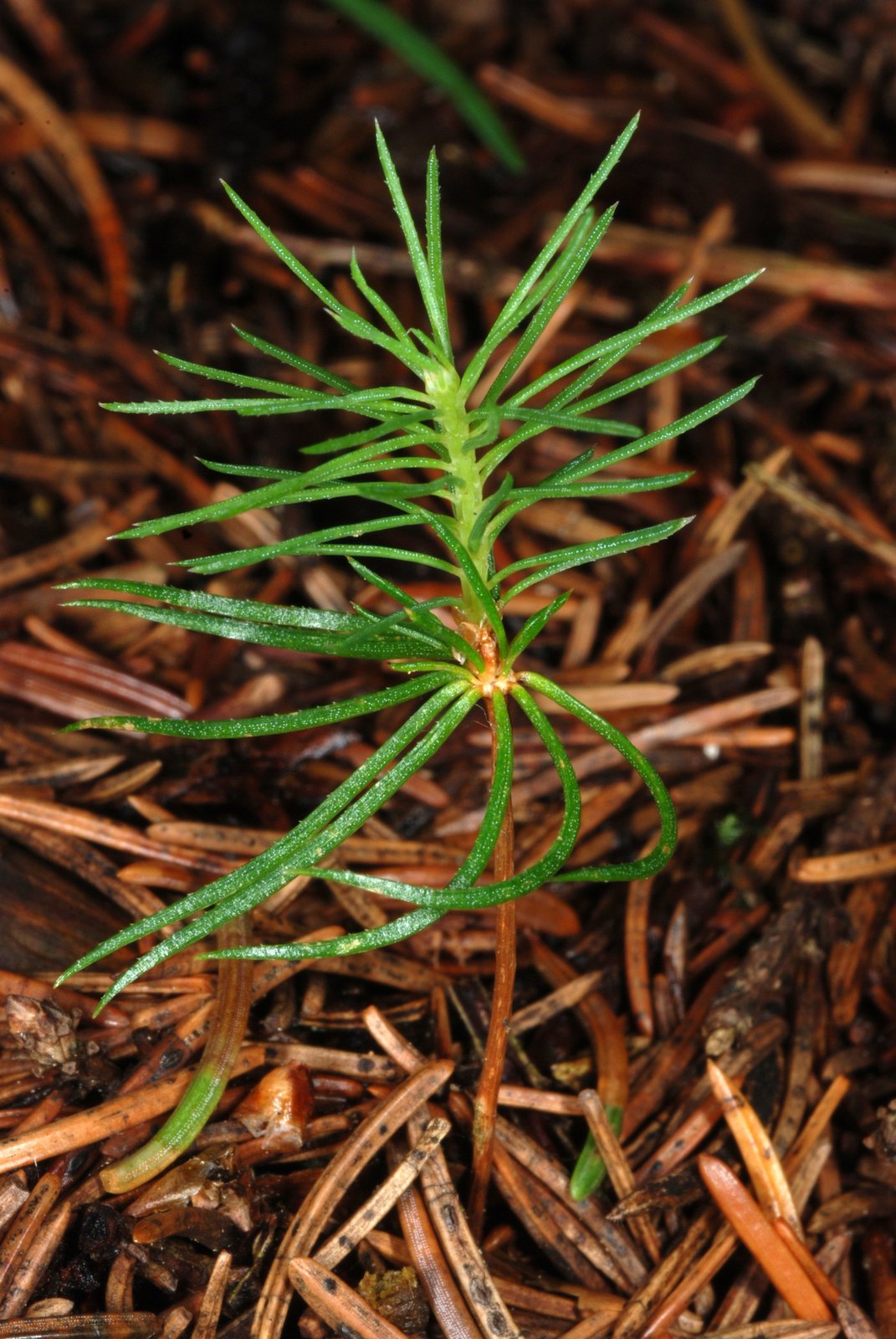
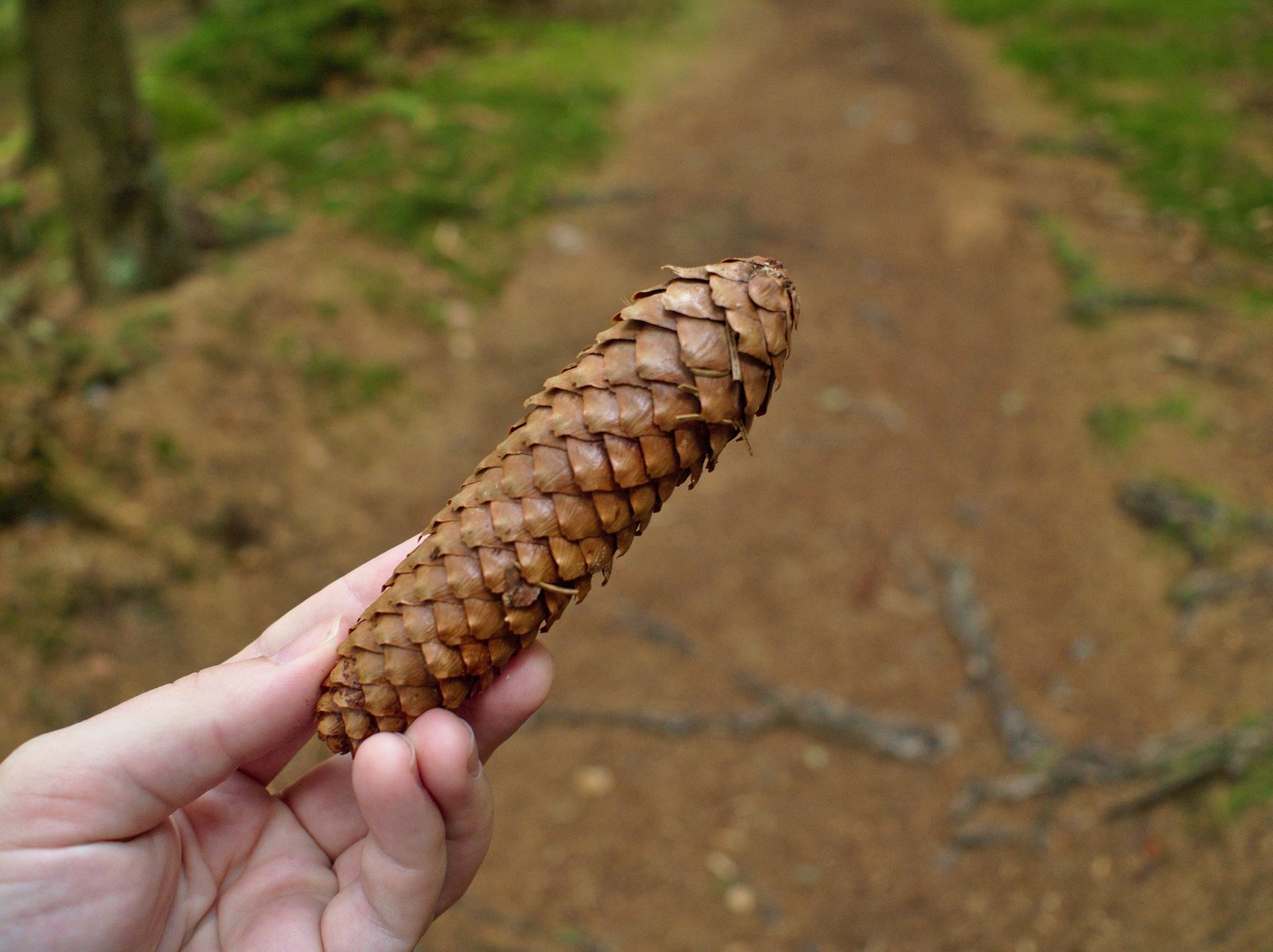
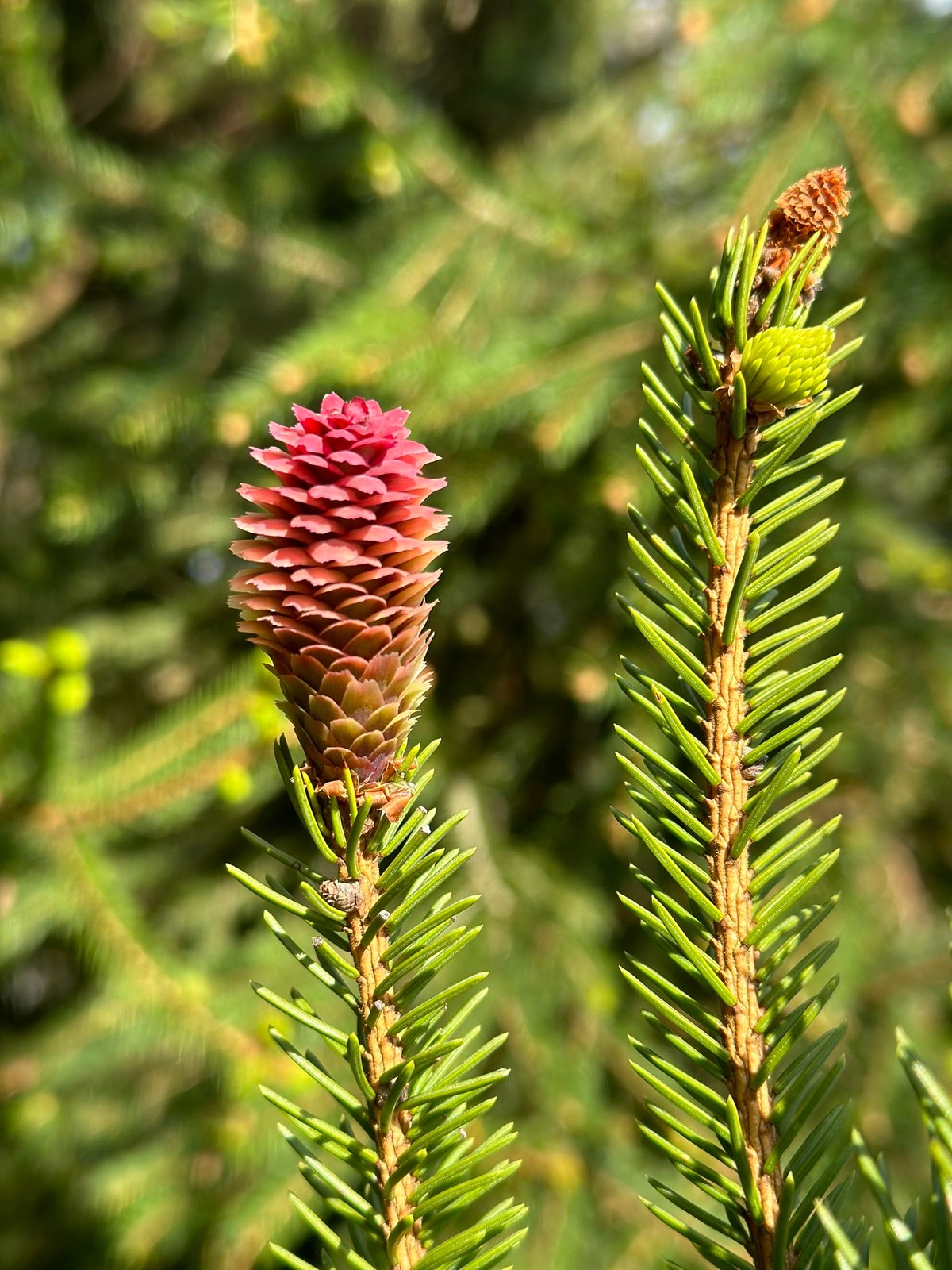
At a glance
- Sun
- Full sun; tolerates light shade, but develops a denser crown in sun.
- Water
- Moderate; keep young trees evenly moist. Established trees tolerate brief dry spells but struggle with prolonged drought and hot, dry summers.
- Soil
- Moist, well-drained, preferably acidic to neutral soil. Tolerates clay if drainage is adequate; avoid waterlogged ground and very dry, shallow soil.
- Height
- 60-100 ft (18-30 m), sometimes taller with age
- Spread
- 25-40 ft (7.5-12 m)
- Foliage
- Evergreen. Dark green, stiff, pointed needles arranged singly around the shoots; older branches carry distinctive drooping branchlets. Long, hanging cones mature brown.
- Growth
- Fast when young, often 1-3 ft (0.3-0.9 m) a year in suitable conditions.
- Care needed
- Low
The year at a glance
- Deer resistant
- Cold hardy
- Wildlife
| J | F | M | A | M | J | J | A | S | O | N | D | |
|---|---|---|---|---|---|---|---|---|---|---|---|---|
| Fruit | ||||||||||||
| Plant |
Northern hemisphere months. In Australia, shift them by six.
- Difficulty
- Easy
- Toughness
- Fairly tough
Will it suit your garden?
Pick your zone, country, light and whether you have pets.
Full sun is 6 or more hours of direct sun a day, part shade 3 to 6 hours, shade under 3.
How it grows
Planting day
9 ft (2.9 m)
After 1 year
15 ft (4.5 m)
After 2 years
20 ft (6.1 m)
After 3 years
25 ft (7.8 m)
After 5 years
36 ft (11 m)
About 13 years to full size.
From a typical nursery size, at an average rate for this kind of plant. A rule of thumb, not a forecast.
Good to know
- Cats and dogs
- Mildly toxic: may upset a stomach
- Growth rate
- Fast
Care
Jobs through the year
- WaterApr–May, Sep–Oct, every 14 days
- Deep-water established trees when soil is dry; water young trees more often for 2-3 seasons.
- WaterJun–Aug, every 7 days
- Water deeply during dry spells; avoid saturating the root zone.
- WaterJan–Mar, Nov–Dec, every 30 days
- Water only during dry, frost-free periods if soil is dry, especially for young trees.
- MulchMar, Oct
- Maintain 5-8 cm of organic mulch, leaving the trunk and root flare uncovered.
- PruneFeb–Mar
- Remove damaged branches or competing leaders only; never top or cut into bare old wood.
- ProtectMay–Aug, every 30 days
- Inspect yellowing or stippled needles for pests and reduce drought stress before treating.
- ProtectJan–Feb, Nov–Dec
- Keep de-icing salt away from roots and do not knock ice off frozen branches.
- Plant with the root flare at ground level, well away from buildings, overhead wires and other trees that need sun.
- Water deeply during dry spells for the first two or three growing seasons; do not leave the root ball standing in water.
- Spread 2-3 in (5-8 cm) of organic mulch over the root area, keeping it clear of the trunk.
- Avoid routine feeding; use a soil test if growth is poor or needles become unusually pale.
- Stake only if the root ball moves in wind, and remove supports once the tree is securely rooted.
Pruning. Prune dead, damaged or competing leaders in late winter or early spring, retaining one upright leader. Avoid topping or cutting into bare old wood, which usually will not produce replacement growth.
Through the year
- Late winter
- Inspect the leader and branches for storm damage; make only necessary corrective cuts.
- Spring
- Plant while soil is workable and moisture is reliable; water thoroughly and mulch.
- Late spring
- Check new shoots for aphids and examine older needles for yellowing or premature shedding.
- Summer
- Water young trees deeply during dry weather and check for spider mites if needles become finely speckled.
- Autumn
- Refresh mulch without burying the root flare, and water if the soil is dry before winter.
- Winter
- Keep de-icing salt away from the root zone and avoid knocking ice from frozen branches.
In the garden
- Use as a specimen on a large lawn, allowing room for the broad lower branches.
- Plant in a spacious shelterbelt or evergreen screen, allowing for mature spread rather than crowding trees together.
- Combine with birches or rowans for contrasting bark, foliage and seasonal colour.
- Use as a dark evergreen backdrop to woodland-edge shrubs and spring-flowering plants, outside its densest root competition.
Garden styles it suits: Scandinavian, Grand estate, Woodland, Winter interest, Mountain lodge and Traditional.
Plant it with: Silver birch, Rowan, Witch hazel, Rhododendron, Christmas fern and Hosta.
Wildlife: Dense branches provide shelter and nesting sites for birds. Seeds feed seed-eating birds and small mammals; native conifers may support a wider range of local specialist wildlife outside its European range.
Problems to watch for
- Spruce spider mites cause fine pale stippling and bronzing, especially in dry conditions. Confirm mites by tapping a branch over white paper; reduce drought stress and use a labelled treatment if damage is substantial.
- Needle-cast fungi can cause spotting and premature loss of older needles. Improve airflow, avoid wetting foliage and obtain a diagnosis before considering fungicides.
- Cytospora canker can kill branches, often with resin around affected areas. Reduce drought and root stress, and prune dead branches in dry weather; fungicides do not cure established cankers.
- Waterlogging and root decay cause weak growth, yellowing and possible instability. Correct drainage where practical and have a qualified arborist assess trees with decay or movement at the base.
Safety
Not known to be toxic to cats, dogs, horses or people. Swallowed needles can irritate the mouth and digestive tract, and resin may irritate sensitive skin; discourage pets and children from chewing needles, cones or bark.
Where it spreads. Naturalized in parts of the northeastern and north-central United States and eastern Canada, where seedlings can establish beyond planted trees. Spread and ecological impact vary locally; check regional guidance before planting beside natural woodland.
Easily confused with
White spruce (Picea glauca)
Usually has shorter, often blue-green needles and much smaller cones; it lacks the strongly hanging branchlets typical of mature Norway spruce.
Serbian spruce (Picea omorika)
Has a narrower crown and flattened needles with two conspicuous white bands beneath; Norway spruce needles are four-sided and green around the surface.
European silver fir (Abies alba)
Has flat needles with white bands beneath and upright cones that break apart on the tree. Norway spruce has pointed, four-sided needles and hanging cones.
The name
Norway spruce refers to its northern European occurrence; Picea is the Latin name for spruce, while abies is the Latin name for fir.
Propagation. Grow the species from seed, usually after a period of cold, moist stratification. Named cultivars are generally propagated by cuttings or grafting to preserve their characteristics.
Checked against open data
- Accepted botanical name
- Picea abies
- In the US and Canada
- Introduced in Canada and the lower 48 states.
- Native range
- Albania, Austria, Baltic States, Belarus, Bulgaria, Central European Rus, Czechoslovakia, East European Russia, Finland, France, Germany and Greece.
- Measured
- Soil pH 5 to 7. Average height 2250 cm.
Sources: GBIF (CC BY 4.0), USDA PLANTS and Trefle (CC BY 4.0). The care and design notes are LandscapeGPT's own.
See it in your own yard.
Upload a photo of your yard and see it redesigned with plants that suit your climate, each checked against your zone.