Oak fern
Gymnocarpium dryopteris. Family Cystopteridaceae. Fern.
Also called Common oak fern, Northern oak fern.
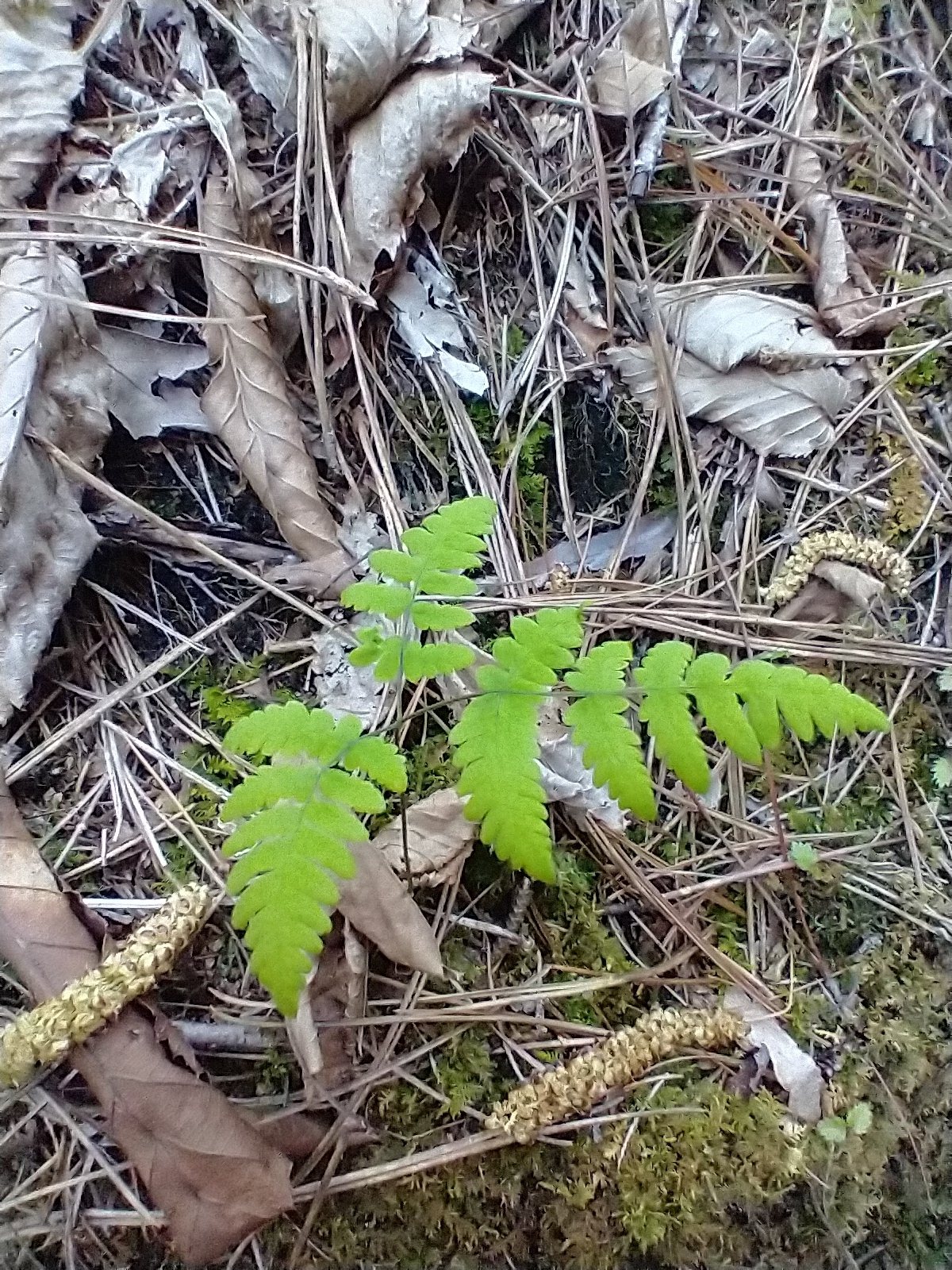
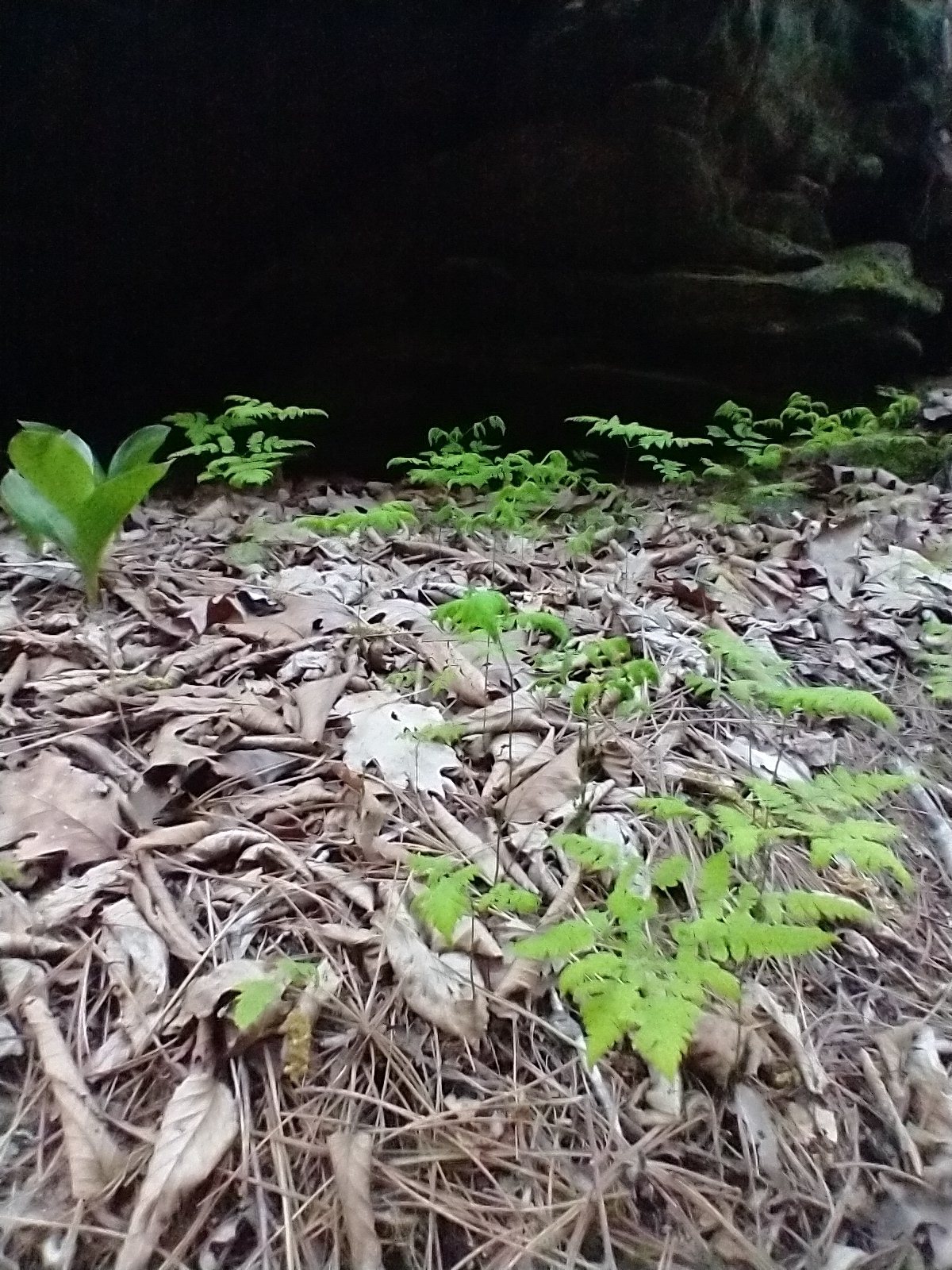
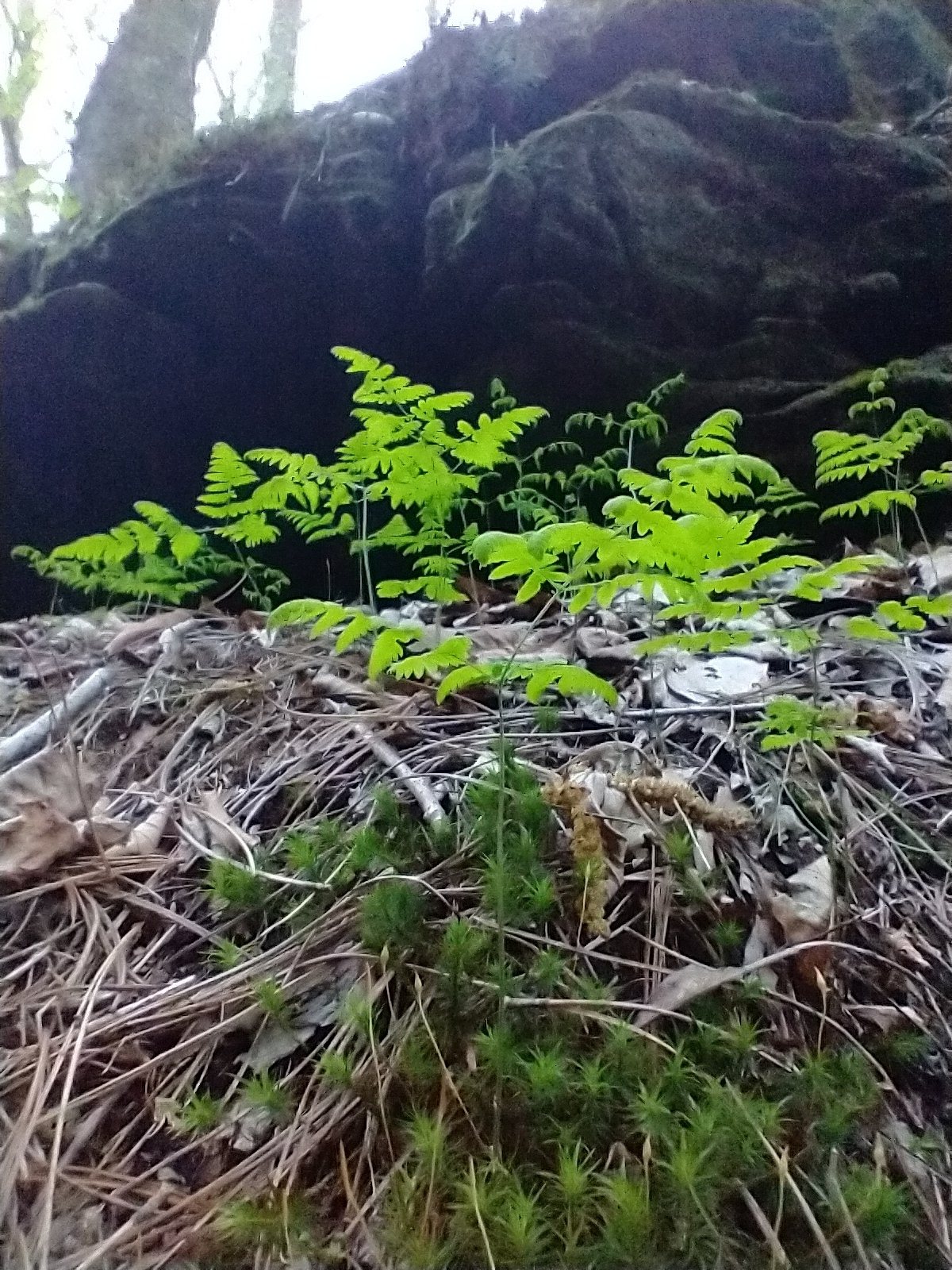
Oak fern is a small, deciduous woodland fern with delicate, triangular fronds held on slender stalks. It spreads by creeping rhizomes to make a light-textured groundcover in cool, moist shade, but struggles in hot, dry gardens.
At a glance
- Sun
- Partial to full shade; avoid hot afternoon sun.
- Water
- Keep consistently moist but not waterlogged. Water during dry spells, especially beneath trees.
- Soil
- Humus-rich, well-drained soil, preferably slightly acidic to neutral; avoid dry, compacted ground.
- Height
- 0.5-1 ft (0.15-0.3 m)
- Spread
- 1-2 ft (0.3-0.6 m), eventually forming wider colonies
- Foliage
- Soft, light-green, finely divided triangular fronds, each appearing to split into three main sections; dies back in autumn.
- Growth
- Moderate in cool, moist conditions
- Care needed
- Low
The year at a glance
- Deer resistant
- Cold hardy
- Wildlife
- Low allergen
| J | F | M | A | M | J | J | A | S | O | N | D | |
|---|---|---|---|---|---|---|---|---|---|---|---|---|
| Plant |
Northern hemisphere months. In Australia, shift them by six.
- Difficulty
- Easy
- Toughness
- Fairly tough
Will it suit your garden?
Pick your zone, country, light and whether you have pets.
Full sun is 6 or more hours of direct sun a day, part shade 3 to 6 hours, shade under 3.
How it grows
Planting day
0.7 ft (0.22 m)
full size
About 3 years to full size.
From a typical nursery size, at an average rate for this kind of plant. A rule of thumb, not a forecast.
Good to know
- Cats and dogs
- Safe
- Native to
- the US, Canada and the UK
- In the garden
- Spreads vigorously: plan to contain it.
- Growth rate
- Moderate
Care
Jobs through the year
- WaterApr–May, Sep–Oct, every 14 days
- Water established patches if soil starts drying; new plants and those under trees need more frequent checks.
- WaterJun–Aug, every 7 days
- Water deeply during dry weather to keep shallow rhizomes consistently moist.
- PruneFeb–Mar
- Remove dead fronds carefully before new growth, without disturbing shallow rhizomes.
- MulchApr
- Spread a thin layer of leaf mould without covering emerging fronds.
- DivideMar–Apr
- Divide crowded or spreading patches as needed and replant immediately.
- ProtectApr–May
- Check emerging fronds for slugs and snails and remove pests.
- Water deeply during dry spells so the shallow rhizomes do not dry out.
- Apply a thin layer of leaf mould each spring, keeping emerging fronds uncovered.
- Avoid routine fertiliser; use a light dressing of compost if growth is weak in poor soil.
- Divide crowded or spreading patches in spring, replanting divisions immediately.
- Protect from drying winds and competition from dense tree roots.
Pruning. Remove dead fronds in late winter or early spring before new growth appears. Leave healthy green fronds intact.
Through the year
- Late winter
- Clear dead fronds carefully without disturbing the shallow rhizomes.
- Spring
- Plant or divide while the soil is moist, and water thoroughly.
- Late spring
- Add a thin mulch of leaf mould and check that emerging fronds are not buried.
- Summer
- Water during dry weather and check young fronds for slug damage.
- Autumn
- Let foliage die back naturally and retain a light covering of fallen leaves.
In the garden
- Plant beneath deciduous shrubs where spring light gives way to summer shade.
- Use as a low groundcover along shaded woodland paths, away from foot traffic.
- Combine with hostas and larger ferns for contrasting leaf shapes and textures.
- Tuck into cool, humus-filled pockets beside shaded rocks or mossy logs.
Garden styles it suits: Woodland, Moss and fern garden, Green on green, Japanese, Secret garden and Pacific Northwest woodland.
Plant it with: Hostas, Lungwort, Foamflower, Solomon's seal, Trilliums and Lady fern.
Wildlife: Provides low cover for small woodland invertebrates. It has no flowers or nectar and is not a direct food source for pollinating insects.
Problems to watch for
- Dry, brown or prematurely dormant fronds: water deeply, mulch with leaf mould and shelter from sun and drying winds.
- Slug or snail damage to young fronds: check after dark, hand-pick pests and use barriers or labelled controls where needed.
- Rhizome rot in waterlogged soil: improve drainage or move the plant to moist but freely draining ground.
- Poor growth beneath trees: reduce root competition by choosing a less congested planting spot and water during dry spells.
Safety
Not known to be toxic to people, cats, dogs or horses, but species-specific safety information is limited. Do not treat the fronds or rhizomes as edible.
Easily confused with
Limestone oak fern (Gymnocarpium robertianum)
Usually has firmer, duller fronds with tiny glandular hairs and a noticeable scent when rubbed; oak fern is largely hairless. Limestone oak fern favours lime-rich ground.
Beech fern (Phegopteris connectilis)
Has a more continuous, elongated triangular blade with the lowest pair of pinnae angled backwards; oak fern has a broader blade that appears divided into three main sections.
The name
Gymnocarpium means 'naked fruit', referring to the uncovered spore clusters on the undersides of the fronds.
Propagation. Divide creeping rhizomes in spring, keeping roots and at least one growing point on each piece. Replant shallowly and keep moist. It can also be raised from spores, but this is slow and requires consistently humid conditions.
Checked against open data
- Accepted botanical name
- Gymnocarpium dryopteris
- In the US and Canada
- Native in Alaska, Canada, Greenland, the lower 48 states and St. Pierre and Miquelon.
- Native range
- Alaska, Albania, Alberta, Altay, Amur, Arizona, Austria, Baltic States, Belgium, British Columbia, Bulgaria and Buryatiya.
- Measured
- Soil pH 5 to 5.5. Average height 17 cm.
Sources: GBIF (CC BY 4.0), USDA PLANTS and Trefle (CC BY 4.0). The care and design notes are LandscapeGPT's own.
See it in your own yard.
Upload a photo of your yard and see it redesigned with plants that suit your climate, each checked against your zone.