Oakland holly
Ilex 'Magland'. Family Aquifoliaceae. Tree.
Also called Ilex 'Magland', Oakland oak leaf holly.
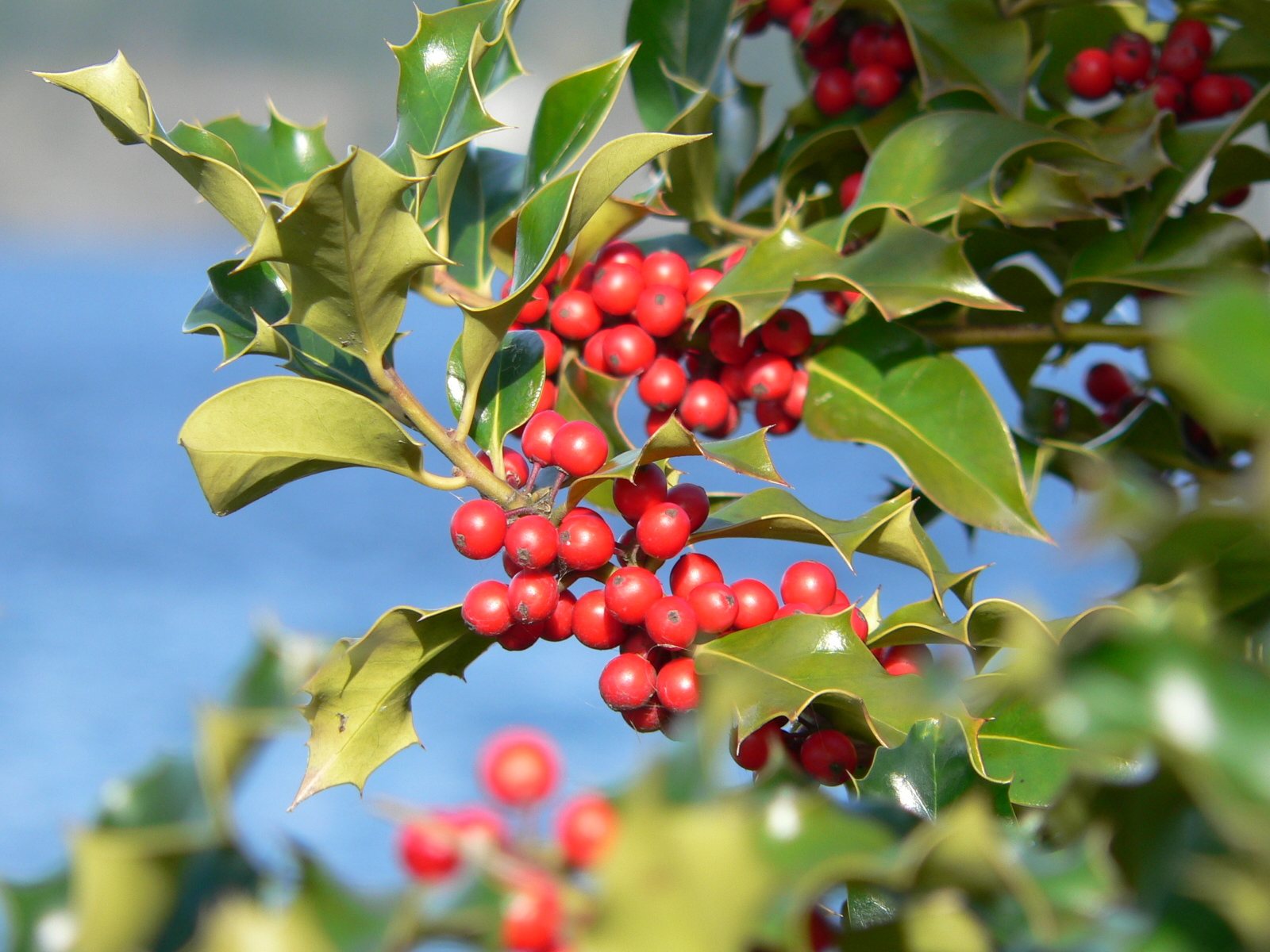
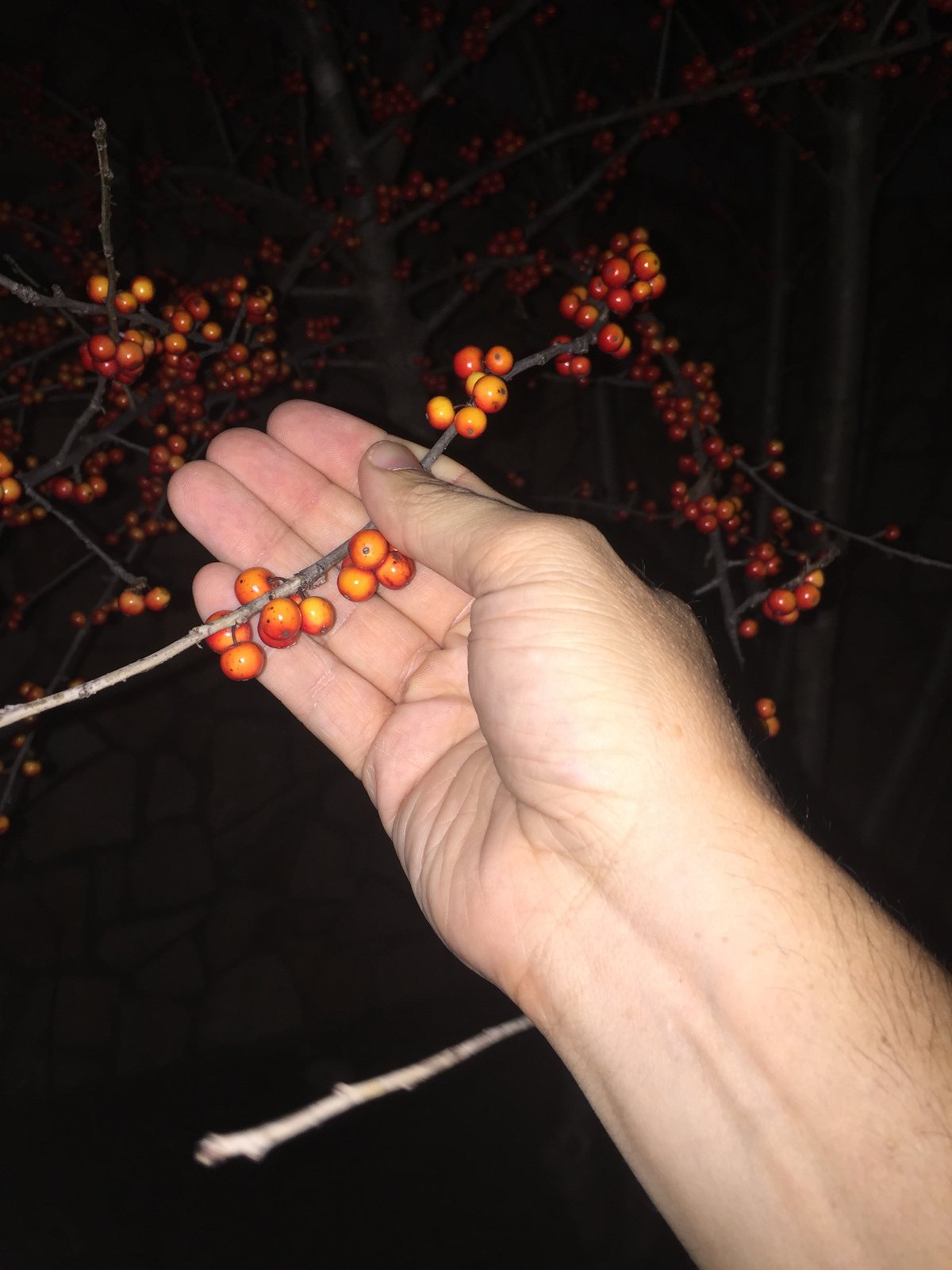
Oakland holly is an evergreen holly with a dense, upright pyramidal shape and glossy, oak-like leaves edged with spines. Gardeners grow it for screening, evergreen structure and orange-red berries that persist into winter. It can set fruit without a separate male holly, although berry production varies with growing conditions.
At a glance
- Sun
- Full sun to partial shade; growth is densest and fruiting usually best with at least six hours of direct sun.
- Water
- Water regularly while establishing; once established, water deeply during prolonged dry spells. Avoid persistently wet soil.
- Soil
- Moist but well-drained, acidic to slightly acidic soil, preferably rich in organic matter. Alkaline soil can cause yellowing leaves.
- Height
- 15-20 ft (4.6-6.1 m)
- Spread
- 12-15 ft (3.7-4.6 m)
- Flowers
- Small, inconspicuous creamy-white flowers in spring.
- Foliage
- Evergreen. Glossy, dark green, leathery leaves with several pointed, spiny lobes; new growth often has a bronze tint.
- Growth
- Moderate to fast in suitable soil with reliable moisture.
- Care needed
- Low
The year at a glance
- Pollinators
- Deer resistant
- Heat tolerant
- Wildlife
- Low allergen
| J | F | M | A | M | J | J | A | S | O | N | D | |
|---|---|---|---|---|---|---|---|---|---|---|---|---|
| Flowers | ||||||||||||
| Fruit | ||||||||||||
| Plant |
Northern hemisphere months. In Australia, shift them by six.
- Difficulty
- Easy
- Toughness
- Very tough
Will it suit your garden?
Pick your zone, country, light and whether you have pets.
Full sun is 6 or more hours of direct sun a day, part shade 3 to 6 hours, shade under 3.
How it grows
Planting day
7 ft (2 m)
After 1 year
7 ft (2.2 m)
After 2 years
8 ft (2.4 m)
After 3 years
9 ft (2.6 m)
After 5 years
10 ft (3 m)
About 16 years to full size.
From a typical nursery size, at an average rate for this kind of plant. A rule of thumb, not a forecast.
Good to know
- Cats and dogs
- Toxic
- Growth rate
- Fast
Care
Jobs through the year
- WaterApr–May, Sep–Nov, every 14 days
- Water established trees only if soil is dry; young trees need regular deep watering.
- WaterJun–Aug, every 14 days
- Water established trees deeply during prolonged dry spells; check young trees more often.
- MulchMar–Apr
- Maintain 5–8 cm of organic mulch, keeping it away from the trunk.
- FeedMar–Apr
- Apply a modest slow-release feed only if weak growth or a soil test warrants it.
- PruneFeb–Mar
- Remove damaged or crossing branches and selectively shorten wayward shoots before growth starts.
- ProtectJan–Feb, Nov–Dec
- Shelter young trees from drying winds and gently brush off heavy, loose snow.
- Plant with the root flare at soil level, allowing room for its mature width rather than relying on repeated clipping.
- Water deeply through the first two growing seasons whenever the root zone begins to dry.
- Spread 2-3 in (5-8 cm) of organic mulch over the root area, keeping it clear of the trunk.
- Apply a modest amount of slow-release fertiliser in spring only if growth is weak or a soil test indicates a need.
- In colder locations, choose a site sheltered from drying winter winds.
Pruning. Prune in late winter or early spring before new growth, removing dead, damaged or crossing branches and shortening wayward shoots selectively. Avoid routine heavy shearing if you want its natural outline and a good berry display.
Through the year
- Late winter
- Inspect for winter damage and prune selectively before new growth starts.
- Spring
- Plant where winters are cold, refresh mulch and check soil moisture around newly planted trees.
- Late spring
- Inspect new leaves and stems for scale insects, leaf spots and unusual yellowing.
- Summer
- Water deeply during extended dry weather, especially during establishment.
- Autumn
- Plant in mild-winter regions and water existing plants if autumn is dry.
- Winter
- Leave berries for birds and gently brush off heavy, loose snow before branches bend.
In the garden
- Plant as an evergreen screen, spacing for the mature width rather than crowding young plants.
- Use a single specimen as a pyramidal focal point in a lawn or large mixed border.
- Frame a broad entrance with a pair, leaving generous clearance from paths and buildings.
- Combine with deciduous shrubs and pale-flowered perennials for a dark green backdrop and winter structure.
Garden styles it suits: Formal, Traditional, Southern, Grand estate, Winter interest and Woodland.
Plant it with: Azaleas, Camellias, Oakleaf hydrangeas, Japanese pieris, Hellebores and Christmas fern.
Wildlife: Spring flowers attract bees and other insects. The dense evergreen crown provides bird shelter, and birds eat the berries, often later in winter.
Problems to watch for
- Yellow leaves with green veins can indicate iron deficiency in alkaline soil; test the soil and address pH rather than repeatedly adding general fertiliser.
- Scale insects can cause sticky honeydew and black sooty mould; prune heavily infested shoots and use a labelled horticultural oil at the appropriate life stage.
- Root rot can develop in waterlogged ground; improve drainage and keep the root flare above buried soil or mulch.
- Winter burn can brown exposed leaves, especially on young plants; shelter from drying winds, mulch and water before the ground freezes if soil is dry.
Safety
Holly berries and leaves should not be eaten by people, cats, dogs or horses. Berries are the main ingestion risk and can cause vomiting, diarrhoea and abdominal pain; the spiny leaves can also injure the mouth. Cultivar-specific toxicity data are limited, so seek medical or veterinary advice after ingestion.
Easily confused with
Oak Leaf holly (Ilex 'Conaf')
Oakland arose as a sport of Oak Leaf and has very similar foliage; Oakland generally develops a denser, more uniform pyramidal crown. A reliable nursery label is the best way to distinguish young plants.
Nellie R. Stevens holly (Ilex 'Nellie R. Stevens')
Its leaves are broader and usually have fewer prominent marginal spines, rather than Oakland's more distinctly oak-like outline.
English holly (Ilex aquifolium)
Typical leaves have strongly wavy margins with irregular spines rather than Oakland's more regular oak-like lobing; English holly also varies greatly in form.
The name
Ilex is the Latin name for the holm oak, whose evergreen leaves resemble those of some hollies.
Propagation. Propagate by semi-ripe stem cuttings in summer using rooting hormone and a free-draining medium under humid conditions. Seedlings will not reliably retain the cultivar's characteristics.
Checked against open data
- Accepted botanical name
- Ilex
Sources: GBIF (CC BY 4.0). The care and design notes are LandscapeGPT's own.
See it in your own yard.
Upload a photo of your yard and see it redesigned with plants that suit your climate, each checked against your zone.