Obedient plant
Physostegia virginiana. Family Lamiaceae. Perennial.
Also called False dragonhead, Virginia lion's-heart.
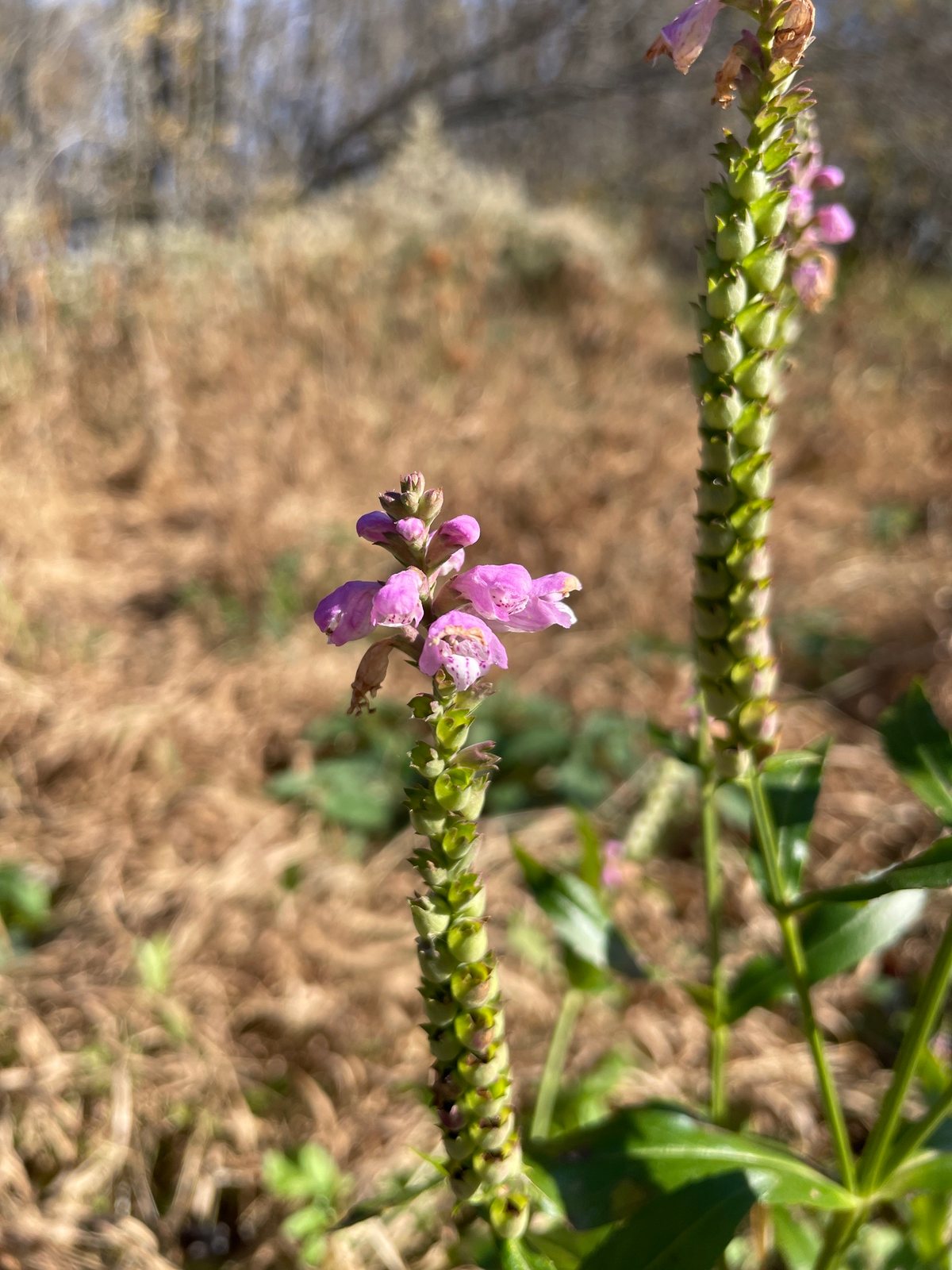
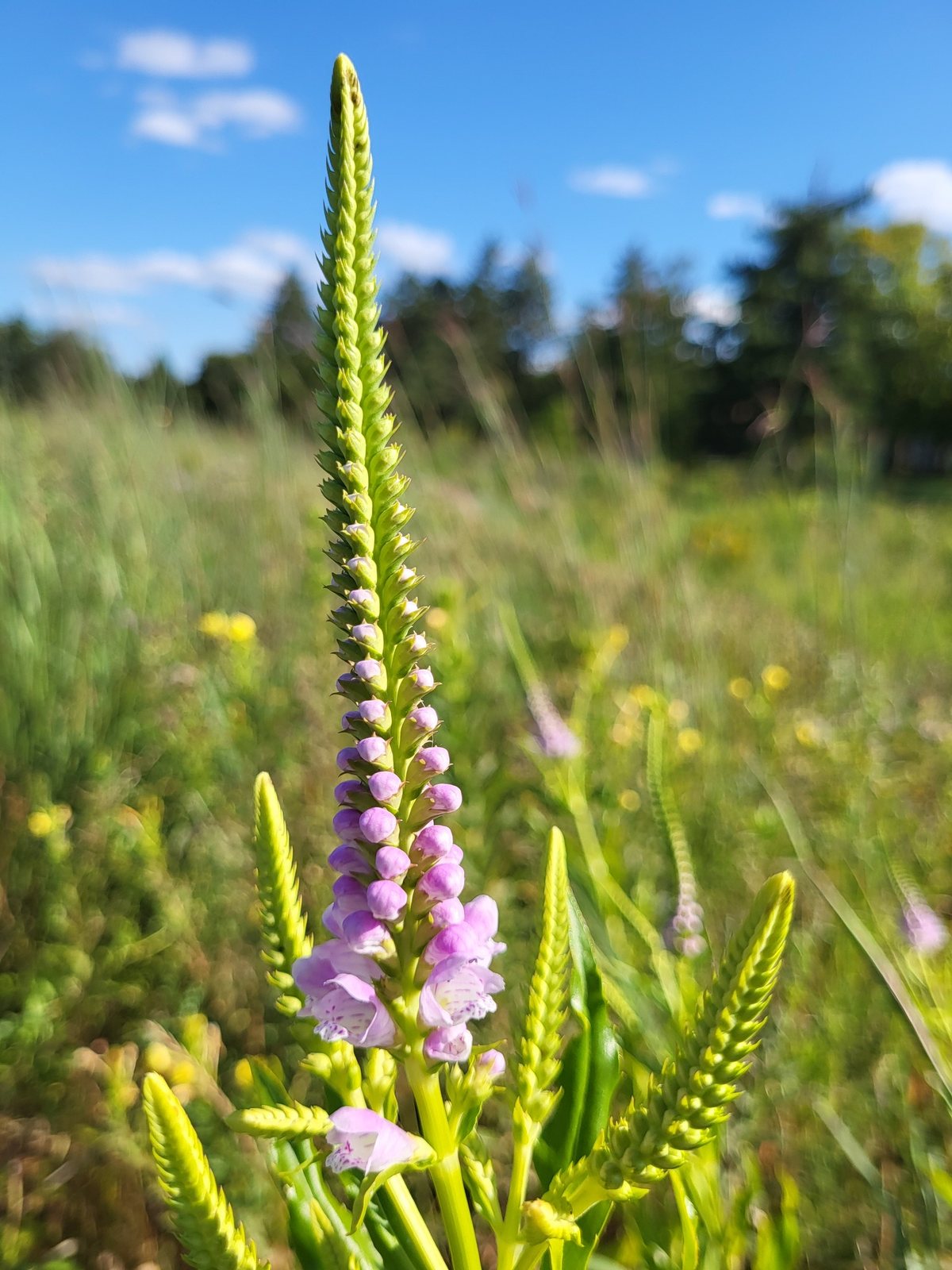
Obedient plant is a North American perennial grown for upright spikes of pink, lilac or white flowers in late summer and autumn. Its flowers briefly stay in position when gently moved sideways, but its spreading roots are far less obedient: give it room or contain it.
At a glance
- Sun
- Full sun is best; tolerates partial shade, but stems may lean and flowering can be reduced.
- Water
- Keep the soil evenly moist, especially while establishing and during dry spells. Established plants tolerate brief dry periods, but prolonged drought reduces flowering.
- Soil
- Moist, well-drained soil, including clay that does not remain waterlogged. Tolerates a broad pH range; very rich soil encourages spreading and floppy stems.
- Height
- 2-4 ft (0.6-1.2 m)
- Spread
- 2-3 ft (0.6-0.9 m) initially; colonies can spread much farther through underground rhizomes.
- Flowers
- Late summer to early autumn; tubular pink to lilac flowers, with white-flowered forms also available.
- Foliage
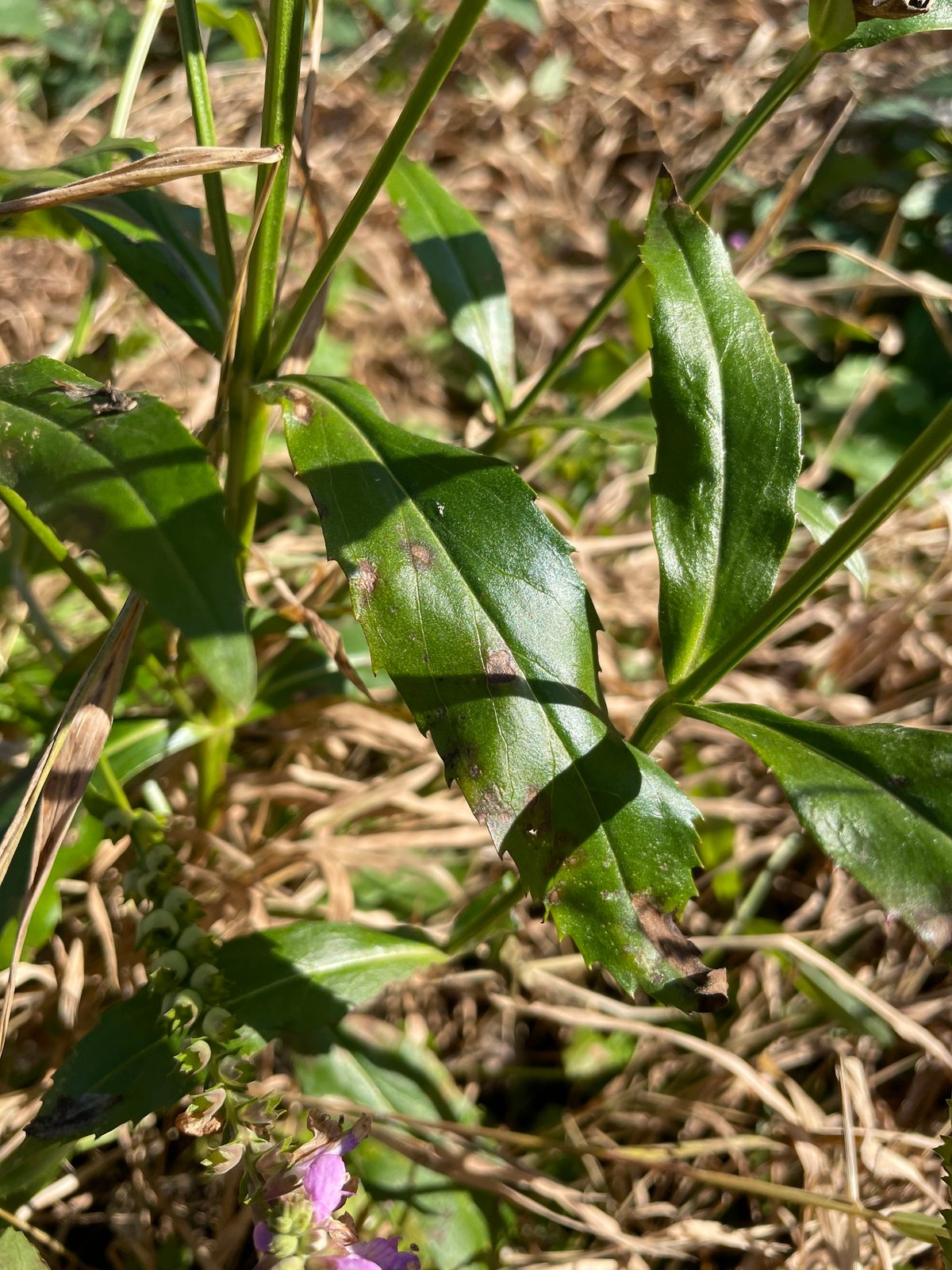
- Narrow, pointed green leaves with toothed edges, arranged in opposite pairs on square stems.
- Growth
- Fast in moist soil.
- Care needed
- Medium
The year at a glance
- Pollinators
- Deer resistant
- Cold hardy
- Heat tolerant
- Wildlife
- Low allergen
| J | F | M | A | M | J | J | A | S | O | N | D | |
|---|---|---|---|---|---|---|---|---|---|---|---|---|
| Flowers | ||||||||||||
| Plant |
Northern hemisphere months. In Australia, shift them by six.
- Difficulty
- Easy
- Toughness
- Very tough
Will it suit your garden?
Pick your zone, country, light and whether you have pets.
Full sun is 6 or more hours of direct sun a day, part shade 3 to 6 hours, shade under 3.
How it grows
Planting day
1 ft (0.3 m)
After 1 year
2 ft (0.61 m)
After 2 years
3 ft (0.9 m)
full size
About 2 years to full size.
From a typical nursery size, at an average rate for this kind of plant. A rule of thumb, not a forecast.
Good to know
- Cats and dogs
- Safe
- Native to
- the US and Canada
- In the garden
- Spreads vigorously: plan to contain it.
- Growth rate
- Fast
Care
Jobs through the year
- WaterApr–May, Sep–Oct, every 14 days
- Water established clumps if soil is drying; keep new plantings consistently moist.
- WaterJun–Aug, every 7 days
- Water deeply during dry spells to maintain flowering; skip if soil remains moist.
- MulchMar–Apr
- Apply a thin organic mulch, keeping emerging shoots clear.
- PruneFeb–Mar
- Cut dead stems close to the ground before strong new growth begins.
- DivideMar–Apr
- Divide crowded clumps every two or three years and remove escaping rhizomes each spring.
- DeadheadAug–Oct, every 7 days
- Remove faded spikes before seed develops if you want to limit seedlings.
- Water newly planted clumps regularly through their first growing season; water established plants during prolonged dry spells.
- Avoid routine high-nitrogen feeding, which encourages weak stems and excessive growth.
- Apply a thin organic mulch in spring to conserve moisture, keeping it clear of emerging shoots.
- Support tall stems early if the site is shaded, windy or particularly fertile.
- Lift unwanted runners each spring and divide congested clumps every two or three years.
Pruning. Remove faded flower spikes before seed develops if you want to limit seedlings. Cut dead stems close to the ground in late winter or early spring, or leave them standing until then for winter habitat.
Through the year
- Early spring
- Cut back old stems before new shoots grow strongly.
- Spring
- Plant or divide clumps, remove escaping rhizomes and apply a thin mulch.
- Late spring
- Install discreet supports around tall-growing clumps where needed.
- Summer
- Water during dry spells and check that spreading shoots are not crowding neighbouring plants.
- Late summer
- Enjoy the flowers or cut stems for arrangements; remove spent spikes if seedlings are unwanted.
- Autumn
- Remove any unwanted seedlings and leave healthy stems standing for winter habitat.
In the garden
- Plant in generous drifts in moist meadow-style borders, where its upright flower spikes contrast with grasses.
- Use behind shorter perennials in cottage borders for late-season colour.
- Combine with coneflowers, black-eyed Susans and asters in a sunny pollinator planting.
- Use beside a pond or rain garden on moist ground above the permanently waterlogged zone.
Garden styles it suits: Cottage garden, Native meadow, New perennial (prairie), Wildlife garden, Pollinator garden and English country.
Plant it with: Purple coneflower, Black-eyed Susan, New England aster, Switchgrass, Bee balm and Joe-Pye weed.
Wildlife: Flowers attract bumblebees and other bees, along with some butterflies. Standing stems provide shelter for small invertebrates over winter.
Problems to watch for
- Aggressive spreading: lift out unwanted rhizomes regularly, or grow in a large container and monitor drainage holes for escaping roots.
- Flopping stems: provide more sun, avoid rich feeding and stake tall growth before flowering.
- Rust: remove affected leaves, improve spacing and avoid wetting foliage when watering; clear badly infected debris.
- Spider mites in hot, dry conditions: keep roots adequately watered and rinse leaf undersides with water.
Safety
Not known to be toxic to people, cats, dogs or horses, and no particular plant part is established as poisonous. Specific safety data are limited; it is an ornamental plant, not a food, and eating plant material may cause digestive upset.
Where it spreads. Can spread aggressively by rhizomes in moist garden soil in the United States, Canada, the United Kingdom and temperate Australia. This is a garden-containment warning, not a claim that it is officially listed as invasive throughout those regions.
Easily confused with
Pink turtlehead (Chelone lyonii)
Turtlehead has broader leaves and short, hooded flowers that resemble a turtle's head; obedient plant has narrower leaves and longer spikes of more open tubular flowers.
Snapdragon (Antirrhinum majus)
Snapdragons have pouch-like flowers whose lips open when squeezed, and their leaves lack the conspicuous toothed edges of obedient plant.
The name
The common name refers to the individual flowers briefly remaining in a new position when gently pushed sideways.
Propagation. Divide clumps in spring, replanting rooted sections promptly. Sow seed in autumn outdoors, or cold-stratify it before spring sowing; seedlings may not match named cultivars.
Checked against open data
- Accepted botanical name
- Physostegia virginiana
- In the US and Canada
- Native in Canada and the lower 48 states.
- Native range
- Alabama, Alberta, Arkansas, British Columbia, Connecticut, District of Columbia, Florida, Georgia, Illinois, Indiana, Iowa and Kansas.
- Measured
- Average height 61 cm.
Sources: GBIF (CC BY 4.0), USDA PLANTS and Trefle (CC BY 4.0). The care and design notes are LandscapeGPT's own.
See it in your own yard.
Upload a photo of your yard and see it redesigned with plants that suit your climate, each checked against your zone.