Okra
Abelmoschus esculentus. Family Malvaceae. Annual.
Also called Lady's fingers, Gumbo, Bhindi.
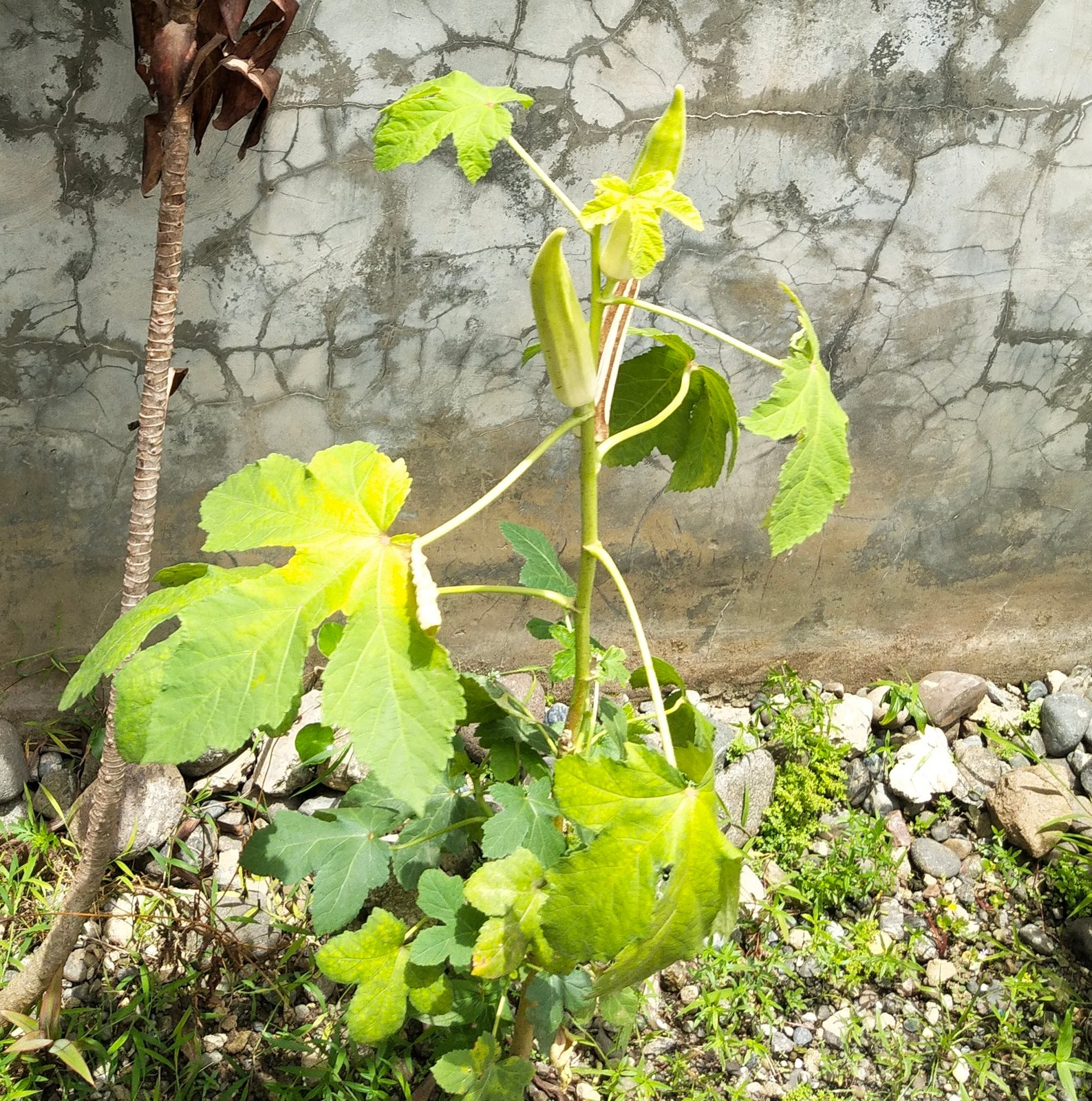
Okra is a heat-loving vegetable grown as an annual for its tender, immature pods, with large lobed leaves and hibiscus-like flowers. It crops best in long, hot summers; in cool parts of the United Kingdom and Canada, a greenhouse or polytunnel is usually more reliable than an outdoor bed.
At a glance
- Sun
- Full sun, with at least 6-8 hours of direct light and shelter from cold winds.
- Water
- Water deeply when the top 1-2 in (2.5-5 cm) of soil dries, keeping moisture reasonably steady during flowering and pod production.
- Soil
- Fertile, well-drained soil, ideally pH 6.0-7.5; avoid cold, waterlogged ground.
- Height
- 3-7 ft (0.9-2.1 m), depending on variety and growing season
- Spread
- 2-3 ft (0.6-0.9 m)
- Flowers
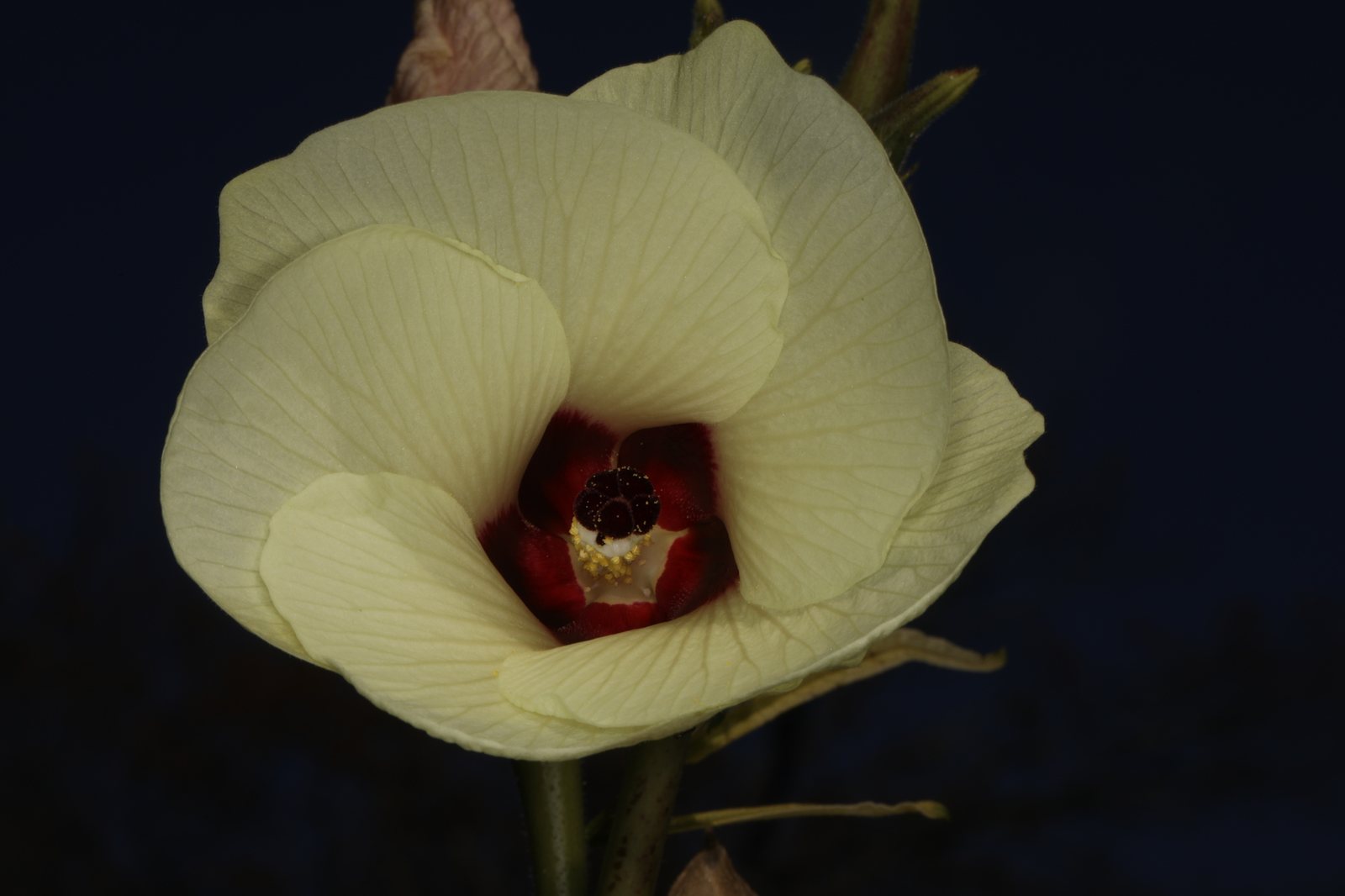
- Summer to early autumn; pale yellow flowers with dark maroon centres, each usually lasting one day.
- Foliage
- Large, coarse-textured green leaves with broad, pointed lobes; stems and leaves may carry irritating hairs.
- Growth
- Fast in sustained warmth; slow in cool weather.
- Care needed
- Medium
The year at a glance
- Pollinators
- Heat tolerant
- Low allergen
- Edible
| J | F | M | A | M | J | J | A | S | O | N | D | |
|---|---|---|---|---|---|---|---|---|---|---|---|---|
| Flowers | ||||||||||||
| Fruit | ||||||||||||
| Plant |
Northern hemisphere months. In Australia, shift them by six.
- Difficulty
- Moderate
- Toughness
- Fairly tough
Will it suit your garden?
Pick your zone, country, light and whether you have pets.
Full sun is 6 or more hours of direct sun a day, part shade 3 to 6 hours, shade under 3.
How it grows
Planting day
0.6 ft (0.18 m)
After 1 year
5 ft (1.5 m)
full size
Full size in one season.
From a typical nursery size, at an average rate for this kind of plant. A rule of thumb, not a forecast.
Good to know
- Cats and dogs
- Safe
- Growth rate
- Moderate
Care
Jobs through the year
- WaterMay–Jun, Sep, every 7 days
- Water established plants deeply when the top 2.5–5 cm dries; water new plants more frequently.
- WaterJul–Aug, every 5 days
- In dry weather, soak established roots to maintain steady moisture during flowering and pod production.
- MulchJun
- Mulch after the soil warms, keeping material away from stems.
- FeedMay
- Work compost into the bed before planting; avoid heavy nitrogen feeding.
- ProtectMay–Jun
- Plant only after frost, with soil at 18–21°C and warm nights; stake exposed tall plants.
- HarvestJul–Sep
- Snip tender pods at 5–10 cm long; wear gloves and remove overlooked woody pods.
- Plant out only after frost danger has passed, soil reaches about 65-70°F (18-21°C), and nights are consistently warm.
- Space plants 18-24 in (45-60 cm) apart, allowing more room for vigorous varieties.
- Water at soil level and mulch once the ground has warmed to conserve moisture and suppress weeds.
- Work compost into the bed before planting; avoid heavy nitrogen feeding, which encourages leaves rather than pods.
- Stake tall plants in exposed sites before they become top-heavy.
- Cut tender pods every day or two, usually at 2-4 in (5-10 cm) long; wear gloves and long sleeves if the hairs irritate your skin.
Pruning. Routine pruning is unnecessary. During the cropping season, remove damaged leaves and cut off overlooked woody pods so the plant continues producing.
Harvest
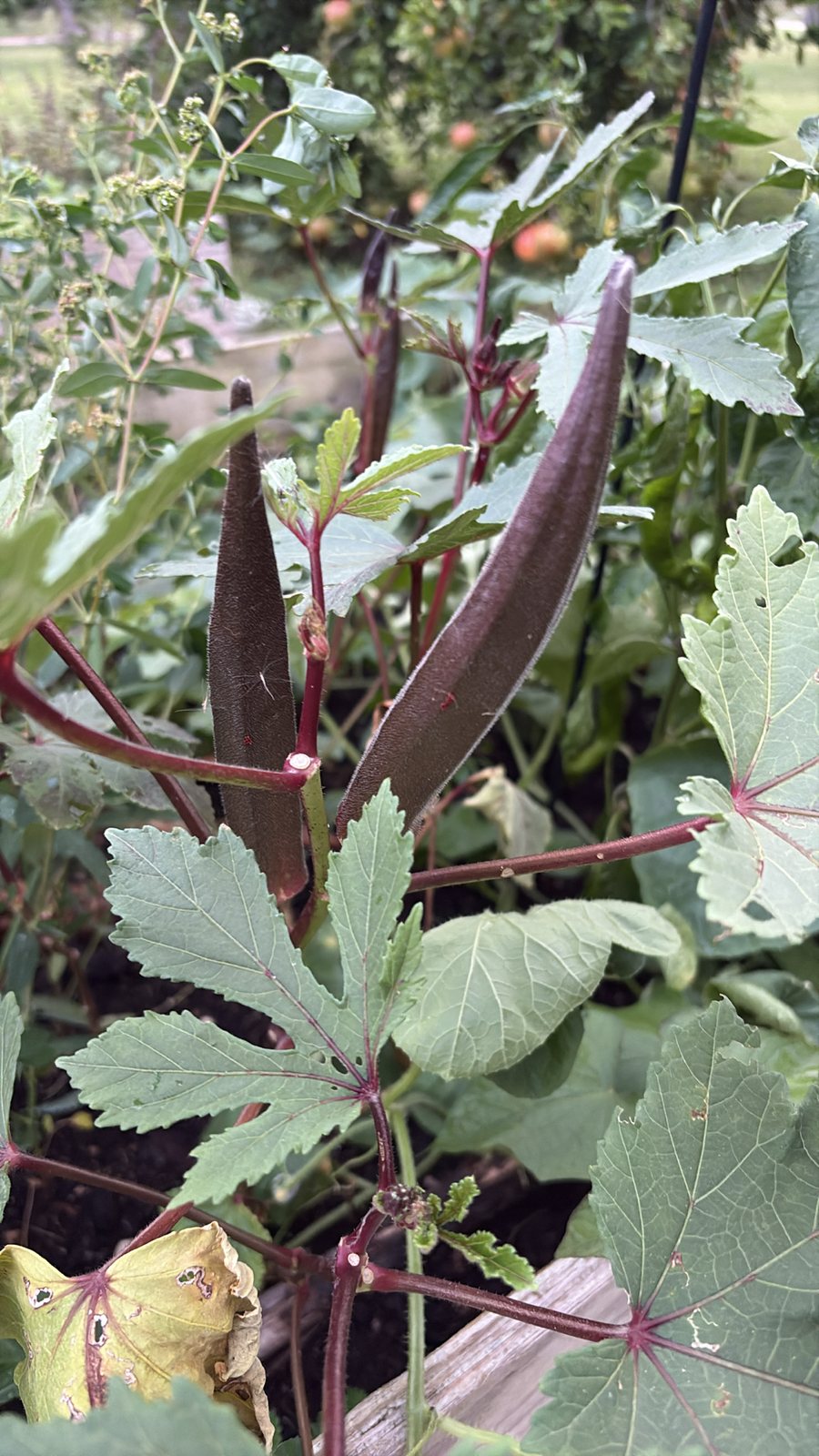
Pick the immature pods in summer and early autumn, usually 2–3 months after sowing in warm conditions. For most varieties, harvest when pods are 5–10 cm (2–4 in) long, tender and easy to cut, typically 3–5 days after flowering; oversized pods quickly become tough and fibrous. Check plants every 1–2 days, snip the stalks with scissors or secateurs, and wear gloves to avoid irritating hairs.
Through the year
- Early spring
- Choose an early-maturing variety for a short summer and prepare a sunny, sheltered bed.
- Mid-spring
- In cooler regions, sow indoors in individual pots about 4-6 weeks before planting out; provide warmth for germination.
- Late spring
- After frost and once soil is warm, direct-sow or plant out carefully without disturbing the roots.
- Early summer
- Mulch warmed soil, establish a deep-watering routine and stake exposed plants.
- Summer
- Check plants daily once flowering begins and harvest young pods before they become fibrous.
- Autumn
- Remove plants when cold weather stops growth; compost healthy material and discard diseased roots.
In the garden
- Plant in rows or blocks in a sunny vegetable garden where pods are easy to reach.
- Use behind low herbs and flowers in a potager for bold leaves and height.
- Combine with peppers, basil and marigolds in an ornamental edible border.
- Grow compact varieties in large containers on a warm patio, using at least a 5-gallon (19-litre) pot per plant.
Garden styles it suits: Potager (kitchen garden), Edible landscape, Homestead, Southern, Tropical and Farmhouse.
Plant it with: Basil, Sweet peppers, French marigolds, Zinnias and Nasturtiums.
Wildlife: Flowers provide pollen and nectar for bees and other insects. Okra is self-fertile and can set pods without insect visits, though bees may cross-pollinate neighbouring varieties.
Problems to watch for
- Poor growth or few pods in cool weather: delay planting until soil and nights are warm; use an early variety and protected growing space in cool climates.
- Aphids: inspect shoot tips and leaf undersides, dislodge colonies with water and preserve ladybirds and other predators.
- Root-knot nematodes, especially in warm, sandy soils: remove affected roots, rotate with locally recommended non-host crops and choose resistant varieties where available.
- Powdery mildew: allow good airflow, avoid overcrowding and remove badly affected leaves; use a locally approved treatment only if needed.
Safety
Not known to be toxic to people, cats, dogs or horses. Young pods are edible, and the leaves are also eaten cooked. Hairs on pods, leaves and stems can cause itching or contact irritation; mature pods become tough rather than poisonous.
Easily confused with
Roselle (Hibiscus sabdariffa)
Roselle often has red stems and develops fleshy red calyces around its seed capsules, rather than okra's elongated, ridged pods.
Kenaf (Hibiscus cannabinus)
Kenaf can have similar lobed leaves and pale flowers with dark centres, but produces short, rounded, hairy seed capsules rather than long edible pods.
The name
The species name esculentus is Latin for 'edible', referring to its use as food.
Propagation. Grow from seed. Soak seeds in lukewarm water overnight, then sow about 1 in (2.5 cm) deep in warm soil or individual pots. For seed saving, leave selected pods to mature and dry fully on healthy plants; different varieties may cross through insect pollination.
Checked against open data
- Accepted botanical name
- Abelmoschus esculentus
- In the US and Canada
- Introduced in the lower 48 states, Pacific Basin, Puerto Rico and US Virgin Islands.
- Native range
- Bangladesh and India.
- Measured
- Average height 70 cm.
Sources: GBIF (CC BY 4.0), USDA PLANTS and Trefle (CC BY 4.0). The care and design notes are LandscapeGPT's own.
See it in your own yard.
Upload a photo of your yard and see it redesigned with plants that suit your climate, each checked against your zone.