Old Gold juniper
Juniperus × pfitzeriana 'Old Gold'. Family Cupressaceae. Shrub.
Also called Old Gold Chinese juniper, Juniperus × media 'Old Gold', Juniperus chinensis 'Old Gold'.
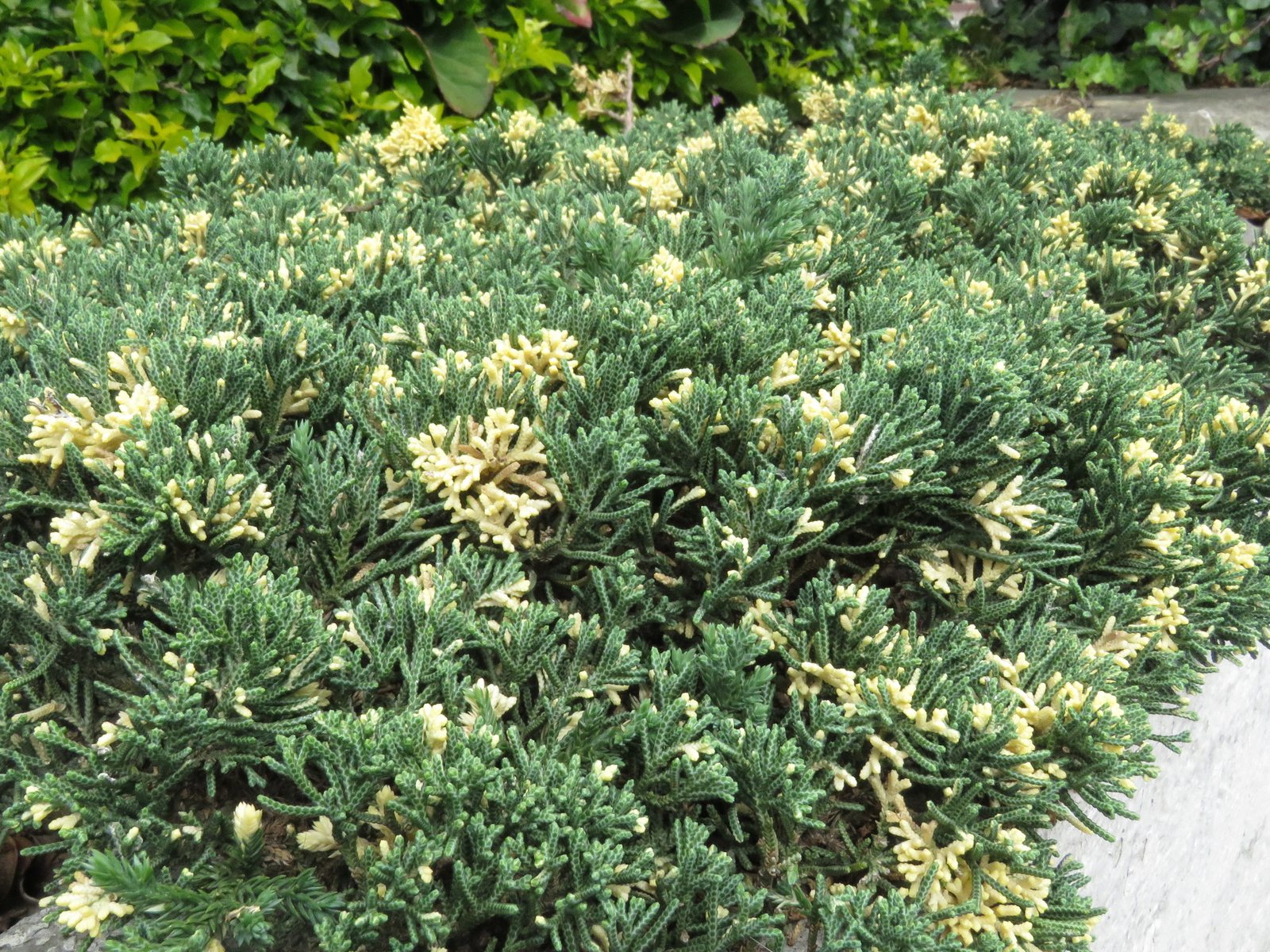
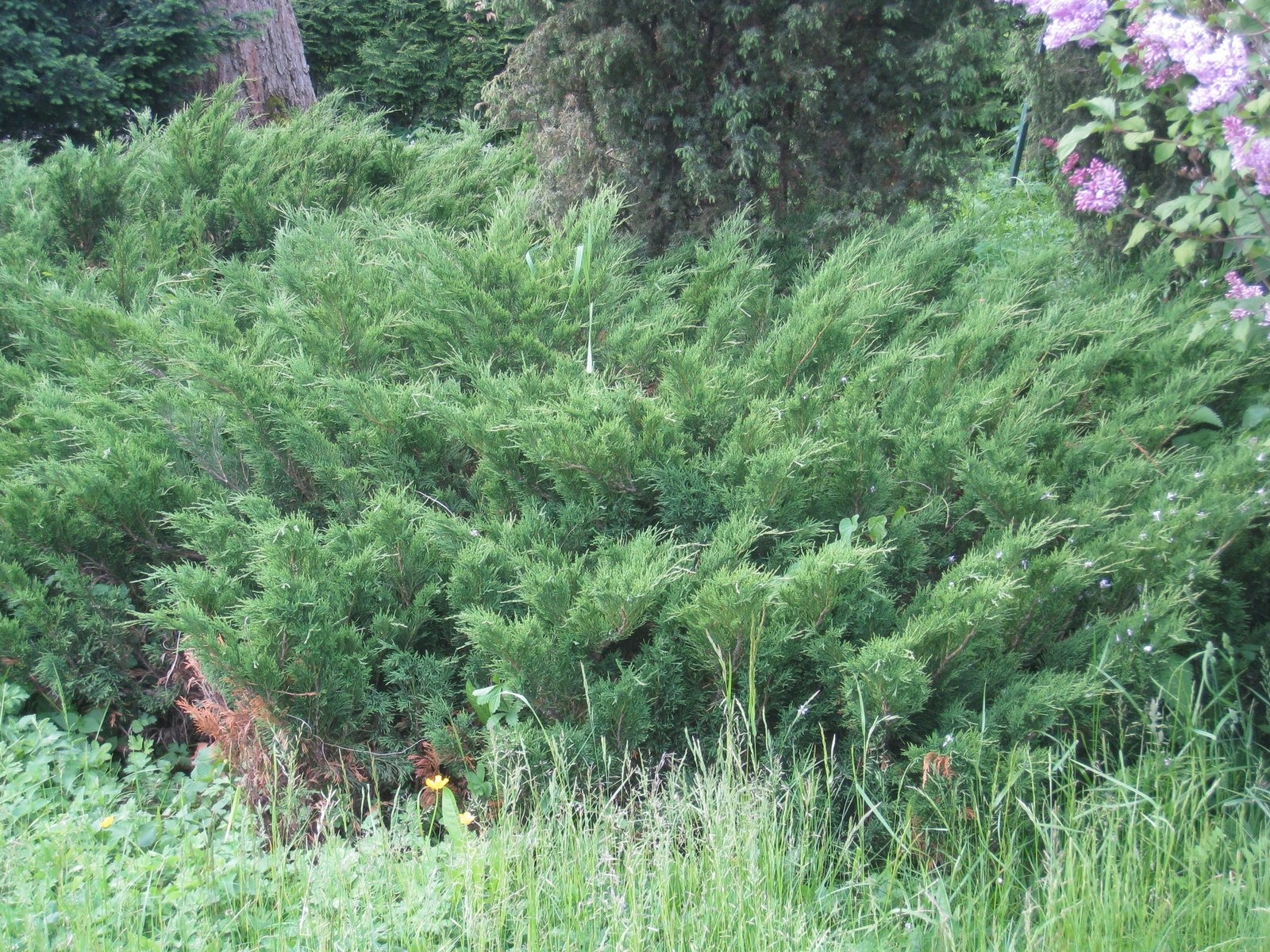
Old Gold juniper is a low, spreading evergreen conifer with fine-textured golden foliage that becomes more bronze in winter. Gardeners grow it for year-round colour, a broad, layered shape and tolerance of dry conditions once established.
At a glance
- Sun
- Full sun gives the strongest gold colour and densest growth; light shade produces greener, looser growth.
- Water
- Water regularly during establishment; once established, water during prolonged drought. Avoid persistently wet roots.
- Soil
- Well-drained sandy, loamy or stony soil; tolerates clay if drainage is good. Grows in mildly acidic to alkaline soil.
- Height
- 2-3 ft (0.6-0.9 m), sometimes taller with age
- Spread
- 4-6 ft (1.2-1.8 m)
- Foliage
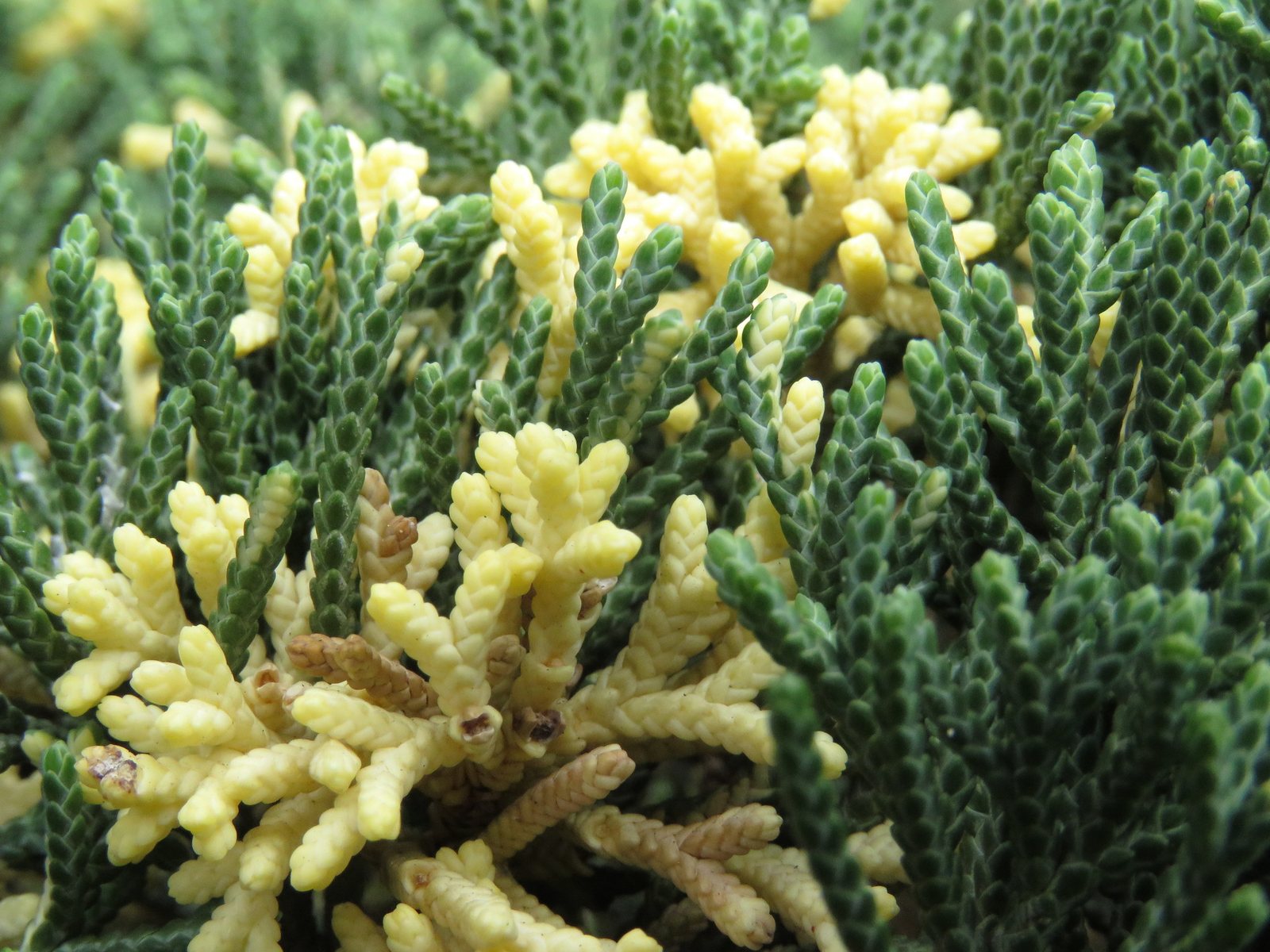
- Fine, mostly scale-like evergreen foliage with golden-yellow outer growth and greener shaded interiors; often turns bronze-gold in cold weather.
- Growth
- Slow to moderate; usually grows wider faster than it grows taller.
- Care needed
- Low
The year at a glance
- Deer resistant
- Drought tolerant
- Cold hardy
- Heat tolerant
- Wildlife
| J | F | M | A | M | J | J | A | S | O | N | D | |
|---|---|---|---|---|---|---|---|---|---|---|---|---|
| Plant |
Northern hemisphere months. In Australia, shift them by six.
- Difficulty
- Easy
- Toughness
- Very tough
Will it suit your garden?
Pick your zone, country, light and whether you have pets.
Full sun is 6 or more hours of direct sun a day, part shade 3 to 6 hours, shade under 3.
How it grows
Planting day
1.6 ft (0.5 m)
After 1 year
1.8 ft (0.55 m)
After 2 years
2 ft (0.6 m)
After 3 years
2.1 ft (0.65 m)
After 5 years
2.5 ft (0.75 m)
full size
About 5 years to full size.
From a typical nursery size, at an average rate for this kind of plant. A rule of thumb, not a forecast.
Good to know
- Cats and dogs
- Mildly toxic: may upset a stomach
- Growth rate
- Moderate
Care
Jobs through the year
- WaterApr–May, Sep–Nov, every 28 days
- For established plants, water deeply only if soil is dry; young plants need more frequent watering.
- WaterJun–Aug, every 21 days
- Water established plants only during prolonged drought; let soil dry between soakings.
- PruneFeb–Mar
- Remove damaged shoots and shorten strays to leafy side shoots; never cut into bare wood.
- PruneMay–Jun
- If tips show blight, cut back to healthy growth in dry weather and disinfect tools.
- MulchMar, Oct
- Maintain a thin mulch layer, keeping stems and crown clear.
- FeedApr
- Feed lightly only if growth is weak and soil fertility is poor.
- Plant with the root flare at soil level and leave room for its full spread.
- Water deeply when the root zone begins to dry during the first one or two growing seasons.
- Keep a thin layer of mulch over the roots, leaving the stems and crown clear.
- Feed lightly in spring only if growth is weak or the soil is poor.
- Keep lawn sprinklers from repeatedly wetting the foliage and saturating the soil.
Pruning. In late winter or early spring, remove dead or damaged shoots and shorten stray branches back to a leafy side shoot. Avoid routine shearing and never cut into bare old wood, which usually will not regrow.
Through the year
- Late winter
- Check for broken branches and remove damaged growth before new growth begins.
- Spring
- Plant when the soil is workable and drains freely; water the root ball thoroughly.
- Late spring
- Check shoot tips for browning and remove affected tips in dry weather.
- Summer
- Water young plants deeply during dry spells; inspect dusty foliage for spider mites.
- Autumn
- Refresh mulch without burying the crown, and clear leaves lodged inside the branches.
- Late autumn
- In cold climates, water before the ground freezes if autumn has been dry.
In the garden
- Use as a low evergreen anchor in a sunny mixed border, contrasting its gold foliage with blue or purple flowers.
- Plant on a well-drained bank for broad, low cover, allowing space for branches to spread naturally.
- Combine with rocks, gravel and blue-foliaged conifers for year-round colour and texture.
- Repeat along a broad path or driveway where its mature spread will not obstruct access.
Garden styles it suits: Low-maintenance, Dry gravel garden, Winter interest, Japanese, Modern and Desert / xeriscape.
Plant it with: Lavender, Catmint, Russian sage, Blue fescue, Sedum and Dwarf mugo pine.
Wildlife: Dense branches provide shelter for small birds. Any berry-like cones that develop may be eaten by birds; the flowers offer little value to pollinating insects.
Problems to watch for
- Root rot in wet soil: improve drainage or move the plant to a raised position; do not keep the root zone constantly moist.
- Spider mites causing stippled, dull or bronzed foliage: check for mites by tapping shoots over white paper, rinse foliage and use a labelled treatment if damage continues.
- Juniper tip blight causing dead shoot tips: prune affected tips back into healthy growth in dry weather, clean tools and improve airflow.
- Brown gaps after hard pruning or shading: avoid cutting into leafless wood and give the plant full sun; badly bare sections rarely fill in.
Safety
Do not eat the foliage or berry-like cones, or use them as culinary juniper berries. Juniper foliage and oils can irritate skin and cause digestive upset if swallowed; keep people, cats, dogs and horses from eating them. Toxicity information specific to this hybrid cultivar is limited, so the severity of larger ingestions is uncertain.
Easily confused with
Gold Coast juniper (Juniperus × pfitzeriana 'Gold Coast')
Usually has a more vigorous, upright-arching habit and brighter yellow new growth; young plants can be difficult to distinguish without a reliable label.
Golden Mop false cypress (Chamaecyparis pisifera 'Golden Mop')
Has conspicuously long, drooping, thread-like foliage rather than the short, finely branched sprays of Old Gold juniper.
The name
Juniperus is the Latin name for juniper, pfitzeriana honours the horticulturist Wilhelm Pfitzer, and 'Old Gold' describes the foliage colour.
Propagation. Take semi-ripe cuttings in late summer or early autumn and root them in a free-draining medium with protection from drying out. Seed does not reproduce the cultivar reliably.
Checked against open data
- Accepted botanical name
- Juniperus pfitzeriana
Sources: GBIF (CC BY 4.0). The care and design notes are LandscapeGPT's own.
See it in your own yard.
Upload a photo of your yard and see it redesigned with plants that suit your climate, each checked against your zone.