Oregon white oak
Quercus garryana. Family Fagaceae. Tree.
Also called Garry oak.
A long-lived deciduous oak native to western North America, from southwestern British Columbia to California. Gardeners grow it for its broad, spreading crown, rugged branches and value to wildlife; it needs a large site and suits climates with dry summers.
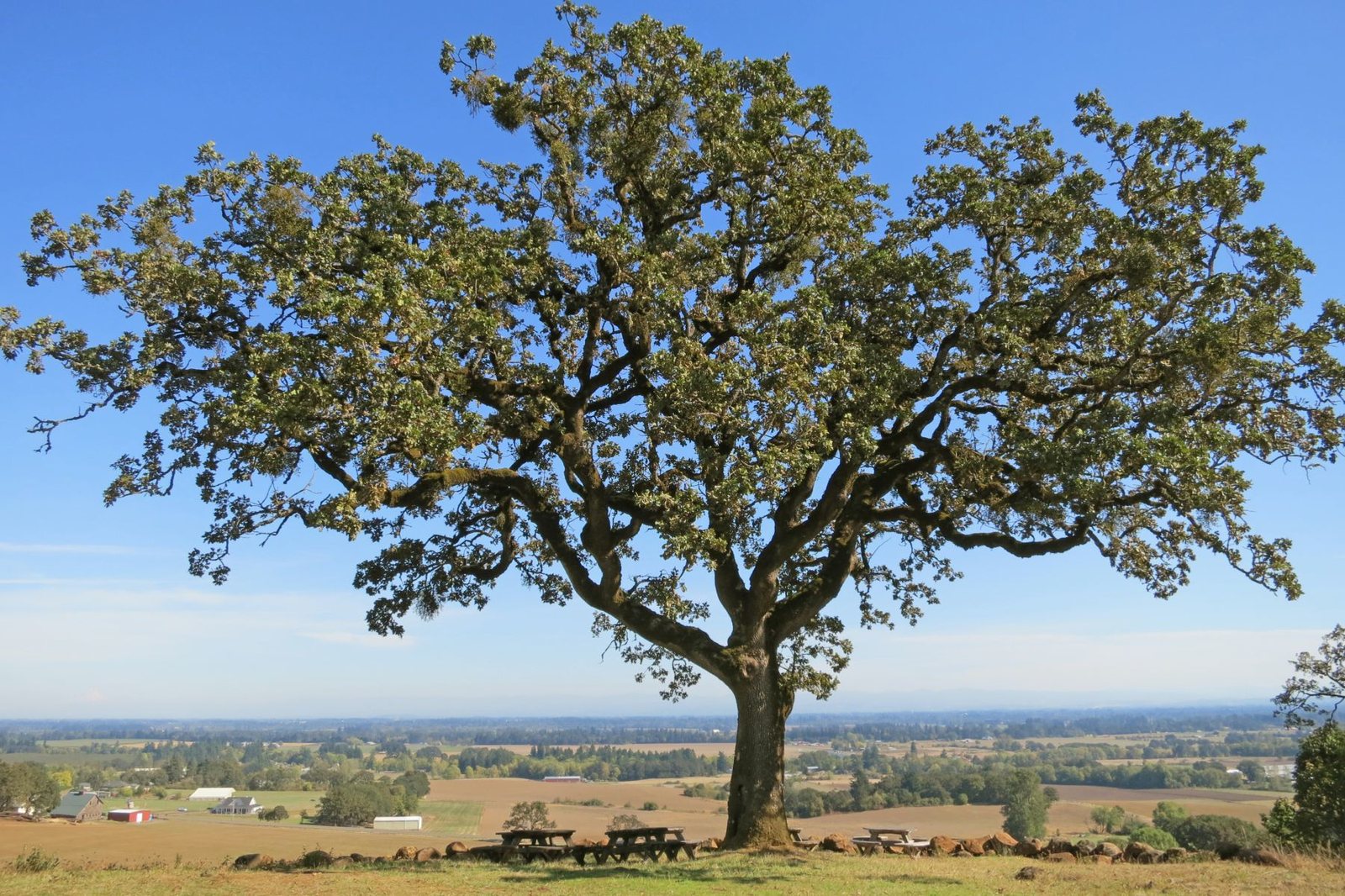
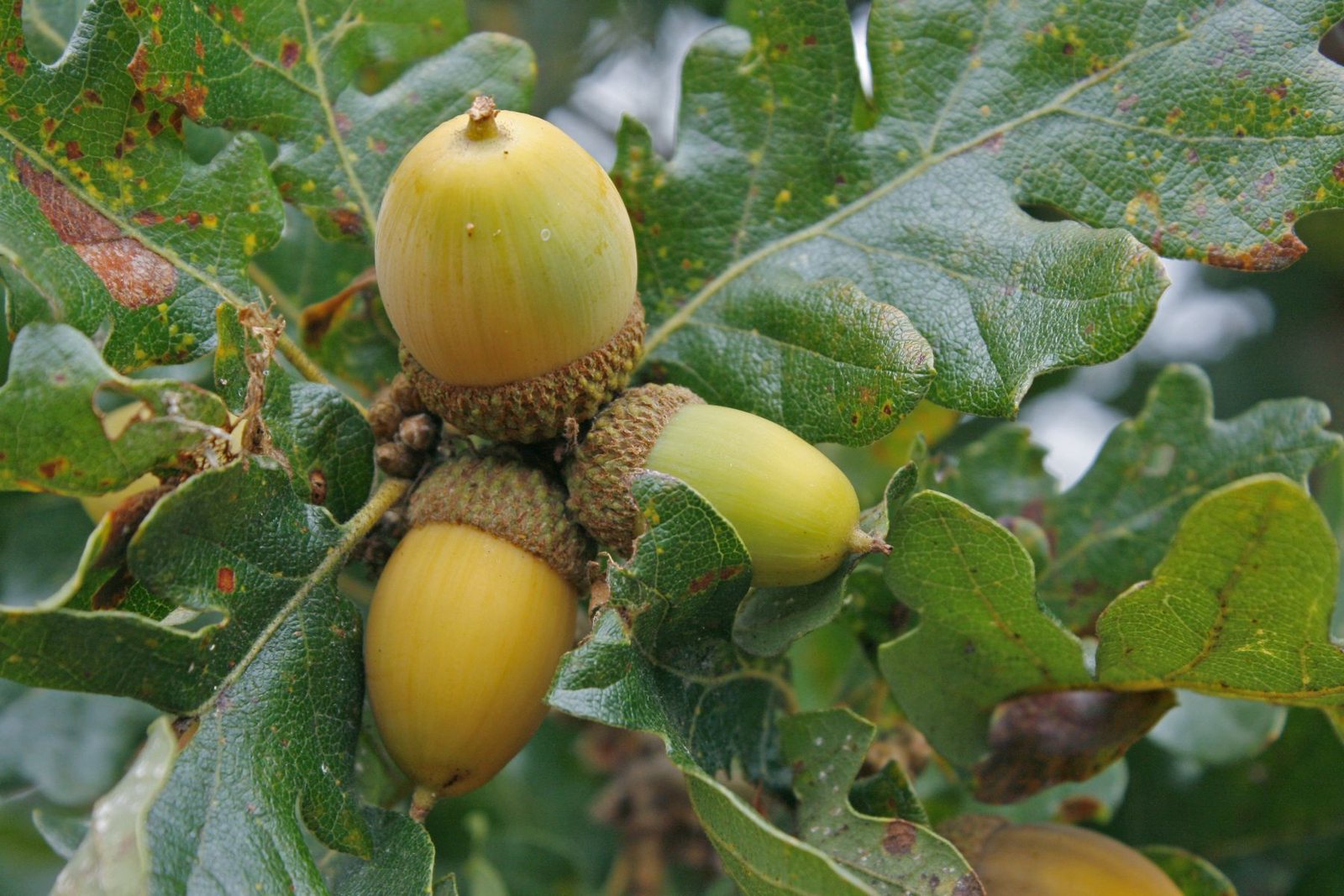
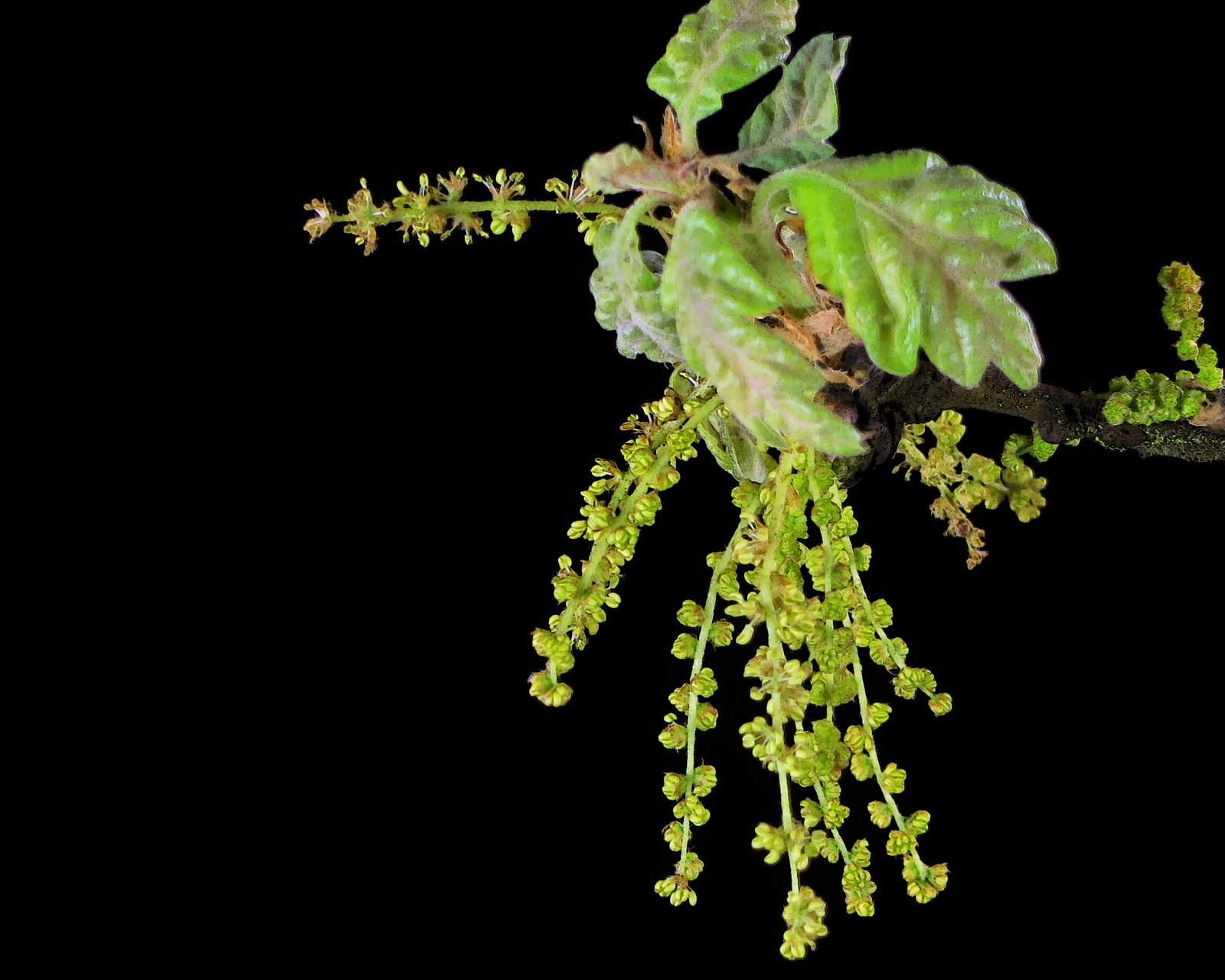
At a glance
- Sun
- Full sun; young trees tolerate light shade.
- Water
- Water regularly while establishing; established trees usually need little or no summer irrigation in suitable climates.
- Soil
- Adaptable to clay, loam and gravelly soils, including seasonally wet ground that dries in summer. Avoid permanently waterlogged sites.
- Height
- 40-80 ft (12-24 m)
- Spread
- 40-70 ft (12-21 m)
- Flowers
- Spring, as leaves emerge; inconspicuous yellow-green male catkins and tiny female flowers.
- Foliage
- Leathery green leaves with rounded lobes and paler, often softly hairy undersides; usually yellow-brown to brown in autumn.
- Growth
- Slow to moderate; young trees grow faster with adequate moisture and little competing vegetation.
- Care needed
- Low
The year at a glance
- Drought tolerant
- Heat tolerant
- Wildlife
| J | F | M | A | M | J | J | A | S | O | N | D | |
|---|---|---|---|---|---|---|---|---|---|---|---|---|
| Flowers | ||||||||||||
| Fruit | ||||||||||||
| Plant |
Northern hemisphere months. In Australia, shift them by six.
- Difficulty
- Easy
- Toughness
- Very tough
Will it suit your garden?
Pick your zone, country, light and whether you have pets.
Full sun is 6 or more hours of direct sun a day, part shade 3 to 6 hours, shade under 3.
How it grows
Planting day
7 ft (2.2 m)
After 1 year
10 ft (3 m)
After 2 years
12 ft (3.7 m)
After 3 years
15 ft (4.5 m)
After 5 years
20 ft (6.1 m)
About 20 years to full size.
From a typical nursery size, at an average rate for this kind of plant. A rule of thumb, not a forecast.
Good to know
- Cats and dogs
- Toxic
- Native to
- Canada
- Growth rate
- Moderate
Care
Jobs through the year
- WaterMay–Sep, every 28 days
- Established trees usually need no irrigation; water only in exceptional drought, but young trees need deeper, more frequent watering for 2–3 years.
- MulchMar, Oct
- Maintain 5–8 cm of wood chips over roots, away from the trunk; retain some fallen leaves.
- PruneJan–Feb, Dec
- Lightly train young trees in dry dormant weather; use an arborist for large limbs and never top.
- ProtectMar
- Clear competing grass around young trees and protect roots from digging, compaction and changes in soil level.
- Plant a small, nursery-grown tree during the cool, moist season, allowing ample room for its mature crown.
- Water deeply during dry spells for the first two or three growing seasons, letting the surface soil dry between waterings.
- Spread 2-3 in (5-8 cm) of wood-chip mulch over the root area, keeping it clear of the trunk.
- Avoid frequent summer lawn irrigation beneath established trees.
- Do not routinely fertilize; protect the root area from digging, paving, soil compaction and changes in soil level.
Pruning. Prune young trees lightly in the dormant season to develop well-spaced main branches and remove damaged or crossing growth. Have a qualified arborist assess large limbs; never top the tree.
Through the year
- Autumn
- Plant nursery-grown trees once cooler weather and dependable rain arrive.
- Late autumn
- Collect sound, freshly fallen acorns for immediate sowing; protect them from rodents.
- Winter
- Prune young trees lightly during dry weather and inspect mature trees for damaged branches.
- Spring
- Refresh mulch, keeping the trunk clear, and remove grass competing with young trees.
- Summer
- Deep-water young trees during prolonged dry spells; avoid routinely irrigating established root zones.
- Autumn
- Leave some fallen leaves beneath the canopy as habitat and natural mulch where practical.
In the garden
- Use as a specimen shade tree in a large garden, with room for its broad crown.
- Plant widely spaced trees over a native meadow to create an open oak-savanna landscape.
- Pair with drought-tolerant grasses and spring bulbs that need little summer irrigation.
- Retain existing trees as the framework of a wildlife garden, keeping construction away from their roots.
Garden styles it suits: Pacific Northwest woodland, Native meadow, Wildlife garden, Grand estate, Rewilded and California native.
Plant it with: Roemer's fescue, California fescue, Common camas, Common yarrow and Kinnikinnick.
Wildlife: Acorns feed squirrels, jays, woodpeckers and other wildlife. Leaves support many moth and butterfly larvae, while old trees provide cavities, nesting sites and shelter.
Problems to watch for
- Root and collar rot: persistent summer moisture, buried trunks and poor drainage encourage decline. Keep the trunk flare exposed and avoid irrigated lawns beneath established trees.
- Powdery mildew: a white coating may develop on leaves, especially in shaded or crowded conditions. Improve airflow where practical; established trees rarely need treatment.
- Oak galls: bumps or unusual growths on leaves and twigs are usually caused by tiny wasps. Most are harmless and need no treatment.
- Poor establishment: large transplants, damaged roots and competition from grass can cause stunting or death. Start with a small tree, mulch widely and water deeply while it establishes.
Safety
Acorns, buds and leaves contain tannins and can poison horses, dogs and cats if eaten in quantity; young leaves and acorns are particular concerns. Serious poisoning can damage the kidneys and digestive tract, especially in grazing animals. Raw, unleached acorns are not safe for people to eat; properly identified acorns require thorough processing to remove tannins.
Easily confused with
Valley oak (Quercus lobata)
Its leaves usually have deeper, more irregular lobes, and mature acorns are generally longer and more pointed. Older trees often have strongly drooping branch tips.
English oak (Quercus robur)
Its leaves usually have small ear-like lobes at the base and very short stalks; the acorns hang on conspicuously long stalks.
California black oak (Quercus kelloggii)
Its leaf lobes end in pointed bristles, unlike the rounded, bristle-free lobes of Oregon white oak.
The name
The epithet garryana honours Nicholas Garry of the Hudson's Bay Company, also commemorated in the common name Garry oak.
Propagation. Sow fresh, sound acorns in autumn in deep pots or their final position, protected with mesh from rodents. Do not let acorns dry out; transplant seedlings while small because they quickly develop a deep root.
Checked against open data
- Accepted botanical name
- Quercus garryana
- Native range
- British Columbia, California, Oregon and Washington.
- Measured
- Soil pH 4.8 to 6.7. Average height 2438 cm.
Sources: GBIF (CC BY 4.0) and Trefle (CC BY 4.0). The care and design notes are LandscapeGPT's own.
See it in your own yard.
Upload a photo of your yard and see it redesigned with plants that suit your climate, each checked against your zone.