Oriental fountain grass
Cenchrus orientalis. Family Poaceae. Ornamental grass.
Also called Pennisetum orientale, Oriental pennisetum.
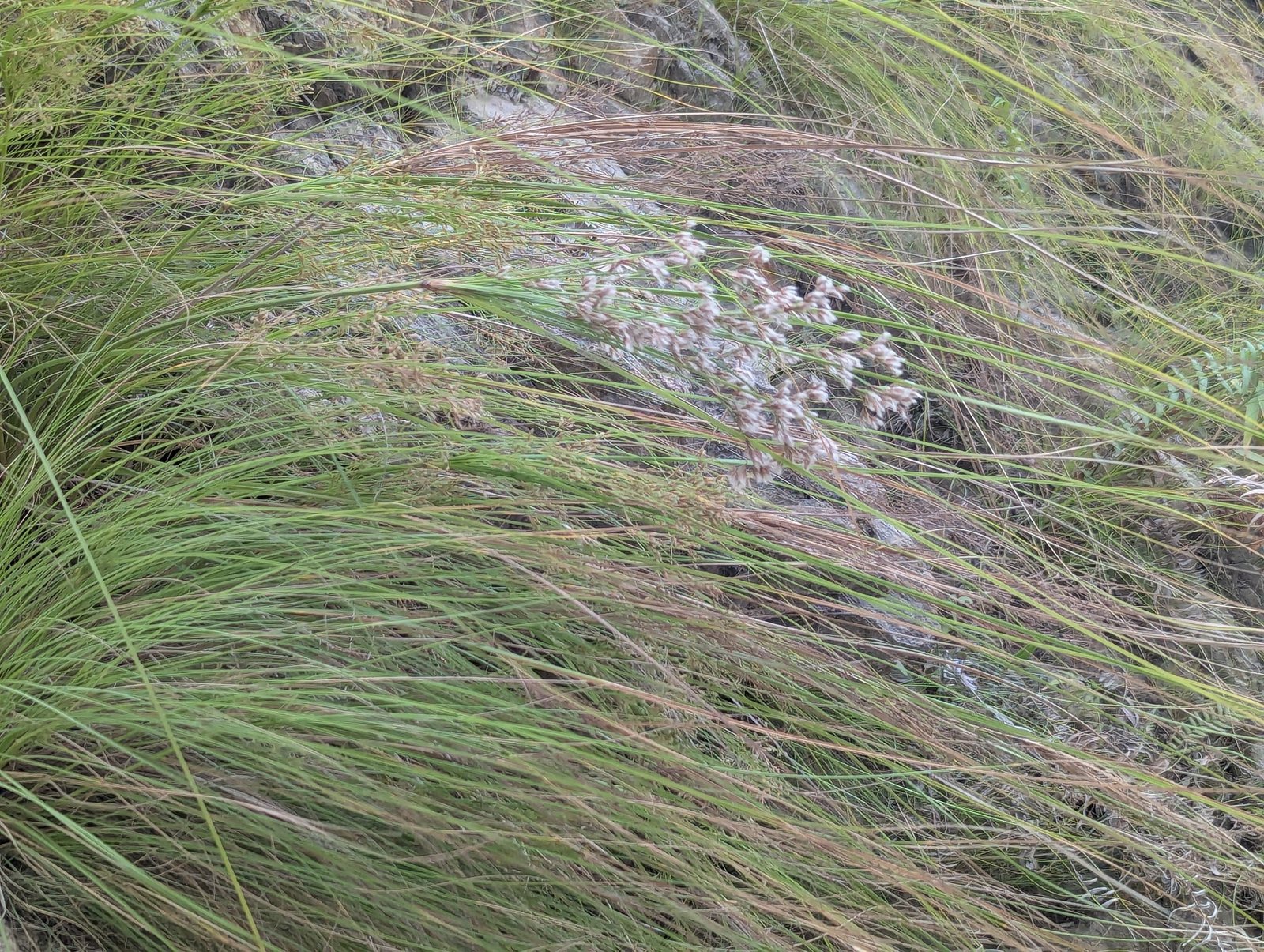
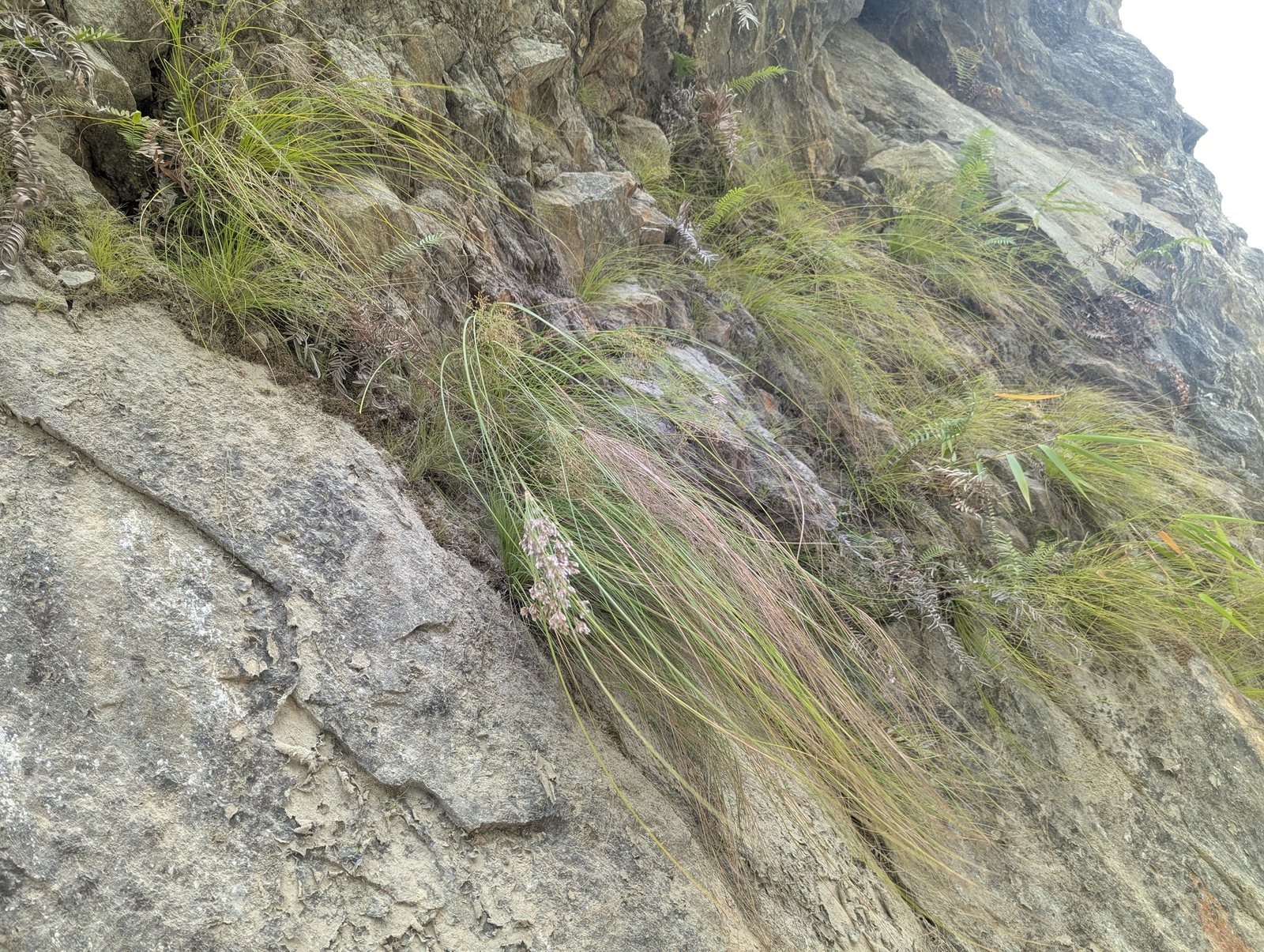
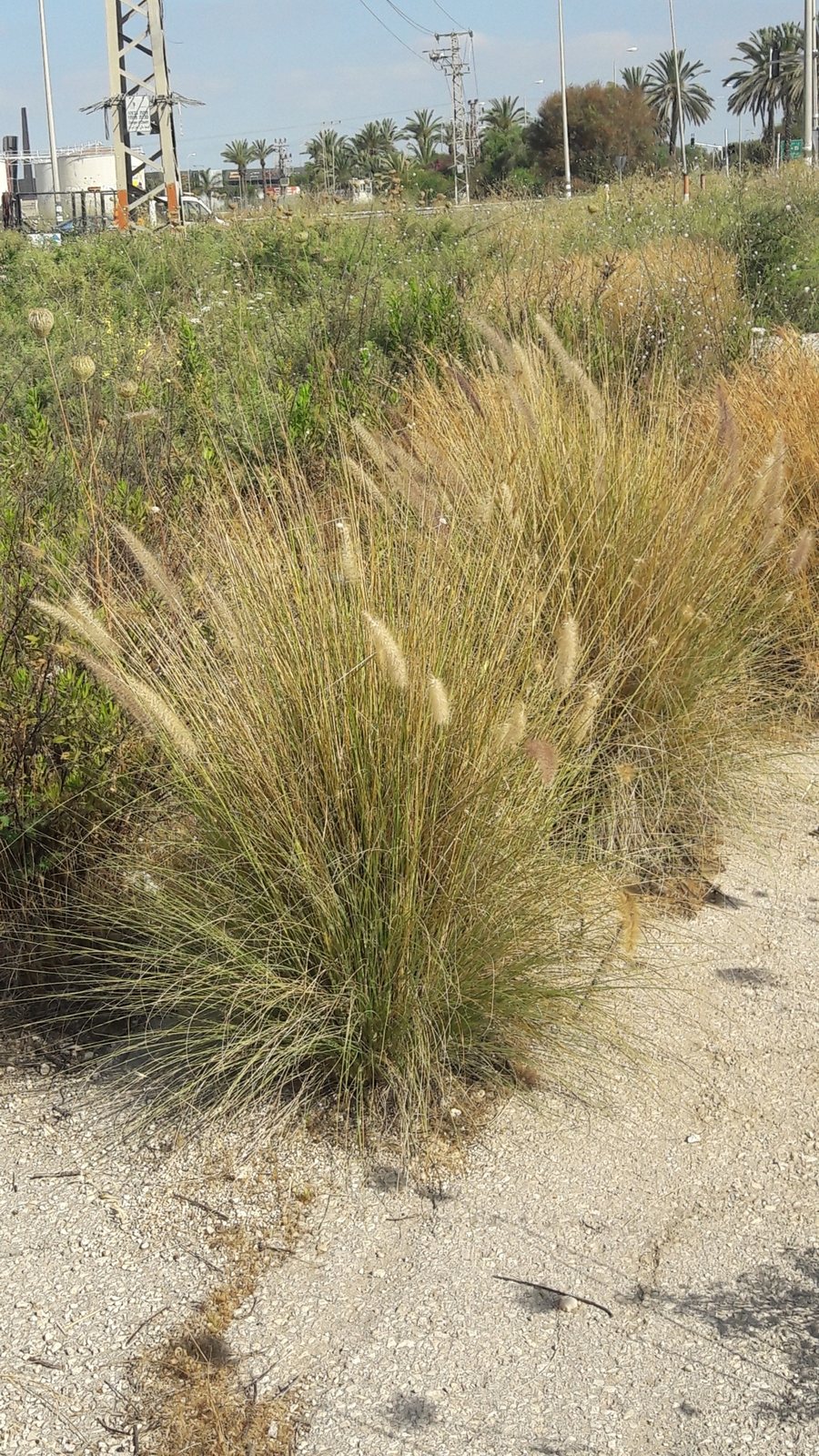
Oriental fountain grass is a clump-forming perennial grass with narrow, arching leaves and soft pinkish flower plumes that fade to buff. Gardeners grow it for its long flowering season, fine texture and movement in sunny borders and gravel gardens.
At a glance
- Sun
- Full sun; tolerates light shade but flowers less and may become floppy.
- Water
- Water regularly during establishment. Once established, it tolerates dry spells, but occasional deep watering during prolonged drought helps maintain flowering.
- Soil
- Well-drained sandy, gravelly or loamy soil; tolerates modest fertility. Avoid heavy soil that stays wet in winter.
- Height
- 2-3 ft (0.6-0.9 m), including flower stems
- Spread
- 2-3 ft (0.6-0.9 m)
- Flowers
- Summer into autumn, sometimes starting in late spring in warm climates; soft pink to pinkish-purple, bristly plumes fade to cream and buff.
- Foliage
- Narrow, arching green to grey-green leaves form a rounded mound and turn straw-coloured after frost.
- Growth
- Moderate
- Care needed
- Low
The year at a glance
- Deer resistant
- Drought tolerant
- Heat tolerant
- Wildlife
| J | F | M | A | M | J | J | A | S | O | N | D | |
|---|---|---|---|---|---|---|---|---|---|---|---|---|
| Flowers | ||||||||||||
| Fruit | ||||||||||||
| Plant |
Northern hemisphere months. In Australia, shift them by six.
- Difficulty
- Easy
- Toughness
- Fairly tough
Will it suit your garden?
Pick your zone, country, light and whether you have pets.
Full sun is 6 or more hours of direct sun a day, part shade 3 to 6 hours, shade under 3.
How it grows
Planting day
1.1 ft (0.35 m)
After 1 year
1.7 ft (0.51 m)
After 2 years
2.2 ft (0.67 m)
After 3 years
2.5 ft (0.75 m)
full size
About 3 years to full size.
From a typical nursery size, at an average rate for this kind of plant. A rule of thumb, not a forecast.
Good to know
- Cats and dogs
- Safe
- Growth rate
- Moderate
Care
Jobs through the year
- WaterApr–May, Sep–Oct, every 21 days
- Water established plants only when the root zone is dry and rain insufficient; new plants need more.
- WaterJun–Aug, every 14 days
- During prolonged dry weather, water established clumps deeply to sustain flowering; young plants need more.
- PruneFeb–Mar
- Cut old foliage and plumes to 10-15 cm before fresh shoots lengthen.
- DivideApr–May
- Divide congested clumps as growth resumes, usually every three to four years.
- FeedApr
- Only if growth is weak, apply a light compost dressing away from the crown; otherwise omit feeding.
- DeadheadSep–Oct
- Remove ripening plumes only if unwanted seedlings are a problem; otherwise retain winter structure.
- ProtectJan–Feb, Nov–Dec
- Retain dry foliage for winter protection and keep wet leaves and mulch off the crown.
- Plant in spring in colder regions, choosing a sunny position with free-draining soil.
- Water deeply during the first growing season, allowing the surface soil to dry between waterings.
- Avoid heavy feeding; apply a light dressing of compost in spring only if growth is weak.
- Keep mulch away from the crown, especially where winters are wet.
- Divide congested clumps in spring when new growth appears, usually every three to four years.
Pruning. Leave the dry foliage and plumes standing through winter where they remain attractive. In late winter or early spring, before new shoots lengthen, cut the old growth back to 4-6 in (10-15 cm) above the ground.
Through the year
- Late winter
- Cut back old stems before fresh growth becomes tall enough to damage.
- Spring
- Plant new specimens and divide established clumps as growth resumes.
- Late spring
- Check soil moisture around new plants and remove weeds from the clump's base.
- Summer
- Water deeply during prolonged dry spells, particularly in containers.
- Autumn
- Leave sound plumes for winter structure, or remove seedheads if unwanted seedlings appear.
- Winter
- Keep the crown free of wet leaf litter and check that container drainage holes remain clear.
In the garden
- Plant in repeated groups through a sunny perennial border to link flowers with fine-textured foliage.
- Combine with lavender, catmint and stonecrops in a well-drained gravel garden.
- Place beside a path or seating area where low sunlight can shine through the plumes.
- Use in a large container with drainage holes for a soft, arching focal point.
Garden styles it suits: New perennial (prairie), Dry gravel garden, Modern, Cottage garden, Sensory garden and Low-maintenance.
Plant it with: Lavender, Catmint, Russian sage, Purple coneflower, Yarrow and Autumn stonecrop.
Wildlife: The dense clump provides shelter for small invertebrates. It is wind-pollinated rather than a useful nectar source for bees.
Problems to watch for
- Winter crown rot: avoid waterlogged ground, improve drainage before planting and keep wet mulch off the crown.
- Failure to return after a cold winter: use a sheltered, well-drained position; container plants need more root protection than plants in the ground.
- Floppy growth or few flowers: move to full sun and stop high-nitrogen feeding.
- Brown tips and reduced flowering during drought: water deeply when the root zone becomes dry, especially in pots.
Safety
Not known to be toxic to people, cats, dogs or horses. The leaves and bristly seedheads can cause mechanical irritation if chewed or caught around the eyes, mouth or skin; this is not poisoning.
Easily confused with
Chinese fountain grass (Cenchrus alopecuroides)
Usually has denser, more cylindrical bottlebrush flowerheads and flowers mainly in late summer and autumn; Oriental fountain grass has looser, softer-looking pinkish plumes and often starts earlier.
Fountain grass (Cenchrus setaceus)
Typically has longer, narrower pink-purple flowerheads on taller, more upright stems. It is less cold-hardy and is invasive or regulated in several regions, so check the botanical name before buying.
The name
The epithet orientalis means 'eastern', while 'fountain grass' describes the fountain-like arch of the leaves and flowering stems.
Propagation. Divide clumps in spring as new growth starts, retaining healthy roots and shoots on each division. The species can also be raised from seed sown in spring; named cultivars should be divided to preserve their characteristics.
Checked against open data
- Accepted botanical name
- Cenchrus orientalis
- Native range
- Afghanistan, Algeria, Bangladesh, East Himalaya, Egypt, Gulf States, India, Iran, Iraq, Lebanon-Syria, Morocco and Myanmar.
Sources: GBIF (CC BY 4.0) and Trefle (CC BY 4.0). The care and design notes are LandscapeGPT's own.
See it in your own yard.
Upload a photo of your yard and see it redesigned with plants that suit your climate, each checked against your zone.