Oriental poppy 'Patty's Plum'
Papaver orientale 'Patty's Plum'. Family Papaveraceae. Perennial.
Also called Papaver orientale 'Patty's Plum', 'Patty's Plum' poppy.
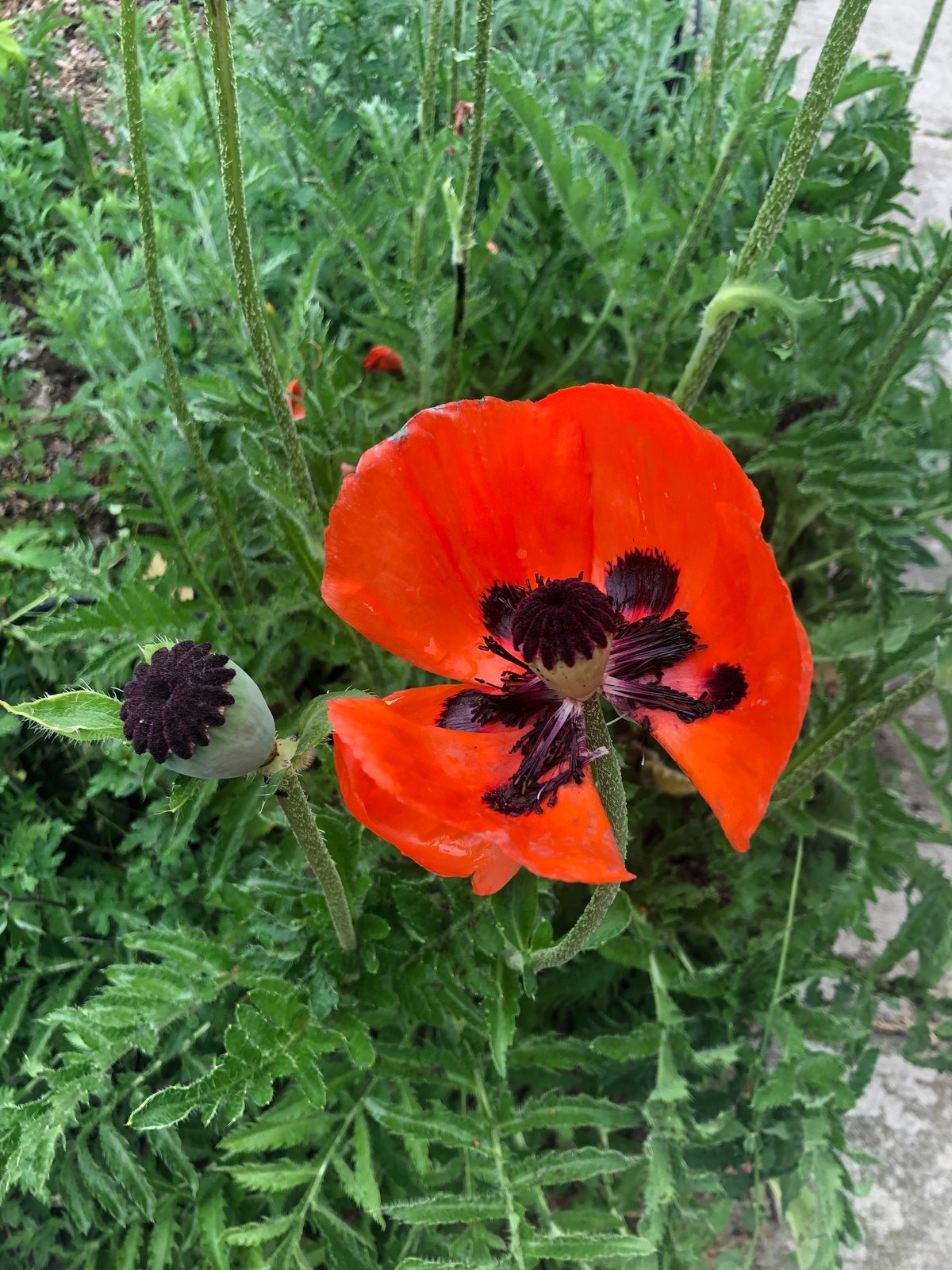
'Patty's Plum' is a clump-forming perennial grown for large, crinkled flowers in muted plum-purple, with dark blotches at the petal bases. It flowers in late spring to early summer, then usually loses its foliage during summer dormancy, so place it among plants that will cover the gap.
At a glance
- Sun
- Full sun; some afternoon shade can help flowers last longer in warm locations.
- Water
- Water regularly while establishing, then during prolonged dry spells in active growth. Keep the soil relatively dry during summer dormancy.
- Soil
- Deep, well-drained soil, preferably moderately fertile; tolerates chalk and neutral to alkaline conditions. Avoid waterlogged ground, especially in winter.
- Height
- 2-3 ft (0.6-0.9 m)
- Spread
- 1.5-2 ft (0.45-0.6 m)
- Flowers
- Late spring to early summer; large, dusty plum-purple flowers with dark basal blotches, often fading toward smoky pink as they age.
- Foliage
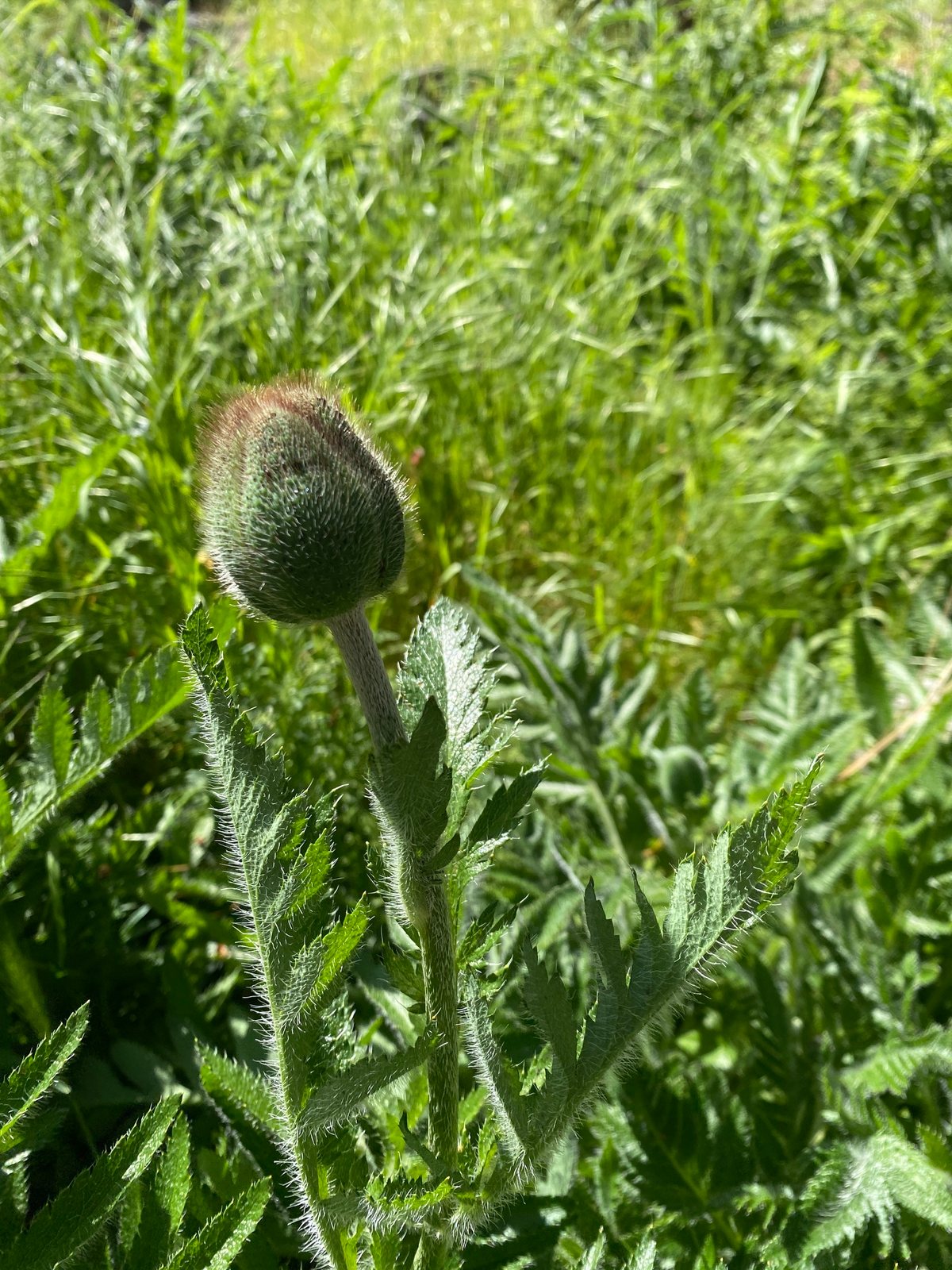
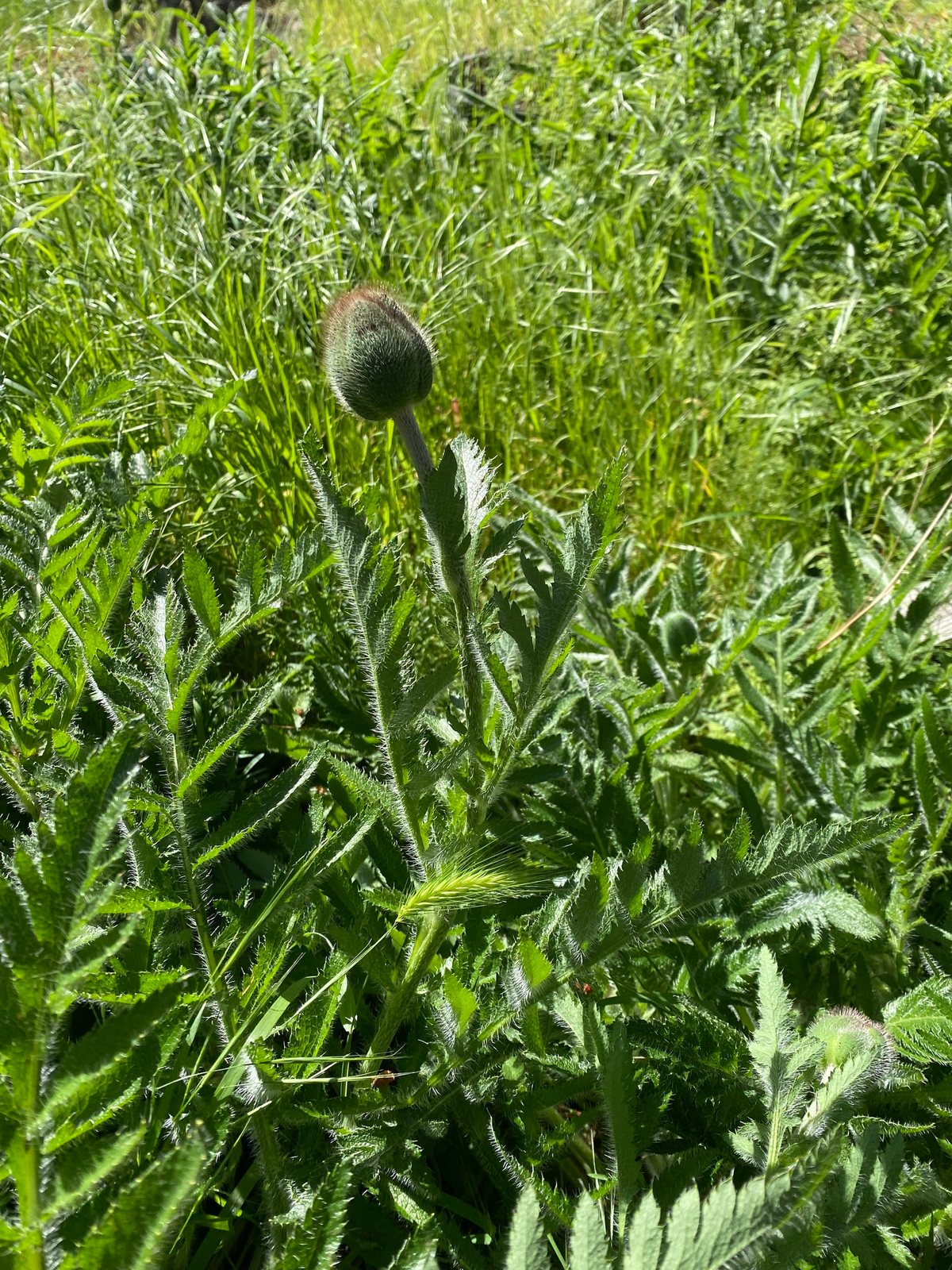
- Coarse, hairy, deeply divided green leaves form a basal clump. Leaves usually die back after flowering, with fresh growth often appearing in autumn.
- Growth
- Moderate; usually takes two to three growing seasons to form a substantial clump.
- Care needed
- Low
The year at a glance
- Pollinators
- Deer resistant
- Drought tolerant
- Cold hardy
- Low allergen
| J | F | M | A | M | J | J | A | S | O | N | D | |
|---|---|---|---|---|---|---|---|---|---|---|---|---|
| Flowers | ||||||||||||
| Fruit | ||||||||||||
| Plant |
Northern hemisphere months. In Australia, shift them by six.
- Difficulty
- Easy
- Toughness
- Very tough
Will it suit your garden?
Pick your zone, country, light and whether you have pets.
Full sun is 6 or more hours of direct sun a day, part shade 3 to 6 hours, shade under 3.
How it grows
Planting day
1 ft (0.3 m)
After 1 year
1.5 ft (0.45 m)
After 2 years
2 ft (0.6 m)
After 3 years
2.5 ft (0.75 m)
full size
About 3 years to full size.
From a typical nursery size, at an average rate for this kind of plant. A rule of thumb, not a forecast.
Good to know
- Cats and dogs
- Toxic
- Growth rate
- Moderate
Care
Jobs through the year
- WaterMar–Jun, every 14 days
- Water established plants during prolonged drought while actively growing; new plants need more.
- WaterSep–Oct, every 21 days
- Water regrowing established plants only in prolonged drought; water new autumn plantings more often.
- MulchMar
- Apply a light compost dressing, keeping the crown exposed and avoiding heavy wet mulch.
- ProtectApr–May
- Fit discreet supports before flower stems lengthen on windy sites.
- DeadheadMay–Jun, every 7 days
- Remove faded stems at the base, or retain selected stems for ornamental seedheads.
- PruneJun–Jul
- Cut yellowed foliage near ground level without damaging fresh basal growth.
- ProtectJul–Aug
- Keep dormant crowns relatively dry and avoid routine summer irrigation.
- DivideSep
- Divide only if necessary; established fleshy roots resent repeated disturbance.
- Plant with the crown at soil level in a sunny position with excellent drainage.
- Water new plants through their first growing season, but do not keep dormant crowns wet.
- Apply a light dressing of compost in spring; avoid heavy nitrogen feeding, which encourages floppy growth.
- Fit discreet supports before the flower stems lengthen if the site is windy.
- Leave established clumps undisturbed unless they need dividing; their fleshy roots resent repeated moving.
Pruning. Remove spent flower stems at the base unless you want seedheads. Once the leaves yellow after flowering, cut them back near ground level without damaging any fresh basal growth.
Through the year
- Early spring
- Remove dead debris, apply a little compost and check that the crown is not buried.
- Spring
- Plant container-grown plants and water them in; install supports where needed.
- Late spring
- Check buds for aphids and water during prolonged dry weather.
- Early summer
- Remove faded flower stems, or leave a few for ornamental seedheads.
- Mid summer
- Cut away yellowed foliage and avoid routine watering over the dormant crown.
- Early autumn
- Plant or divide during cool weather, allowing time for roots to establish before hard freezes.
- Late autumn
- Take root cuttings if required and keep heavy, wet mulch away from the crown.
In the garden
- Plant in small groups through a sunny mixed border for a brief, distinctive late-spring display.
- Pair with silver foliage and soft pink or blue flowers to complement the muted plum colouring.
- Place behind hardy geraniums or catmint, which can spread over the space left by dormant foliage.
- Use among later-flowering perennials and grasses to keep the border full after the poppies finish.
Garden styles it suits: Cottage garden, English country, Romantic rose garden, Arts and Crafts, Blues and silvers and New perennial (prairie).
Plant it with: Hardy geraniums, Catmint, Bearded iris, Salvia, Lady's mantle and Switchgrass.
Wildlife: The pollen-rich flowers attract bees. They offer little or no nectar.
Problems to watch for
- Crown and root rot in wet soil: improve drainage or move to a raised planting area; do not irrigate dormant crowns routinely.
- Aphids on young shoots and buds: dislodge with water or use insecticidal soap according to the label, avoiding open flowers.
- Powdery mildew: provide airflow, avoid overcrowding and remove badly affected leaves.
- Flopping stems or damaged flowers: provide early support and choose a position sheltered from strong wind.
Safety
Treat all parts, including roots, seed capsules and milky sap, as toxic to people, cats, dogs and horses if eaten. Ingestion can cause digestive upset and potentially serious nervous-system effects; seek medical or veterinary advice promptly. Sap may irritate skin, so wear gloves when cutting or dividing.
Easily confused with
Opium poppy (Papaver somniferum)
An annual with smooth, waxy blue-green leaves that clasp the stems; Oriental poppies have conspicuously hairy, deeply divided leaves and persistent fleshy roots.
Common poppy (Papaver rhoeas)
An annual with a lighter, branching habit and usually smaller flowers. It does not form the substantial perennial crown and coarse basal foliage of an Oriental poppy.
The name
Papaver is the Latin name for poppy, and orientale means eastern, referring to the species' origins in western Asia.
Propagation. Take root cuttings in late autumn or winter, or divide established clumps during dormancy in late summer to early autumn. Vegetative propagation preserves the cultivar; seedlings will not reliably match 'Patty's Plum'. Root fragments left after moving a plant may regrow.
Checked against open data
- Accepted botanical name
- Papaver orientale
- In the US and Canada
- Introduced in Canada and the lower 48 states.
- Native range
- Iran, North Caucasus, Transcaucasus and Turkey.
- Measured
- Average height 5 cm.
Sources: GBIF (CC BY 4.0), USDA PLANTS and Trefle (CC BY 4.0). The care and design notes are LandscapeGPT's own.
See it in your own yard.
Upload a photo of your yard and see it redesigned with plants that suit your climate, each checked against your zone.