Oxford cranesbill 'Wargrave Pink'
Geranium × oxonianum 'Wargrave Pink'. Family Geraniaceae. Perennial.
Also called Geranium × oxonianum 'Wargrave Pink', 'Wargrave Pink' hardy geranium.
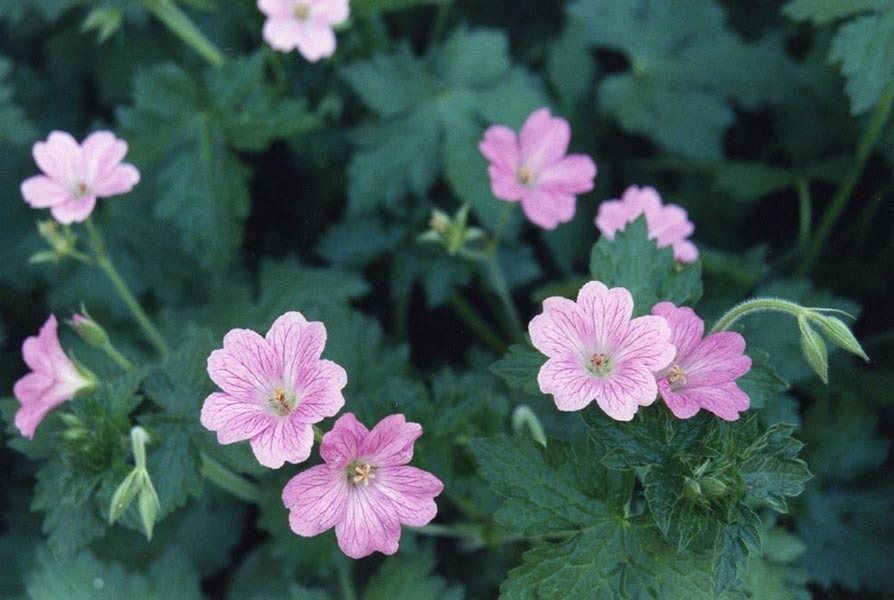
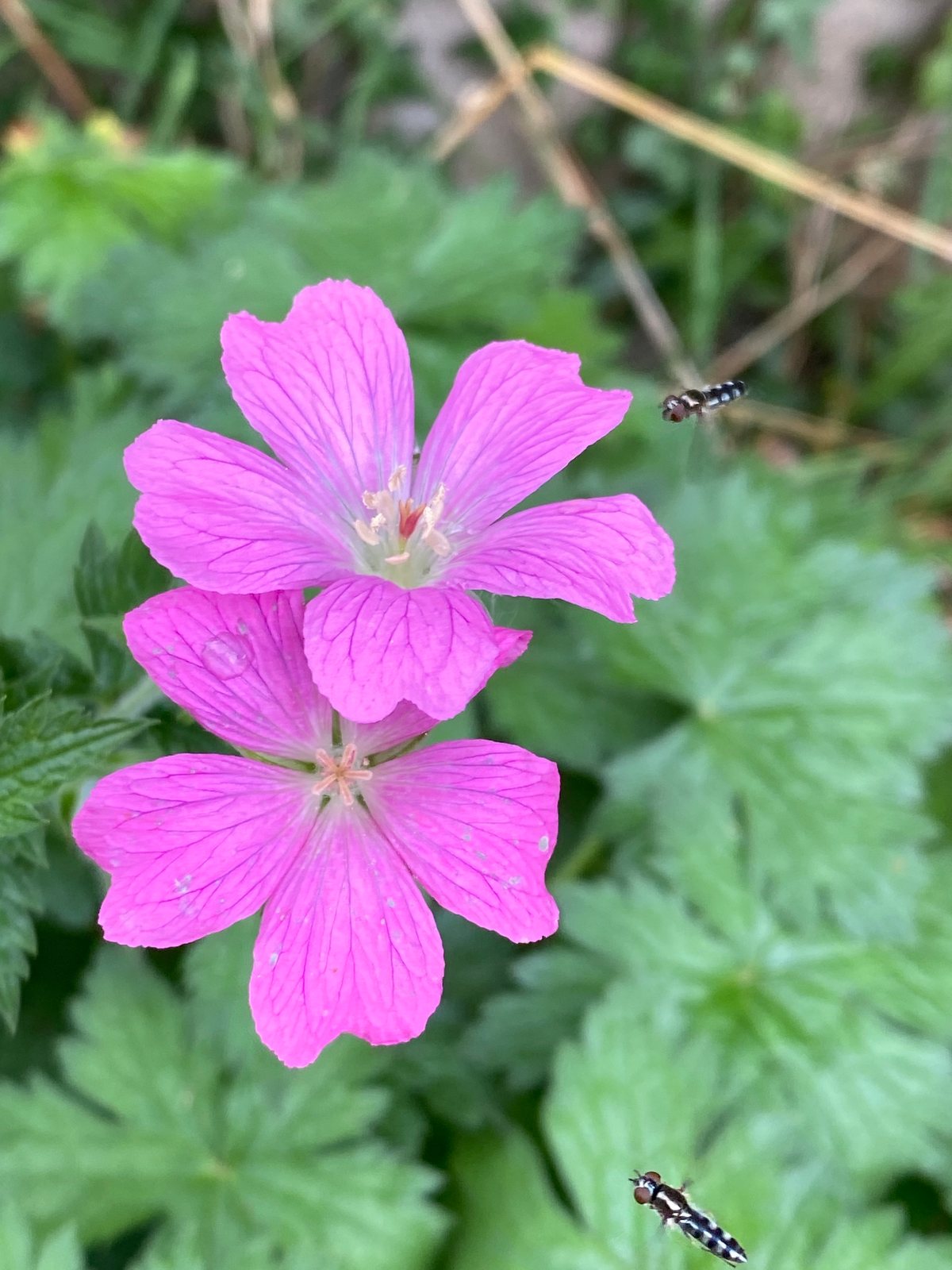
'Wargrave Pink' is a hardy, spreading perennial with lobed leaves and loose clusters of salmon-pink flowers. It makes useful groundcover beneath roses and among border plants, flowering for many weeks and often blooming again after cutting back. Allow room for its spreading clumps and remove unwanted seedlings.
At a glance
- Sun
- Full sun to partial shade; afternoon shade helps in hot summers.
- Water
- Water regularly during establishment, then during prolonged dry spells. Established plants tolerate some drought but flower better with moderate moisture.
- Soil
- Well-drained soil, including clay improved with organic matter; tolerates acidic, neutral and alkaline conditions. Avoid persistently waterlogged ground.
- Height
- 1-2 ft (0.3-0.6 m)
- Spread
- 2-3 ft (0.6-0.9 m)
- Flowers
- Salmon-pink flowers with fine darker veins from late spring through summer, sometimes continuing or repeating into autumn.
- Foliage
- Rounded, deeply lobed green leaves form broad, leafy clumps. Usually deciduous in cold winters, but some foliage may persist in mild climates.
- Growth
- Fast
- Care needed
- Low
The year at a glance
- Pollinators
- Deer resistant
- Drought tolerant
- Low allergen
| J | F | M | A | M | J | J | A | S | O | N | D | |
|---|---|---|---|---|---|---|---|---|---|---|---|---|
| Flowers | ||||||||||||
| Plant |
Northern hemisphere months. In Australia, shift them by six.
- Difficulty
- Easy
- Toughness
- Very tough
Will it suit your garden?
Pick your zone, country, light and whether you have pets.
Full sun is 6 or more hours of direct sun a day, part shade 3 to 6 hours, shade under 3.
How it grows
Planting day
1 ft (0.3 m)
After 1 year
1.2 ft (0.38 m)
After 2 years
1.5 ft (0.45 m)
full size
About 2 years to full size.
From a typical nursery size, at an average rate for this kind of plant. A rule of thumb, not a forecast.
Good to know
- Cats and dogs
- Safe
- Growth rate
- Fast
Care
Jobs through the year
- WaterApr–May, Sep–Oct, every 14 days
- Water established clumps only if soil is dry; water new plants more often.
- WaterJun–Aug, every 7 days
- During prolonged dry weather, soak established clumps deeply; young plants need closer attention.
- MulchMar–Apr
- Spread a thin compost mulch, keeping the crown clear.
- DivideMar–Apr, Sep
- Divide crowded clumps as needed, allowing autumn divisions to root before frost.
- PruneFeb–Mar
- Remove dead foliage before new growth develops.
- PruneJul–Aug
- After the main flush, shear tired growth above the crown and water if dry.
- DeadheadJun–Sep, every 14 days
- Remove spent stems before seed ripens to limit self-seeding.
- Water new plants deeply whenever the root zone begins to dry during their first growing season.
- Apply a thin layer of compost in spring; rich feeding is usually unnecessary.
- Mulch around plants to conserve moisture, keeping mulch away from the crown.
- Divide crowded clumps in spring or early autumn to control their spread.
- Pull unwanted seedlings while small; they may not match the named cultivar.
Pruning. After the main flush of flowers, shear back spent stems and tired foliage to just above the crown, then water to encourage fresh growth and possible repeat bloom. Remove remaining dead foliage in late winter or early spring.
Through the year
- Early spring
- Remove dead foliage and divide established clumps if they have outgrown their space.
- Spring
- Plant into well-drained soil, water thoroughly and add a light compost mulch.
- Late spring
- Check around established plants for unwanted seedlings and remove them before they become rooted among neighbours.
- Summer
- Cut back after the main flowering flush and water during prolonged dry weather.
- Early autumn
- Plant or divide where winters are mild enough for roots to establish before the ground freezes.
- Late autumn
- Remove collapsed or diseased foliage, but leave healthy leaves that remain green.
In the garden
- Plant beneath shrub roses to cover bare lower stems and soften the edge of the planting.
- Use along informal paths, allowing the foliage to spill over the edge without blocking the walkway.
- Weave between salvias and catmint for a long-flowering pink, purple and blue border.
- Mass beneath deciduous shrubs in light shade to reduce exposed soil and help suppress weeds.
Garden styles it suits: Cottage garden, English country, Romantic rose garden, Pastel border, Pollinator garden and Low-maintenance.
Plant it with: Shrub roses, Catmint, Perennial salvia, Lady's mantle, Astrantia and Foxgloves.
Wildlife: The open flowers provide nectar and pollen for bees and other visiting insects.
Problems to watch for
- Powdery mildew can affect foliage in dry, crowded conditions; improve airflow, water the soil during drought and remove badly affected leaves.
- Vine weevil larvae can damage roots, particularly in containers; inspect declining plants and use an appropriate biological nematode treatment when soil temperatures suit.
- Clumps may flop or look ragged after flowering; shear them back and water to encourage a fresh mound of foliage.
- Self-seeding can crowd nearby plants; remove seedheads before they ripen and pull seedlings promptly.
Safety
Not known to be toxic to people, cats, dogs or horses. No part is recognised as poisonous, but it is not a food plant and should not be eaten.
Easily confused with
French cranesbill (Geranium endressii)
One of the hybrid's parents, with similar foliage and flowers; its flowers are generally clearer pink rather than the salmon-pink typical of 'Wargrave Pink'. The two can be difficult to separate without a reliable label.
Pencilled cranesbill (Geranium versicolor)
The other parent has whitish to very pale pink flowers with a conspicuous network of purple veins, rather than an overall salmon-pink flower.
The name
Geranium comes from the Greek word for crane, referring to the beak-shaped fruit, while oxonianum means 'of Oxford'.
Propagation. Divide clumps in spring or early autumn to retain the cultivar's characteristics. Seedlings may differ from 'Wargrave Pink', so do not rely on seed for identical plants.
Checked against open data
- Accepted botanical name
- Geranium oxonianum
Sources: GBIF (CC BY 4.0). The care and design notes are LandscapeGPT's own.
See it in your own yard.
Upload a photo of your yard and see it redesigned with plants that suit your climate, each checked against your zone.