Pacific Night mirror bush
Coprosma repens 'Pacific Night'. Family Rubiaceae. Shrub.
Also called Coprosma 'Pacific Night', Pacific Night mirror plant.
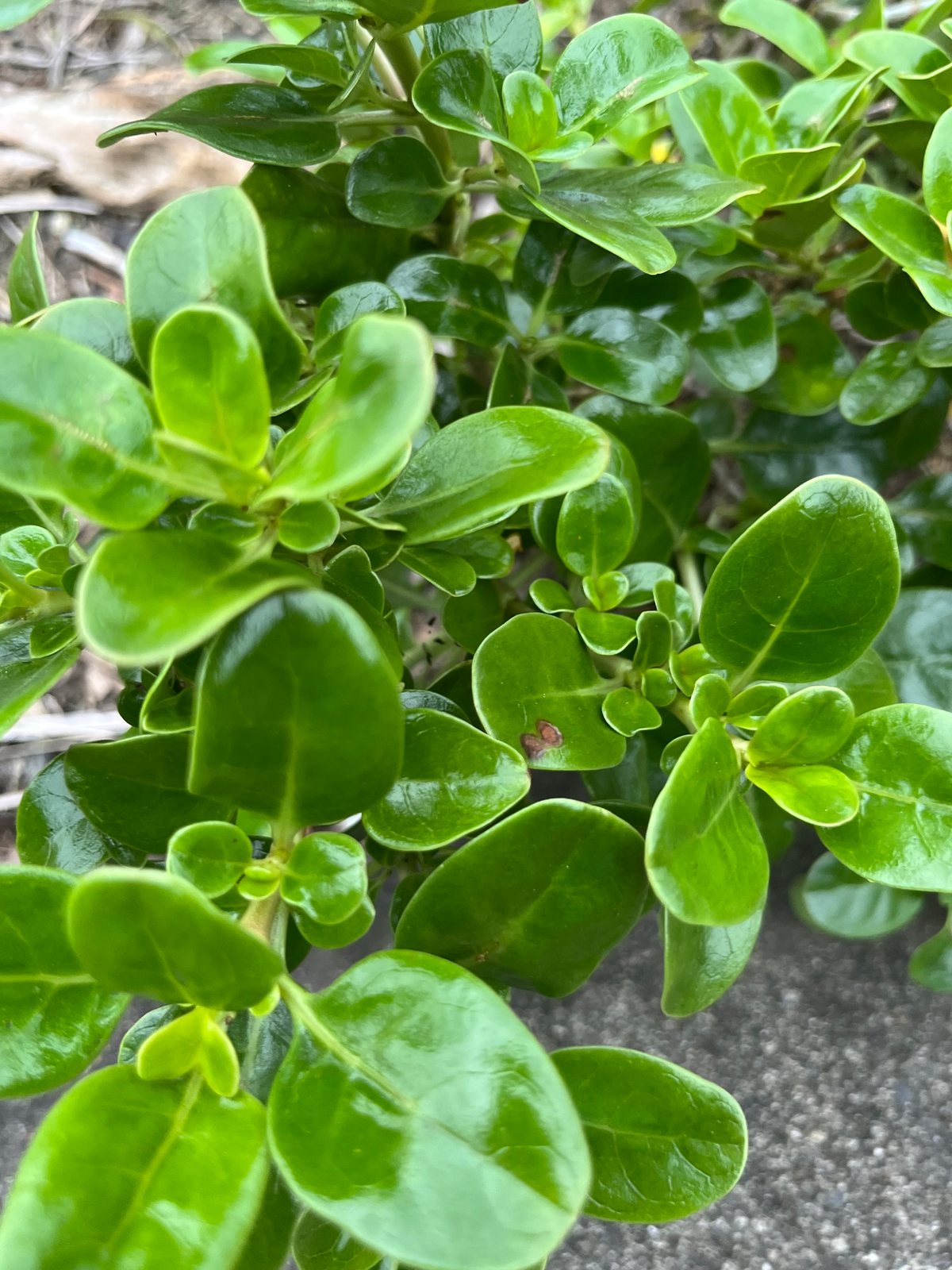
A compact evergreen shrub grown for its glossy, very dark purple foliage, which can look almost black in good light. It provides year-round contrast in mild coastal gardens and containers, but needs protection from hard frost and cold, drying winds.
At a glance
- Sun
- Full sun to partial shade; foliage usually colours best in sun. Provide some afternoon shade in very hot inland gardens.
- Water
- Water regularly during establishment, then during prolonged dry spells. Let the soil surface dry slightly between waterings; containers need more frequent checks.
- Soil
- Well-drained soil, including sandy or gravelly soil. Avoid waterlogged ground, especially in winter.
- Height
- 4-5 ft (1.2-1.5 m)
- Spread
- 3-5 ft (0.9-1.5 m)
- Foliage
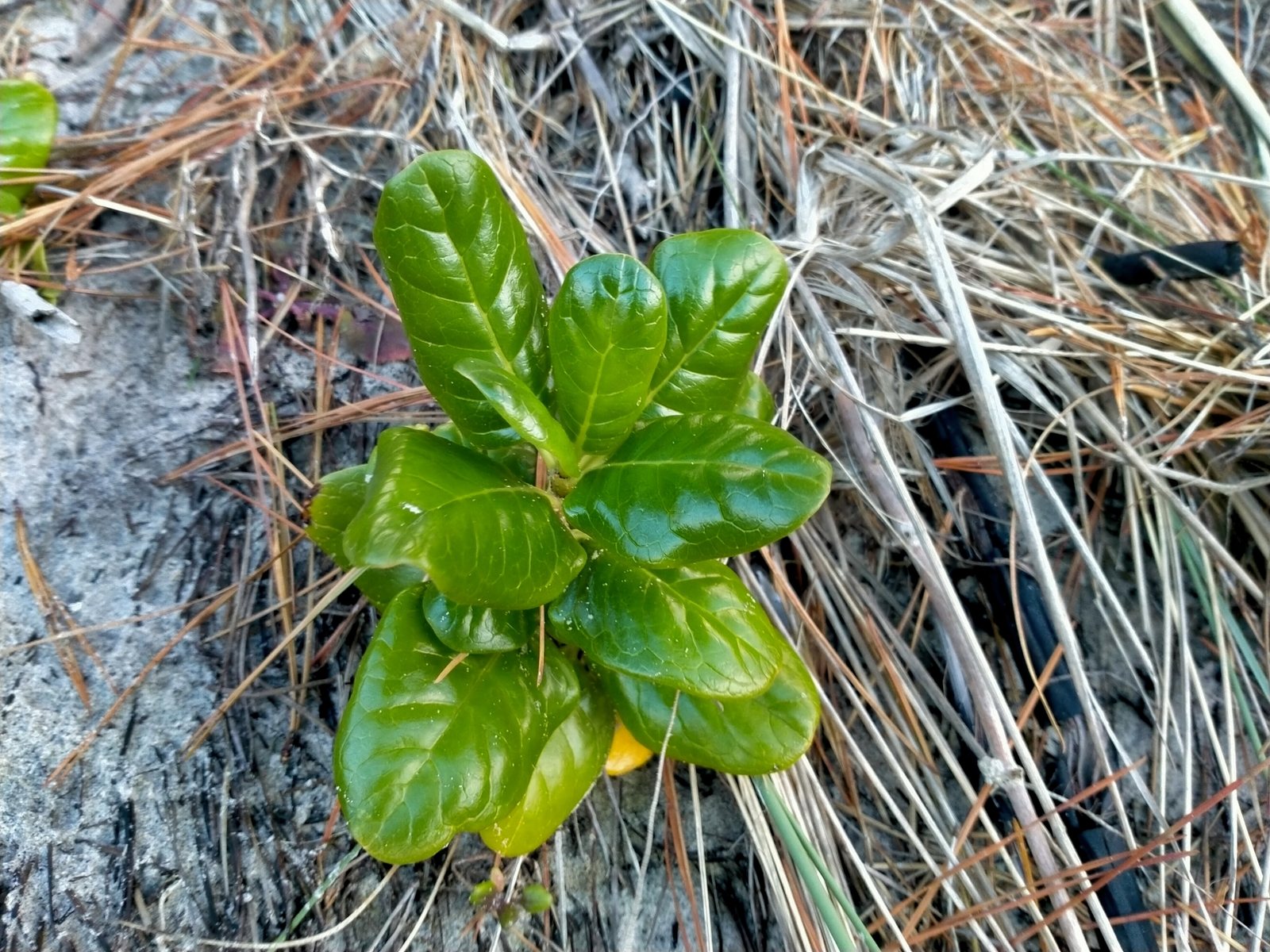
- Evergreen. Small, rounded to oval, highly glossy leaves in deep burgundy-purple to near-black; younger growth may show bronze tones.
- Growth
- Moderate
- Care needed
- Low
The year at a glance
- Drought tolerant
- Heat tolerant
| J | F | M | A | M | J | J | A | S | O | N | D | |
|---|---|---|---|---|---|---|---|---|---|---|---|---|
| Plant |
Northern hemisphere months. In Australia, shift them by six.
- Difficulty
- Moderate
- Toughness
- Needs looking after
Will it suit your garden?
Pick your zone, country, light and whether you have pets.
Full sun is 6 or more hours of direct sun a day, part shade 3 to 6 hours, shade under 3.
How it grows
Planting day
1.6 ft (0.5 m)
After 1 year
2.2 ft (0.67 m)
After 2 years
2.8 ft (0.84 m)
After 3 years
3 ft (1 m)
After 5 years
4 ft (1.4 m)
full size
About 5 years to full size.
From a typical nursery size, at an average rate for this kind of plant. A rule of thumb, not a forecast.
Good to know
- Cats and dogs
- Safe
- Invasive in
- Australia
- Growth rate
- Moderate
Care
Jobs through the year
- WaterApr–May, Sep–Oct, every 14 days
- For established outdoor shrubs, water if dry; young plants and containers need closer checks.
- WaterJun–Aug, every 10 days
- Deep-water during dry spells; let the surface dry slightly and check pots much more often.
- WaterJan–Mar, Nov–Dec, every 14 days
- Check sheltered pots and water sparingly only as compost dries; keep barely moist.
- FeedApr–May
- Apply a light dressing of balanced slow-release fertiliser.
- MulchMay
- Mulch the root area without covering the stems.
- PruneApr–May
- After frost risk, trim lightly to shape and remove frost-damaged shoots.
- ProtectJan–Apr, Oct–Dec
- In zones 6–7, grow in a container and move into bright, frost-free shelter before frosts.
- Water deeply through the first growing season, allowing the surface soil to dry slightly between waterings.
- Apply a light dressing of balanced slow-release fertiliser in spring; avoid heavy feeding.
- Mulch the root area, keeping mulch clear of the stems.
- Use a pot with drainage holes and free-draining potting mix for container plants.
- Move containers to a bright, frost-free place where winters regularly fall below about 23°F (-5°C).
Pruning. Lightly trim in spring after the main frost risk has passed to maintain a rounded shape or low hedge. Remove dead and frost-damaged shoots then, cutting back to healthy growth.
Through the year
- Spring
- Plant after the main frost risk has passed, and water thoroughly.
- Mid-spring
- Trim lightly and apply a modest amount of slow-release fertiliser.
- Summer
- Check containers frequently and water when the surface mix begins to dry.
- Early autumn
- Reduce feeding and avoid hard pruning that encourages tender new growth.
- Late autumn
- Move pots under bright, frost-free cover in colder regions.
- Winter
- Keep sheltered plants barely moist and ensure outdoor plants are not sitting in saturated soil.
In the garden
- Use as a dark foliage accent beside silver-leaved lavender or santolina in a sunny, well-drained border.
- Plant repeated rounded shrubs along a path for a simple, structured edge.
- Grow in a large container on a sheltered patio, where the glossy leaves remain visible throughout the year.
- Combine with golden sedges or lime-green foliage for strong colour contrast.
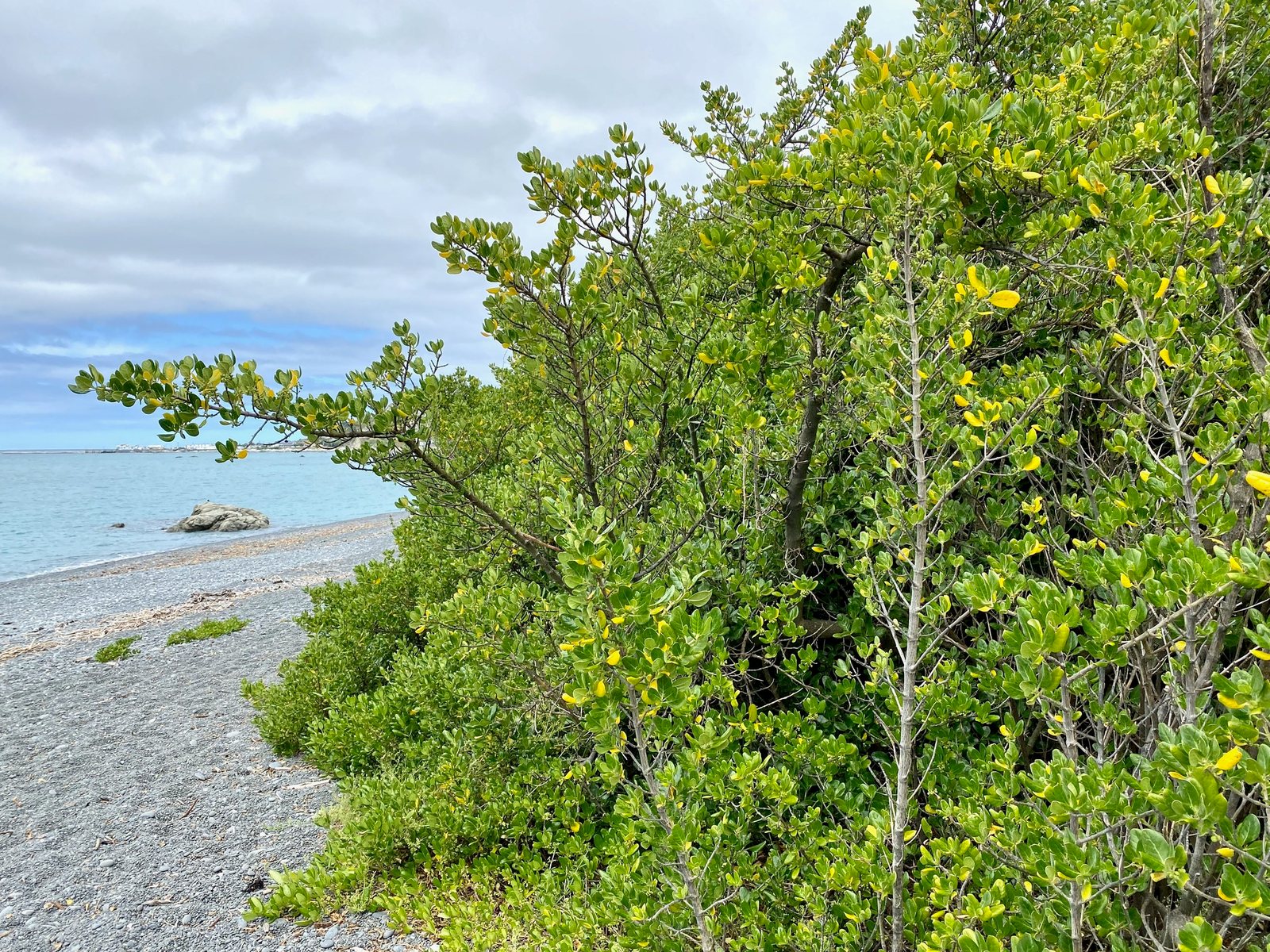
- Use in mild coastal gardens where salt-laden air limits more sensitive shrubs.
Garden styles it suits: Coastal, Modern, Contemporary minimal, Modern courtyard, Small-space and Winter interest.
Plant it with: Lavender, Santolina, New Zealand flax, Golden Japanese sedge, Agapanthus and Rock rose.
Wildlife: Small flowers can attract insects, and female Coprosma plants may produce bird-eaten fruit if a compatible male is nearby. Do not rely on this cultivar for a regular flower or berry display.
Problems to watch for
- Frost scorch: protect from cold winds and severe frost; wait until spring before removing damaged growth.
- Root rot in wet soil: improve drainage, reduce watering and never leave a container standing in water.
- Scale insects: inspect stems and leaf undersides; remove small infestations by hand or use a labelled horticultural oil.
- Spider mites in hot, dry sheltered conditions: check for fine webbing and stippled leaves, rinse foliage and use a labelled treatment if needed.
Safety
Not known to be toxic to people, cats, dogs or horses, but detailed safety information for this cultivar is limited. No particular part is established as poisonous; it is an ornamental plant, not a food crop.
Where it spreads. Coprosma repens is an environmental weed in parts of coastal southern Australia, including Victoria, Tasmania and South Australia, and is also naturalised elsewhere in Australia. Evidence specific to 'Pacific Night' is limited; check local guidance and do not plant near vulnerable coastal bushland where the species is discouraged.
Easily confused with
Pacific Sunset mirror bush (Coprosma 'Pacific Sunset')
Leaves have conspicuous pink-red colouring around darker centres, rather than the largely uniform dark purple foliage of 'Pacific Night'.
Purple-leaved kohuhu (Pittosporum tenuifolium 'Tom Thumb')
Has wavy-edged purple leaves and conspicuous light-green new growth; its leaves are less mirror-glossy.
Purple-leaved Chinese fringe flower (Loropetalum chinense var. rubrum)
Has softer, less glossy leaves arranged alternately on the stems and distinctive pink, ribbon-like flowers.
The name
Coprosma comes from Greek words meaning dung and smell, referring to the unpleasant odour of crushed leaves in some species, while repens means creeping.
Propagation. Take semi-ripe cuttings in summer and root them in a free-draining medium under humid cover. Seed does not reliably reproduce the cultivar; check any plant breeders' rights restrictions before propagating.
Checked against open data
- Accepted botanical name
- Coprosma repens
- In the US and Canada
- Introduced in the lower 48 states.
- Native range
- New Zealand North and New Zealand South.
Sources: GBIF (CC BY 4.0), USDA PLANTS and Trefle (CC BY 4.0). The care and design notes are LandscapeGPT's own.
See it in your own yard.
Upload a photo of your yard and see it redesigned with plants that suit your climate, each checked against your zone.