Paddle plant
Kalanchoe luciae. Family Crassulaceae. Succulent.
Also called Flapjacks, Red pancake plant.
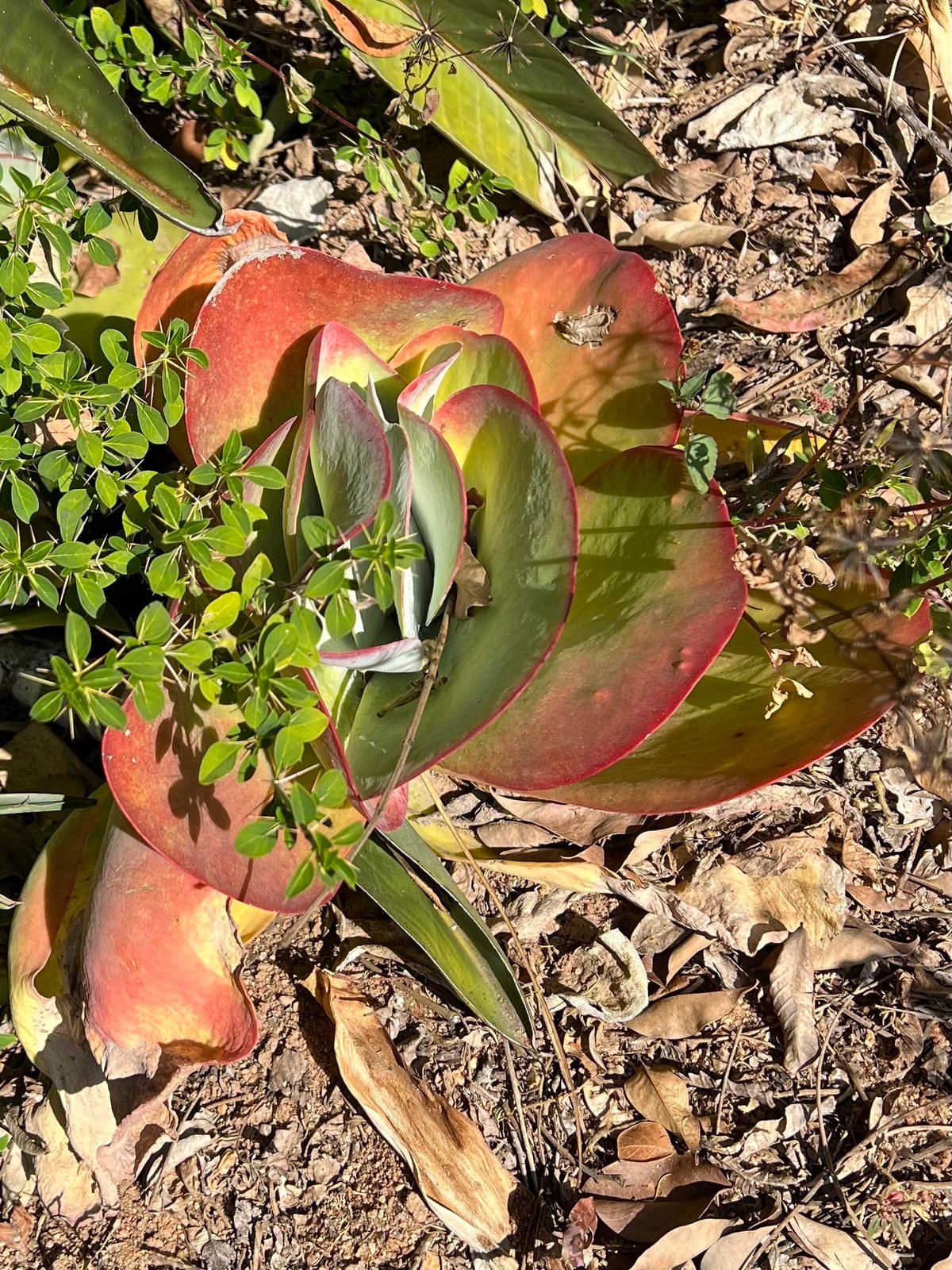
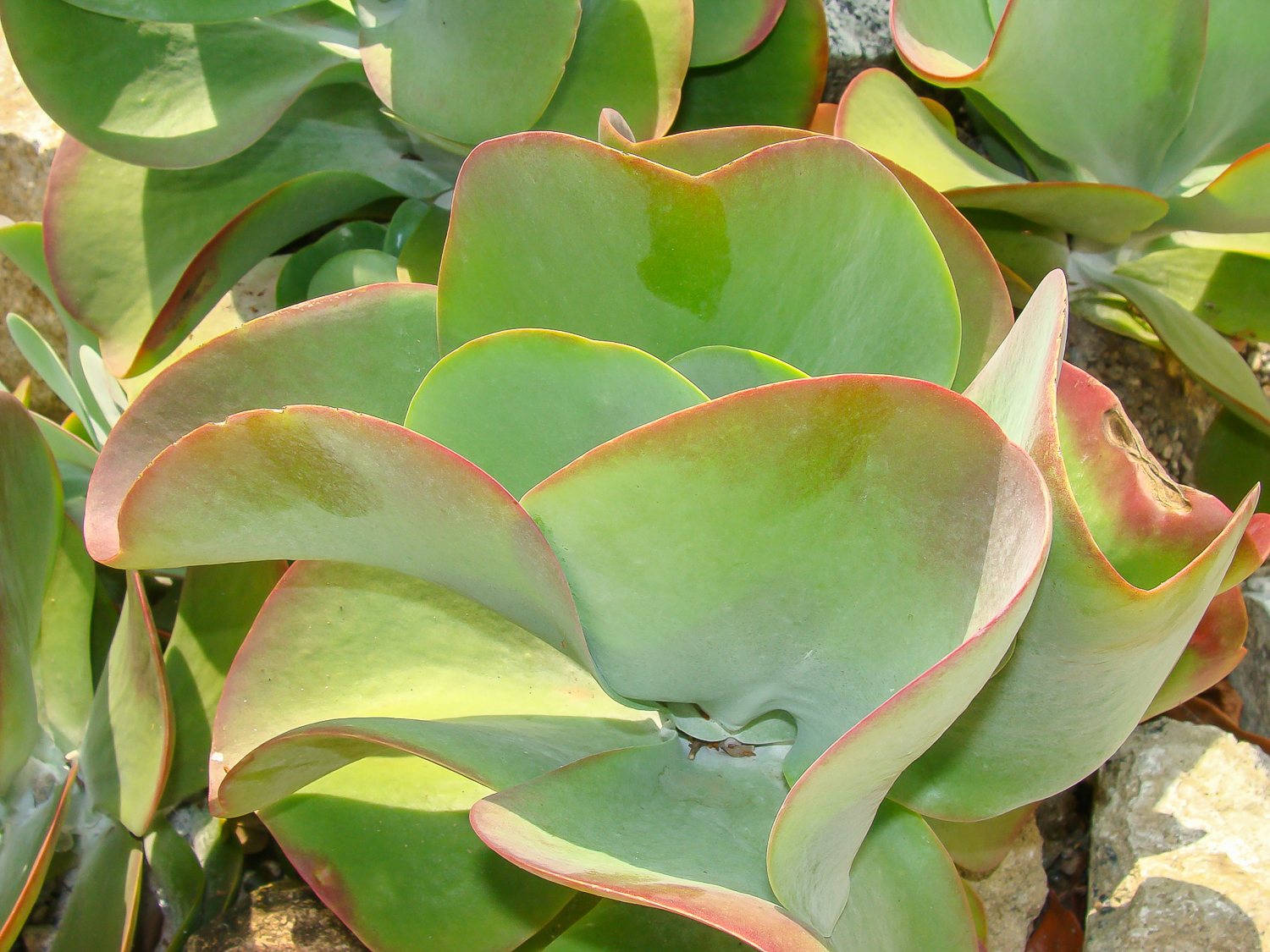
Paddle plant forms upright rosettes of broad, flattened leaves that develop red margins in bright light and cool weather. Gardeners grow it for its bold shape and foliage colour in containers and frost-free succulent beds. In colder climates, keep it in a pot that can be moved indoors for winter.
At a glance
- Sun
- Full sun to partial shade; give afternoon shade in very hot climates. Introduce indoor-grown plants to direct sun gradually.
- Water
- Low water needs; let the compost or soil dry between thorough waterings. Water very sparingly in cool winter conditions.
- Soil
- Sharply drained, sandy or gritty soil; use cactus compost with added mineral grit in containers.
- Height
- 1-2 ft (0.3-0.6 m) in leaf; flower stalks can reach 3-6 ft (0.9-1.8 m)
- Spread
- 2-3 ft (0.6-0.9 m), including offsets
- Flowers
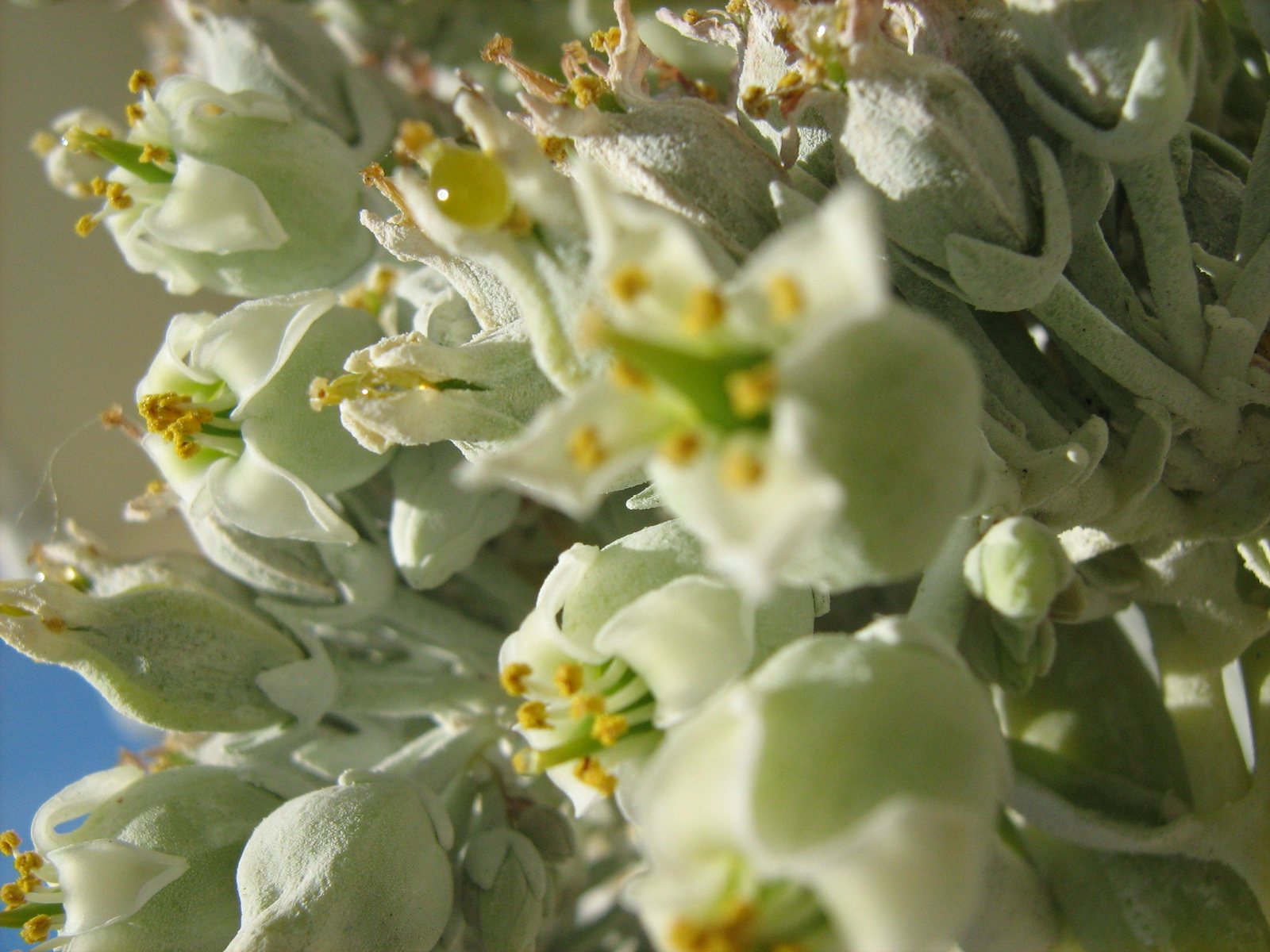
- Mature rosettes produce tall stalks of pale greenish-yellow to cream tubular flowers, usually from late winter into spring. Flowering is uncommon on small indoor plants.
- Foliage
- Evergreen. Broad, rounded, fleshy leaves held in overlapping pairs, with a whitish waxy coating; grey-green centres and red margins, sometimes turning largely red in bright, cool conditions.
- Growth
- Moderate in warm weather; slow in cool conditions
- Care needed
- Low
The year at a glance
- Pollinators
- Drought tolerant
- Heat tolerant
- Low allergen
| J | F | M | A | M | J | J | A | S | O | N | D | |
|---|---|---|---|---|---|---|---|---|---|---|---|---|
| Flowers | ||||||||||||
| Plant |
Northern hemisphere months. In Australia, shift them by six.
- Difficulty
- Moderate
- Toughness
- Fairly tough
Will it suit your garden?
Pick your zone, country, light and whether you have pets.
Full sun is 6 or more hours of direct sun a day, part shade 3 to 6 hours, shade under 3.
How it grows
Planting day
0.8 ft (0.25 m)
After 1 year
0.9 ft (0.28 m)
After 2 years
1 ft (0.3 m)
After 3 years
1.1 ft (0.33 m)
After 5 years
1.2 ft (0.38 m)
About 8 years to full size.
From a typical nursery size, at an average rate for this kind of plant. A rule of thumb, not a forecast.
Good to know
- Cats and dogs
- Toxic
- Growth rate
- Slow
Care
Jobs through the year
- WaterApr–May, Sep, every 21 days
- Water only after soil dries completely; check pots more often than established ground plants.
- WaterJun–Aug, every 14 days
- Water thoroughly only when dry; newly planted offsets and containers need closer checks.
- WaterJan–Mar, Oct–Dec, every 35 days
- Under cool frost-free cover, water very sparingly and only when compost is dry.
- FeedMay, Jul
- Give one light application of diluted cactus fertilizer in each listed month.
- PruneMay–Jun
- After flowering, remove the spent stalk and dying parent rosette, retaining offsets.
- DivideAug
- Separate well-developed offsets only if new plants are wanted.
- ProtectJan–May, Sep–Dec
- Grow in movable pots in zones 6–7; overwinter bright and frost-free, returning outdoors gradually after frost.
- Use a pot with drainage holes and empty any saucer after watering.
- Water the soil thoroughly, then wait until it has dried before watering again.
- Feed lightly with diluted cactus fertiliser once or twice during active spring and summer growth.
- Keep frost off the leaves; move containers into a bright, frost-free place before winter.
- Avoid rubbing the leaves, which removes their protective waxy coating.
Pruning. Remove dead lower leaves when they come away easily. After flowering, remove the spent stalk and dying parent rosette without damaging the offsets; each rosette flowers only once.
Through the year
- Spring
- Repot crowded plants into a slightly larger container with fresh, gritty compost.
- Late spring
- Once frost risk has passed, move overwintered plants outdoors gradually, starting in light shade.
- Summer
- Water when the soil dries and give a light feed during active growth.
- Late summer
- Separate well-developed offsets if you want new plants.
- Autumn
- Move pots under bright, frost-free cover before cold, wet weather arrives.
- Winter
- Keep plants bright and mostly dry; check leaf joints for mealybugs.
In the garden
- Use a single rosette in a simple container where its stacked leaves can be seen clearly.
- Plant in raised gravel beds with aloes and echeverias in frost-free gardens.
- Repeat small groups beside paths to provide broad-leaved contrast to fine grasses.
- Combine with blue-grey succulents to highlight its red leaf margins.
Garden styles it suits: Desert modern, Architectural minimal, Modern courtyard, Dry gravel garden, Desert / xeriscape and Small-space.
Plant it with: Echeveria, Zebra haworthia, Blue chalk sticks, Golden barrel cactus, Foxtail agave and Bulbine.
Wildlife: Flowers can provide nectar for visiting insects, but this plant offers limited wildlife value when grown indoors or kept primarily for foliage.
Problems to watch for
- Root or stem rot in wet soil: improve drainage, let the soil dry between waterings and remove rotten tissue; save healthy offsets if the base has collapsed.
- Mealybugs in leaf joints: isolate the plant and dab visible insects with a cotton bud lightly moistened with rubbing alcohol, avoiding broad contact with the leaf coating.
- Sun scorch after a sudden move outdoors: acclimatise plants over one to two weeks and provide afternoon shade in intense heat.
- Soft, translucent leaves after frost: move under frost-free cover, keep dry and remove damaged tissue once its extent is clear.
Safety
All parts are toxic if eaten by cats, dogs, horses or people; flowers may contain higher concentrations of cardiac glycosides. Ingestion can cause vomiting and diarrhoea and, in serious cases, dangerous heart rhythm disturbances. Keep away from grazing animals, pets and young children, and seek veterinary or medical advice promptly after ingestion.
Easily confused with
Paddle plant (Kalanchoe thyrsiflora)
Often sold under the same common names. It usually has more uniformly grey-green, heavily powder-coated leaves and fragrant, bright yellow flowers;
The name
The common name paddle plant refers to its broad, flattened, paddle-shaped leaves.
Propagation. Separate offsets in spring or summer with a clean blade, retaining roots where possible. Allow cut surfaces to dry and callus for several days before planting in gritty compost; water sparingly until established.
Checked against open data
- Accepted botanical name
- Kalanchoe luciae
- Native range
- KwaZulu-Natal, Mozambique, Northern Provinces, Swaziland and Zimbabwe.
Sources: GBIF (CC BY 4.0) and Trefle (CC BY 4.0). The care and design notes are LandscapeGPT's own.
See it in your own yard.
Upload a photo of your yard and see it redesigned with plants that suit your climate, each checked against your zone.