Pale-leaf yucca
Yucca pallida. Family Asparagaceae. Succulent.
Also called Pale yucca.
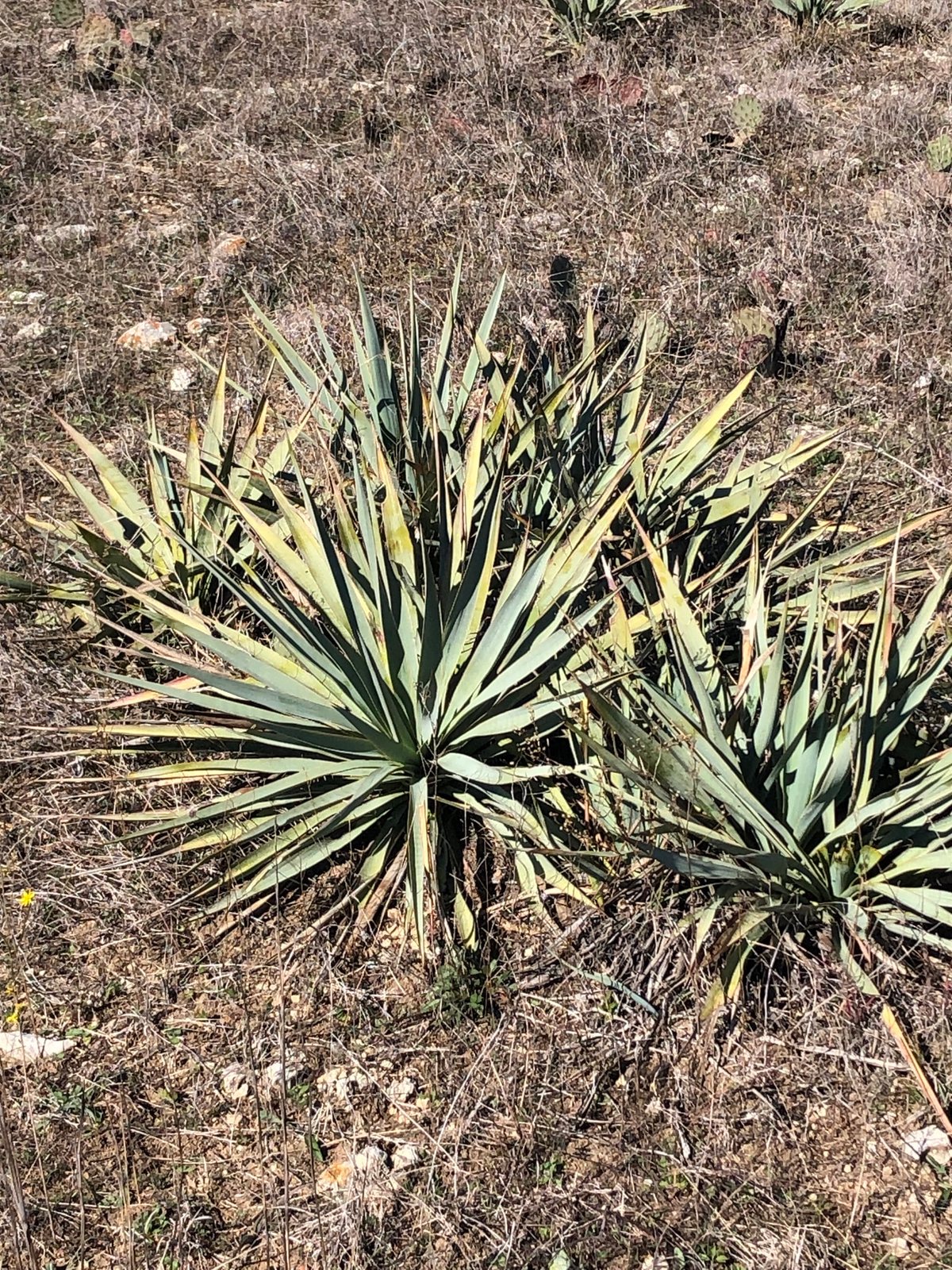
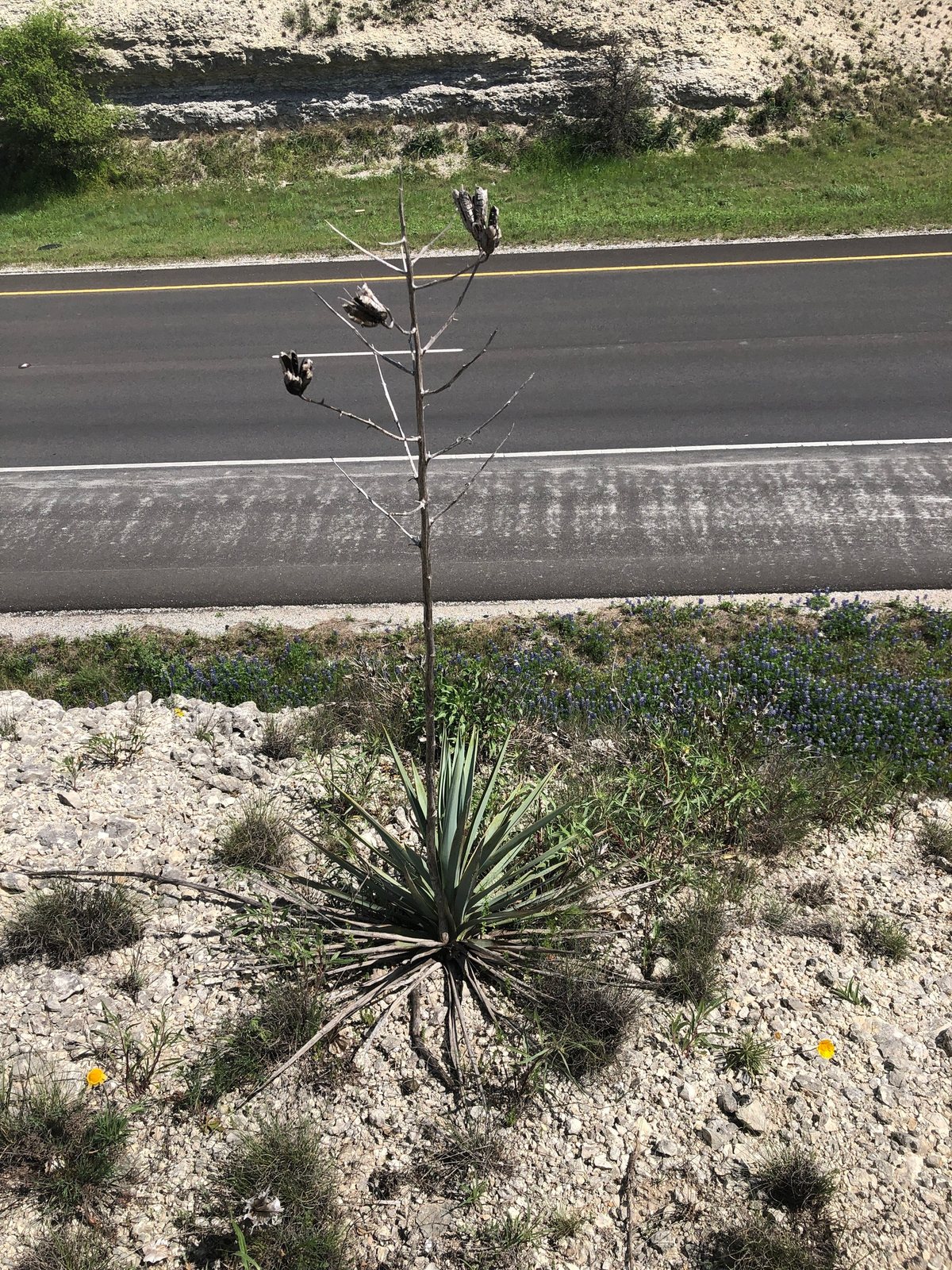
Pale-leaf yucca is a low-growing evergreen native to north-central Texas, with broad, powdery blue-grey leaves arranged in rosettes. Gardeners grow it for its year-round shape, drought tolerance and tall sprays of creamy white flowers; it needs especially sharp drainage where winters are wet.
At a glance
- Sun
- Full sun to light shade; foliage is usually most compact in sun.
- Water
- Low once established. Water during establishment, then mainly during prolonged drought; avoid persistently damp soil.
- Soil
- Well-drained sandy, gravelly or rocky soil, including limestone soils. Tolerates poor soil but not waterlogged clay.
- Height
- 1-2 ft (0.3-0.6 m) in leaf; flower stalks reach 3-5 ft (0.9-1.5 m)
- Spread
- 2-3 ft (0.6-0.9 m) per mature rosette; offsetting clumps can become wider
- Flowers
- Late spring to early summer; creamy white, bell-shaped flowers on upright, branched stalks. Established plants may not flower every year.
- Foliage
- Evergreen. Broad, sword-shaped, powdery blue-grey leaves with finely toothed margins and pointed tips; more flexible than those of many yuccas.
- Growth
- Slow to moderate
- Care needed
- Low
The year at a glance
- Pollinators
- Deer resistant
- Drought tolerant
- Heat tolerant
- Low allergen
| J | F | M | A | M | J | J | A | S | O | N | D | |
|---|---|---|---|---|---|---|---|---|---|---|---|---|
| Flowers | ||||||||||||
| Plant |
Northern hemisphere months. In Australia, shift them by six.
- Difficulty
- Easy
- Toughness
- Very tough
Will it suit your garden?
Pick your zone, country, light and whether you have pets.
Full sun is 6 or more hours of direct sun a day, part shade 3 to 6 hours, shade under 3.
How it grows
Planting day
0.8 ft (0.25 m)
After 1 year
0.9 ft (0.28 m)
After 2 years
1 ft (0.3 m)
After 3 years
1.1 ft (0.33 m)
After 5 years
1.2 ft (0.38 m)
About 8 years to full size.
From a typical nursery size, at an average rate for this kind of plant. A rule of thumb, not a forecast.
Good to know
- Cats and dogs
- Toxic
- Native to
- the US
- Growth rate
- Slow
Care
Jobs through the year
- WaterApr–May, Sep, every 28 days
- Water established plants only in exceptional drought; water new plants when the root zone dries.
- WaterJun–Aug, every 21 days
- Deep-water established plants only during prolonged drought; let soil dry between soakings.
- PruneMar–Apr
- Wear gloves and remove only dead or badly damaged outer leaves; leave the growing centre intact.
- DeadheadJul–Aug
- Cut finished flower stalks near the base unless retaining developing capsules.
- ProtectOct–Nov
- Clear fallen leaves from the crown and ensure rain drains freely before winter.
- Plant with the crown at soil level, on a raised mound if drainage is doubtful.
- Water new plants deeply when the root zone dries; reduce watering once established.
- Keep irrigation spray and moisture-retaining mulch away from the crown.
- Use a thin gravel mulch rather than piling bark around the leaves.
- Do not routinely feed; rich soil and heavy feeding are unnecessary.
- Leave room around the pointed leaves and wear gloves when working nearby.
Pruning. Cut spent flower stalks near their base after flowering. In spring, remove only dead or badly damaged outer leaves with clean secateurs; do not shear the rosette or cut out its growing centre.
Through the year
- Spring
- Remove dead outer leaves and check that winter moisture has not softened the crown.
- Spring
- Plant or transplant into freely draining soil once severe frost has passed.
- Late spring
- Watch for flower stalks and keep neighbouring plants from crowding the rosettes.
- Summer
- Water young plants when the root zone dries; water established clumps only during extended drought.
- Late summer
- Remove finished flower stalks unless you want to retain any developing seed capsules.
- Autumn
- Clear fallen leaves from the crown and check drainage before wet winter weather.
In the garden
- Use as a low architectural focal point in a gravel garden, with space around each rosette.
- Repeat through a sunny dry border with ornamental grasses and drought-tolerant flowering perennials.
- Plant on a raised rocky bank where the blue-grey foliage contrasts with stone.
- Grow in a large, freely draining container for a sunny courtyard, away from narrow routes.
Garden styles it suits: Architectural minimal, Desert modern, Dry gravel garden, Desert / xeriscape, Southwestern and Texas Hill Country.
Plant it with: Red yucca, Autumn sage, Little bluestem, Prairie dropseed, Blanket flower and Purple coneflower.
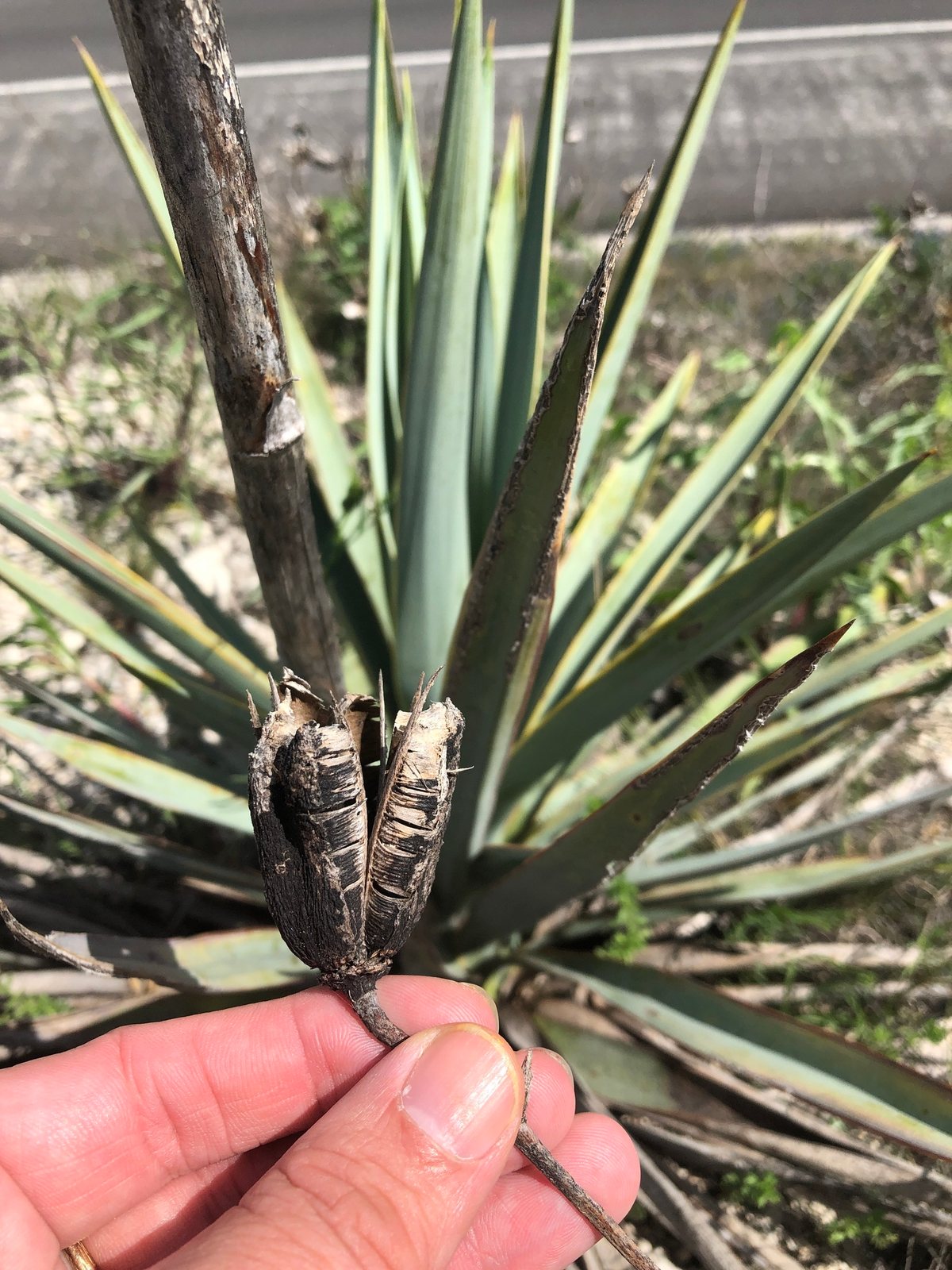
Wildlife: In its native range, flowers support specialist yucca moths, which pollinate the flowers while their larvae consume some developing seeds. Seed production may be poor where suitable moths are absent.
Problems to watch for
- Root or crown rot in wet soil: improve drainage, stop frequent watering and replace severely rotted plants in a better-drained position.
- Leaf spots in damp, crowded conditions: remove badly affected leaves, improve airflow and avoid overhead watering.
- Scale insects: inspect leaf bases and undersides, remove small colonies by hand and use a labelled horticultural oil if needed.
- Winter leaf damage: avoid late feeding and wet winter conditions; remove damaged leaves in spring once healthy growth is apparent.
Safety
Yucca species contain saponins and are considered toxic to cats, dogs and horses if eaten, particularly the roots and other vegetative parts. Ingestion can cause vomiting or diarrhoea in pets, and potentially more serious illness in horses. Human poisoning information for this species is limited; do not treat it as an edible plant. Pointed leaf tips can injure skin and eyes.
Easily confused with
Twistleaf yucca (Yucca rupicola)
Usually has greener leaves that twist conspicuously along their length; pale-leaf yucca has powdery blue-grey leaves that are generally flatter.
Adam's needle (Yucca filamentosa)
Has conspicuous curling white threads along the leaf margins; pale-leaf yucca has finely toothed margins without those abundant threads.
Soapweed yucca (Yucca glauca)
Has much narrower, stiff, strap-like leaves, often with marginal threads; pale-leaf yucca has broader, more flexible leaves.
The name
The species name pallida means pale, referring to the pale blue-grey foliage.
Propagation. Separate rooted offsets in spring and replant at their original depth in sharply drained soil. It can also be raised from seed, although seed may not form outside its native range without suitable pollinators.
Checked against open data
- Accepted botanical name
- Yucca pallida
- In the US and Canada
- Native in the lower 48 states.
- Native range
- Texas.
Sources: GBIF (CC BY 4.0), USDA PLANTS and Trefle (CC BY 4.0). The care and design notes are LandscapeGPT's own.
See it in your own yard.
Upload a photo of your yard and see it redesigned with plants that suit your climate, each checked against your zone.