Pale yellow-eyed grass
Sisyrinchium striatum. Family Iridaceae. Perennial.
Also called Yellow-eyed grass, Satin flower.
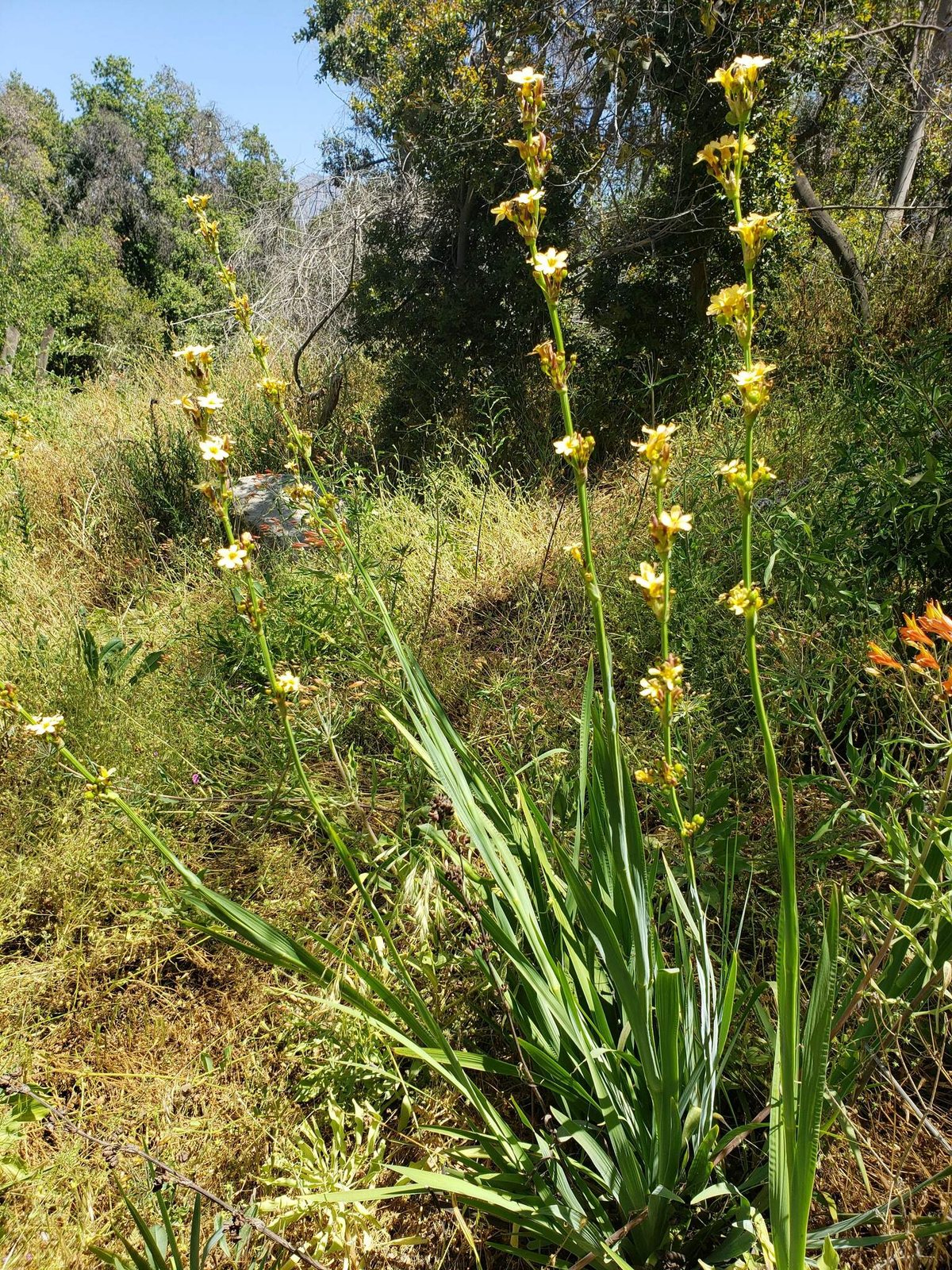
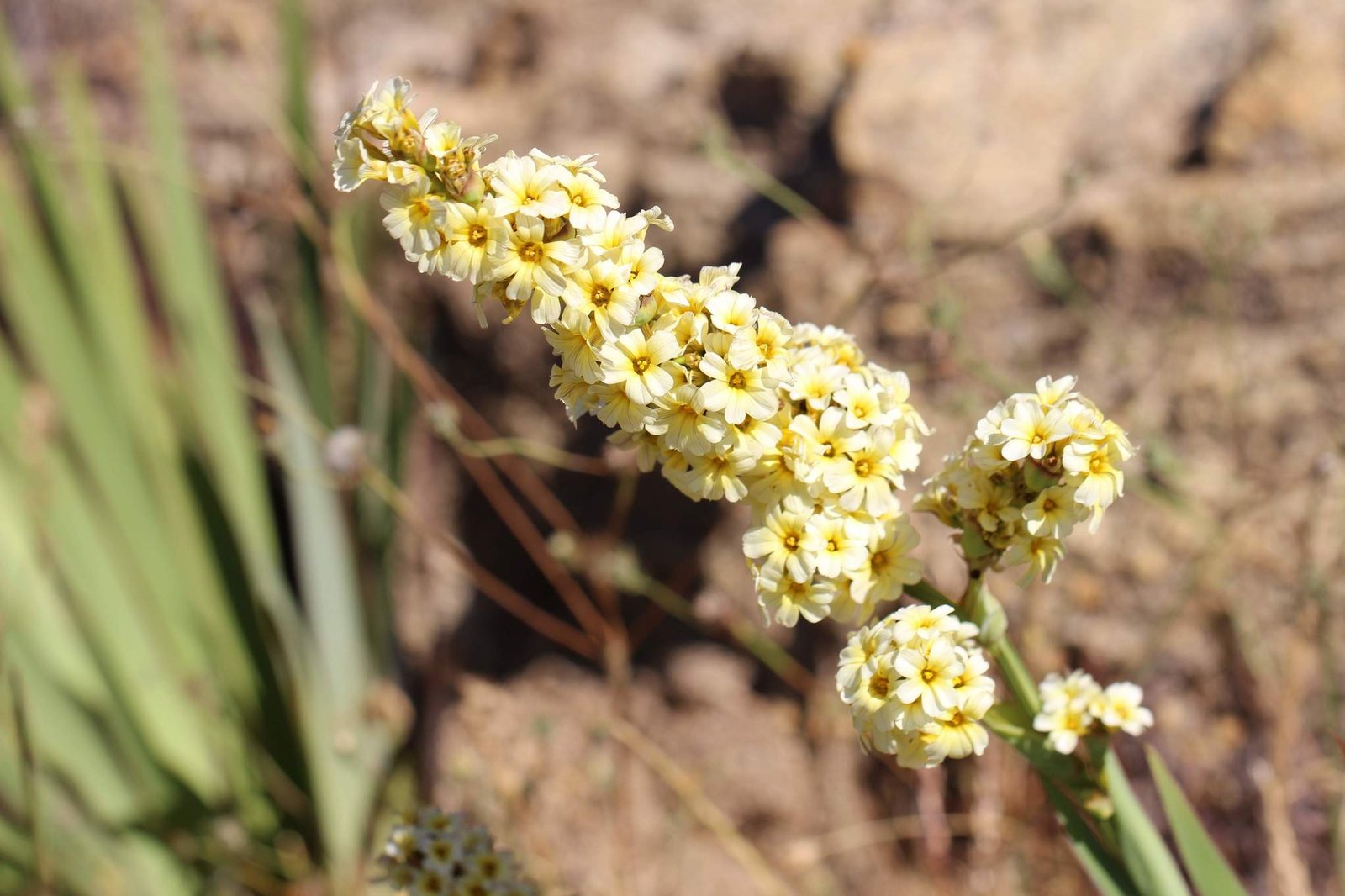
An upright, clump-forming perennial from Chile and Argentina, with grey-green sword-shaped leaves and tall stems carrying tiers of small, pale yellow flowers. Gardeners grow it for its strong vertical shape and soft colour in sunny borders and gravel gardens; despite its name, it belongs to the iris family, not the grasses.
At a glance
- Sun
- Full sun; tolerates light shade but flowers less freely.
- Water
- Water regularly while establishing. Once rooted, water during prolonged dry spells; avoid soil that stays wet in winter.
- Soil
- Well-drained, moderately fertile soil, including sandy or gravelly ground. Tolerates a range of soil pH.
- Height
- 2-3 ft (0.6-0.9 m)
- Spread
- 1-2 ft (0.3-0.6 m)
- Flowers
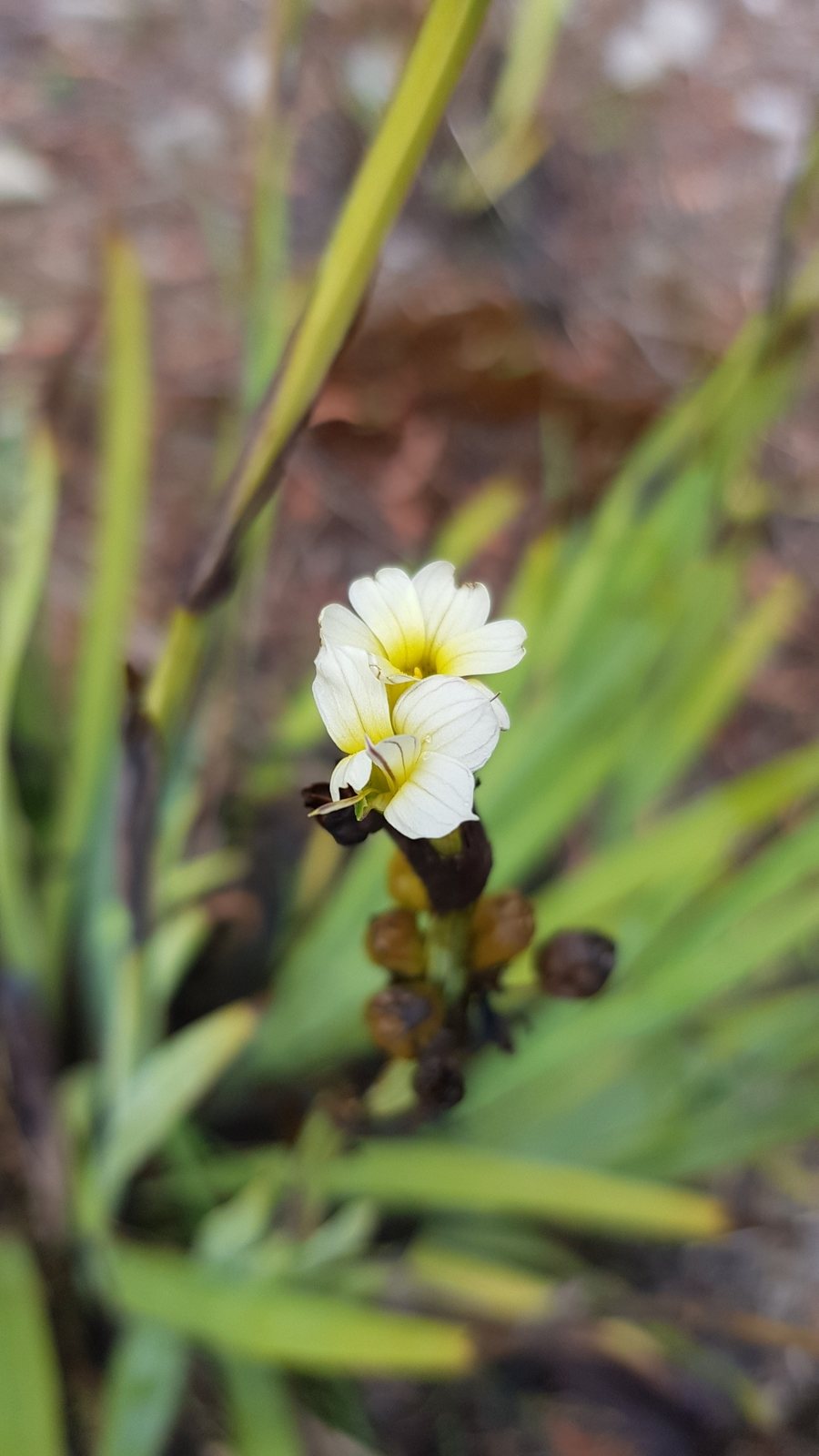
- Late spring to midsummer; small creamy yellow flowers with darker veins, arranged in tiers along upright stems.
- Foliage
- Stiff, narrow, grey-green leaves form upright fans. Evergreen in mild climates, but leaves may die back or become damaged in colder winters.
- Growth
- Moderate
- Care needed
- Low
The year at a glance
- Pollinators
- Drought tolerant
- Heat tolerant
- Low allergen
| J | F | M | A | M | J | J | A | S | O | N | D | |
|---|---|---|---|---|---|---|---|---|---|---|---|---|
| Flowers | ||||||||||||
| Fruit | ||||||||||||
| Plant |
Northern hemisphere months. In Australia, shift them by six.
- Difficulty
- Easy
- Toughness
- Fairly tough
Will it suit your garden?
Pick your zone, country, light and whether you have pets.
Full sun is 6 or more hours of direct sun a day, part shade 3 to 6 hours, shade under 3.
How it grows
Planting day
1 ft (0.3 m)
After 1 year
1.5 ft (0.45 m)
After 2 years
2 ft (0.6 m)
After 3 years
2.5 ft (0.75 m)
full size
About 3 years to full size.
From a typical nursery size, at an average rate for this kind of plant. A rule of thumb, not a forecast.
Good to know
- Cats and dogs
- Safe
- In the garden
- Spreads vigorously: plan to contain it.
- Growth rate
- Moderate
Care
Jobs through the year
- WaterApr–May, Sep, every 14 days
- Water established clumps only during prolonged dry spells; water new plants more often as the surface dries.
- WaterJun–Aug, every 10 days
- In prolonged dry weather, soak the root zone and let the surface dry between waterings.
- MulchMar–Apr
- Apply a light compost dressing around the clump, keeping it clear of the crown.
- PruneMar–Apr
- Remove dead and frost-damaged leaves individually, retaining healthy evergreen foliage.
- DivideApr–May
- Divide congested clumps only when flowering declines or their centres become sparse.
- DeadheadJun–Aug, every 14 days
- Cut finished flower stems to the base before capsules ripen unless seedlings are wanted.
- ProtectJan–Feb, Oct–Dec
- Keep crowns clear of wet debris and drainage open; use a sheltered site, as zone 6 winters may be too cold.
- Plant in spring in colder areas, choosing a sunny position with good winter drainage.
- Water through the first growing season, allowing the surface soil to dry between waterings.
- Use only a light spring dressing of compost; rich feeding can encourage floppy growth.
- Keep mulch away from the crown, especially where winters are wet.
- Divide congested clumps in spring when flowering declines or the centre becomes sparse.
- Remove spent flower stems before seed ripens if you do not want seedlings.
Pruning. Cut finished flower stems down to the base after flowering, or leave a few if seedlings are wanted. In early spring, remove dead and frost-damaged leaves individually rather than cutting healthy evergreen foliage to the ground.
Through the year
- Early spring
- Remove damaged foliage and check that the crown is not buried under wet debris.
- Spring
- Plant or divide clumps as growth resumes, then water thoroughly.
- Late spring
- Weed around the clumps and water new plants during dry weather.
- Summer
- Remove fading flower stems before seed capsules ripen to limit self-seeding.
- Autumn
- Remove unwanted seedlings and clear fallen leaves from around the crown.
- Winter
- Keep drainage channels clear; protect container-grown plants from prolonged freezing and waterlogging.
In the garden
- Repeat small groups through a sunny border to add upright accents among rounded plants.
- Plant in gravel gardens with lavender and santolina for contrasting grey foliage and soft yellow flowers.
- Combine with ornamental grasses and airy perennials for a loose, naturalistic planting.
- Use beside paths or terraces where the tiered flower stems can be seen close up.
Garden styles it suits: Dry gravel garden, Mediterranean, New perennial (prairie), Cottage garden, Coastal and Architectural minimal.
Plant it with: English lavender, Santolina, Catmint, Purple coneflower, Mexican feather grass and Purpletop vervain.
Wildlife: The flowers provide pollen and nectar for visiting insects, including bees. Its South American origin means it is not a native habitat plant in the United States, United Kingdom, Canada or Australia.
Problems to watch for
- Crown or root rot in wet soil: improve drainage or move the plant to a raised bed; keep mulch off the crown.
- Winter leaf damage: choose a sheltered position and remove damaged leaves once spring growth begins.
- Excessive seedlings: cut off flower stems before the seed capsules mature and pull seedlings while small.
- Slugs and snails on young growth: inspect in damp weather, remove hiding places and use wildlife-conscious controls if needed.
Safety
Not known to be toxic to people, cats, dogs or horses. Species-specific information is limited, so do not treat the leaves, flowers or seeds as edible.
Where it spreads. Can self-seed freely in mild climates and is naturalised in parts of southern Australia and New Zealand. Remove seed heads near natural areas and check local weed guidance before planting.
Easily confused with
Golden-eyed grass (Sisyrinchium californicum)
Much shorter, with brighter golden-yellow flowers rather than tall stems bearing several tiers of creamy flowers.
Narrow-leaved blue-eyed grass (Sisyrinchium angustifolium)
Forms smaller clumps of finer green leaves and bears blue to violet flowers with yellow centres.
The name
The botanical epithet striatum means 'striped' or 'grooved' in Latin.
Propagation. Divide established clumps in spring, retaining healthy roots and several leaf fans on each division. Sow fresh seed in pots in a cool frame; seedlings may vary and can take more than one season to reach flowering size.
Checked against open data
- Accepted botanical name
- Sisyrinchium striatum
- Native range
- Argentina Northwest, Argentina South and Chile Central.
Sources: GBIF (CC BY 4.0) and Trefle (CC BY 4.0). The care and design notes are LandscapeGPT's own.
See it in your own yard.
Upload a photo of your yard and see it redesigned with plants that suit your climate, each checked against your zone.